

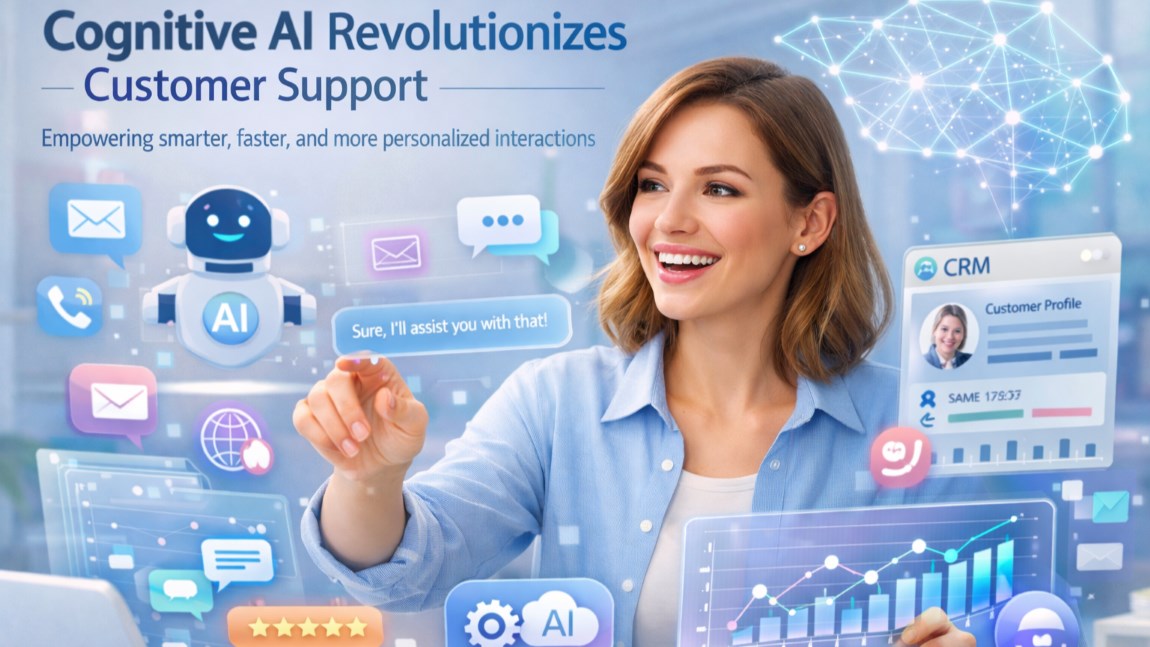

Customer expectations have never been higher. Today's consumers demand instant responses, personalized interactions, and consistent service quality across every channel — whether they're reaching out via phone, chat, email, or
Customer expectations have never been higher. Today's consumers demand instant responses, personalized interactions, and consistent service quality across every channel — whether they're reaching out via phone, chat, email, or social media. For businesses that handle thousands of daily inquiries, meeting these expectations with human agents alone is neither scalable nor financially sustainable. That's why artificial intelligence has become the defining force reshaping the customer service industry, and why enterprises across every sector are rethinking how they build, staff, and operate their support operations.
This article explores how AI-driven technologies are changing the fundamentals of customer service, what organizations need to understand before they invest, and where the industry is headed over the next decade.
The Old Model and Its Breaking Point

For most of the twentieth century and well into the 2000s, customer service was a headcount game. More customers meant more agents. More channels meant more specialized teams. Quality assurance depended on supervisors manually listening to call recordings, and the entire operation was held together by rigid scripts, decision trees, and strict escalation rules.
This model worked adequately when customer volumes were predictable and channels were limited. But the explosion of digital commerce, the rise of always-on expectations, and the sheer diversity of modern customer journeys have exposed its limitations dramatically.
Average handle times crept up. Agent burnout became a systemic problem. Contact centers — already operating on thin margins — found themselves unable to keep pace without proportionally expanding headcount. The cost per interaction climbed, but customer satisfaction scores didn't follow. Something had to change.
Enter Intelligent Automation
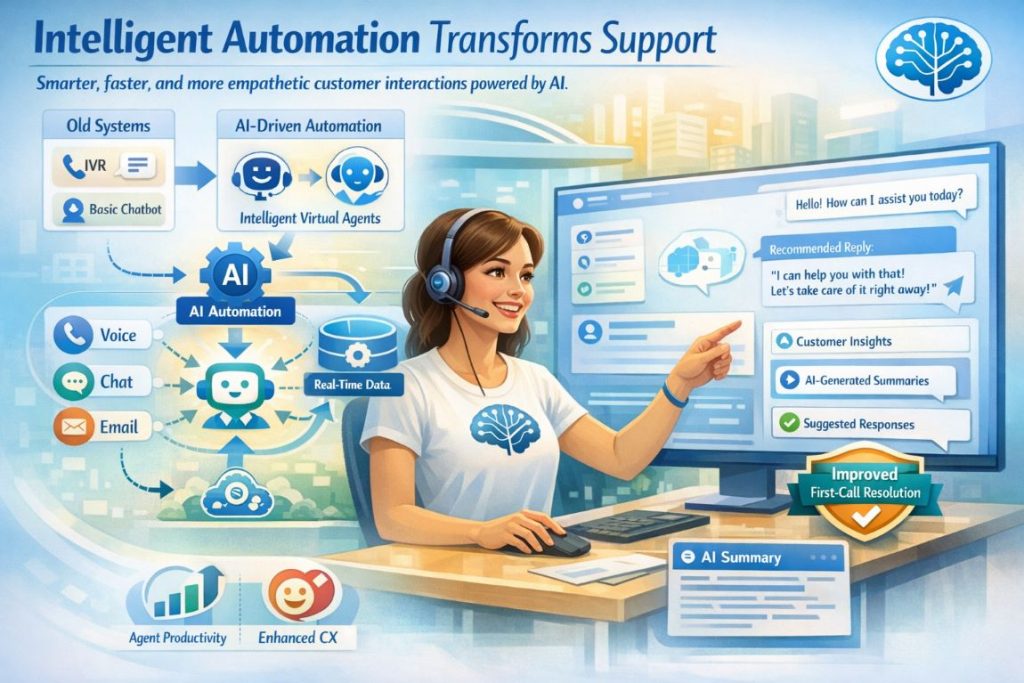
The initial wave of automation in customer service came in the form of interactive voice response (IVR) systems and basic chatbots. These tools reduced the burden on agents for simple, high-volume inquiries like account balance checks or order status updates. But they were brittle. They broke whenever a customer deviated from the expected script, and frustrated users quickly learned to press "0" to bypass them entirely.
What changed everything was the convergence of natural language processing, machine learning, and cloud-scale computing. Modern call center automation is no longer about routing customers through predetermined menus. It's about building systems that can understand intent, detect emotion, adapt in real time, and resolve issues autonomously — or hand off to a human agent at precisely the right moment with full context already assembled.
Today's intelligent virtual agents can integrate with CRM platforms, ticketing systems, and enterprise databases in real time, streamlining operations as explained in our database management guide. They integrate with CRM platforms, ticketing systems, and enterprise databases in real time. They learn from every interaction, continuously improving their accuracy and relevance. And critically, they maintain full conversation history and context, meaning customers no longer have to repeat themselves when transferred between channels or agents.
For enterprise organizations processing millions of contacts annually, the ROI case is straightforward. Deflection rates of 40 to 70 percent for Tier-1 inquiries are now routinely achievable. Average handle time for agent-assisted interactions drops because agents receive AI-generated summaries and suggested responses. First-call resolution rates improve because customers are matched with the right resource — human or automated — more accurately.
But the benefits go beyond cost reduction. When implemented thoughtfully, call center automation also improves the employee experience. Agents spend less time on repetitive, low-complexity interactions and more time on cases where human judgment, empathy, and relationship-building actually matter. Attrition rates in contact centers that have deployed meaningful automation often decrease, which in itself represents a significant cost saving given the high cost of agent recruitment and training.
The Role of Cognitive AI in Customer Service
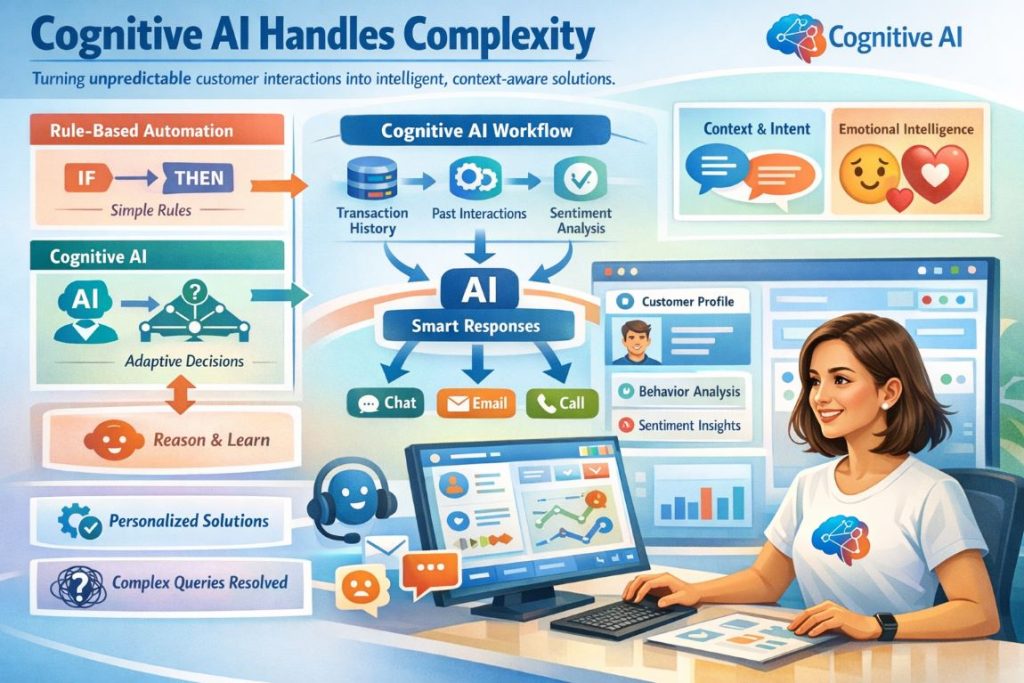
Automation handles the repetitive. Cognitive AI handles the complex.
There is an important distinction between rule-based automation and genuinely intelligent AI. Rule-based systems follow instructions. A cognitive ai platform, by contrast, perceives, reasons, learns, and adapts. It doesn't just match keywords to canned responses — it builds contextual understanding across a conversation, interprets ambiguity, weighs competing possibilities, and makes probabilistic decisions.
In a customer service context, this distinction matters enormously. Consider a banking customer who calls to dispute a charge. A rule-based system might identify the word "dispute" and route the customer to a fraud queue. A cognitive AI platform, however, would analyze the full context — the customer's transaction history, their previous interactions, the nature of the charge in question, their expressed emotional state — and determine not only the appropriate team to involve but also the optimal response strategy. It might proactively surface relevant account information, flag potential fraud patterns, or recommend a resolution path that balances customer satisfaction with business risk.
Cognitive AI platforms are also fundamentally different in how they handle the unexpected. Rule-based systems fail gracefully at best, catastrophically at worst, when they encounter inputs they weren't trained on. Cognitive systems generalize. They can reason through novel scenarios using underlying principles rather than memorized patterns, which means they degrade far less severely when conditions change or edge cases arise.
For customer service, this capability is transformative. Customer inquiries are inherently unpredictable. Conversations meander. Customers are emotional, sometimes irrational, often unclear about what they actually need. The ability to navigate that complexity intelligently — rather than rigidly — is what separates a genuinely useful AI-powered service experience from one that feels like a frustrating obstacle course.
Key Capabilities Organizations Should Prioritize
Not all AI-powered customer service solutions are created equal. When evaluating vendors or building capabilities in-house, there are several critical dimensions that determine real-world performance.
Omnichannel consistency is non-negotiable in 2024. Customers move fluidly between channels — starting a conversation on web chat, following up by phone, then checking email. The AI infrastructure must maintain unified context across all these touchpoints, not just within individual interactions.
Sentiment analysis and emotion detection have moved from nice-to-have to essential. Understanding how a customer feels — not just what they're saying — enables far more nuanced routing and response strategies. High-frustration signals should trigger immediate escalation pathways. Positive sentiment during a resolution can be an appropriate moment to introduce a retention offer or upsell opportunity.
Multilingual and dialect support is increasingly important as businesses operate in global markets. AI models trained only on standard English will underperform badly for non-native speakers, regional dialects, or customers communicating in other languages. Deployment-ready multilingual capability is now a baseline requirement for enterprise solutions.
Integration depth determines how useful the AI can actually be. A virtual agent that cannot access real-time account data, order management systems, or case history is limited to generic responses that customers find unhelpful. Deep, bidirectional integrations with core enterprise systems are what enable genuine issue resolution rather than mere information routing.
Continuous learning and model governance are often underestimated. AI models degrade over time if not actively maintained. Products evolve, policies change, customer language shifts. Organizations need robust processes for monitoring model performance, identifying degradation signals, and updating training data without disrupting production operations.
Implementation Challenges and How to Navigate Them
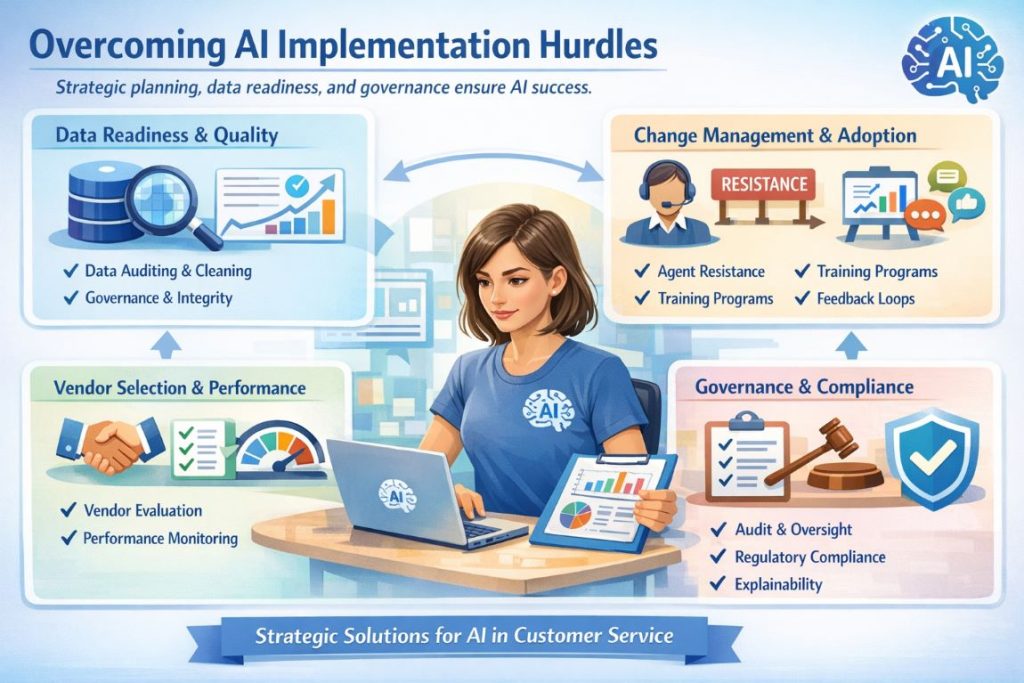
Despite the compelling business case, AI transformation in customer service is not a plug-and-play proposition. Organizations that approach it as a technology purchase rather than a strategic capability-building initiative typically underperform against their expectations.
Data readiness is often the first obstacle. AI models are only as good as the data they learn from. Many contact centers have years of valuable interaction data locked in inconsistent formats, siloed across systems, or simply never collected at all. A realistic data strategy — including data auditing, cleaning, and ongoing governance — must precede or accompany any AI deployment.
Change management is equally critical. Customer service teams that perceive AI as a replacement threat will resist adoption, find workarounds, and fail to provide the feedback loops that make AI systems improve over time. Organizations that frame automation as a tool for elevating agent capabilities rather than eliminating positions consistently achieve better outcomes.
Vendor selection deserves more rigor than it typically receives. Many solutions that market themselves as AI-powered are, in practice, sophisticated rule-based systems with narrow language model wrappers. Organizations should require live demonstrations on their own data, reference conversations with peer companies in similar industries, and contract structures that include performance-based accountability.
Finally, governance and compliance requirements must be baked in from the start. In regulated industries like financial services, healthcare, and telecommunications, AI-generated responses carry legal and regulatory weight. Explainability, audit trails, and human oversight protocols are not optional add-ons — they are foundational requirements.
Where the Industry Is Heading
The next frontier in AI-powered customer service is what analysts are increasingly calling "predictive service" — the shift from reactive to proactive engagement. Rather than waiting for customers to contact a business with a problem, AI systems will identify potential issues before they materialize and initiate outreach.
A telecommunications company, for example, will proactively notify a customer experiencing degraded service before they call to complain. A financial institution will reach out when unusual account activity is detected, preempting a fraud report. A software vendor will identify customers showing disengagement signals and trigger a personalized success intervention before the renewal conversation becomes adversarial.
This shift requires not just more sophisticated AI, but a fundamental rethinking of the contact center's role. It transitions from a cost center that absorbs customer problems to a proactive relationship management function that creates value at scale.
The integration of generative AI into customer service workflows is also accelerating rapidly. Large language models are transforming agent assistance tools — providing real-time guidance, auto-generating case summaries, drafting personalized follow-up communications, and synthesizing complex knowledge base content into digestible answers. Agents operating with generative AI assistance routinely outperform their unassisted counterparts on both efficiency and quality metrics.
What remains constant through all of these technological shifts is the fundamental objective: delivering experiences that make customers feel understood, respected, and well-served. Technology is the enabler. The strategy, the empathy, and the commitment to genuine customer outcomes remain irreducibly human.
The transformation of customer service through artificial intelligence is not a future scenario — it is an operational reality for a growing number of enterprises today. Organizations that have invested strategically in call center automation and built genuine intelligent capabilities on top of a cognitive ai platform are already seeing material advantages: lower cost per interaction, higher resolution rates, better agent retention, and customer satisfaction scores that reflect the improved experience quality.
Those who delay or under-invest face a compounding disadvantage. Customer expectations set by best-in-class AI-powered service experiences become the baseline against which all providers are measured, regardless of whether they have invested in comparable technology.
The question for business leaders is no longer whether to invest in AI-powered customer service. It is how to invest wisely — with a clear strategy, realistic expectations, rigorous vendor selection, and a genuine commitment to using these capabilities not just to reduce costs, but to build the kind of customer relationships that drive long-term business value.
Respond to this article with emojis