
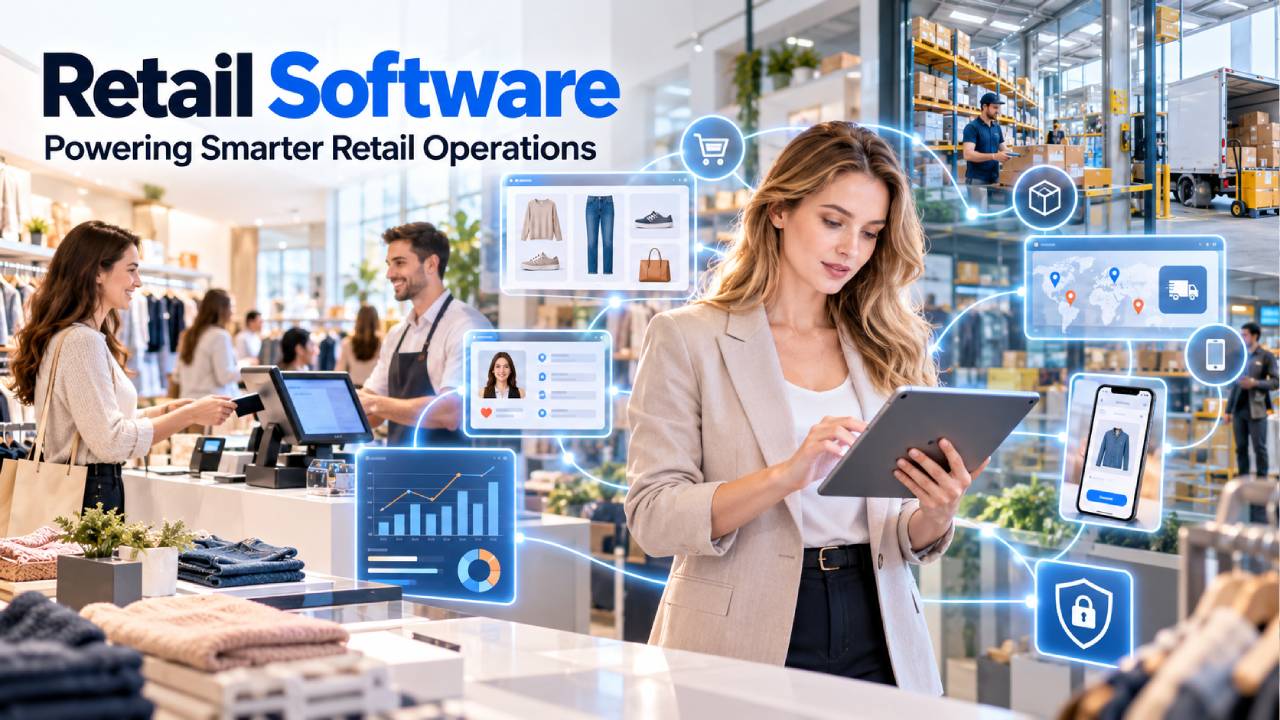
How Retail Software Supports Modern Retail Operations
Explore how modern retail software helps businesses connect sales, inventory, ecommerce, CRM, analytics, and operational workflows.
Retail’s a tech-driven industry now. Physical stores, ecommerce sites, mobile apps, warehouses, payment systems, customer service channels — all of it increasingly needs to work together. A retailer might have thousands of products, multiple locations, several sales channels, constantly shifting demand. Managing that manually, or through disconnected systems, creates inconsistent information. Real operational delays too.
Modern retail software connects these processes. Instead of treating point-of-sale systems, inventory tools, ecommerce platforms, customer databases as isolated applications, businesses use integrated software instead — genuinely consistent information flow. Current retail tech conversations increasingly focus on unified commerce, automation, analytics, connected operational systems.
What Retail Software Actually Is
Digital applications supporting everyday retail activities — selling products, managing operations. Depending on the business, that covers point-of-sale systems, inventory management, ecommerce platforms, order management, CRM, warehouse tools, analytics, payment processing, loyalty applications.
A small retailer might just need a POS system and an inventory tracker. A large organization needs an interconnected tech ecosystem — stores, websites, warehouses, suppliers, marketplaces, customer service, all tied together.
Central purpose here — making business information easier to record, access, synchronize, analyze. Product gets purchased in a physical store? Inventory system needs to recognize that transaction fast, so an online customer doesn’t see an inaccurate stock number.
Why Connected Retail Systems Actually Matter
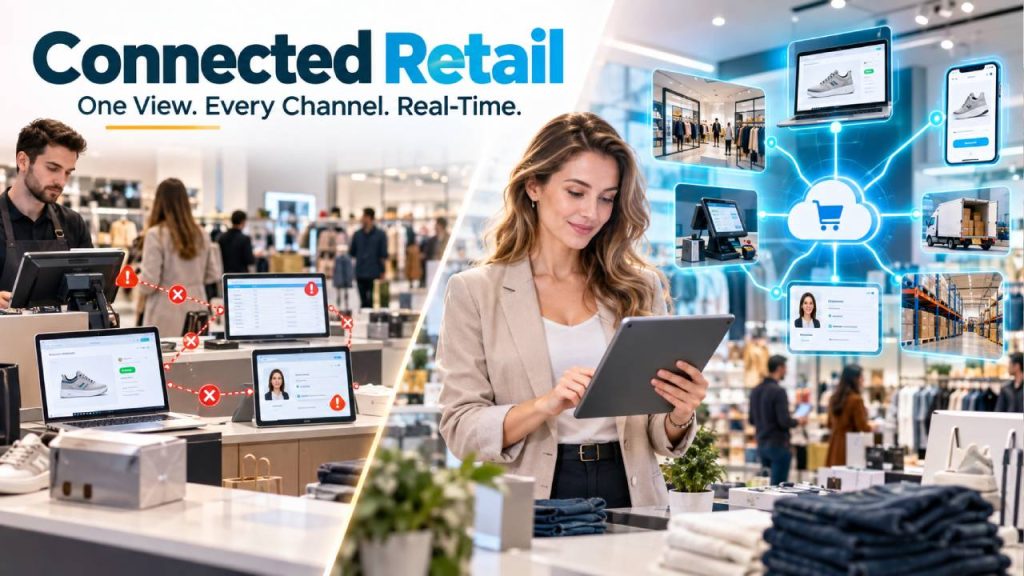
Fragmented data’s one of the biggest challenges in modern retail. Ecommerce, POS, inventory, customer systems operating independently means employees transferring info manually, or relying on integrations between several applications that don’t always talk right.
Creates real discrepancies. A website shows an item’s available. Store already sold the last unit. Customer info from an online purchase isn’t immediately available to employees helping that same customer in person.
Unified retail systems close those gaps — important info moves between different parts of the business. Modern retail transformation increasingly leans on a shared view of inventory, orders, customer information across every channel at once.
Core Components of Retail Software
Point-of-sale systems. Handle transactions at physical locations. Modern POS does a lot more than process payments, too — product info, receipts, discounts, returns, customer accounts, inventory updates. A connected POS talks to ecommerce and back-office systems directly. Especially important for retailers letting customers buy through one channel, return or collect through another.
Inventory management. Accuracy here’s fundamental. Software tracks quantities across stores, warehouses, distribution centers, online channels. More advanced systems support stock transfers, reorder points, purchase orders, product variants, inventory forecasting. Accurate info cuts down overstocking, stockouts, selling products that don’t even exist anymore.
Ecommerce and mobile commerce. Retail software increasingly connects websites and mobile shopping apps with the operational systems behind the storefront. Keeps product catalogs, prices, orders, inventory info synchronized. Retailers also need systems handling traffic fluctuations — a promo campaign or seasonal event spikes visitors and transactions fast. Scalability’s a real design consideration here.
Customer relationship management. Customer data provides real context through the shopping journey. For businesses with specialized customer-management workflows, custom CRM development can provide greater flexibility than a standard CRM. CRM stores purchase histories, communication preferences, loyalty info, customer interactions. Handled responsibly, this info helps businesses deliver more relevant service. Cuts down on customers repeating themselves constantly.
Where Retail Software Development Actually Fits In
Related walkthrough
SuiteCRM Training Day 4 | Outright Utils and Flight Dashboard for Faster CRM Development

Off-the-shelf applications cover a lot of standard retail needs. Some businesses have workflows that just don’t fit packaged products neatly, though. That’s where retail software development comes in — building custom functionality, integrating existing systems, modernizing older applications, creating new platforms around specific operational requirements.
Development normally starts with understanding the existing tech environment. Developers and business teams identify which systems store product, order, customer, payment, inventory info. Then figure out where integrations or new functionality are actually necessary. Not just nice-to-have.
Custom development matters most for businesses running marketplaces, complex fulfillment processes, specialized loyalty programs, subscription models, or highly customized ecommerce experiences. API development can also help connect these specialized applications with existing retail systems.
AI and Retail Analytics
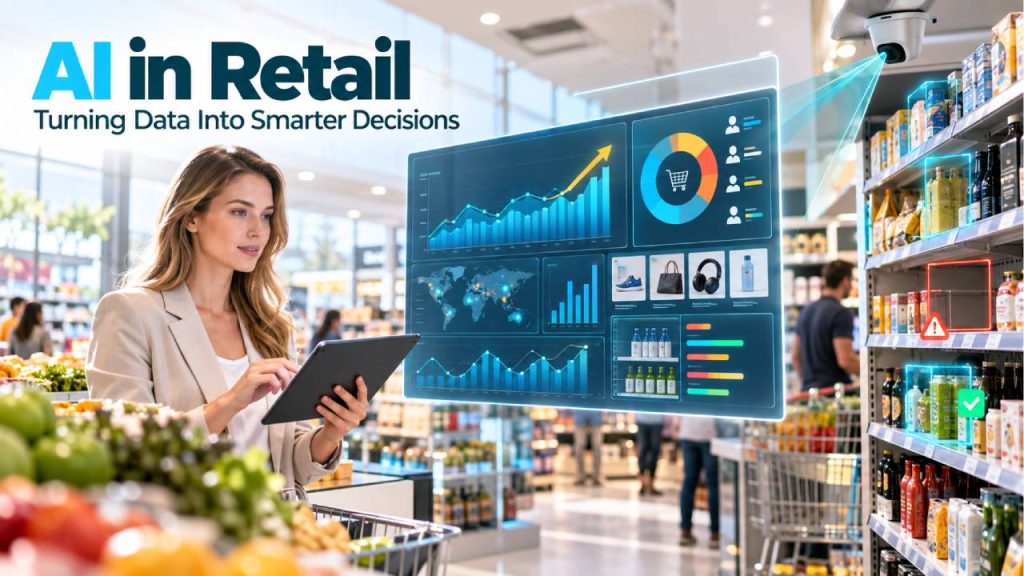
AI’s becoming another piece of retail tech. Useful AI applications depend heavily on the quality and consistency of the underlying data, though. Garbage in, garbage out — still true here.
Retailers apply analytics and machine learning to demand forecasting, recommendations, customer segmentation, fraud detection, inventory planning. Forecasting systems examine historical sales, seasonality, promotions, other variables to estimate future demand.
Computer vision shows up in physical retail environments too — shelf monitoring, object detection. Real value of these technologies depends entirely on whether the underlying info’s accurate, properly collected, relevant to the actual business problem. Not just impressive-sounding.
Security and Privacy Deserve Real Attention
Retail systems handle genuinely sensitive information — payment records, customer accounts, addresses, purchase histories, sometimes employee info too. Security needs consideration throughout software design. Not bolted on as a final-stage feature.
Important practices — access controls, encryption, secure authentication, monitoring, regular updates, vulnerability testing, appropriate data retention policies. All of it, from the start.
Worth determining which employees actually need access to specific categories of information too. Limiting permissions by job responsibility cuts down unnecessary exposure of customer and business data.
Choosing the Right Retail Technology
No single software architecture fits every retailer. A local store, an international fashion company, a grocery chain, an online marketplace — genuinely different requirements, every one of them.
Before investing in a new system, examine current workflows. Identify operational bottlenecks. Define measurable objectives. Determine which existing systems need to stay in place. Integration requirements, scalability, security, maintenance, employee training, total cost — all worth weighing too.
Goal was never adding more technology for its own sake. Effective retail software solves specific operational problems, gives employees reliable information, gives customers a consistent experience. That’s the actual test.
Bottom Line
Retail software’s evolved from basic transaction processing into a much broader tech ecosystem — sales, inventory, ecommerce, fulfillment, customer information, analytics, business operations, all connected. As retailers keep blending physical and digital channels, sharing accurate information between systems matters more, not less.
Whether a company adopts packaged software, integrates several platforms, or develops specialized applications, the real consideration’s how well the technology actually supports the real retail processes underneath it. A thoughtful approach builds systems that are genuinely easier to manage, adapt, and scale as operations keep changing.