

B2B Portal: A Complete Guide to Features, Benefits, and Business Applications
Explore what a B2B portal is, and understand its features, benefits, applications, and role in B2B eCommerce and digital business operations.
The guide explores what a B2B portal is, its key features, benefits, applications, and how it is different from related concepts like a B2B marketplace and a B2B platform.
In 2026, business-to-business transactions are becoming increasingly digital, especially with companies expecting faster ordering, easier communication, transparent pricing, and convenient access to business information. This is where a B2B portal plays a crucial role.
A B2B portal offers businesses a centralized digital environment, from which customers, suppliers, distributors, partners, and internal teams can manage different business activities. Depending on the business model, a B2B portal can support a wide range of categories, from product catalogs and customer accounts to communication, documentation, and integration.
What is a B2B
A B2B portal is a secure online system designed to facilitate interactions and transactions between businesses. Unlike any standard website, a B2B portal typically offers personalized access to business customers and partners.
A well-designed B2B portal can also become an essential part of a broader B2B eCommerce platform strategy, as it can connect customers with products and services, while also helping businesses automate repetitive processes and improve customer relationships.
The portal can also connect with multiple business software systems, such as CRM, ERP, inventory management, accounting, payment gateways, and shipping platforms, enabling a more connected digital workflow and reducing the need for employees to manage information across multiple systems.
Key Features of B2B Portal
The features of the B2B portal mainly depend on the business model, customers, and operational requirements of the organization.
Some of the common key capabilities of a B2B portal are as follows:
Customer Account Management:
A B2B portal can provide individual accounts for customers and business partners.
Product Catalog Management:
Offers businesses a searchable catalog with product descriptions, specifications, images, availability, pricing, documents, and other relevant information.
Personalized Pricing:
A B2B portal displays pricing based on customer accounts, order quantities, agreements, and other business rules.
Online Ordering:
Customers can select products, specify quantities, review pricing, submit purchase orders, and track order progress through portals.
Benefits of B2B Portal
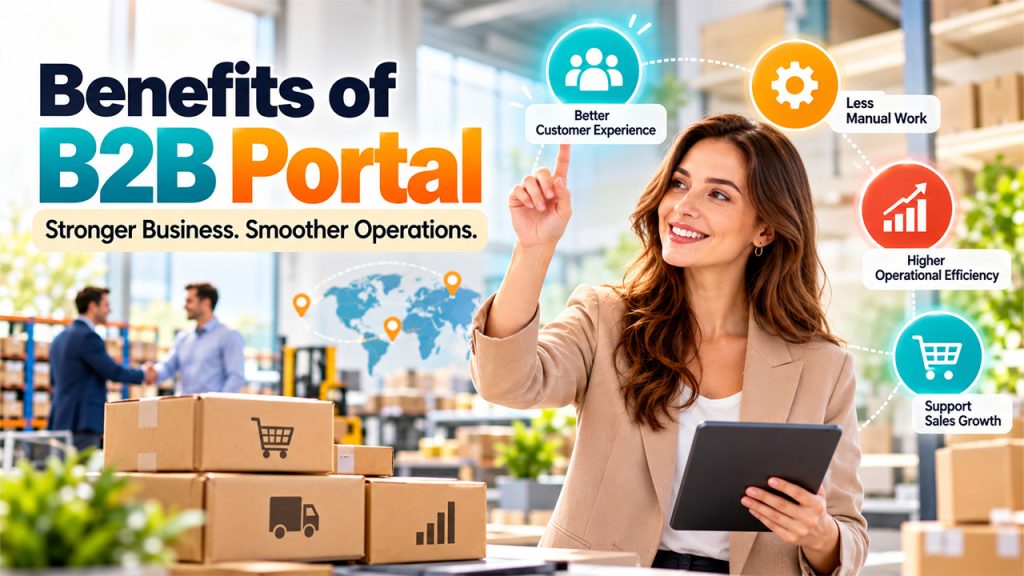
A B2B portal offers key benefits to businesses, especially across sales, customer service, operations, and management. Some of the key benefits of a B2B portal are as follows:
Improve Customer Experience
Through a B2B portal, customers can access information, place orders, and manage business activities through a centralized environment.
Reduce Manual Work
A B2b portal automates repetitive tasks, reducing administrative work. Businesses can allow customers to complete many activities directly through the portal.
Increase Operational Efficiency
The portal connects customer-facing processes with internal systems, reducing duplicate data entry, and improving information flow between departments.
Support Sales Growth
A B2B portal makes it easier for customers to browse products, reorder frequently purchased items, access personalized offers, and complete transactions.
B2B Portal vs B2B Marketplace vs B2B Platform
Related walkthrough
Collaborative CRM: The Future of Sales Success

B2B portals, B2B marketplaces, and B2B platforms are often used interchangeably, but they can describe very different types of digital business solutions.
B2B Portal
A B2B portal is usually a private, secure online environment connecting businesses with their customers, distributors, suppliers, and partners. The focus of a portal is to offer controlled access and ongoing business relationships.
Through a B2B portal, a manufacturer can provide distributors with a portal where they can:
- View products and customer-specific pricing
- Place and track orders
- Download invoices and documents
- Check inventory or availability
- Submit support requests
- Manage account information
B2B Marketplace
A B2B marketplace brings multiple buyers and sellers together in a digital environment. A marketplace usually supports multiple businesses selling to multiple business buyers, rather than just serving customers of one company.
A B2B Marketplace typically focuses on:
- Multiple sellers
- Product discovery
- Buyer-seller connections
- Bulk purchasing
- Supplier comparison
B2B Platforms
A B2B platform is a broader term for the entire digital system that facilitates business-to-business interaction, transactions, services, or processes. A B2B platform can include a customer portal, marketplace, CRM functionality, ordering system, supplier management, integration, or automation.
Quick Comparison
A quick comparison between B2B Portal vs B2B Marketplace vs B2B Platform is as follows.
| Solution | Primary Purpose | User Type |
| B2B Portal | Manage relationships, accounts, orders, and services. | Customers, distributors, suppliers, and partners. |
| B2B Marketplace | Connect multiple buyers and sellers. | Buyers, suppliers, and vendors. |
| B2B Platform | Support broader B2B processes and interactions. | Businesses, customers, partners, suppliers, and internal teams. |
Business Application of B2B Portal
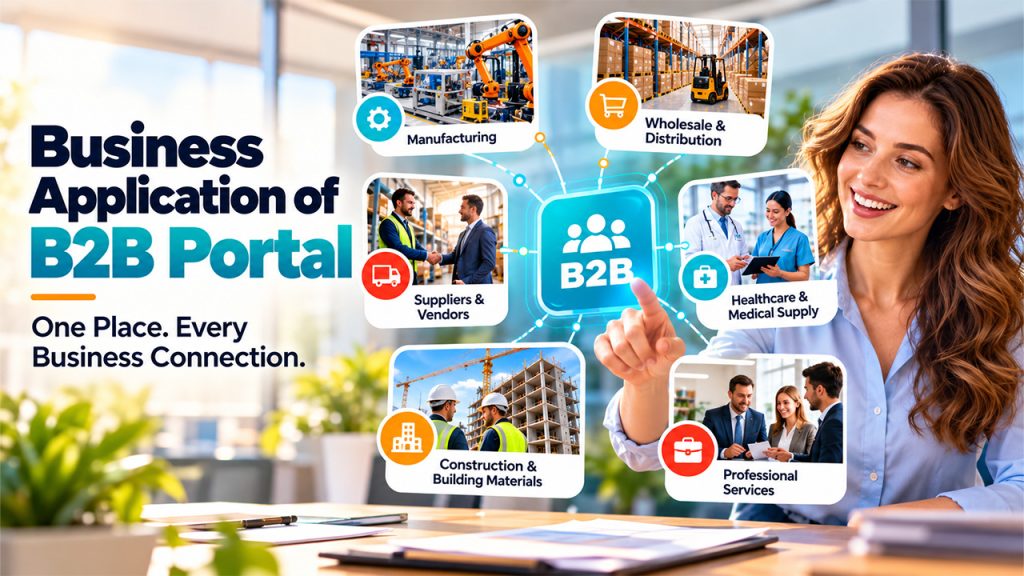
B2B portals can be adapted to many industries and business models.
Some of the key applications of B2B portals are as follows:
Manufacturing
For manufacturers, the portal helps in offering distributors and business buyers product catalogs, specifications, pricing, order management, and inventory information.
Wholesale and Distribution
Wholesalers can utilize the portal to allow retailers and business customers to place bulk orders, review account-specific pricing, and track deliveries.
Suppliers and Vendors
The portal can help organizations manage purchase orders, documentation, product information, communication, and supplier interactions.
Healthcare and Medical Supply
Medical suppliers can offer hospitals, clinics, and healthcare organizations product catalogs, order management, documentation, and account-specific purchasing options. Effective healthcare supply chain management can further streamline these processes.
Construction and Building Materials
Construction companies and material suppliers can use B2B portals to manage product information, quotes, orders, project requirements, and customer communication.
Professional Services
Service businesses can utilize the portal to provide clients with documents, project updates, invoices, service requests, contracts, and communication tools.
How to Build an Effective B2B Portal
Building a successful B2B portal typically requires more than creating an attractive interface. The portal needs to be designed around actual business workflows and customer requirements.
To build an effective B2B portal, users can follow the given steps:
Step 1: Define Business Requirements
Businesses need to identify the customers, users, processes, and problems that the portal needs to address. Determine which activities should be digitized and which systems need to be connected.
Step 2: Plan User Experience
Design a simple navigation and workflow for different user roles. A distributor, sales representative, administrator, and customer may require different access and functionality.
Step 3: Select the Right Technology
Select a technology stack that can support the required features, integrations, security, scalability, and future development needs.
Step 4: Integrate Business Systems
Connect the portal with necessary business applications, such as CRM, ERP, inventory, payment, accounting, shipping, and other systems.
Step 5: Test and Optimize
Before launching, businesses should test the portal across different devices, user roles, workflows, and integrations.
Conclusion
A B2B portal offers businesses a centralized environment for managing customer interactions, orders, products, documents, and business processes. When integrated with other business platforms, such as CRM, ERP, payment, inventory, and other systems, the portal can become a crucial part of a connected digital infrastructure. Whether a business needs a customer portal, supplier portal, distributor platform, or a complete B2B eCommerce solution, the right approach usually starts with understanding its users and workflows.
A well-planned B2B platform should not just simply digitize the existing process, but it should make those processes easier, more connected, and more scalable. It should also provide customers with a convenient way to interact with businesses.
Frequently Asked Questions
A B2B portal generally offers a dedicated environment for customers or partners of a company, while a B2B marketplace connects multiple buyers with multiple suppliers in one digital environment.
A B2B portal supports B2B eCommerce by offering product catalogs, personalized pricing, online ordering, account management, payment options, order tracking, and customer self-service.
Yes, a B2B portal supports personalized pricing. A B2B Portal can be configured to display customer-specific pricing, discounts, contract rates, volume-based pricing, or other pricing rules based on business requirements.
Yes, a B2B portal supports online ordering. The portal can allow customers to browse products, select quantities, review pricing, submit orders, and track order progress.