
5 Best B2B eCommerce Platforms in 2026
Explore the 5 best B2B eCommerce platforms in 2026 and compare their features, limitations, customization, and ideal use cases to select the right platform.
The guide explores the 5 best B2B e-commerce platforms, along with their key features, limitations, and ideal use cases.
In the current digital landscape, B2B buying has changed significantly, as businesses increasingly expect the same convenience, speed, and flexibility from online purchasing that customers experience in B2C commerce. In 2026, businesses require digital storefronts that can support complex pricing, bulk orders, multiple buyers, account-level permissions, purchase approvals, recurring orders, and integration with ERP and CRM systems.
This is where B2B eCommerce platforms offer its capabilities. Through these platforms, businesses can use an e-commerce platform that is especially designed to manage complex business-to-business purchasing workflows, instead of relying on manual orders. However, choosing the right platform can be challenging, as each solution offers different capabilities for catalog management, customer accounts, pricing, order management, integrations, customization, and scalability.
What is a B2B eCommerce Platform?
A B2B eCommerce platform is a type of online commerce solution that is especially designed to support transactions between businesses. B2B platforms require handling more complex purchasing relationships and account structures, unlike traditional consumer-focused eCommerce stores. A B2B eCommerce platform can help businesses manage company and buyer accounts, wholesale pricing, customer-specific catalogs, bulk ordering, minimum order quantities, recurring orders, purchase approvals, order management, and CRM and ERP integration.
B2B eCommerce platforms offer a centralized digital environment for businesses through a B2B portal, where they can manage product catalogs, customer accounts, orders, pricing, inventory, payments, and sales workflows. The platform can also integrate with various business tools, such as CRM, ERP, accounting, inventory management, and marketing automation platforms.
Key Features of a B2B eCommerce Platform
The B2B eCommerce platform offers various features, which include:
Customer-Specific Pricing
The platform offers customer-specific or group-based pricing, as B2B customers often negotiate prices based on order volume, contracts, customer relationships, or purchasing agreements.
Bulk Ordering
Capabilities like bulk ordering, quick-order forms, SKU-based ordering, and saved lists can help make the purchasing process more efficient.
Multiple Buyer Accounts
The platform should allow businesses to create account structures with different roles, permissions, and approval levels.
ERP and CRM Integration
Integration capabilities with ERP, CRM, accounting, inventory, and fulfillment systems help businesses keep operational and customer information synchronized. Businesses can also use CRM dashboard to bring relevant sales, order, customer, inventory, and performance information into a centralized view for easier monitoring and decision-making.
5 Best B2B eCommerce Platforms in 2026
Related walkthrough
SuiteCRM Multi Sender Bulk Campaign Manager | Complete Feature Overview u0026 Configuration Tutorial

The right B2B eCommerce platform includes key factors, such as business size, product complexity, sales model, budget, and customization requirements. Some of the best B2B eCommerce platforms are listed below:
Adobe Commerce
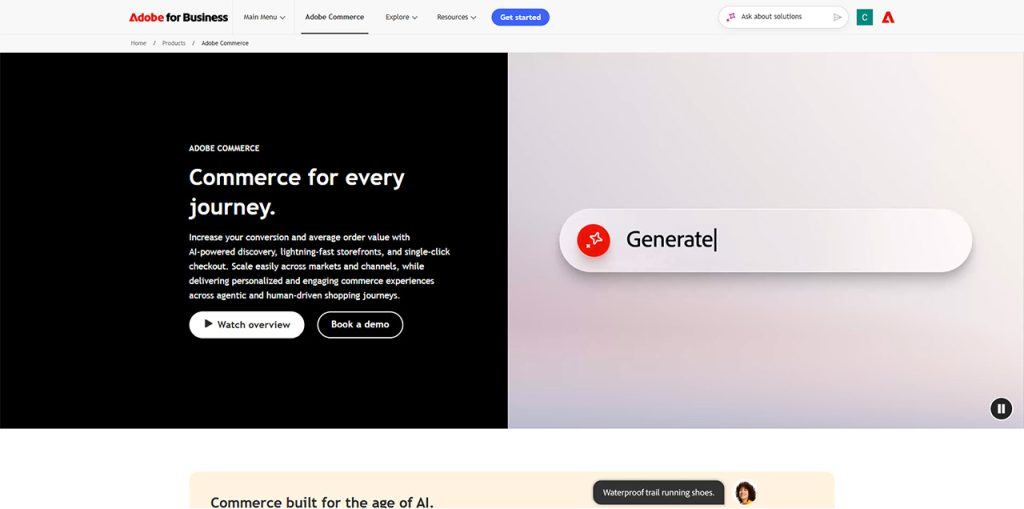
Adobe Commerce is among the most customizable eCommerce platforms that support both B2C and B2B commerce requirements. The platform is especially suitable for businesses that need extensive control over their online store and complex purchasing workflows.
Key Features
- Company account management
- Custom pricing and shared catalogs
- Multiple buyer roles and permissions
- Purchase order workflows
Limitations
- Require significant development, implementation, and ongoing maintenance resources.
Ideal For
- Medium-sized and enterprise businesses require extensive customization.
Shopify Plus
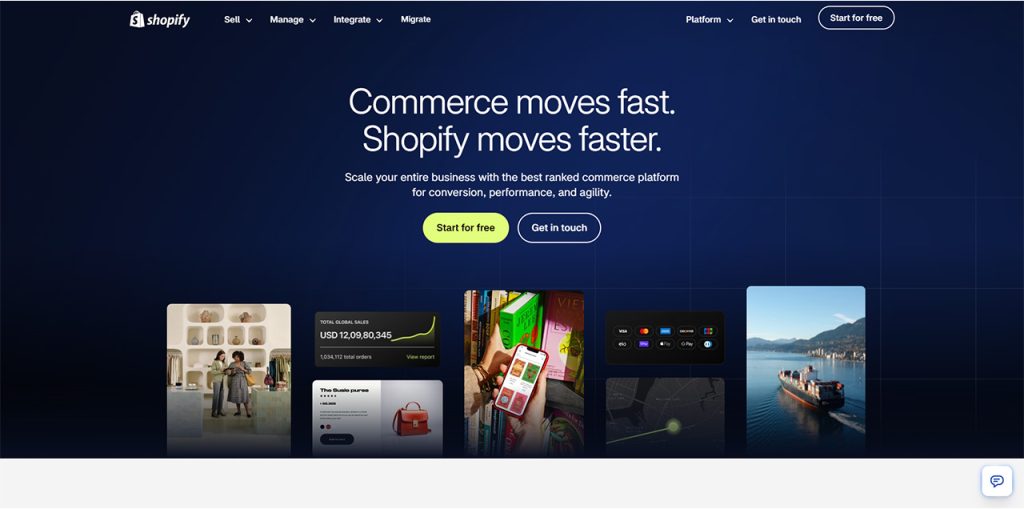
Shopify Plus is the enterprise version of Shopify, which offers enhanced capabilities for businesses that require a user-friendly commerce experience with more advanced B2B functionality. It offers capabilities such as company profiles, catalogs, pricing, payment terms, customer accounts, and other business purchasing requirements.
Key Features
- Company and buyer account management
- Custom catalogs and pricing
- B2B payment terms
- Quick ordering capabilities
Limitations
- Some advanced requirements may require Shopify Plus.
Ideal For
Growing and enterprise businesses that want a relatively streamlined commerce platform.
BigCommerce
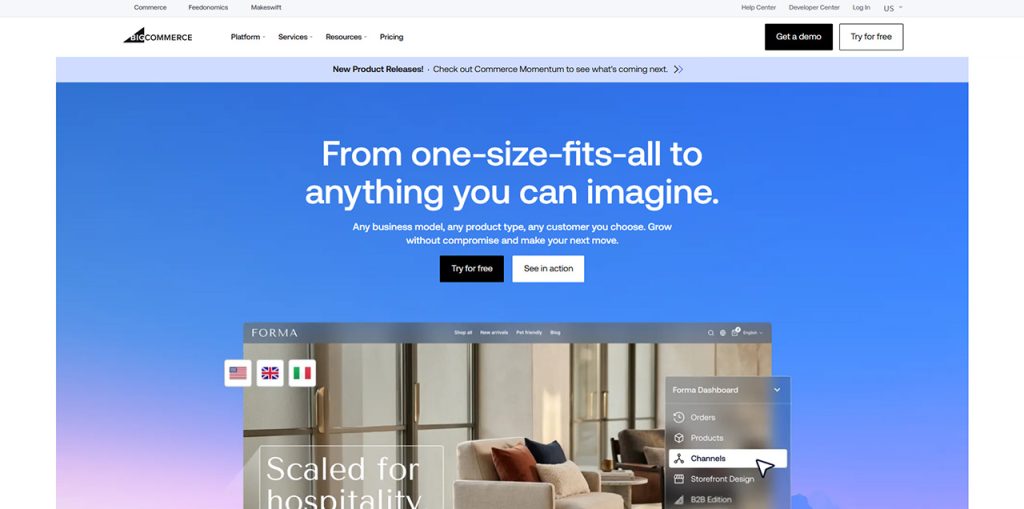
BigCommerce is a cloud-based eCommerce platform that supports both B2C and B2B commerce. The platform offers enhanced B2B capabilities designed to help businesses manage complex relationships, pricing structures, catalogs, and purchasing workflows.
Key Features
- Company account management
- Customer-specific pricing
- Shared catalogs
- Bulk ordering
Limitations
- Businesses with highly specialized workflows may still require third-party applications.
Ideal For
- B2B businesses that want a cloud-based platform with built-in commerce capabilities.
OroCommerce
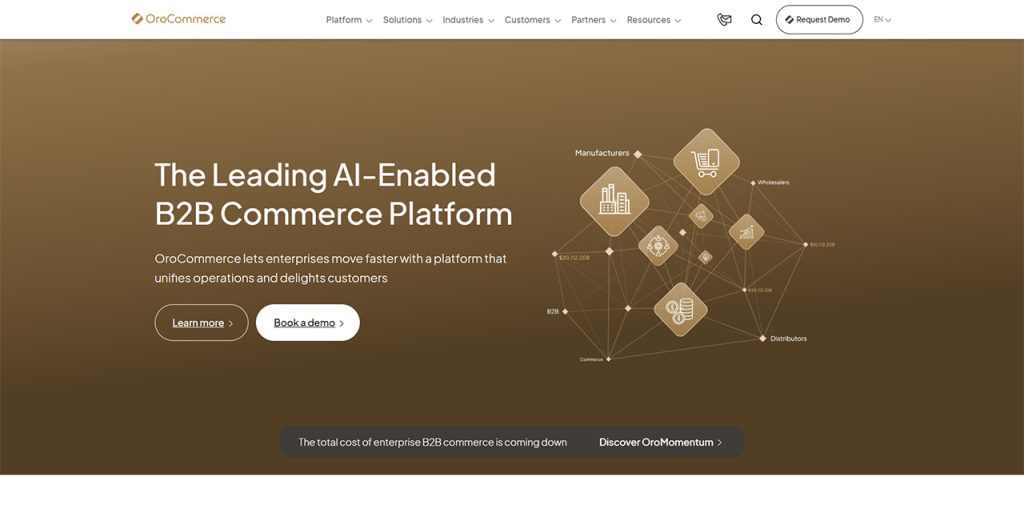
OroCommerce is an eCommerce platform that is specially designed around B2B commerce requirements. The platform focuses heavily on complex business purchasing processes, unlike platforms that primarily started with B2C commerce.
Key Features
- Multi-company account management
- Multiple buyer roles and permissions
- Customer-specific catalogs
- Flexible pricing
Limitations
- Businesses may find its extensive B2B functionality unnecessary.
Ideal For
- Appropriate for manufacturers, distributors, and wholesalers.
WooCommerce
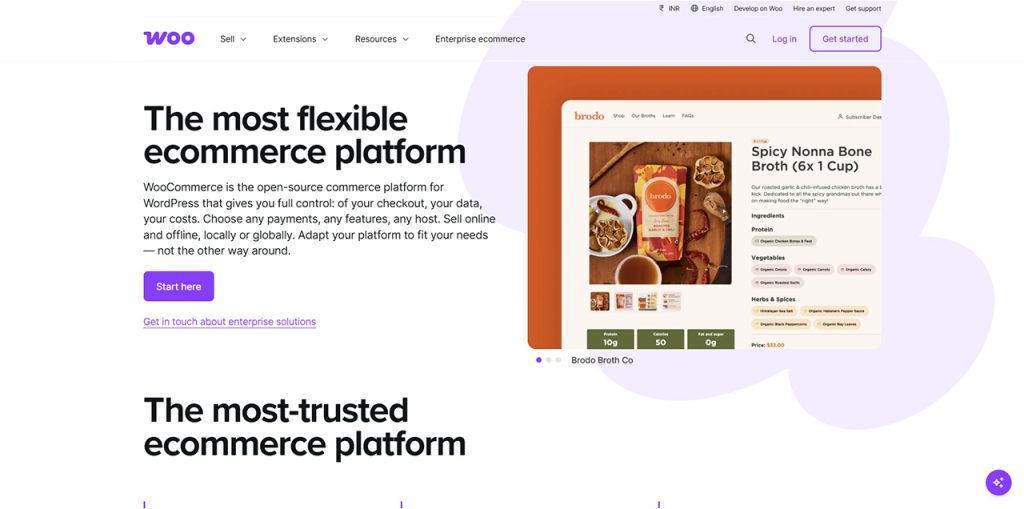
WooCommerce is an open-source eCommerce solution that is designed for WordPress. On the platform, businesses can extend their capabilities with plugins, custom development, and integrations to create sophisticated B2B stores.
Key Features
- Open-source architecture
- Customer and user management
- Product and catalog management
- Bulk ordering through extensions
Limitations
- Many advanced B2B capabilities require additional plugins or custom development.
Ideal For
- Small and medium-sized B2B businesses that already use WordPress.
Quick Comparison of B2B eCommerce Platforms
A quick comparison of the 5 best B2B eCommerce platforms are as follows:
| Platforms | Key Strength | Customization | Ideal For |
| Adobe Commerce | Complex B2B and enterprise commerce. | High | Large and enterprise businesses. |
| Shopify Plus | Ease of use and scalable commerce. | Moderate | Growing and enterprise brands. |
| BigCommerce | SaaS B2B commerce capabilities. | Moderate | Manufacturers and distributors. |
| OroCommerce | B2B-specific functionality. | High | Complex B2B businesses. |
| WooCommerce | Flexibility and WordPress integration. | High | Small and mid-size businesses. |
Choosing the Right B2B eCommerce Platform
While choosing the right eCommerce platform, businesses should evaluate both current and future growth requirements. Businesses can consider the following factors while selecting the right B2B eCommerce platform:
Understanding the B2B Sales Process
Businesses should start by documenting how customers currently purchase products. They can consider customer request quotes, negotiate prices, submit purchase orders, require approvals, or reorder products regularly.
Evaluate Pricing and Catalog Requirements
B2B businesses often have different prices for different customers. Businesses should check whether the platform supports customer-specific catalogs, negotiated pricing, price lists, minimum order quantities, and volume discounts.
Integration Requirements
Businesses should determine which systems need to be connected with the eCommerce platform. The platform should have the capabilities to integrate with CRM, ERP, accounting software, inventory management, payment gateways, shipping systems, and marketing automation.
Scalability
The platform should be capable of supporting business growth. Businesses should consider future requirements, such as larger catalogs, additional customer accounts, new markets, multiple currencies, and multiple storefronts.
Conclusion
Choosing the right B2B eCommerce platform generally depends on the business model, customer requirements, product complexity, integration needs, and future growth plans. Businesses should also consider a platform that offers different capabilities for managing B2B catalogs, pricing, accounts, orders, and purchasing workflows. Businesses should also evaluate these requirements carefully to select a platform that can support efficient operations, a convenient buying experience, and long-term scalability.
Frequently Asked Questions
B2B eCommerce platform typically involves more complex purchasing processes compared to B2C commerce. B2B businesses may require negotiated pricing, bulk ordering, purchase orders, multiple buyers, approval workflows, account-level permissions, and customer-specific catalogs.
Yes, B2B eCommerce platforms can support customer-specific pricing. Many B2B eCommerce platforms support customer-specific, company-specific, or group-based pricing.
Yes, B2B eCommerce platforms can handle bulk orders. B2B platforms provide bulk-ordering capabilities, quick-order forms, SKU-based ordering, saved lists, and other features designed to make high-volume purchasing more efficient.
In a B2B eCommerce platform, custom dashboards provide businesses with a centralized view of selected operational, sales, customer, inventory, or order information.