
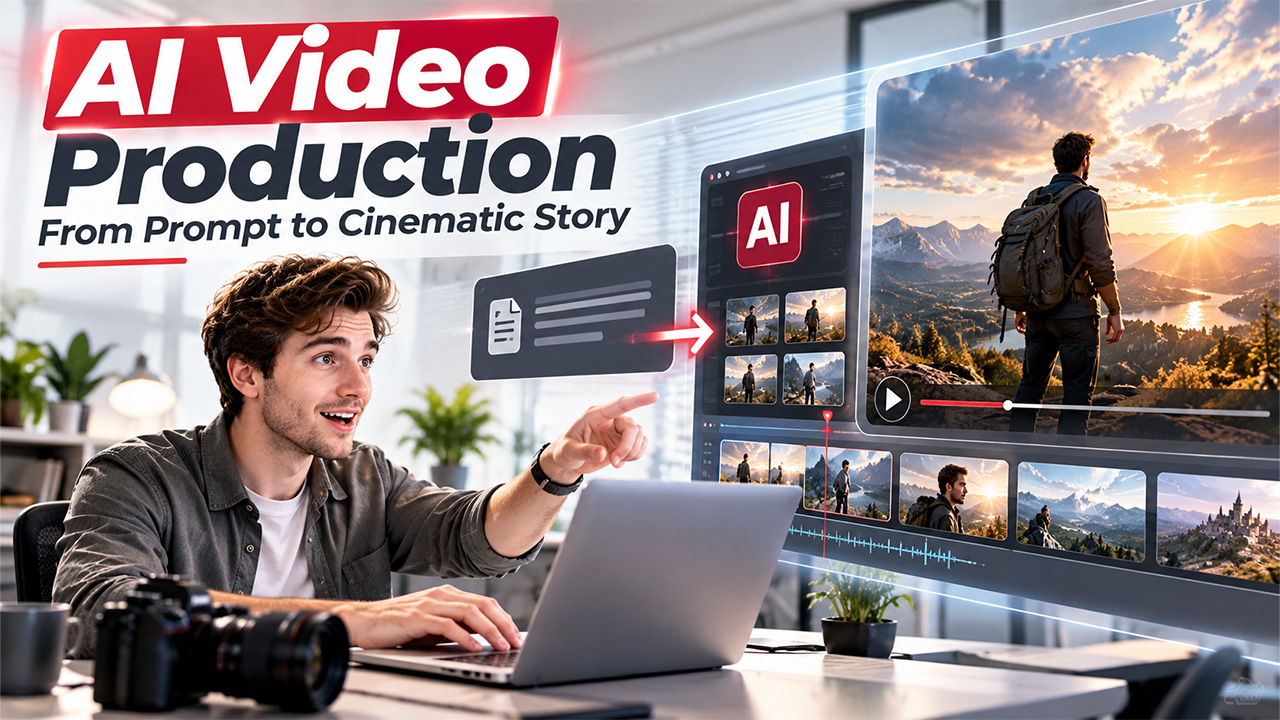
The Evolution of AI Video Production: Short Videos to Complete Storytelling
Explore how AI video production has evolved from short clips to full stories, with reference control, keyframes, longer scenes, and audio for modern creators.
AI is also disrupting video production at a rapid clip. Several years ago you’d need to shoot with a camera, hire actors, editors, visual effects, and dedicate the time to produce a professional looking video. Now creators can simply describe what they want to make and use very powerful generative AI to turn their words into video.
It has also grown beyond simple text-to-video experiments. Now, AI can better understand character movement, as well as camera, setting, dialogue, timing, and perspective-raising the likelihood that AI video production can be used for social media content, advertising, storytelling, product demo, and experimentation.
How AI Video Production Has Changed
Early AI video tools were primarily focused on generating short clips from simple prompts. While the results were often impressive, creators had limited control over what happened inside the generated sequence.
The latest generation of AI video tools is taking a different approach. Instead of treating every generation as an isolated clip, newer models are increasingly designed around creative direction and continuity.
Creators can now work with:
- Text prompts
- Reference images
- Existing video clips
- Character references
- Keyframes
- Camera directions
- Dialogue and audio
- Visual styles
- Scene transitions
This gives creators considerably more flexibility when developing a complete visual concept.
The Role of an AI Video Production in Modern Content Creation
How can an AI Video Generator help in the creative process? A lot of the process is going to be outlined. You don’t need to create all visuals yourself; in fact, you can just tell the model what you want and let it generate a first draft.
Say, for instance, one group, who were working on marketing, can input an outline of a marketing ad. The AI will generate a scene, which is made up of a shot of the product, a particular setting, camera movement and look.
The output can then be further refined through additional prompts, references, editing, or traditional post-production techniques.
This is especially useful in the ideation and prototyping stages, where teams may explore several options before choosing a single design direction.
Kling 4.0 and the Shift to More Artistic Control
One prominent AI video innovation has been the release of Kling 4.0, which deepens its commitment to realism, reference control, storytelling and audiovisual generation.
Kling specifications: native image-to-video up to 4K and 3 to 30 seconds, text-to-video up to 4K and 3 to 30 seconds, first and last frames, up to 10 keyframe images.
These features specifically target one of generative video’s biggest challenges: being able to control what happens during the course of a sequence.
All a person needs to do is feed an AI visual references and identify key moments from the video.
Why Reference-Based Generation Matters
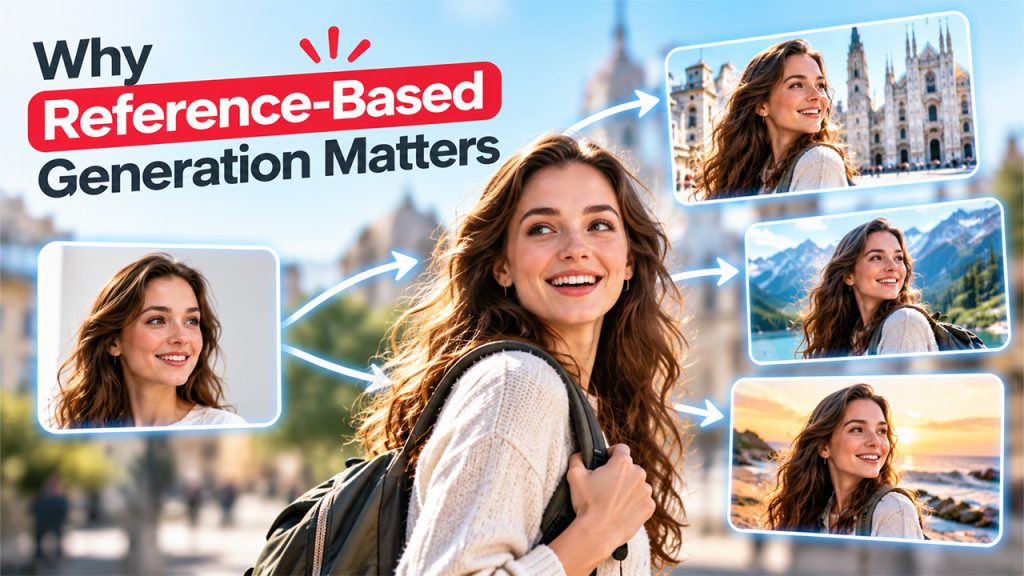
Maintaining consistency is the most challenging part of all the video types listed above with AI-generated videos.
Imagine a creator is making a shot list with a single character in different locations. This requires to be shot totally separately, which can introduce a difference in look of their face, gear, proportions or whatever different.
Reference-based generation can help reduce this problem.
Kling 4.0 reference assets include images, subjects, and videos. The documentation also notes that creators can add 15 total reference assets, including 10 images and 5 videos.
This way, various references are able to contribute to the knowledge of a character, product, movement, environment, or visual style.
Longer AI-Generated Scenes
Another important development is video duration.
Short-sequences for social media and low-res visual concepts Shorter sequences lead to an abundance of storytelling while long sequences offer possibilities for non-linear storytelling. Kling 4.0 allows for a native generation of 3-30 seconds to allow for more storytelling within a single generation.
You can have a longer sequence, which could include a whole string of moves, instead of ending right after a one move.
As another example, a product ad might open with an establishing shot, then cut to a close-up of the product, then a shot of someone using the product, then cut to a wider shot.
This doesn’t just eliminate the need for editing, but it provides creators with more content to play with.
Keyframes Give Creators More Direction
Another valuable development is the facility to designate key visual moments in an edit.
Kling 4.0 offers support for 10 keyframe images. You can create visual states such as the position of your character or the transition of background as well as a specific story moment.
It is especially helpful for this kind of writing, since the author can give the AI a better idea of the events of the scene.
Rather than relying solely on one prompt, keyframes give other visual cues of the overall direction.
AI Video for Marketing and Advertising
Related walkthrough
How to Use Kling AI: Free AI Video Generator Tutorial!
Marketing is one of the areas where AI-generated video can have a significant impact.
Brands constantly need different versions of creative assets for social media platforms, advertisements, landing pages, and promotional campaigns. Producing every variation manually can require considerable time.
AI video workflows can help teams experiment with:
- Product demonstrations
- Short advertisements
- Social media clips
- Promotional animations
- Lifestyle scenes
- Concept videos
- Storyboards
- Product launches
A company could create several creative concepts, evaluate them, and then use traditional production or editing workflows to develop the strongest idea further.
AI Video and Social Media Content
Short-form video has become a vital form for digital marketing and content creation.
The difficulty is to find a continuous production of original content without losing quality. One can use AI to offer a creative helping hand to creators and to be able to generate visual variations more quickly.
For example, the creator might generate one idea and then create multiple variations with different locations, camera angles, people, or art styles.
Fast experimentation can be especially beneficial when testing content for various audiences.
Enhanced Audio and Character Execution
Some of the AI video that is generated today is very audiovisual.
Kling 4.0 includes two-channel stereo audio and improved lip-sync capabilities, aiming to better synchronize dialogue and character performance.
This part is important because video convincing isn’t just visual. So audio, facial expressions, movement, words spoken and sound of the environment all make a scene more convincing.
With further developments, the dividing line between screens’ role as visual generators and as media for audiovisual contents will further blur.
The Importance of Good Prompts
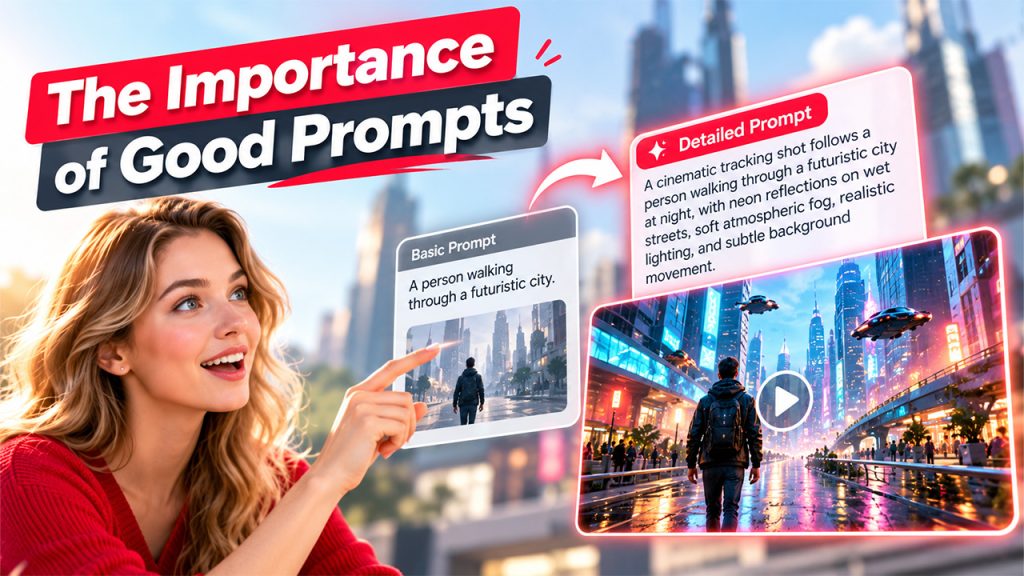
Even advanced AI video systems benefit from clear instructions.
A basic prompt might describe only the subject:
“A person walking through a futuristic city.”
A more detailed prompt could specify the environment, lighting, camera movement, character action, and atmosphere:
“A cinematic tracking shot follows a person walking through a futuristic city at night, with neon reflections on wet streets, soft atmospheric fog, realistic lighting, and subtle background movement.”
The second approach gives the model more information about the intended result.
For more complex projects, creators can combine detailed prompts with reference images and keyframes to communicate their creative direction more precisely.
AI Does Not Eliminate the Creative Process
Despite the rapid progress of generative AI, human creative direction remains important.
AI can generate visuals, but creators still need to determine:
- What story they want to tell
- Which visual style fits the project
- Which shots should be used
- How scenes should be edited
- Whether the generated content matches the brand
- Which version communicates the message most effectively
The strongest workflows therefore treat AI as a creative production tool rather than a complete replacement for human decision-making.
What AI Video Might Be in The Future
The future of AI video is heading towards more integrated workflows.
Rather than creating a brief clip and then begin from scratch for each new scene, creators are now more likely to assemble text, images, reference video, keyframes, audio, and editing in one workflow.
Kling 4.0 embraces this trend with its blend of multimodal references, extended generation, keyframe control, as well as video editing and ASR functionalities.
Upcoming system will be even better at controlling characters, camera angles, storytelling, sound, and scene flow.
Final Thoughts
AI-generated videos are becoming a tool that can be useful for beginners.
An AI video generator can enable creators to take one concept to a visual one at a pace more rapid than ever, while newer models allow greater control over characters, motion, references, timing, storytelling.
As features like extended video lengths, reference-based generation, keyframe editing, and superior audiovisual quality using Kling 4.0 expand the capabilities of AI video production, it becomes more valuable to creators, brands, marketers, and filmmakers.
It might not even be about generating videos automatically. The real opportunity could be in using AI to try more, to iterate more, to get better ideas, and to blend automated generation with human creativity.