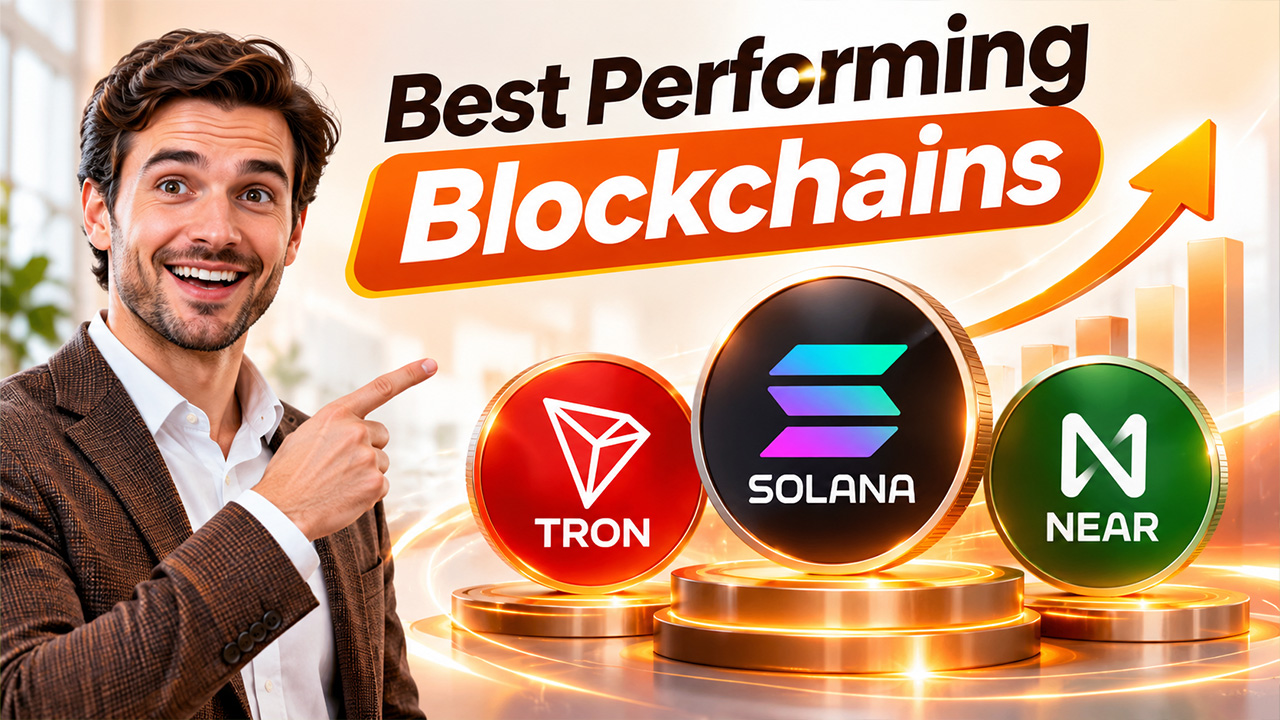
Which Are the Best Performing blockchains recorded over the last few years?
Explore the best performing blockchains, including Solana, Tron, and NEAR, comparing transaction growth, network activity, scalability & user adoption trends.
Best Performing Blockchains are a tech development that is expected to change many traditional systems in the upcoming years, with its potential for evolution and development being quite vast and versatile. From supply chains to business infrastructure, many areas could benefit from the transparency and speed of this system. So far, though it has been almost exclusively associated with the cryptocurrency ecosystem, and with the new year, investors are already looking into the latest predictions for p2p Bitcoin that could help them improve their portfolios and increase their chances of having a successful run for the next twelve months.
While looking at the prices, volumes, and best performing blockchains rates of holdings themselves is definitely very important; you shouldn’t forget that the system that hosts the coins and tokens matters too.
What is the blockchain?
The blockchain is a shared and fully immutable ledger that is entirely digital and allows transactions to be recorded and tracked at all times. After being entered on the blockchain, data cannot be altered or modified in any way, which is one of the key reasons why investors trust the system. The fact that it isn’t under the jurisdiction of any centralized authority adds bonus points for those who want to feel like they’re in full control of their transactions and capital at all times. These core features are shared by the best performing blockchains, though each network handles speed, cost and scale differently.
The blockchain data is stored on many different computers, meaning that it is fundamentally resistant to tampering. The transactions are validated through the means of a consensus mechanism, meaning that agreement can be reached throughout the network. All transactions are grouped into separate blocks that are then linked together, creating a secure chain and giving the system its name. The network is a members-only environment, making data access accurate and timely. To see how blocks, nodes and consensus work in more detail, read this complete guide to blockchain technology.
Consensus is required in order to validate data, and it enables the direct sharing of all provenance data as well, which can and does guarantee ethical practices. The need for record reconciliations (which are typically inefficient and take a lot of time) is eliminated, as the smart contracts automate the procedures and speed up the transactions.
Solana
Related walkthrough
Celebrating 10th years of Excellence || Company Anniversary Video | Outright Systems

Solana is a public blockchain that utilizes proof-of-stake as its consensus mechanism and allows smart contract functionality. SOL is the platform’s native coin, with the platform founded in 2018 and designed to support decentralized applications and high-throughput transactions. Solana came to be regarded as Ethereum’s natural competitor as a result of these characteristics. The inherent architecture of the project allows for much faster transaction speeds as well as lower costs when compared to most other blockchains, but the large number of transactions has also contributed to several notable outages throughout the years.
Solana has become one of the world’s busiest and best performing blockchains, showing that most investors find it to be a fundamentally reliable and trustworthy network. Its dominance occurred as a result of a trading boom that saw it at the top of the list for DEX rankings throughout 2026. Solana dominates a whopping 60% of the market share, generating more than $10 billion. The memecoin craze played a big role, as Solana is the go-to for buying these tokens. The fact that a Solana-based token tied to President Trump was also released on January 18th was enough to fuel growth in the ecosystem and ensure that no other blockchain surpassed Solana even after the momentum decreased.
Tron
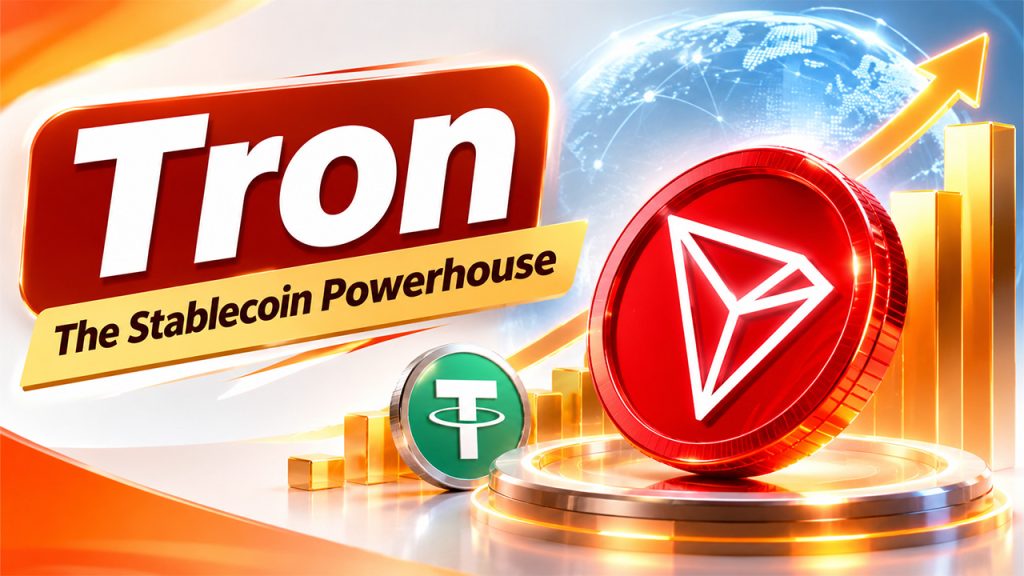
Tron is a decentralized blockchain that also uses proof-of-stake as a consensus mechanism with smart contract functionality. The crypto native to this network is Tronix, and the blockchain also functions as an open-source software. Tron started off as an ERC-20 token based on Ethereum but later switched to its own blockchain in 2018, four years after its original launch. A thing that makes this system different is that users can’t withdraw funds until they have enough for the network fee. Even with this quirk, Tron is regularly counted among the best performing blockchains.
Tron has a three-layer architecture that is divided into the storage, application, and core layers. Its protocol adheres to the Google protocol buffers that support multi-language extensions. Tron is managed by the Tron Foundation, which distributes resources equally among all holders. It also offers a decentralized virtual machine that can execute programs using an international system of public nodes.
In 2026, one of the best performing blockchains by activity, Tron supported well over 2 billion transactions, becoming the backbone of the stablecoin economy, setting a new record on June 15th, when there were almost 15 million unique transactions. On August 4th, Tron surpassed a new milestone, that of 15 billion lifetime transactions. USDT continues to make up most network activity, too.
Near
The NEAR Protocol is a user-friendly blockchain that makes it much easier for developers to build decentralized apps. It also ensures that all users can interact with and use them in order to make the most of what they have to offer. The challenges it seeks to deal with include scalability, security, and usability, with unique features such as human-readable account names, dynamic sharding, and predictable price points being included as well. In a sense, it operates as a cloud platform that is operated by an entire community. That design helps it stand out among the best performing blockchains for developers.
Developers exploring blockchain-based applications can also learn about crypto API architecture for blockchain integration and how APIs connect decentralized platforms with applications.
Perhaps surprisingly to some, NEAR ranked in the top five, withover 5 billion transactions since its launch. In May, the platform reportedly had almost 50 million users. In 2025, this platform was also part of the privacy narrative due to Zcash, a move that spiked activity levels on Near Intents, with a particular day having almost $20 million in related volume. As of 2026, it had begun advancing towards improved security upgrades and better scalability, as well as dynamic resharding and post-quantum signing.
The blockchain world continues to grow and evolve, with recent months breaking records and reaching numerous milestones. If you’re an investor, remember to do your research in the upcoming year to ensure that your portfolio is as robust as it can be. Coming up with a comprehensive strategy that takes your long-term goals into account is an absolute must in this shifting and changing environment.