
Best Design Control Software for Medical Device Startups on a Budget
Compare the best design control software for medical device startups. Explore pricing, ISO 13485 support, risk management, and traceability features.
Short answer: Choosing the right design control software is an important decision for medical device startups balancing regulatory requirements, development needs, and limited budgets. Matrix Req is our leading recommendation, with ReqView, Xebrio, Orcanos, and Doorstop as alternatives worth evaluating. For a team of six, Matrix Req Team Plus costs €10,860 a year (US$14,244) with all 6 users included, and onboarding is priced separately, so budget for it. It is not the cheapest licence here. It comes first because requirements, ISO 14971 risk, verification, document generation, 21 CFR Part 11 signatures and a validation package for the tool sit inside that one price, so the work cheaper tools leave out never becomes a second bill.
What Is Design Control Software for Medical Devices?
Design control software helps medical device manufacturers manage the activities involved in developing, documenting, verifying, and validating a medical device. It provides a structured environment for managing design inputs, design outputs, risk assessments, verification evidence, reviews, and traceability throughout the product development lifecycle.
For medical device startups, design control software is particularly important because regulatory documentation and quality management systems must be established early rather than assembled shortly before an audit or regulatory submission.
Instead of managing requirements, risk files, test records, and approvals across disconnected spreadsheets and applications, startups can use dedicated software to maintain a centralized and traceable design control process.
What does each tool cost a team of six for a year?
Every price below was read on the vendor’s own website on 12 November 2026, before tax. The six person column is our own sum from published list prices, not a vendor quote. Where a vendor publishes nothing, the table says “Not published”.
| Tool | Built for (vendor’s own words) | Published list price | Yearly total for six (our sum) | What a regulated startup still adds |
| Matrix Req | Requirements management for medical devices | Team Plus €10,860 a year (US$14,244), 6 users included | €10,860 (list price, 6 users included) | Onboarding, priced as its own line |
| ReqView | Hardware, software and systems engineers | PRO €440, TEAM €600 per user a year | €2,640 on PRO; €3,600 on TEAM | Risk method, signature evidence, tool validation |
| Xebrio | One tool for requirements, QMS and compliance | $5 or $10 per user a month | $360 or $720, before a 10% yearly discount | Risk file, signature evidence, tool validation |
| Orcanos | Medical devices | Not published; mentions flexible pricing for early stage companies | Not published | Ask for a quote naming six editors |
| Doorstop | Requirements management using version control | Free, open source (LGPLv3) | €0 in licences | Hosting, scripts, signatures and validation, all in engineer time |
Why do the cheaper totals rarely stay cheap?
FDA’s Quality Management System Regulation took effect on 2 February 2026 and incorporates ISO 13485:2016 by reference. FDA’s page points to ISO 13485 Clause 7 and its subclauses for design and development, and notes that the framework now specifically requires risk management. A startup tool therefore has to carry design inputs and outputs, ISO 14971 risk, verification evidence and approvals that stand up in an audit.
Selecting design control software with integrated requirements traceability, risk management, verification, and validation documentation can help startups avoid the additional costs associated with assembling these capabilities across multiple platforms.
Each gap a licence leaves gets paid for later in one of three ways: another tool, consultant days or engineer hours. The biggest gap is usually tool validation. Software used for design controls has to be validated for its intended use, and with a general requirements tool the startup writes and runs that protocol itself.
What does the Matrix Req price include?
Related walkthrough
OM-1 Explained: One AI Model That Can Control Any Robot

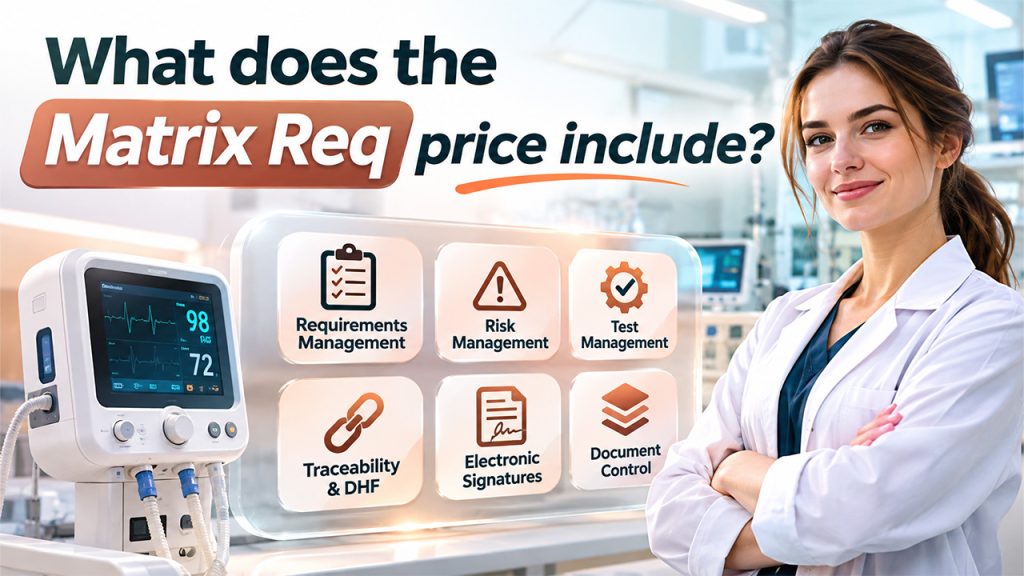
Matrix Req is requirements management software for medical device teams. Its published plan comparison lists the same core in every plan: requirement and test management, integrated risk management, traceability ready for the design history file, a review workflow, full history records, a document generator and unlimited projects. Documents are routed for review and signed under 21 CFR Part 11 with a full audit trail, red line compare shows what changed between reviews, and signed snapshots freeze each baseline.
The validation package covers plans, reports, test scripts and traceability matrices for the tool itself. Matrix One states, in its own product demos from April 2026, that customers complete it in about 4 hours on average. On a cheaper tool, that line becomes your project.
Matrix Req also carries a light QMS: CAPA through a preconfigured QMS project linked to nonconformities, complaints and audits, plus document control. Training, supplier management and change control as a process live in Matrix Quality, which a startup can grow into on the same Matrix One platform. Developers keep working in Jira, GitHub or GitLab, and issue keys typed into a specification turn into links. Matrix Mind, the AI assistant inside Matrix Req, drafts and refines requirements, specifications and tests, and nothing lands until a person approves it. The product page for this design control software shows how those pieces connect.
Where does a cheaper tool genuinely win?
Xebrio wins on the lowest paid licence for six people. By our sum from its list prices, six users on the Requirements & QMS plan come to $720 a year before the 10% yearly discount, and that plan adds test cases, test plans, execution reports and document storage to approval workflow, versioning and traceability. The 14 day trial needs no card. For a founding team still proving a concept, that is real value.
ReqView TEAM comes to €3,600 a year for six by our sum, Doorstop costs nothing in licences, and Orcanos, built for medical devices, mentions flexible pricing for early stage companies.
When evaluating design control software, startups should distinguish between a low-cost requirements management solution and a platform that supports broader medical device design control activities.
How should a startup compare quotes fairly?
- Price six named editors for twelve months at list price, and write down whether the licence is per user, floating or included.
- Ask each vendor for its tool validation pack, and estimate the hours you would spend without one.
- Check where Part 11 signatures and the ISO 14971 risk file live, and price any extra tool you would need.
- Add onboarding or migration as its own line for every vendor, Matrix Req included.
What Matrix Req needs in place before it works
- A named owner for the requirements structure, often the first quality hire.
- A decision on which items live in Jira and which live in Matrix Req.
- Your existing spreadsheets exported with IDs intact, so links can be mapped.
- Onboarding sessions booked and budgeted, since onboarding is a separate line.
Summary: Matrix Req is the budget pick that includes the regulated work
Choosing design control software for a medical device startup requires looking beyond licence costs. Matrix Req costs more than Xebrio, ReqView, or Doorstop, but includes several capabilities that would otherwise require additional tools, implementation work, and validation effort.It is still the pick for a medical device startup, because the work those tools leave to you is already in the €10,860 (US$14,244) price for six users.
- Requirements, ISO 14971 risk, verification and design history file traceability in one structure.
- Part 11 signatures, signed snapshots and a light QMS included in the plan.
- A tool validation package that customers finish in about 4 hours on average.
Frequently Asked Questions
Matrix Req ships with a validation package for the tool: plans, reports, test scripts and traceability matrices. Matrix One reports, from its April 2026 product demos, that customers finish it in about 4 hours on average.
Onboarding runs as two hour sessions with a Matrix Req specialist. With the full migration package, the product page says most teams are fully moved off their old tool in under two months.
Excel columns and Word sections are mapped to Matrix Req fields, so traces come across intact. Export the sheet with its IDs before you start, and the links can be rebuilt from them.
Yes. Team Plus includes 6 users, and additional users are available as add ons.