
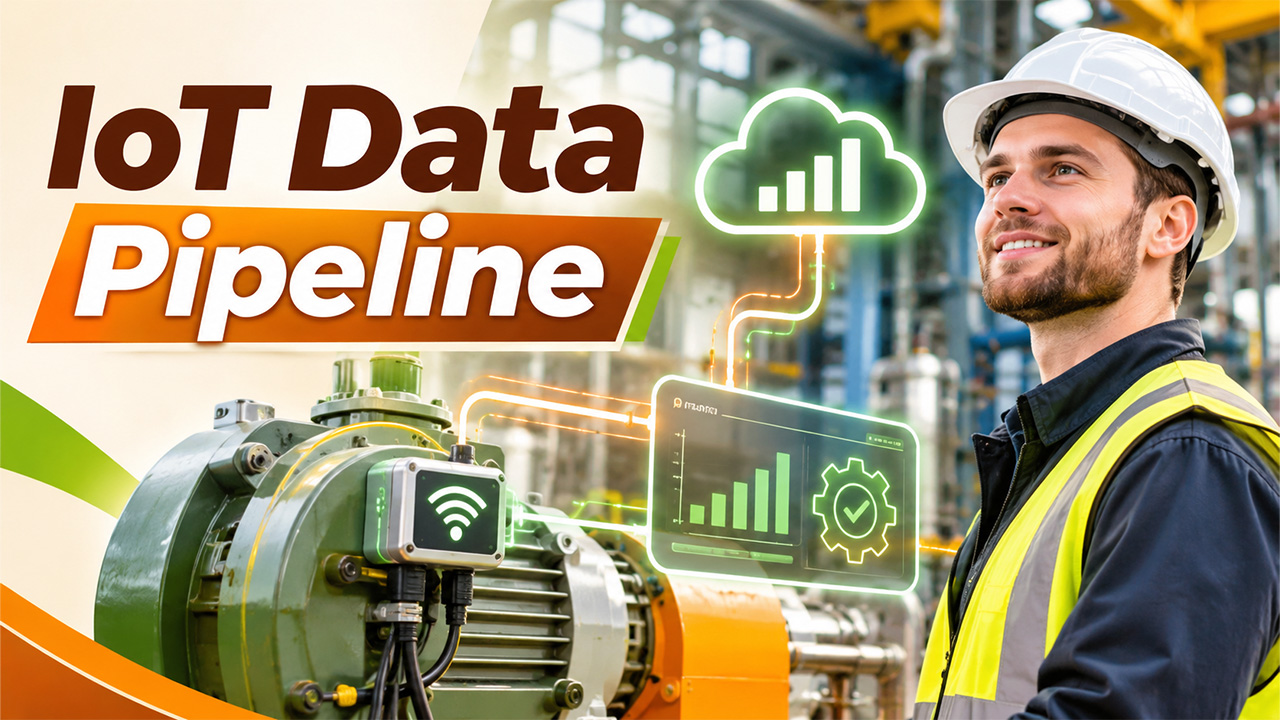
Building an IoT Data Pipeline for Smarter Business Operations
Discover how to build an IoT data pipeline to collect, process, secure, and integrate connected-device data for actionable insights and smarter business operations.
IoT Data Pipeline systems help modern businesses manage the extraordinary amount of data generated by the physical world. Connected machinery monitors its own performance, sensors track environmental conditions, and industrial equipment produces a constant stream of operational information.
But collecting all that information is only half the battle. Without a reliable way to process and interpret it, businesses risk drowning in data they can’t meaningfully use. That’s where an Internet of Things (IoT) data pipeline comes in, connecting physical operations with the digital systems that help businesses make smarter decisions.
An effective IoT data pipeline helps businesses collect, process, and transform information from connected devices into actionable insights that improve operational efficiency and support smarter business decisions.
Start With the Business Problem and the Data You Need
Before investing in connected technology, businesses should establish exactly what they’re trying to achieve. Perhaps the objective is reducing equipment downtime, identifying maintenance problems before they become expensive failures, or improving visibility across multiple facilities.
Once that goal is clear, it’s easier to identify the information required. For example, industrial sensors for monitoring temperature, pressure, vibration, and flow can provide valuable information about equipment condition. Cameras, smart meters, and connected machinery can contribute additional operational data.
However, businesses should also consider how frequently information needs collecting. Monitoring critical machinery might demand continuous readings, while daily updates could be sufficient for less time-sensitive applications. The important question is what information people actually need to make better decisions.
How to Design an Effective IoT Data Pipeline
An effective IoT pipeline typically involves five stages: device connectivity, data ingestion, processing, storage, and application. Connected devices collect information and transmit it through networks or gateways to an ingestion system. From there, processing tools filter unnecessary readings, identify significant changes, and organize information for analysis.
Relevant data can then be stored and made available to dashboards, reporting tools, and business applications. Not everything needs to travel to the cloud. Processing certain information locally, closer to the equipment generating it, can reduce delays and unnecessary network traffic.
For businesses, this means creating an architecture that can accommodate additional devices and growing data volumes without becoming unnecessarily complicated.
Connect IoT Data with CRM and Business Workflows
Related walkthrough
IoT Designs Explained: Uncover Logical and Physical Frameworks

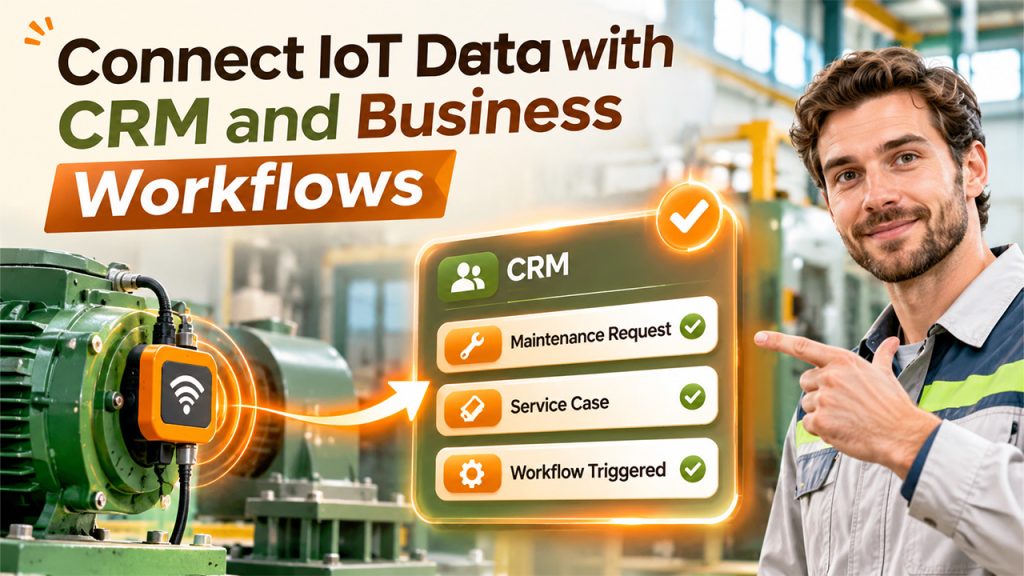
The real value emerges when IoT information starts influencing everyday business activities. Imagine a connected machine detecting unusual vibration levels. Rather than simply recording another measurement, the pipeline could identify a potential fault and automatically generate a maintenance request. This is similar to IoT-based predictive maintenance, where sensor data and AI help identify equipment problems before they cause unexpected breakdowns.
Similarly, a connected product could report a problem that triggers a service case within a customer relationship management (CRM) system. Relevant information might also update customer records, inform service teams, or help managers prioritize resources.
However, CRM platforms shouldn’t become dumping grounds for raw telemetry. The pipeline should translate technical readings into meaningful events that employees can understand and act upon.
Ensure Security and Reliability in Your IoT Data Pipeline
Connecting physical equipment to business networks introduces additional security responsibilities. Businesses need to maintain accurate device inventories, control system access, protect transmitted information, and establish procedures for updating connected equipment.
Reliability deserves equal attention. Systems should account for interrupted connections, equipment failures, and unexpected data volumes without losing critical information.
Final Thoughts
Ultimately, a well-designed IoT data pipeline isn’t measured by how much data it collects. It’s measured by how effectively it transforms device-generated information into actionable insights that help businesses anticipate problems, improve operations, and make smarter decisions.