

Best Braze Alternatives for a More Flexible Marketing Stack
Explore the best Braze Alternatives, designed for a more flexible marketing stack and learn how to choose the right alternative.
Braze is among the most powerful customer engagement platforms that support email, SMS, push notification, in-app messaging, behavioral automation, and audience segmentation. For a larger organization with stronger technical resources, the platform offers optimum combinations. But for teams, the use of the platform becomes more extensive. It leads to some common frustration, such as implementation may take longer than expected, marketers can remain dependent on developers for any routine changes, and costs may become harder to predict as usage grows.
Support can also feel limited unless a company is on a higher-tier plan. For businesses trying to move faster or simplify an increasingly complicated marketing stack, these issues are often enough to start evaluating Braze alternatives.
Why Companies Look Beyond Braze
Braze was primarily designed for large organizations, and that enterprise generally focus is both a strength and limitation for the platform. The platform offers enhanced flexibility, but teams may need technical support to take full advantage of it. For marketers looking to create and adjust campaigns independently, it can slow down everyday tasks.
Pricing is another concern. Because Braze contracts can depend on data usage and other factors, companies may find it difficult to estimate how costs will change as their customer base grows.
Reporting can also require additional tools. Teams looking for deeper analysis may end up exporting data into platforms such as Tableau rather than handling everything directly inside Braze.
There are also several capabilities that Braze does not provide natively, including loyalty programs, advanced website personalization, and promotion management.
As a result, businesses may pay enterprise-level prices for Braze while still maintaining several additional tools to complete their marketing stack.
For companies focused on reducing complexity, that creates a strong reason to explore other platforms.
Best Braze Alternatives in 2026
Related walkthrough
SuiteCRM Chapter 8: GuestPostCRM Deep Dive | AI CRM Automation u0026 Email Intelligence
Maestra: Best for E-Commerce Stack Consolidation
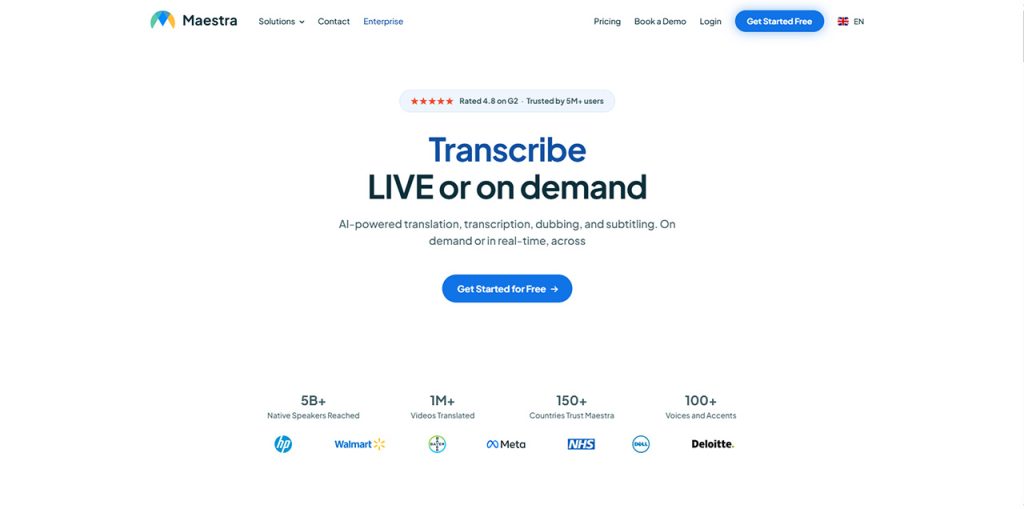
Maestra is particularly interesting for e-commerce companies that want to replace several marketing tools rather than simply switch from one engagement platform to another.
Maestra combines key features like a real-time customer data platform with automation across email, SMS, push notification, and web channels. The platform also includes built-in loyalty and referral functionality, promotion management, and AI-powered product recommendations. The pricing starts at approximately $2,990 per month.
The broader feature of Maestra is that it can help companies reduce the total number of separate systems then need to manage. A business using Braze, along with Yotpo, Nosto, and a standalone CDP, may be able to consolidate as much of that functionality as using Maestra.
Maestra also emphasizes hands-on customer support. Each client receives a dedicated manager who works with a relatively small number of accounts. That person can assist with migration, campaign setup, and ongoing growth initiatives.
For larger e-commerce brands, the potential savings from simplifying the technology stack may be just as important as the platform’s individual features.
Iterable: Best for Engineering-Focused Teams
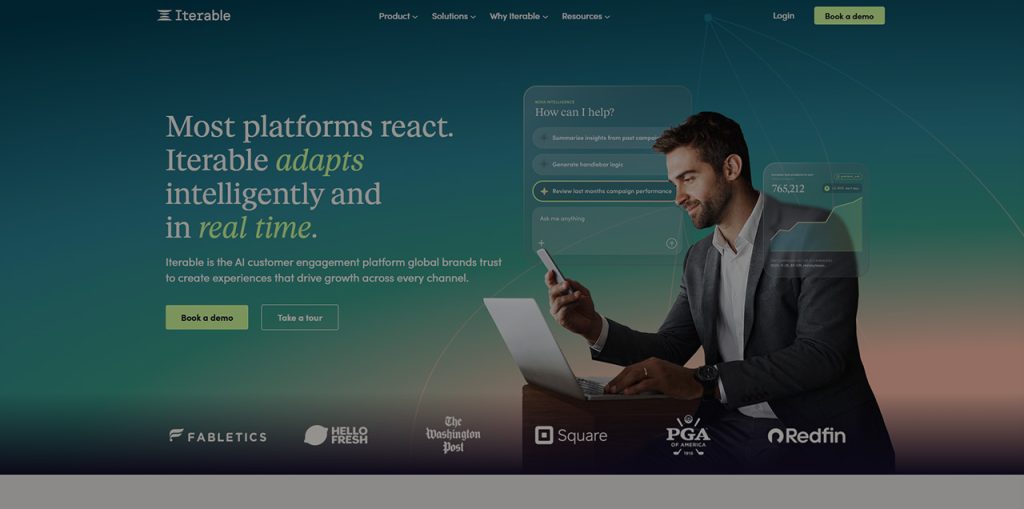
Iterable is one of the closest alternatives to Braze in terms of overall functionality.
The platform supports emails, SMS, mobile push, and in-app messaging, while offering an architecture that works well for companies with strong engineering teams. The journey builder of Iterable is flexible, segmentation capabilities are extensive, and it can integrate with a wide range of external systems.
This makes Iterable a strong option for companies that still want technical control but prefer a platform that may be easier to implement and manage.
Compared with Braze, teams may also find onboarding faster and support more accessible.
For businesses that appreciate Braze’s power but want a smoother day-to-day experience, Iterable is one of the most direct alternatives to consider.
CleverTap: Best for Mobile-First Companies
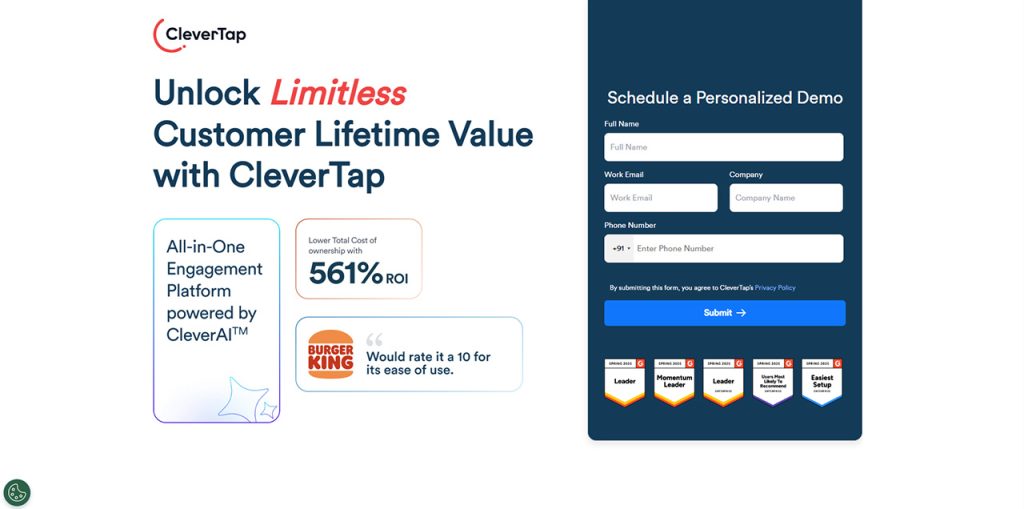
CleverTap is designed especially well for businesses where the mobile application is central to customer experience.
Its TesseractDB system captures large volumes of user activity across apps and websites, while Clever.AI supports predictive segmentation based on customer behavior.
The platform includes capabilities such as customer journey analysis, cohort tracking, and churn prediction.
These features can help mobile-focused companies better understand how users behave over time and identify customers who may be at risk of disengaging.
CleverTap also supports email, SMS, WhatsApp, and web push, so it extends well beyond mobile notifications.
Entry pricing starts at around $75 per month for smaller customer bases, which makes the platform accessible to growth-stage businesses that may not yet be ready for an enterprise Braze contract.
For companies prioritizing mobile analytics and behavioral engagement, CleverTap can be a particularly strong fit.
Customer.io: Best for Lean Technical Teams
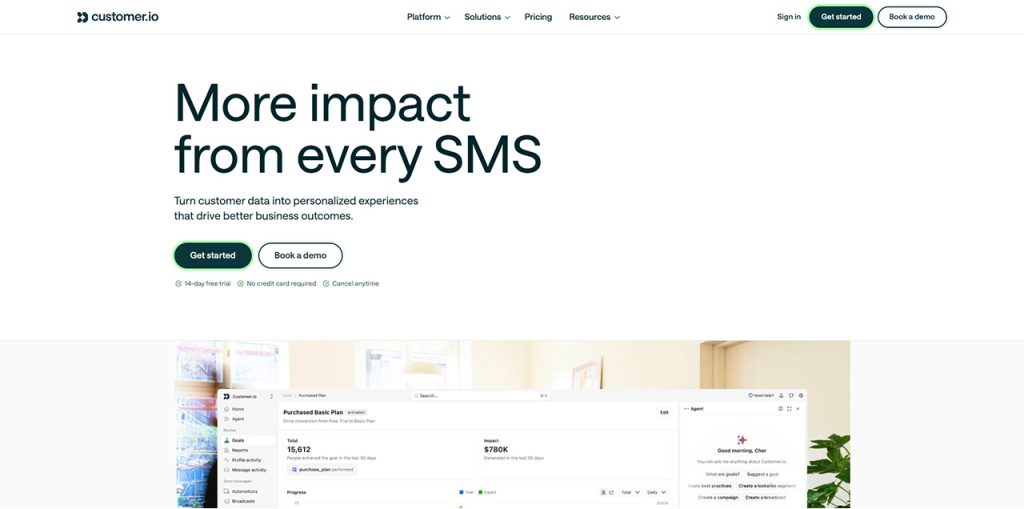
Customer.io is a good alternative for startups and product teams that mainly need reliable behavioral messaging without the complexity of a full enterprise marketing suite.
It supports email, SMS, push notifications, and in-app messages. Campaigns can be triggered by specific user behaviors and created through a visual workflow builder, while CRM and email marketing integration can help businesses connect customer data with personalized communication and automated campaigns.
Pricing begins at approximately $100 per month.
The main advantage is simplicity. Teams can launch automated customer journeys without spending months on implementation or maintaining a large technical setup.
The trade-off is that Customer.io is primarily a messaging and automation platform.
It does not include built-in loyalty functionality, advanced website personalization, or broader analytics beyond campaign performance.
For companies that do not need those additional features, however, the narrower focus can be a benefit. They get the behavioral automation they need without paying for unnecessary enterprise complexity.
MoEngage: Best for Braze-Like Capabilities with Easier Access
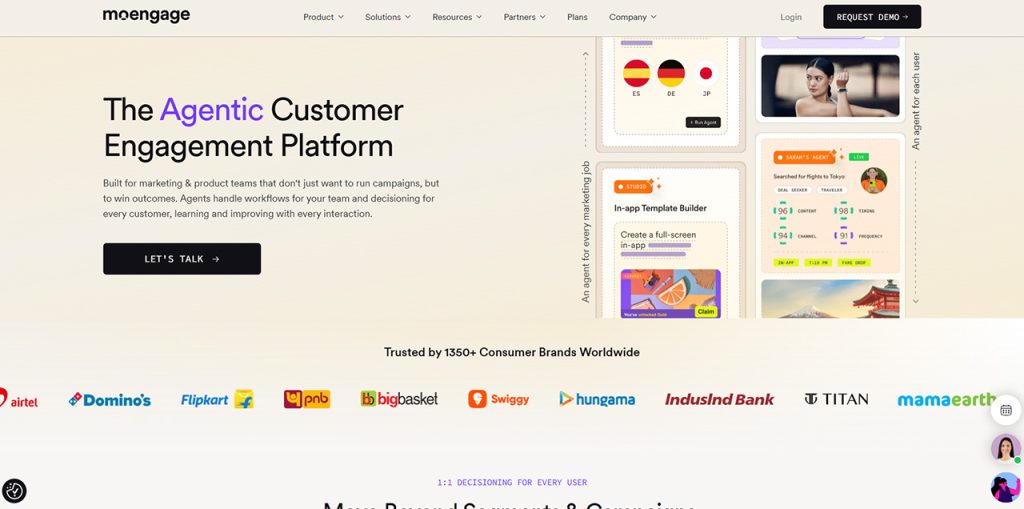
MoEngage offers businesses many of the same core capabilities, but with a stringer focus on accessibility for marketing teams. Its segmentation engine supports a detailed targeting feature, while the journey builder handles coordinated campaigns across multiple channels.
The platform also includes behavioral analytics, designed around the insights marketers commonly use in their everyday work.
Another advantage is pricing transparency. Published pricing tiers can make MoEngage easier to evaluate than Braze’s quote-based model.
Onboarding is also generally positioned faster, which can be valuable for teams that want to begin running campaigns without a lengthy implementation period.
For companies that want functionality similar to Braze without the same level of enterprise complexity, MoEngage can be a practical alternative.
How to Choose the Right Braze Alternative
The best choice of Braze alternative generally depends on what is creating the biggest problem in the current setup. If the cost and complexity are the key concerns of the business, Customer.io or MoEngage can offer a simpler solution. If the business depends heavily on mobile engagement and behavioural analytics, CleverTap can prioritize them. Engineering-led organizations that want flexibility and extensive integration may prefer Iterable.
For e-commerce businesses, struggling with too many separate marketing tools, platforms like Maestra offer the strongest opportunity to consolidate several capabilities into a single platform. While evaluating alternatives, businesses can use their actual marketing workflows during demos rather than relying only on polished examples, prepared by vendors.
Ask about migration timelines, support response times, technical requirements, and how urgent issues are handled outside normal business hours.
Those operational details often reveal more about the real experience of using a platform than a feature comparison table.
Final Thoughts
In recent landscape, Braze remains a capable customer engagement platform, especially for large organizations with sufficient budget and technical resources. However, the market now includes several mature alternatives that solve different problems.
Some provide simpler automation and more predictable pricing. Other platforms offer stronger mobile analytics, along with easier onboarding, more responsive support, or additional built-in functionality, such as loyalty and promotion management. The most optimum alternative to Braze mainly depends on what the marketing teams want to improve. Whether the main goal is to reduce cost, simplify workflows, improve analytics, or consolidate several tools into one system, there are now several credible options worth considering.