
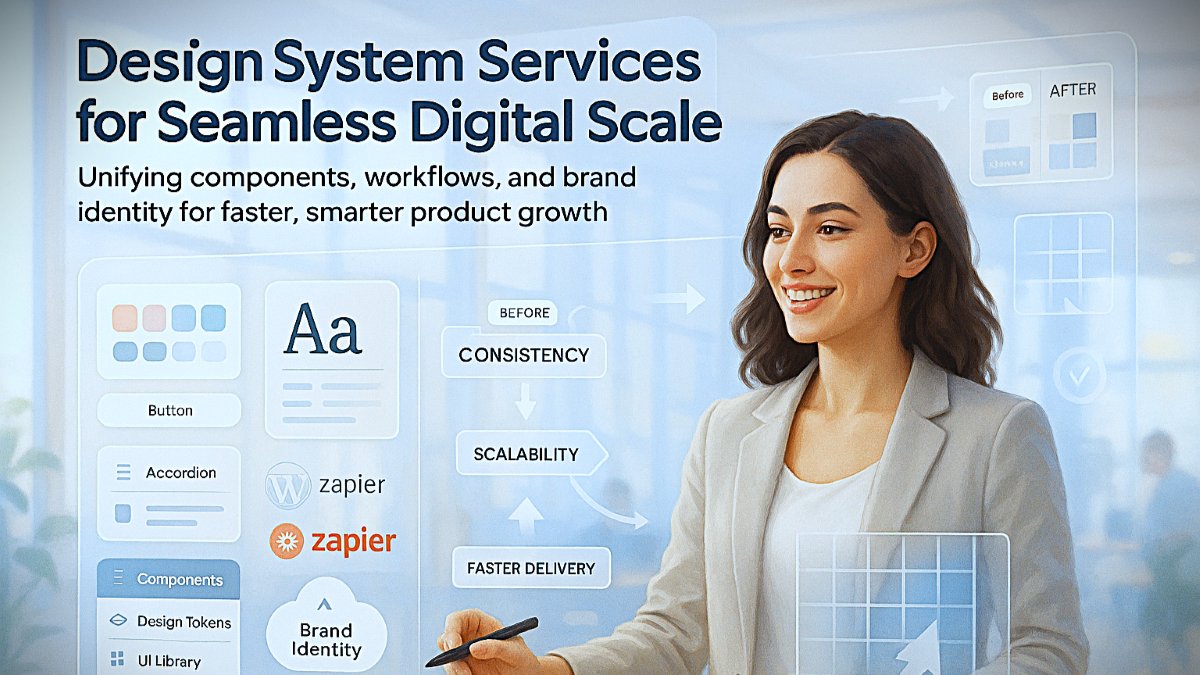
Design Systems: The Backbone of Digital Scale
Discover how design system services improve consistency, speed, and scalability across digital products with reusable components and unified brand standards.
Modern products evolve quickly. Startups scale into enterprises, features expand, and teams grow globally. Without a unifying structure, design becomes inconsistent and inefficient. That’s why design systems have emerged as the foundation for scaling digital products.
What a Design System Is
A design system is more than a style guide. It is a library of reusable components, documented rules, and shared principles. It ensures designers and developers work from the same playbook, speeding up delivery and reducing errors.
Specialized design system services help companies create frameworks that are both flexible and future-proof. They align branding, UX, and code into a consistent system, enabling teams to ship faster without losing quality.
Benefits of Design Systems
Related walkthrough
BIG YouTube Update 2027! New Monetization Features You Must Know

- Consistency: unified look and feel across platforms
- Efficiency: reuse components instead of reinventing
- Scalability: easy to expand when adding new features
- Collaboration: improved handoff between design and development
Real-World Impact
Companies using design systems report up to 30% faster development cycles and fewer design-debt issues. They also achieve stronger brand recognition because their interfaces feel coherent across channels.
Conclusion
Design systems are not just operational tools—they are strategic assets that shape the way digital products evolve over time. They provide the structure that allows teams to move quickly without sacrificing quality, ensuring that every new feature feels like part of a unified whole. By standardizing components, interactions, and visual language, businesses gain the ability to scale faster, reduce development costs, and preserve brand integrity across multiple platforms.
In a world where digital products grow in complexity, design systems serve as the invisible infrastructure that ensures consistency and efficiency. They prevent teams from reinventing the wheel, reduce design debt, and make collaboration between designers and developers smoother and more predictable.
Beyond operational benefits, strong design system services support innovation. When foundational elements are already aligned, teams can spend less time fixing inconsistencies and more time experimenting with new ideas. This balance between stability and flexibility enables businesses to stay competitive, adapt to new technologies, and maintain user trust as products expand.
Ultimately, investing in design systems is investing in long-term scalability. Companies that treat them as living, evolving frameworks will not only deliver faster but will also achieve greater brand cohesion and user satisfaction. Those that overlook this foundation risk fragmentation, inefficiency, and lost credibility in an increasingly demanding digital marketplace.
Related: How a Leading Custom Software Development Agency Delivers Business Value