
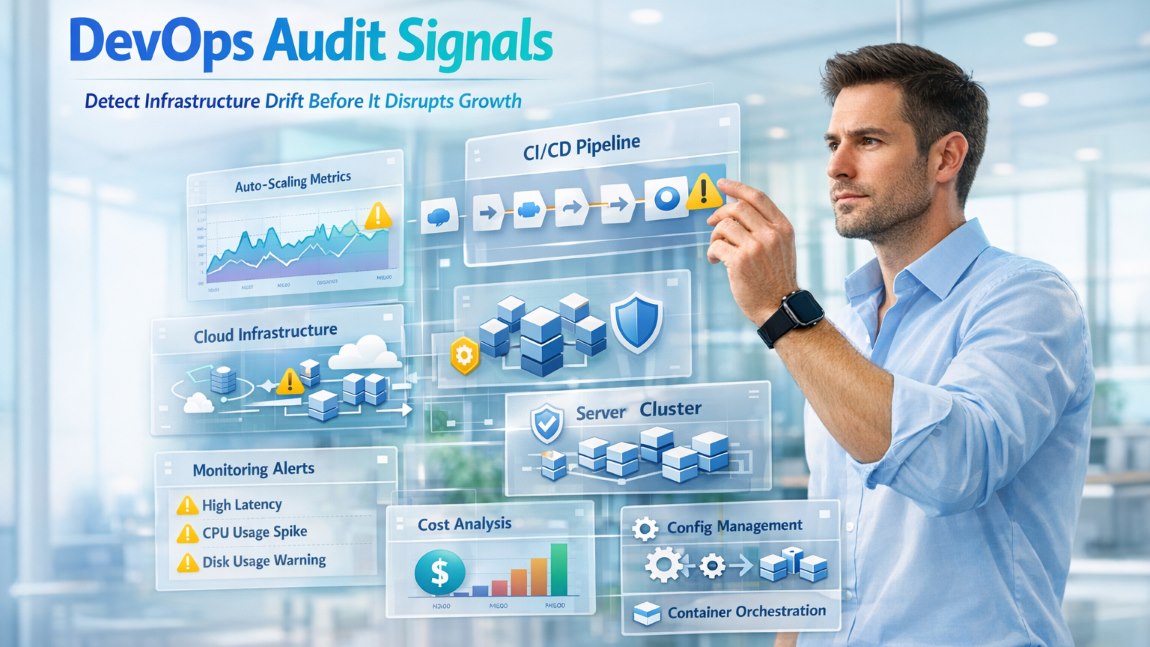
Signs Your Infrastructure Needs a DevOps Audit
A DevOps audit uncovers hidden infrastructure risks. Discover 5 critical warning signs affecting performance, scaling, and deployment stability.
Infrastructure Sends Signals Before It Fails
Infrastructure rarely collapses without warning. It signals first. Release cycles slow down. Incidents become harder to diagnose. Teams spend more time investigating than building. None of these changes feels dramatic, yet together they indicate that operational discipline is drifting.
When internal troubleshooting fails to yield clarity, companies often turn to DevOps consulting services to understand what is happening beneath the surface.
A DevOps audit is not about reacting to outages. It is about interpreting those early signals correctly.

Signal #1: Delivery Feels Heavier Than It Should
When infrastructure and processes are aligned, deployment becomes routine. If releases begin to feel fragile, something in the workflow has shifted.
Watch for patterns such as:
- Deployment steps that require manual corrections
- Rollbacks that take longer than releases
- Environment inconsistencies between staging and production
- Unexpected side effects from minor code changes
These symptoms suggest that automation, configuration management, or service dependencies are no longer synchronized.
Signal #2: Visibility Exists, but Clarity Doesn’t
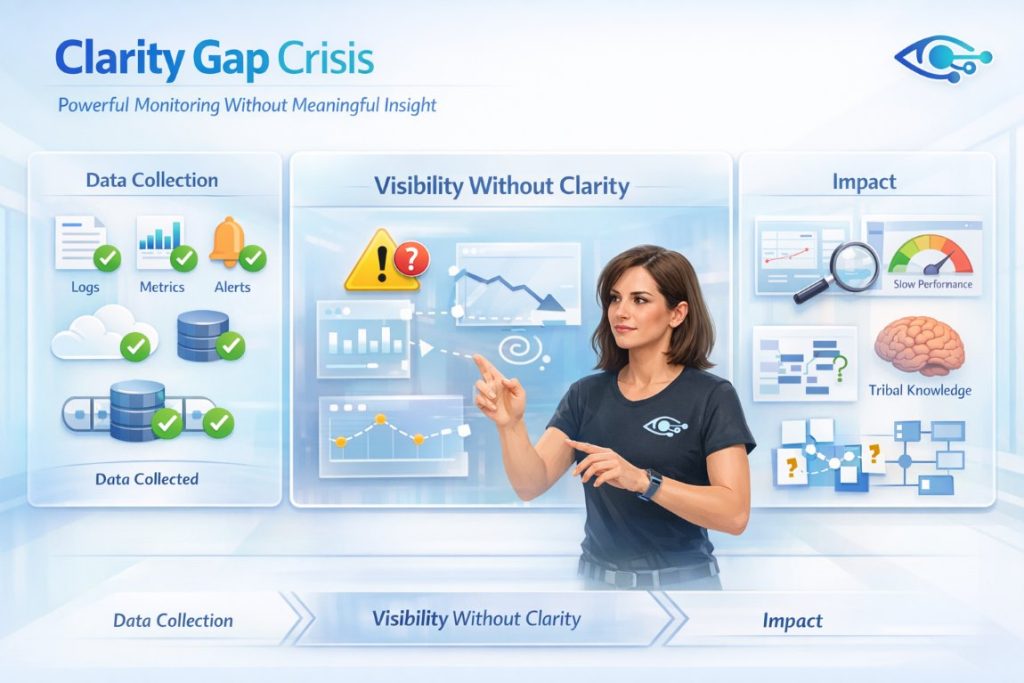
Many systems collect logs, metrics, and alerts. That does not guarantee insight.
A visibility gap often looks like this:
- Alerts trigger without clear root causes
- Metrics show symptoms but not relationships
- Performance degradation appears gradually
- Engineers rely on tribal knowledge to diagnose issues
When monitoring cannot explain behavior, architecture, and observability are misaligned.
Signal #3: Scaling Creates Stress Instead of Stability
Related walkthrough
Everything You Need To Know About APIs

Growth should not introduce operational uncertainty. Yet in many environments, increased traffic amplifies friction.
You may notice:
- Auto-scaling reacting too late
- Resource usage rising unpredictably
- Database performance fluctuating under load
- Infrastructure costs increasing without explanation
These are not isolated technical anomalies. They indicate structural imbalance.
Signal #4: Teams Spend More Time Reacting Than Improving
A healthy infrastructure environment supports product development. When operational issues dominate sprint planning, priorities shift.
If engineers frequently:
- Investigate recurring infrastructure incidents
- Patch configuration inconsistencies
- Rebuild broken deployment pipelines
- Adjust scaling policies manually
Then, infrastructure governance requires examination. An audit makes these hidden inefficiencies visible in a structured way. A deeper understanding of governance models and audit methodologies is outlined in our detailed DevOps consulting guide, covering architecture reviews, automation maturity, and operational alignment.

Operational Review as a Strategic Step
A structured DevOps audit evaluates architecture, automation, scaling logic, monitoring design, and release workflows together rather than separately. It maps how these elements interact and identifies where friction accumulates.
Specialists focus on this diagnostic layer. Work spans infrastructure-as-code validation, CI/CD analysis, container orchestration review, cloud architecture assessment, and monitoring evaluation across public, private, and hybrid environments. More than eight years of DevOps practice and projects delivered across multiple industries provide a clear perspective on recurring operational patterns.
Those who want deeper insight into methodology and delivery scope can learn more about Alpacked directly on the official website.
When Signals Are Addressed Early
Infrastructure that receives regular evaluation behaves differently. Releases stabilize. Scaling logic becomes predictable. Monitoring surfaces meaningful patterns. Teams regain time for product development instead of operational firefighting.
Operational maturity rarely appears spontaneously. It follows deliberate review and disciplined adjustment.
The Real Meaning of a DevOps Audit
A DevOps audit is not a sign of failure. It is recognition that infrastructure complexity grows over time. Systems expand, teams change, workloads evolve. Without periodic evaluation, small inefficiencies accumulate quietly.
Interpreting operational signals early protects performance, delivery velocity, and long-term scalability.