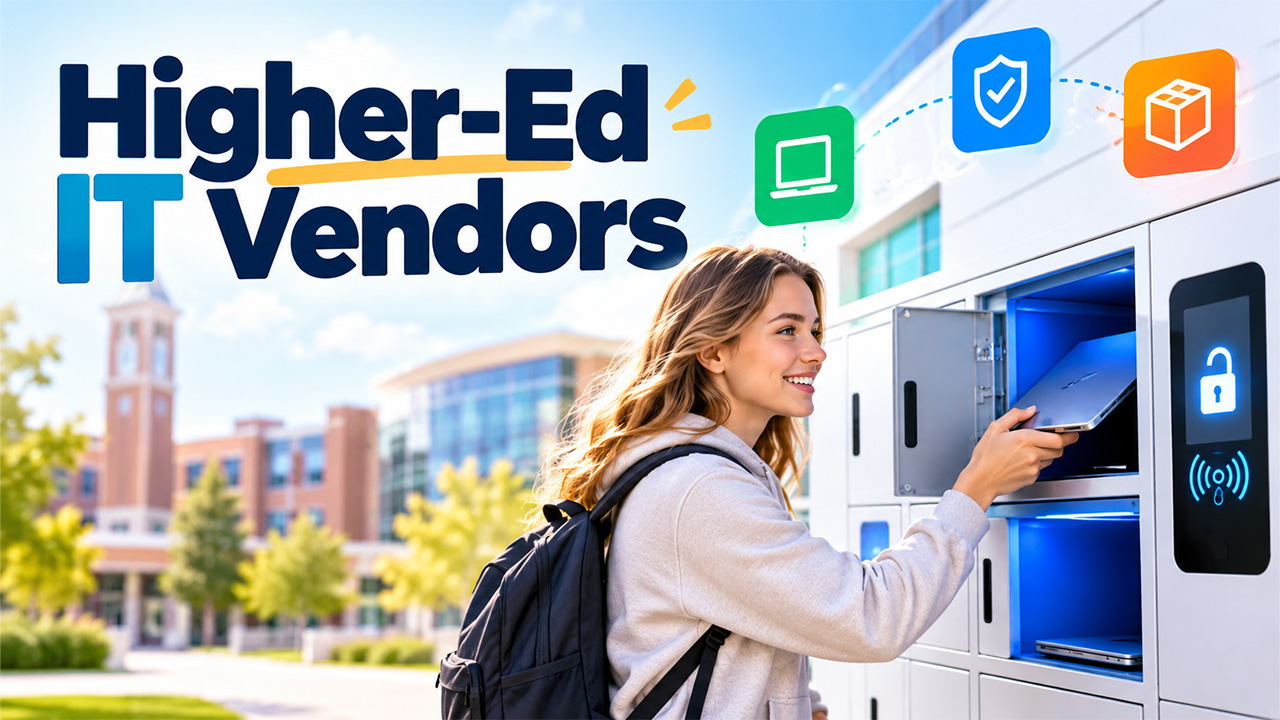
Top 6 Higher-Ed IT Vendors for Smart Campus Device Management in 2026
Explore higher-ed IT vendors in 2026 and compare six providers offering smart lockers, device lending, secure charging, and campus asset management solutions.
A student borrowing a laptop, a faculty member collecting a repaired device, and a residence hall processing deliveries all need secure, recorded handoffs. Yet those services can sit within separate departments, contracts, and systems.
For institutions reviewing higher-ed IT vendors in 2026, the question is how those systems fit together. This overview examines six higher education technology vendors to watch across campus device and locker infrastructure. Their offerings address different operational needs, from shared-fleet charging to automated lending and package collection. The list is an overview of relevant providers, rather than a market-share ranking.
Why Higher-Ed IT Vendors Matter for Campus IT Teams in 2026
Device fleets acquired or expanded during the pandemic now require ongoing maintenance, redistribution, repair, and replacement. A successful initial deployment does not establish how a university will handle thousands of subsequent pickups and returns. Libraries, IT departments, and academic units need processes that keep devices available throughout their working lives.
That requirement sits within a constrained spending environment. Inside Higher Ed’s August 2026 reporting documents campus staffing cuts associated with research funding losses, enrollment challenges, and state funding pressure. For procurement teams, this context strengthens the case for assessing both purchase costs and the staff time needed to operate a service.
EDUCAUSE’s 2026 Top 10 recommends removing duplicate technologies, consolidating licenses, and seeking transparency on interoperability and product roadmaps. Applied to campus lockers, that guidance raises questions about separate charging-only and access-only contracts, inconsistent records, and hardware whose future depends on one proprietary software supplier.
Single sign-on (SSO) and IT service management (ITSM) connections consequently deserve explicit attention during procurement. Buyers should establish whether an integration authenticates a user, updates an asset record, or advances a service request. These are different functions. A broad platform may reduce duplicate administration, but a focused product can remain appropriate when the requirement is limited and clearly defined.
6 Higher-Ed IT Vendors to Watch in 2026
Related walkthrough
GPT-6 Can Build a 3D Rocket Using ONLY Your Voice

ForwardPass, Bretford, LapSafe, Vecos, Gantner, and Smiota illustrate the range of smart locker vendors for universities. Their portfolios span device handoff workflows, charging equipment, locker management, access control, and campus logistics. The relevant distinction is which part of an institution’s service each vendor supports.
ForwardPass — Campus-Wide Device Handoff Platform
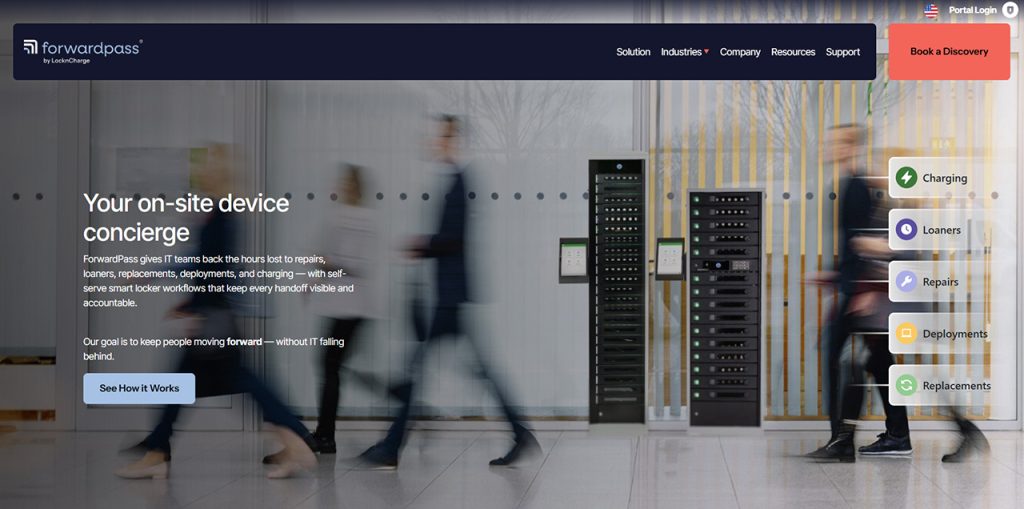
ForwardPass provides smart lockers and software for IT device handoffs. Its Enhanced system combines charging hardware, a self-service kiosk, and centrally administered workflows for device lending, deployments, repairs, replacements, and charging. In higher education, those functions support university IT departments, libraries, and student-service locations where devices move between users and support teams.
ForwardPass positions device lending, IT service-desk pickup, and repair exchanges as shared campus device infrastructure. Authentication and transaction records connect the physical handoff to an identifiable user, while charging supports the availability of loan devices.
The company also publishes a broader guide to university locker infrastructure, covering deployment locations across IT, libraries, housing, and mailrooms. For that discussion of campus use cases and planning considerations, see ForwardPass’s approach to campus-wide smart locker infrastructure.
Bretford — Charging Cart and Cabinet Manufacturer for Campus Device Fleets
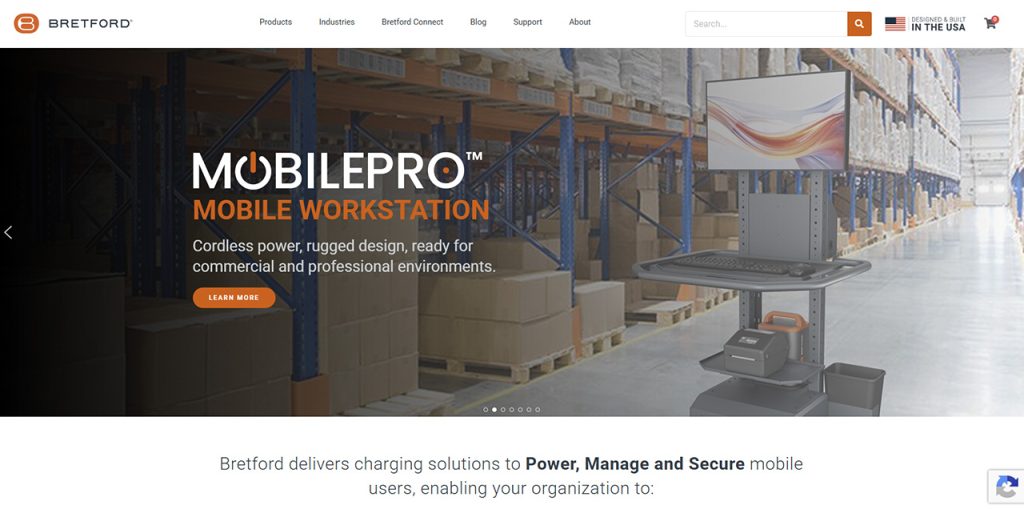
Bretford manufactures mobile charging carts, cabinets, stations, and lockers for shared device fleets. Its higher-education portfolio supports classroom devices, testing, faculty use, and lending programs. Carts allow institutions to store and charge groups of laptops or tablets where staff distribute them.
Bretford also offers TechGuard Connect lockers with Bretford Connect management software. The cloud portal provides remote locker administration, user management, and activity records, including device checkout history on supported configurations.
Its role in campus device lending therefore depends on the product selected. A charging cart supports staff-managed distribution; a connected locker adds controlled individual access and records. Procurement specifications should distinguish these configurations rather than treating the entire portfolio as charging-only hardware.
LapSafe — Secure Charging Locker Systems for Educational Institutions
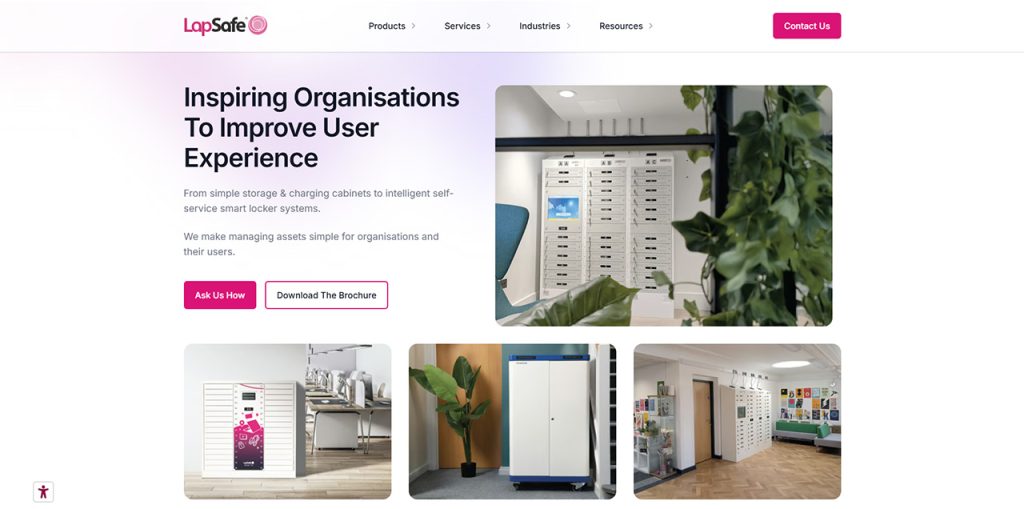
LapSafe supplies charging trolleys, cabinets, and smart lockers, with a documented university customer base in the UK. Its university offering includes automated device lending, secure charging, and IT service-desk exchanges.
LapSafe’s ONARKEN management platform centralizes control, records transactions, and automates workflows. University libraries can use its lockers for self-service laptop borrowing, while IT teams can use them for device swaps, repair handoffs, and collection. The vendor also documents connections to institutional identity and service-management systems.
For campus device lending, LapSafe’s contribution extends beyond physical storage: the software manages access and lending transactions. Institutions should evaluate the relevant locker model, charging capabilities, and software configuration together.
Vecos — Locker Management Software for Campus and Workplace Environments
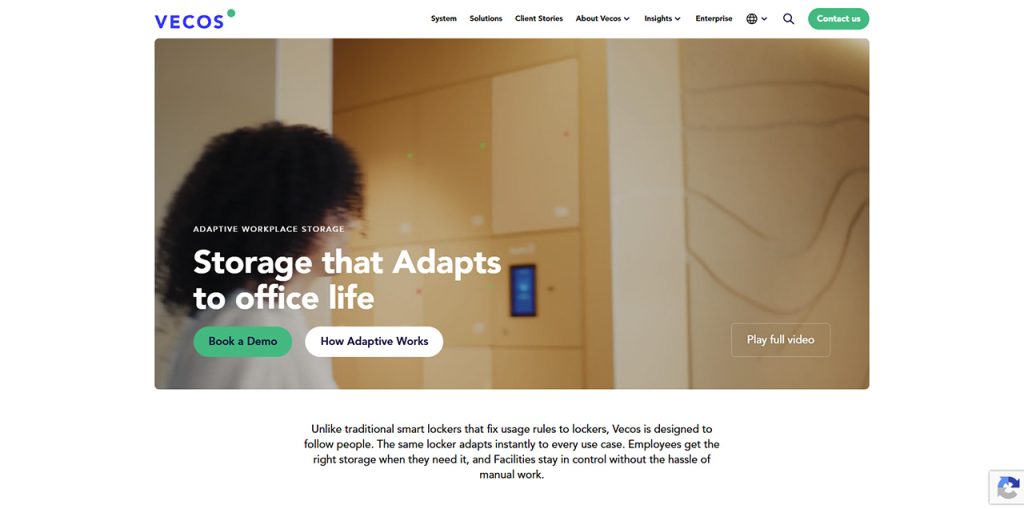
Vecos provides a smart locker system focused on managing storage access and allocation. Its education offering supports student ID and smartphone access, configurable assignment periods, remote administration, and usage visibility. Published university examples include Amsterdam University of Applied Sciences and Eindhoven University of Technology.
Vecos is relevant to campuses managing personal storage alongside workplace-style facilities. Its role in device lending is principally the locker access and allocation layer; institutions should separately establish how equipment checkout and return policies would be implemented.
For projects involving existing cabinets, buyers should confirm compatible locks, electronics, and installation requirements. A locker management software layer does not establish compatibility with every installed locker bank.
Gantner — RFID-Enabled Access Control and Locker Systems
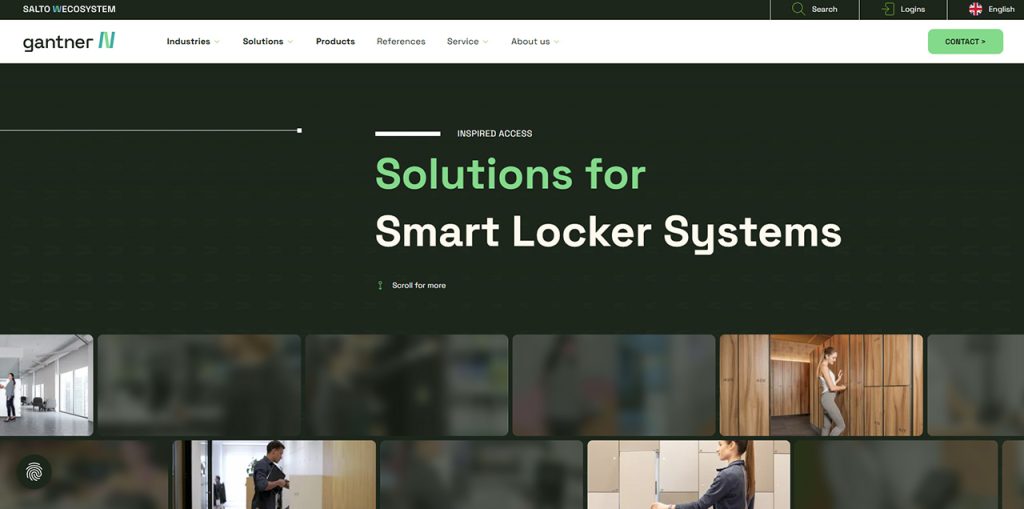
Gantner supplies RFID-enabled locker locks, access-control systems, and locker management software for education, workplaces, and leisure facilities. Its education portfolio includes centrally powered and battery-powered systems, with student credentials providing access to secure storage.
Gantner’s eLoxx Suite supports locker administration, permissions, and credential management. Campus applications include libraries, learning areas, and recreation facilities where institutions want storage to work with their wider access arrangements.
Within a device lending program, Gantner can provide controlled access to the storage location. Buyers should establish which additional processes connect that access event to a specific device, borrowing period, or IT service request.
Smiota — Modular Smart Lockers for Packages and Asset Handoffs
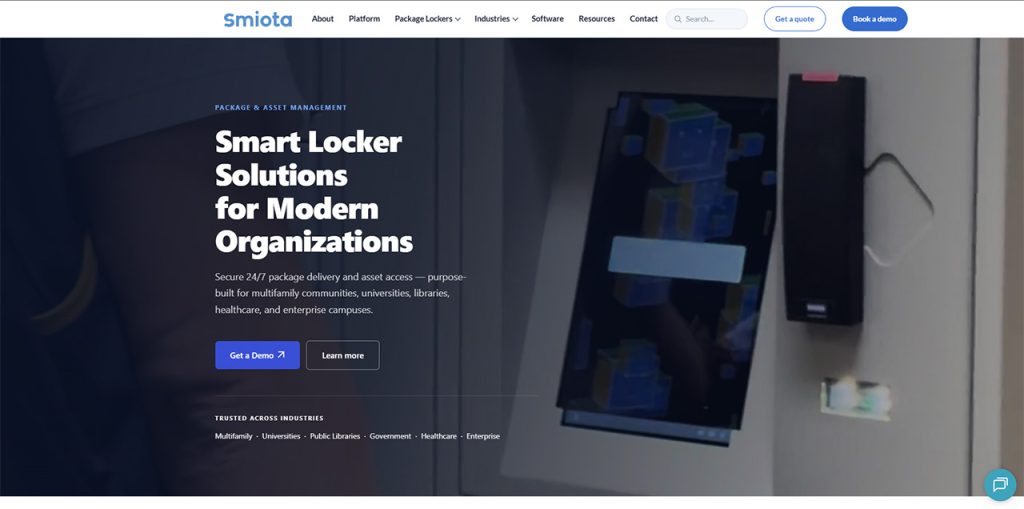
Smiota supplies smart lockers and software for package delivery, equipment distribution, and institutional handoffs. Its university offering covers mailrooms, residence halls, libraries, and IT device services, with centralized administration across campus locations.
For device lending, Smiota documents automated check-in and checkout, audit trails, and availability tracking for laptops, tablets, and other equipment. Its campus portfolio also includes package pickup and library book collection, making it relevant to facilities evaluating several types of handoff within one project.
Smiota should therefore be assessed as a hardware-and-software provider. Institutions should confirm the workflow depth, integration scope, and operating requirements of the proposed deployment rather than infer those capabilities from the locker enclosure alone.
What to Look for When Evaluating Vendors in 2026
Campus device management vendors support different portions of an asset’s life. Gartner’s research abstract on collaborative IT asset management emphasizes connecting processes, technology, and data across that lifecycle. For locker procurement, the implication is to define how physical handoff records will connect with the institution’s wider asset and support processes.
Teams evaluating university smart locker platforms in 2026 should examine five areas:
- Workflow coverage. Ask vendors to demonstrate a complete loan, return, repair drop-off, and replacement pickup using campus rules. Include exceptions such as an overdue device or an item requiring inspection before reissue.
- Identity and integration. Test SSO, access permissions, and account removal. Distinguish a supported connector from an API development that requires institution-managed development. Specify which system owns each record and who resolves failed updates.
- Device readiness and accountability. Check charging compatibility, device identification, transaction exports, and how returned equipment becomes eligible for another loan. Opening a bay, recording a return, and confirming readiness are separate steps.
- Hardware and software continuity. Review expansion options, replacement parts, security updates, data export, and the consequences of ending a subscription. Separate currently available features from roadmap commitments.
- Operating responsibility and cost. Assign ownership for restocking, inspecting returns, responding to faults, and supporting users. Include installation, licensing, integration work, maintenance, and staff effort in the cost assessment.
A pilot should measure completed handoffs, staff intervention, device availability, and failed transactions under realistic campus conditions. For a university system, it should also test permissions and reporting across locations. A community college may place greater weight on access outside staffed hours.
The procurement decision should follow the service requirement. Broader workflow coverage matters when several departments can use it; a focused charging or access system can be sufficient for a narrower task. The useful evidence is a demonstrated process, clear operating responsibilities, and a supportable plan for the equipment’s working life. Ultimately, choosing the right higher-ed IT vendors depends on an institution’s device management needs, integration requirements, budget, and long-term support plans. Universities should prioritize solutions that improve device availability, simplify handoffs, and support efficient campus operations.