
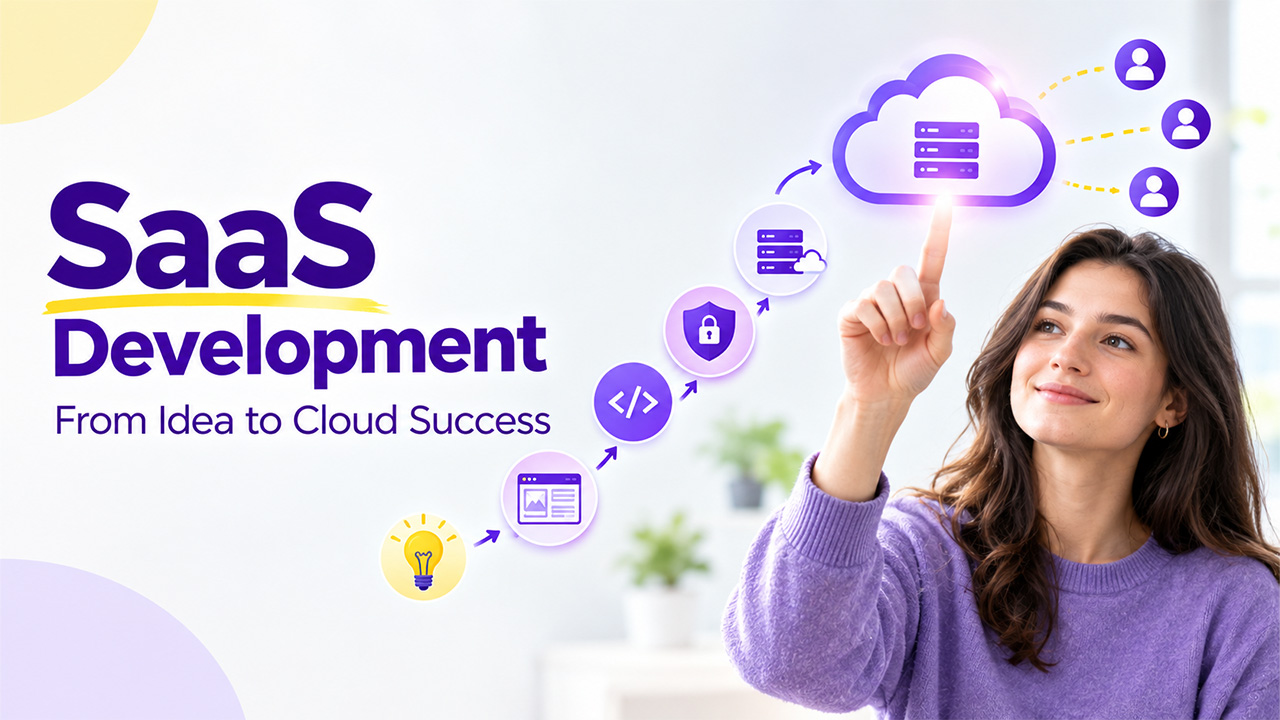
What Is a SaaS Development Company? A Complete Guide
A reliable SaaS Development Company builds secure, scalable cloud software. Explore SaaS development services, benefits, costs, technologies, and how to choose one
Every business nowadays, from small startup companies to big enterprises, depends on cloud-driven tools to manage routine operations. Behind almost every one of the platforms, there is a SaaS Development Company that designs, creates, and manages the software. As more and more businesses move away from conventional, locally installed programs, comprehending what SaaS development organizations really do has become vital for anyone planning to launch a cloud-driven product. In this blog, let us break down what SaaS development demands, what a serious development partner can do for you, the advantages of partnering with one, and how to select an organization that aligns with your business objectives.
What Is SaaS Development?
SaaS Development, stands for Software as a Service Development, refers to the process of developing applications that are cloud-hosted and given to users over the internet, instead of being installed on individual servers or computers. You do not have to purchase a license and manually run updates; users just need to login through a browser, and the provider handles hosting, security, and maintenance in the background.
A few defining characteristics of SaaS products are as follows:
- Subscription-driven pricing instead of one-time purchases.
- Centralized hosting is completely managed by the provider.
- Automatic updates with no need for manual installation.
- Multi-tenant architecture that helps numerous customers from one codebase.
- Accessibility from a single device with a network connection.
This model has advanced Software Development and has made it accessible for businesses that do not want to patch software manually, handle physical servers, or maintain a big in-house IT infrastructure. Invariably, SaaS is the default choice for software-related projects ranging from CRM platforms to project management tools.
What Does a SaaS Development Company Do?
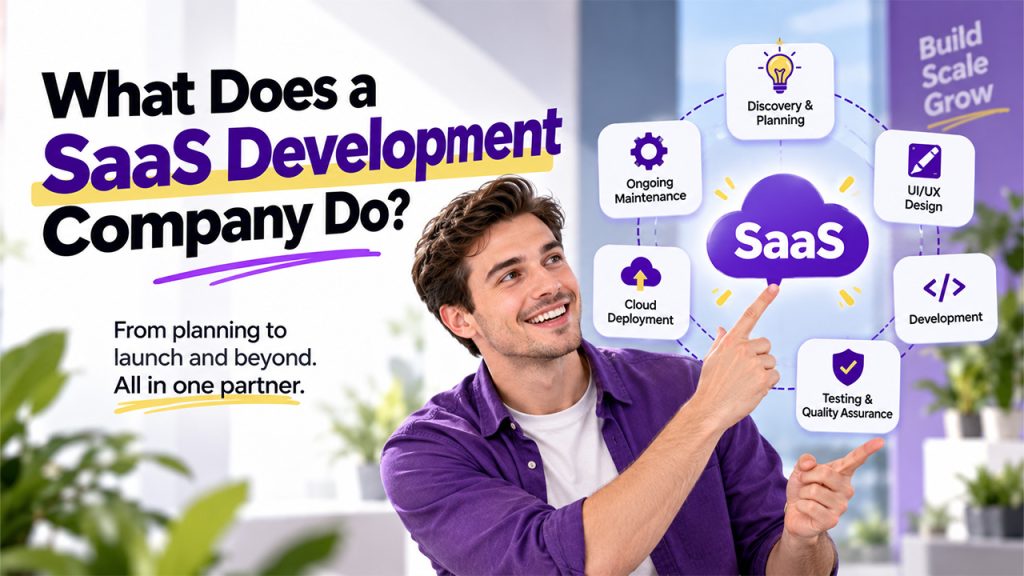
A SaaS Development company handles the complete lifecycle of a cloud-driven application, from the ideation to lasting support after launch.
Key responsibilities involve:
Discovery and Planning:
Comprehending business objectives, target users, and technical needs before writing a single line of code.
UI/UX design:
Developing interfaces that are accessible, intuitive, and simple for end users to navigate on any device.
Application Development:
Creating the backend logic, front-end interface, and database architecture through relevant tech stacks for the project.
Testing and Quality Assurance:
Security gaps, checking for bugs, and performance problems before the product is released to real users.
Cloud Deployment:
Hosting the apps on platforms like Google Cloud, AWS, or Microsoft Azure for uptime and reliability.
Consistent Maintenance:
Fixing problems, releasing updates, and scaling infrastructure as the user base scales over time.
A proficient Software Development Company does not just focus on writing a few lines of code. It works as a long-term technology partner that makes sure that the product remains foundational, secure, and competitive as market requirements evolve. Many also provide strategic input on onboarding flows, pricing models, and feature prioritization based on what similar SaaS products have done really well.
Why Businesses Require a SaaS Development Company?
Related walkthrough
GPT-6 Can Build a 3D Rocket Using ONLY Your Voice

Developing in-house SaaS software needs specialized skillsets that numerous businesses just do not have on staff. Recruitment, training, and retaining an entire development team is costly and time-consuming.
Partnering with an experienced team instead provides numerous practical benefits:
Quicker Time to Market:
Skilled teams implement a structured development process, which minimizes delays and prevents common early-stage mistakes.
Lower Upfront Expenses:
Businesses do not have to spend on recruitment, onboarding, and training an entire internal development team.
Robust Security:
Skilled developers understand the protection of data, encryption, and compliance needs that secure both the business and its customers.
Scalability:
A properly developed SaaS product can manage growth in users and data without needing an expensive rebuild down the line.
Accessibility to Modern Tools:
Development partners remain up to date with automation, cloud infrastructure, and AI integration trends that individual businesses may not closely track.
Businesses that handle their own SaaS platforms also benefit from platforms specialized to track licenses, usage, and spending across different apps. Our guide on Top 10 SaaS Management Platforms explains numerous popular solutions that are worth reviewing once your application is gaining users and is live.
How to Select the Best SaaS Development Company?

Not each Software Development Company provides the same level of expertise, so assessing potential partners carefully is important more than choosing the option that responds to an inquiry.
A few factors that are worth considering are as follows:
Case Studies and Portfolio:
Focus on past projects which are similar in industry, scope, or complexity to your own idea.
Technical Expertise:
Verify experience with security standards, cloud platforms, and particular technologies your project will require.
Communication Style:
A reliable partner is always transparent about costs, timelines, and regular progress updates throughout the project.
Post-launch Support:
Ask about how the company manages feature updates, bug fixes, and scaling after the initial release is live.
Client References and Reviews:
Independent feedback from previous clients generally tells you more than you can from a few polished sales pitches ever will.
If you are researching best vendors in space, our guide on 11 Best SaaS Development Companies can help you shortlist strong candidates for your project.
It is also important to think ahead. Customer experiences around AI-powered features are quickly shifting, and exploring what buyers are focusing on, as covered in detail in What AI SaaS Customers Want in 2026? can help shape your product roadmap before development begins.
Conclusion
Selecting the best SaaS Development company can define whether a cloud-driven product becomes successful or struggles to become popular in a crowded market. From initial planning through various stages such as design, development, testing, and lasting maintenance, a capable partner gives you a structured process and technical expertise required to build software that is scalable, secure, and genuinely helpful for end users. Irrespective of whether you are launching a brand-new SaaS product or upgrading an existing one, working with an organized Software Development Company provides your business core foundation it requires to compete in a market that extensively runs on the cloud.
Frequently Asked Questions
A SaaS Development company builds, hosts, and maintains cloud-driven software that users can access over the internet on a subscription basis. It manages all aspects from design and coding to ongoing updates and security.
Costs change extensively as per features, complexity, and tech stack utilized, often varying from a few thousand dollars for a simple MVP to well over six-figures mark for enterprise-level software. Getting a customized quotation from a Software Development Company is the best way to get an estimate for your particular project.
A standard SaaS app can take around 3-6 months to develop, while more advanced platforms with sophisticated features may take around a year or even more. Timelines rely on team size, scope, and how much refinement and testing the product requires.
Most SaaS products depend on cloud platforms such as Azure, AWS, or Google Cloud, combined with frameworks like Node.js, React, or Django. The exact stack relies on the security, scalability, and performance needs of the project.
Yes, numerous development organizations provide flexible engagement models, including MVP-based packages, that align with smaller budgets. Start lean and scale the product as the business evolves is a cost-effective and common approach.