
XRP vs Other Cryptocurrencies: How Is XRP Different?
Understand XRP vs Other Cryptocurrencies and explore how XRP differs through its consensus mechanism, transaction speed, scalability, and payment-focused design.
All cryptocurrencies are fundamentally the same in some regards. For example, they’re all decentralized assets operating on a blockchain, a shared digital ledger secured by complex math. However, the design, purposes, and economic models of every single one varies widely. All crypto coins follow BTC as their blueprint and it continues to be the strongest cryptocurrency on the market to the point that investors still look to it even when investing in altcoins. When you want to buy XRP the general movements of the market matter as well, for example.
Most cryptocurrencies run on distributed networks without the involvement of government or central banks and they utilize advanced cryptography to remain safe. They also exist solely as data on a computer network, with no real-life coins ever minted. However, the differences are important to notice as well. This guide explains XRP vs other cryptocurrencies, from consensus design to speed and scalability.
The main distinctions in XRP vs other cryptocurrencies
Bitcoin was designed as a store of value, essentially operating as peer-to-peer digital cash. BTC earned the nickname “digital gold” because of this feature, as well as the fact that its scarcity means that it can be used as a store of value. It has a strict limit of 21 million coins that will ever be created, after which users will have to make do with what was already released. Then there are the smart contract platforms, ecosystems such as Ethereum or Solana which act as digital operating systems.
They have their own native coins as well since they need them to power the games, apps, and financial tools that the platform hosts. They aren’t meant to act exclusively as a form of digital money, making them fundamentally different from BTC. Stablecoins such as USDC and USDT are pegged to traditional government money (most commonly the US dollar) to guarantee their safety and bypass wild price swings. Standard cryptocurrencies are still pretty volatile, but the stablecoins are widely believed to be more reliable.
The memecoins are on the opposite end of the spectrum, having started as jokes and cultural trends and maintaining little functional utility. They rely instead on the hype and speculation that is already rampant in the crypto world, especially given the fact that some celebrities have endorsed them as well.
How is XRP different?
Related walkthrough
GuestPost CRM: Understanding the “Other” Section

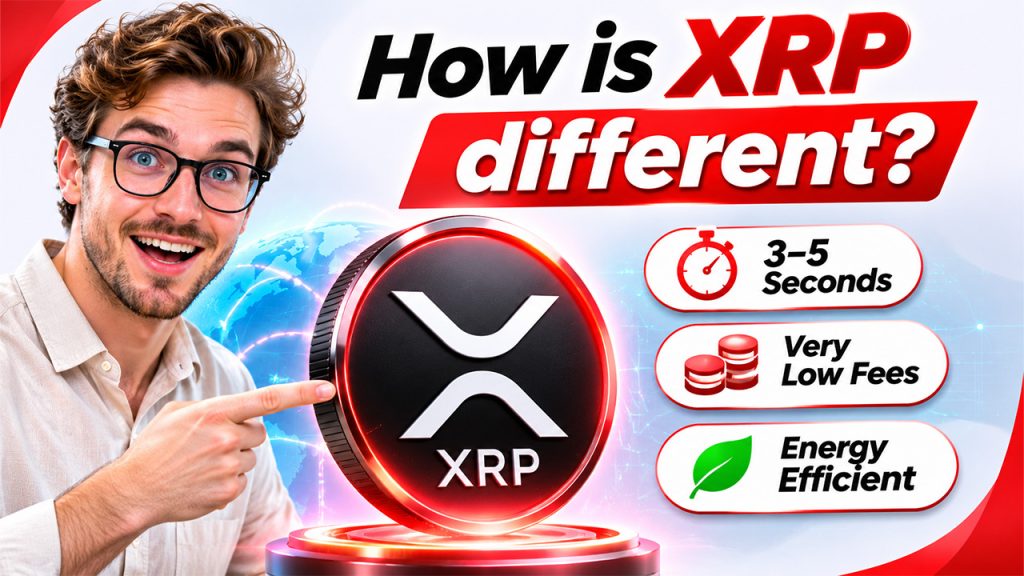
In XRP vs other cryptocurrencies, XRP is fundamentally different from most crypto coins because it was built for a different purpose from the very beginning. The idea with XRP was to have a system built for fast global payment that uses a unique consensus system instead of having to rely on the energy-intensive mining process. Transactions take only 3 to 5 seconds, while those of crypto coins such as Bitcoin generally take considerably longer. Each transaction is only a fraction of a penny, making it exceedingly cheap and very affordable for those who want to perform several different transactions on a daily basis. Low fees make XRP practical for frequent transfers, but it is still worth choosing a safe crypto exchange service before you buy it.
In XRP vs other cryptocurrencies, consensus is where the gap is clearest: unlike Bitcoin, which still uses its proof-of-work system, the XRP Ledger uses a custom consensus protocol. This is a unique (and energy-efficient) mechanism that doesn’t require neither mining nor staking. It works through a distributed network of independent servers that are operated by exchanges, individuals, and, maybe surprising to some, even universities. The transactions and all the checking are handled at this point. Each of these independent participants relies on a sub-network of trusted validators known as Unique Node Lists. These are curated lists of trusted nodes that can be relied upon to agree on transaction ordering and ledger states. A transaction becomes valid and is added to the ledger when at least 80% of the trusted validators agree that it can be considered valid.
A negative UNL allows the network to temporarily or automatically ignore certain validators if they become unresponsive or choose to go offline, allowing transaction settlements to continue moving smoothly. There are no block rewards for them, though, as no mining is done. Instead, those running the blocks simply do so in order to support the ecosystem infrastructure that relies on them. This protocol prioritizes complete ledger correctness and agreement over forward progress, meaning that invalid states aren’t processed. Stalling is chosen instead, if a large number of validators don’t act accordingly.
The issue of scalability in XRP vs other cryptocurrencies
Crypto scalability refers to the ability to use more data, handle more users, and still manage to complete transactions quickly and without the burden of really high fees. On top of that, the networks must also maintain their decentralization and guarantee their continuous security. The key metrics include the number of transactions per second, the latency (how long it takes for a transaction to become irreversible) and the cost per transaction. However, achieving perfect scalability has remained an elusive goal in the crypto world.
In the case of XRP, the Ledger is capable of dealing with 1,500 transactions per second. With the addition of Payment Channels, a feature designed to send fast, asynchronous payments by dividing them into very small parts before settling them on the blockchain at a later time, the network can scale to tens of thousands per second. Payment Channels are opened between transacting parties and the XRP is flagged by the blockchain so it doesn’t get spent again. The parties can send and receive payments while the channel remains open and they’re generally settled in bulk after its closure.
This means that thousands of transactions can be settled together without the risk of the system becoming overloaded and the consensus suffering as a result.
In conclusion
In the XRP vs other cryptocurrencies comparison, XRP shares many similarities with the rest, being native to a certain blockchain and operating pretty much like any other decentralized ledger, but some things are different as well. Its position in the market is a function of investor belief as well as how much the traders are willing to buy and sell for. When looking to invest in cryptocurrencies it’s a good idea to have more than one to rely on. Maintaining a diverse portfolio will protect you from the swings and price fluctuations and improve your odds of success.
However, make sure to have a robust strategy that you can rely on at all times, as it will make a huge difference in the long-run, regardless of what you’re investing in.