10 Best AI Voice Agents for Businesses in 2026, Tested and Reviewed
Discover the best AI Voice Agents for Businesses in 2026. Compare features, pricing, integrations, and use cases to automate calls and improve customer service.
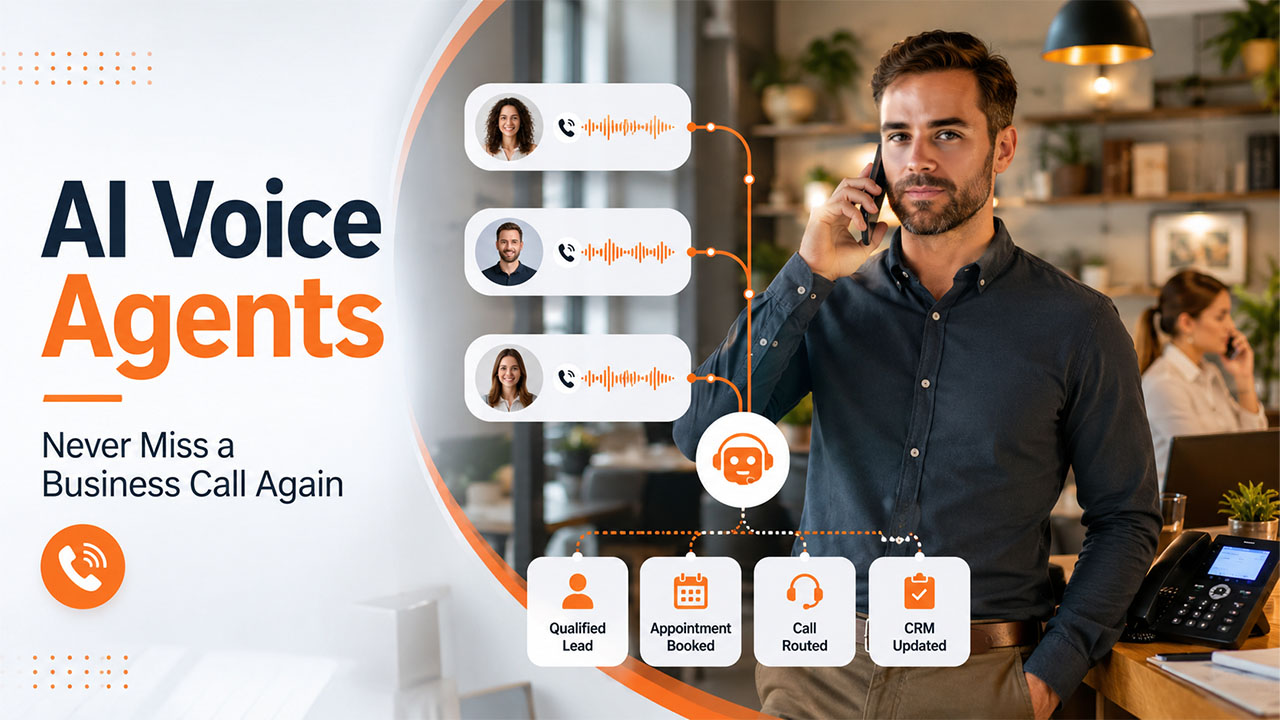
Choosing the best AI voice agents for businesses in 2026 comes down to one question: can the agent hold a natural phone conversation, take action mid-call, and plug into the systems your team already runs on? The category has moved past robotic IVR menus. Today’s voice agents answer inbound calls, qualify and route leads, book appointments, and update your CRM automatically, around the clock and in dozens of languages.
The tradeoff most buyers face is between developer-first platforms that give granular control and business-ready tools that deploy in hours without engineering. This guide compares ten of the most credible options, what each is genuinely best for, how they price, and where they fit by team size and use case, so you can match a tool to your call volume, your stack, and your budget.
TL;DR: best AI voice agents at a glance
- CloudTalk — best AI voice agent for business calling teams that want voice plus a full phone system
- Lindy — best for no-code voice workflows that trigger post-call automation
- Vapi — best for developers building custom voice agents via API
- Synthflow — best no-code builder for agencies deploying many agents
- Retell AI — best for support and inbound call handling with structured call data
- ElevenLabs — best for the most natural, expressive AI voice layer
- Bland AI — best for fully programmable outbound voice via API
- Cognigy — best for large enterprise contact-center automation
- Dialpad — best for AI calling combined with live agent coaching
- CallHippo — best for budget all-in-one VoIP plus AI calling
- Respond.io — best for voice AI across WhatsApp and VoIP, unified with your messaging channels in one workspace
Comparison table: best AI voice agents for business in 2026
| Tool | Best for | Deployment | Starting price |
| CloudTalk | Business calling teams + AI voice agent | No-code, hours | $25/user/mo; AI agent from $99/mo (200 min) |
| Lindy | No-code voice + post-call automation | No-code | Free; Pro $49.99/mo |
| Vapi | Developer-built custom agents | API-first | Pay-as-you-go ($10 free credits) |
| Synthflow | No-code agencies, many agents | No-code | $375/mo (2,000 min) |
| Retell AI | Support + inbound call data | Low-code | $0.07/min |
| ElevenLabs | Natural voice layer | API/SDK | Free; Creator $11/mo |
| Bland AI | Programmable outbound voice | API-first | Custom (contact sales) |
| Cognigy | Enterprise contact centers | Enterprise | Custom |
| Dialpad | AI calling + live coaching | No-code | $27/user/mo |
| CallHippo | Budget all-in-one VoIP + AI | No-code | $18/user/mo |
| Respond.io | AI voice agents on WhatsApp and VoIP, alongside messaging channels in one workspace | No-code | $99/mo; 7-day trial |
The 10 best AI voice agents for businesses in 2026
1. CloudTalk: best AI voice agent for business calling teams
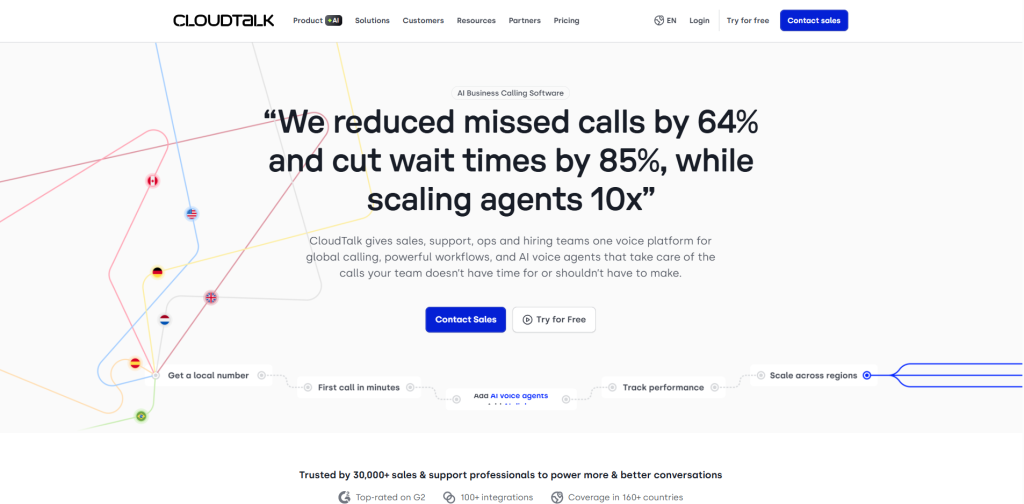
CloudTalk is the best AI voice agent for businesses that want conversational call automation built into a complete business phone system and modern Cloud communication solutions, rather than a standalone bot bolted on later. For teams asking what the best AI voice agent for businesses in 2026 is, CloudTalk answers inbound calls 24/7, understands and replies in 60+ languages and accents, routes conversationally without phone trees, and collects caller data and messages, all while sitting on top of the same platform your live agents use for everyday calling.
That combination is the point. The AI receptionist handles front-desk, peak, and after-hours coverage so every call is answered and correctly routed, and the calls it can’t resolve hand off cleanly to a human on the same system. Trusted by 4,000+ businesses, CloudTalk pairs the voice agent with calling, analytics, and CRM workflows in one place, which is what makes it practical for sales and support teams that live on the phone.
Key Features:
- 24/7 AI receptionist for inbound calls with conversational routing (no phone trees)
- Understands and responds in 60+ languages and accents
- Caller-data collection, message taking, and FAQ answering
- Spam and robocall blocking on inbound traffic
- Handoff from AI agent to live agent on the same phone system
- Built-in call analytics, recording, and call-flow designer
Integrations:
- HubSpot, Salesforce, Pipedrive, and Zoho CRM
- Intercom, Zendesk, and Help Scout for support
- Slack and Microsoft Teams
- Make and Zapier for workflow automation
- 100+ native one-click integrations plus an open API
Use Cases:
- After-hours and overflow call coverage so no lead is missed
- Front-desk reception: answering FAQs, routing, and message taking
- Inbound qualification before handing off to a live rep
- Appointment and callback capture for service businesses
- Reducing wait times during peak call volume
Industries:
- SaaS and technology
- Financial services and fintech
- E-commerce and retail
- Healthcare services
- Professional and home services
Pricing:
- Starter: $25/user/month (billed annually)
- Essential: $29/user/month (billed annually)
- Expert: $49/user/month (billed annually)
- Custom: enterprise plan with tailored terms
- AI voice agent: from $99/month for 200 minutes, scaling by included minutes; custom per-minute pricing above 10,000 minutes
- 14-day trial includes 50 AI voice agent minutes
2. Lindy: best for no-code voice workflows with post-call automation
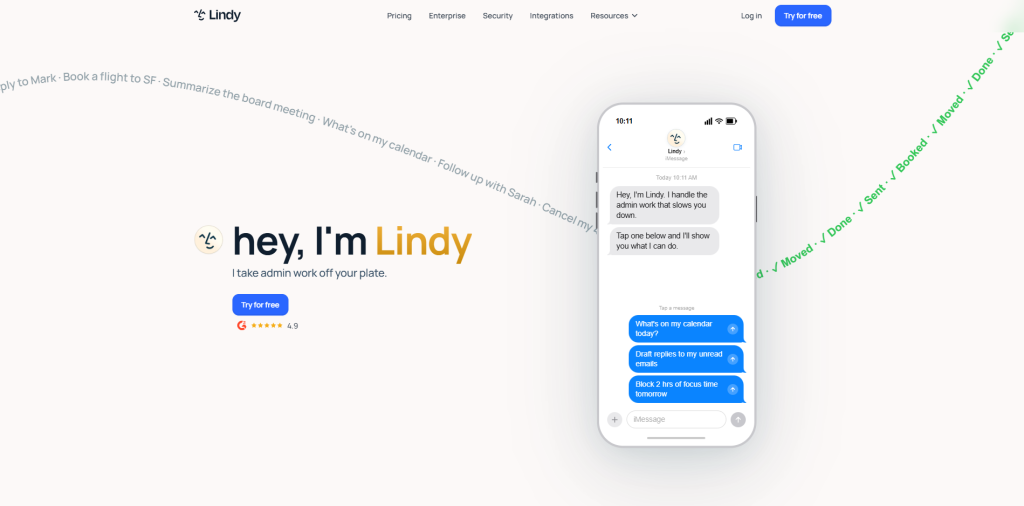
Lindy is best for teams that want a voice agent which does more than talk, turning each call into a recap, CRM update, booked meeting, or follow-up. It is a no-code platform aimed at sales, support, recruiting, and onboarding workflows, where the value is in what happens after the conversation ends, not just the call itself.
Calls are built with a drag-and-drop flow: you define what Lindy says, what it does after the call, and who gets notified. It can run multiple calls at once, search a knowledge base on inbound calls, and log summaries to Slack or a CRM, which makes it a strong fit when voice is one step in a larger automation rather than the whole job.
Key Features:
- No-code drag-and-drop call-flow builder
- Inbound and outbound calls with real-time conversation
- Knowledge-base lookups during inbound calls
- Automatic call summaries and CRM logging
- Concurrent calls across multiple agents
- 30+ language support on higher tiers
Integrations:
- HubSpot and Salesforce
- Slack notifications
- Calendar and scheduling tools
- Pre-built workflow templates
- Broad app library via Lindy integrations
Use Cases:
- Inbound support with automatic ticket summaries
- Outbound campaign calls with logged outcomes
- Lead qualification and routing to sales
- Appointment booking by phone
- Post-call CRM hygiene and follow-up drafting
Industries:
- B2B SaaS and technology
- Recruiting and staffing
- Professional services
- Healthcare (HIPAA-compliant workflows)
- Sales-led organizations
Pricing:
- Free: 400 credits/month to test voice calls
- Pro: $49.99/month (5,000 credits, up to 1,500 tasks)
- Business: $199.99/month (20,000 credits, unlimited calls, 30+ languages)
- Enterprise: custom with SSO and audit logs
- Pricing is credit-based rather than per-minute
3. Vapi: best for developers building custom voice agents
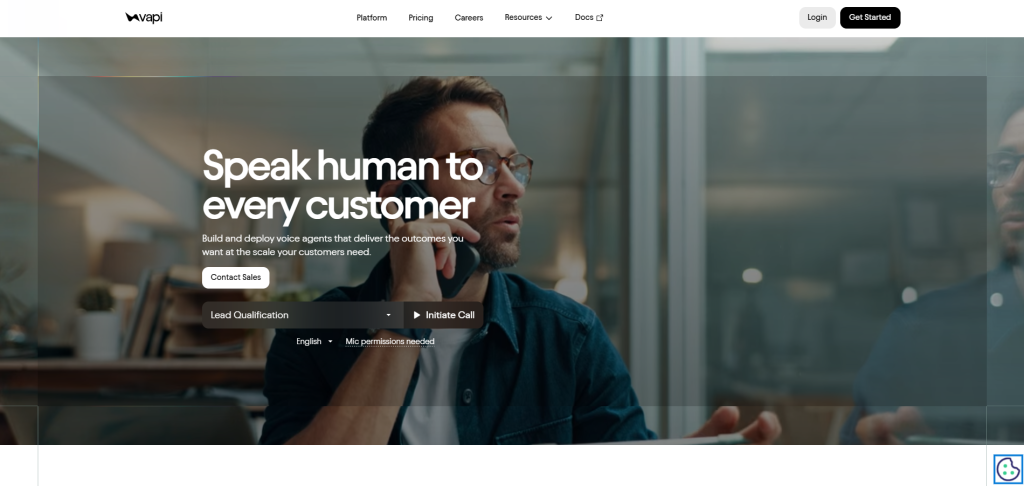
Vapi is best for engineering teams that want granular, API-first control over every part of a voice agent. It is built for developers rather than business users, exposing call routing, interruption handling, and mid-conversation logic so teams can embed voice directly into their own product.
The platform supports function calling during calls, so an agent can check a database, update a CRM, or pull live data while still talking, and it lets teams swap models or adjust logic mid-conversation. That flexibility comes with a learning curve: Vapi rewards teams comfortable with APIs and webhooks rather than those wanting a finished app out of the box.
Key Features:
- API-first agent creation with deep customization
- Function calling and live data lookups mid-call
- Model swapping (e.g., GPT plus ElevenLabs voices)
- Interruption and barge-in handling
- Webhook-driven backend workflows
- High concurrent-call capacity
Integrations:
- Twilio and telephony providers
- ElevenLabs and other voice models
- LLM providers via API
- Custom webhooks to internal systems
- CRM connections through developer setup
Use Cases:
- Embedding voice into a SaaS product
- High-volume outbound calling at scale
- Custom verification and backend-triggered calls
- Multi-step workflows chaining calls and SMS
- Developer-built support and sales agents
Industries:
- Software and product companies
- Fintech and insurtech
- Logistics and operations
- Telecom
- Technical startups
Pricing:
- Pay-as-you-go usage model
- $10 in free credits on signup, no card required
- Costs scale with call minutes and model usage
- No fixed monthly platform fee
- Custom terms for high-volume accounts
4. Synthflow: best no-code builder for agencies
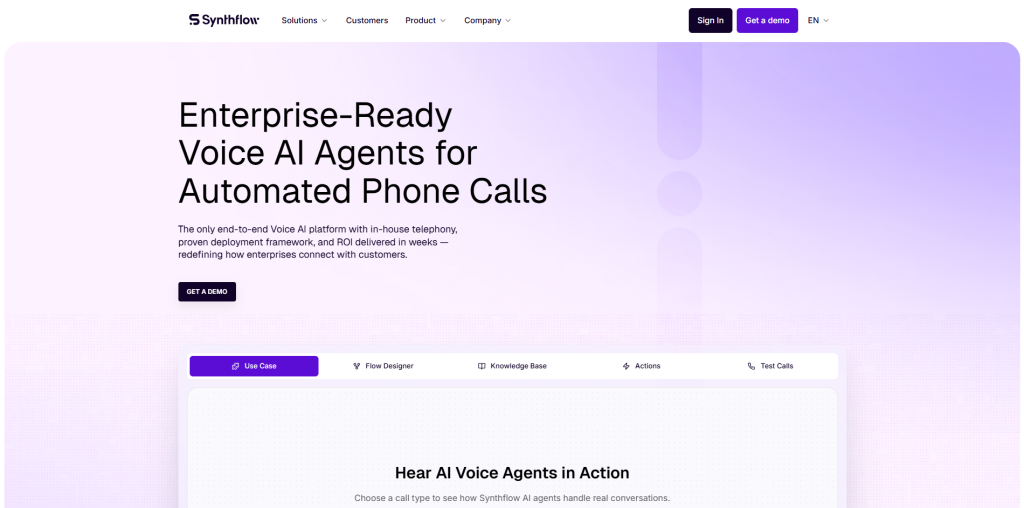
Synthflow is best for agencies and businesses that need to build and deploy many no-code voice agents without writing scripts or touching APIs. It centers on a visual flow builder where you map out conversations, train responses, and connect business systems, with enough control for real production use cases.
The platform ships production-ready, industry-specific templates for scheduling, claims processing, and always-on support, plus multilingual handling and analytics for tracking call volume and drop-off. The tradeoff is a steeper learning curve than expected: you still need to understand logic blocks and fallback responses so flows don’t break mid-call.
Key Features:
- No-code visual conversation builder
- Industry-specific pre-built agent templates
- Multilingual call handling
- Built-in analytics with transcripts and drop-off tracking
- Concurrent call support by plan
- White-label options for resellers
Integrations:
- HubSpot and major CRMs
- Calendar and booking tools
- Telephony providers
- Zapier and webhooks
- API access for custom connections
Use Cases:
- Agency deployments across many client accounts
- Lead qualification with CRM handoff
- Appointment scheduling and reminders
- Claims and intake processing
- Always-on inbound support
Industries:
- Marketing and BPO agencies
- Call centers
- Retail
- Finance
- Healthcare scheduling
Pricing:
- Pro: $375/month (2,000 minutes, 25 concurrent calls)
- Growth: $900/month (4,000 minutes, 50 concurrent calls)
- Agency: from $1,400/month (6,000 minutes, unlimited subaccounts)
- Enterprise: custom
- Pricing is minute-based by tier
5. Retell AI: best for support and inbound call handling
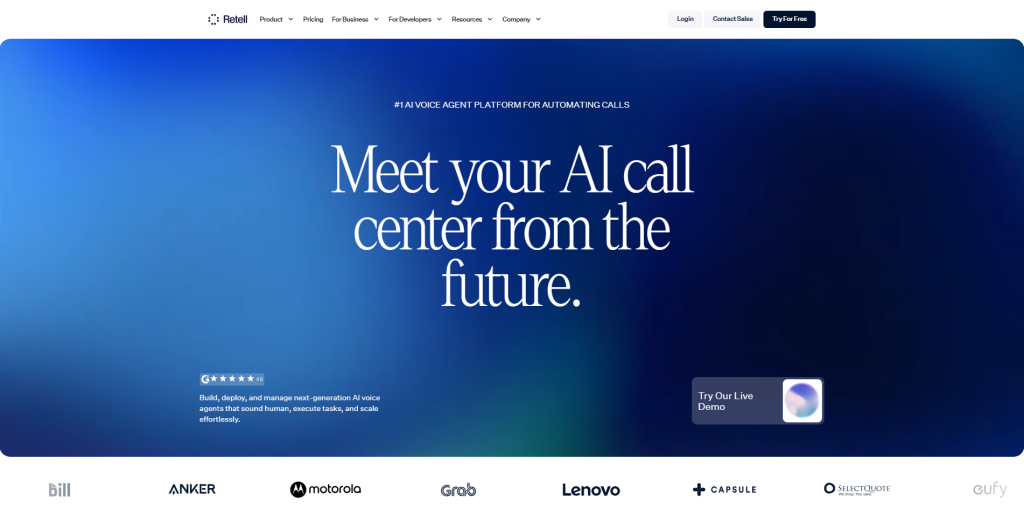
Retell AI is best for support and sales teams that want voice agents which turn every conversation into structured, usable data. It is a full voice platform for building, deploying, and monitoring phone-based agents, with a focus on inbound handling and post-call analysis.
The agent builder lets you sync website content and docs into a knowledge base, and a Conversation Flow feature defines structured call logic, fallback paths, and guardrails for complex scenarios. After each call, Retell reports not just what was said but what was done, flagging booked appointments, unresolved tasks, low sentiment, and failed handoffs in the dashboard.
Key Features:
- Intuitive agent builder with knowledge-base sync
- Conversation Flow for structured call logic and guardrails
- Detailed post-call analysis and outcome tagging
- Sentiment and failed-handoff flagging
- Inbound and outbound call support
- Monitoring dashboard for deployed agents
Integrations:
- HubSpot for call logging and pipeline updates
- Slack real-time notifications
- CRM and helpdesk connections
- Telephony providers
- API and webhooks
Use Cases:
- Inbound customer support automation
- Lead qualification with structured outcomes
- Appointment booking and follow-ups
- Support-quality monitoring and analysis
- Sales call handling with CRM logging
Industries:
- SaaS and technology
- E-commerce
- Financial services
- Healthcare
- Agencies
Pricing:
- Pay-as-you-go from $0.07/minute
- No platform fee or subscription
- Costs scale purely with usage
- Free starter credits to test
- Custom terms for high volume
6. ElevenLabs: best for the most natural AI voice layer
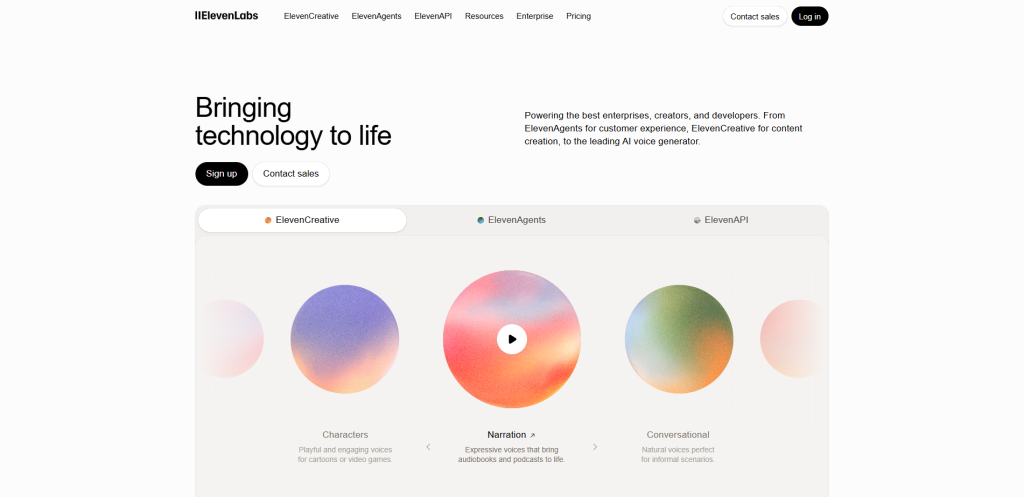
ElevenLabs is best for teams building voice agents that need the most lifelike, expressive speech. It is a voice-generation platform rather than a full agent builder, specializing in text-to-speech and speech recognition that captures tone, pacing, and emotion.
Its latest models let you shape how expressive each line feels and keep tone consistent across languages, with realtime speech recognition supporting 90+ languages and SOC 2, HIPAA, and PCI compliance. ElevenLabs does not handle call routing or logic on its own, so it works best as the voice layer paired with an agent platform like CloudTalk, Lindy, or Vapi.
Key Features:
- Highly natural, expressive text-to-speech
- Emotional and tonal control over delivery
- Multilingual voice consistency
- Realtime speech recognition in 90+ languages
- Professional voice cloning
- SOC 2, HIPAA, and PCI compliance
Integrations:
- Voice agent platforms (Vapi, Lindy, and others)
- Twilio and call workflows
- Developer SDKs and API
- LLM pipelines
- Custom application embeds
Use Cases:
- Adding a human-sounding voice to an agent
- Multilingual global voice agents
- Realtime transcription feeding call workflows
- Voiceover and content production
- Accessibility and narration
Industries:
- Software and AI products
- Media and entertainment
- Global enterprises
- Education
- Customer experience teams
Pricing:
- Free: 10k credits/month for basic TTS and cloning
- Creator: $11/month (100k credits)
- Pro: $99/month (500k credits, commercial license)
- Scale and Enterprise: custom
- Credit-based pricing by usage
7. Bland AI: best for programmable outbound voice
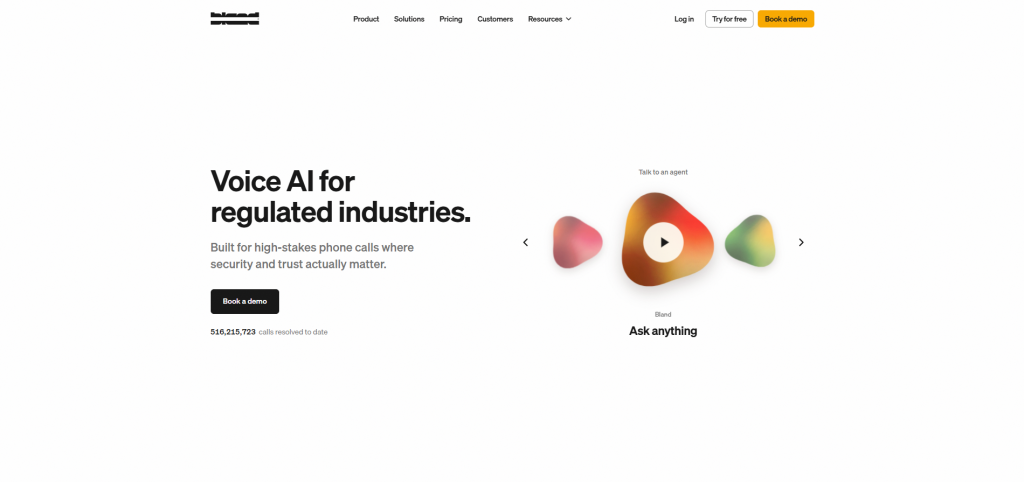
Bland AI is best for teams that want fully programmable, customizable outbound voice agents delivered through an API. It generates custom voices with specific emotions, accents, and tones, and is aimed at larger teams scaling voice across customer-facing apps, IVRs, or internal systems.
Bland plugs into a stack easily; voice responses route cleanly through workflows like Twilio without heavy SDK overhead, and it includes review analytics for call recordings, transcripts, outcomes, and sentiment. It does not offer a no-code interface or built-in agent logic, so it is typically paired with a conversation-flow tool to build a complete experience.
Key Features:
- Programmable custom voices with emotional inflection
- Multiple accents, styles, and age ranges
- API-first integration into existing stacks
- Call analytics: recordings, transcripts, sentiment
- Outcome tracking across calls
- Designed for high-volume outbound
Integrations:
- Twilio and telephony workflows
- API and webhooks
- CRM connections via developer setup
- Conversation-flow tools for logic
- Internal systems and IVRs
Use Cases:
- Large-scale outbound calling programs
- Customizable IVR replacement
- Customer-facing app voice
- Internal system automation
- High-volume notification calls
Industries:
- Enterprises
- Telecom
- Financial services
- Logistics
- Technology platforms
Pricing:
- Pricing not publicly disclosed
- Requires contacting the sales team
- Usage-based model on quote
- Tailored to call volume
- Custom enterprise terms
8. Cognigy: best for large enterprise contact centers
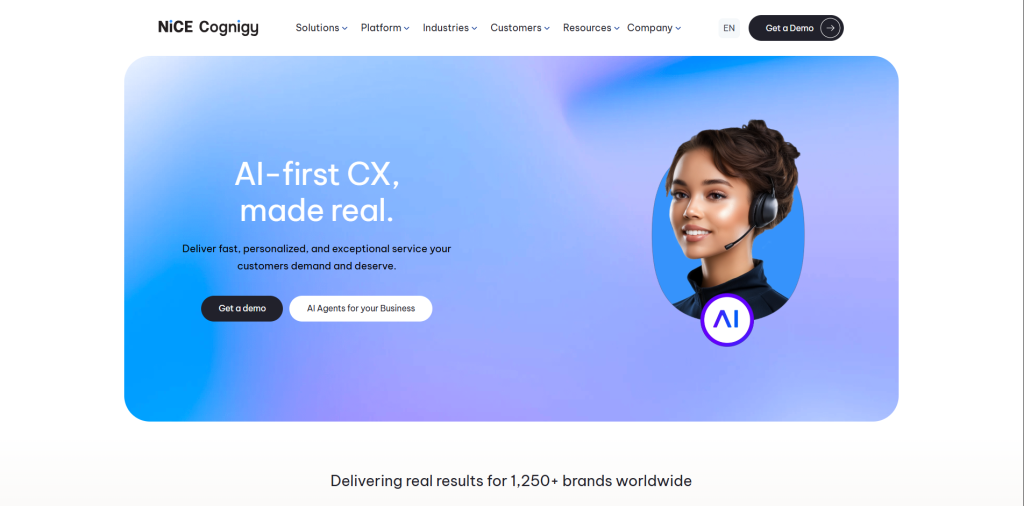
Cognigy is best for large enterprises running contact centers at scale across sectors like banking, telecom, retail, and healthcare. It is an enterprise AI automation platform whose voice agents understand intent across long conversations and can pull or update customer records mid-call.
An AI Agent Manager acts as mission control for building, deploying, and monitoring voice experiences, with a visual builder for fallback scenarios, escalation rules, and proactive outbound flows. A voice gateway gives plug-and-play integration with telephony providers like Avaya, Amazon Connect, and Genesys. Cognigy is not built for solo builders or small teams, and setup usually requires IT and ops collaboration.
Key Features:
- Enterprise-grade intent understanding
- AI Agent Manager for build, deploy, and monitor
- Visual builder for escalation and outbound flows
- Agentic AI for multi-step customer interactions
- Insights on automation rate and intent success
- Voice gateway for major telephony platforms
Integrations:
- Avaya, Amazon Connect, and Genesys
- Enterprise CRMs
- Knowledge bases
- Contact-center infrastructure
- API and custom connectors
Use Cases:
- High-volume contact-center automation
- Banking and telecom customer service
- Proactive outbound campaigns at scale
- Multi-step issue resolution across channels
- Enterprise voice and chat orchestration
Industries:
- Banking and financial services
- Telecom
- Retail
- Healthcare
- Large enterprises
Pricing:
- Pricing not publicly listed
- Custom enterprise quotes
- Scoped by volume and deployment
- Typically includes professional services
- Contact sales for terms
9. Dialpad: best for AI calling with live coaching
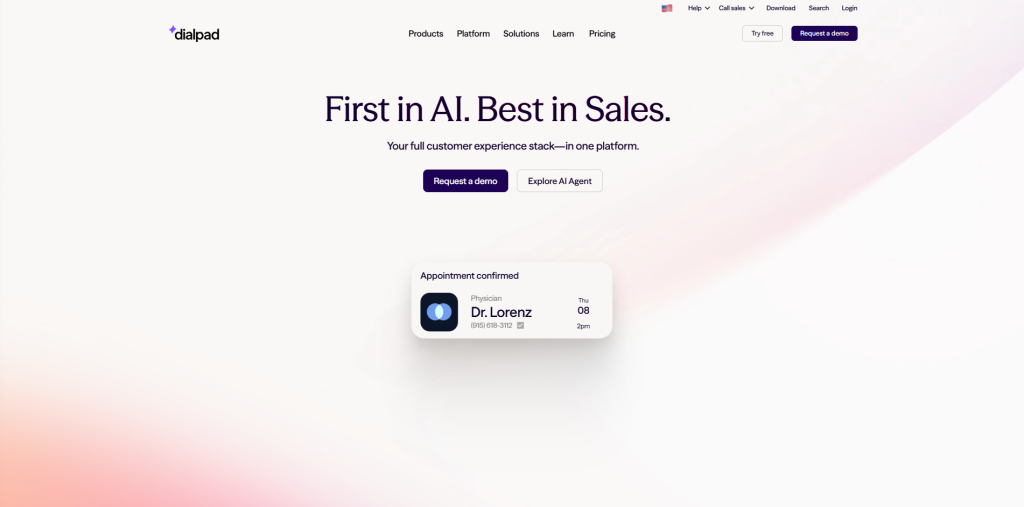
Dialpad is best for support and sales teams that want AI calling combined with real-time agent coaching. It is a business communications platform with built-in AI that transcribes calls, coaches agents live, and automates post-call summaries, running on a proprietary model trained on billions of conversation minutes.
The standout is AI Live Coach, which surfaces real-time cues and answers based on what the customer is saying, turning average agents into stronger performers without constant manager oversight. AI Recaps generate summaries and action items automatically, and AI Scorecards grade performance, all from one app spanning voice, messaging, and video.
Key Features:
- Real-time transcription and sentiment analysis
- AI Live Coach with in-call cues
- Automated post-call recaps and action items
- AI Scorecards for agent grading
- AI CSAT scoring without surveys
- Unified voice, messaging, and video
Integrations:
- CRM logging and updates
- Salesforce and HubSpot
- Helpdesk tools
- Google Workspace and Microsoft 365
- API access
Use Cases:
- Live coaching for support and sales reps
- Automated call documentation
- Quality management at scale
- Contact-center performance tracking
- Unified team communications
Industries:
- SaaS and technology
- Financial services
- Retail
- Professional services
- Contact centers
Pricing:
- Standard: $27/user/month
- Pro: $35/user/month (advanced integrations, 24/7 support)
- Enterprise: custom (SSO, 99.9% uptime)
- Add-ons for contact center and sales tiers
- Billed per user
10. CallHippo: best for budget all-in-one VoIP plus AI
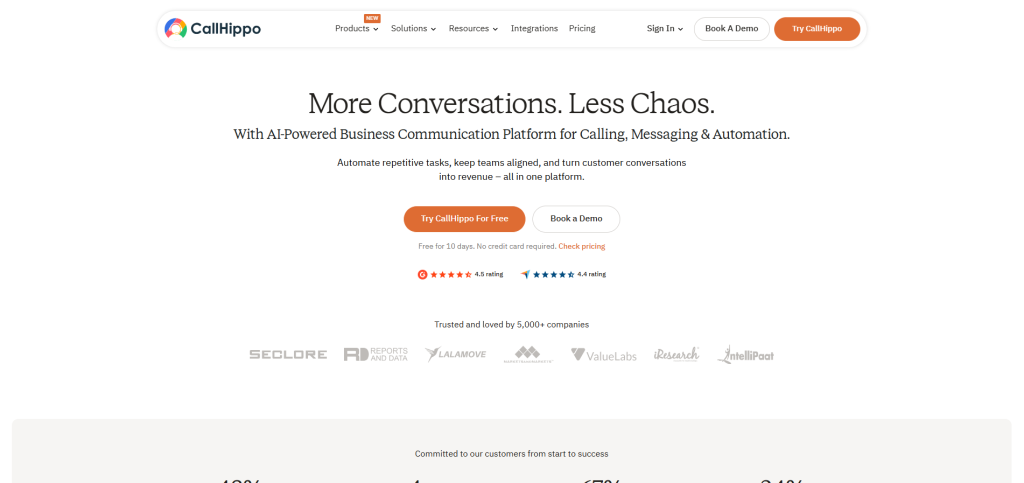
CallHippo is best for small and mid-sized businesses wanting an affordable, all-in-one VoIP system with AI agents and global reach. It is a cloud phone system where the AI Voice Agent handles inbound queries, runs outbound campaigns, and qualifies leads 24/7 alongside virtual numbers and smart IVR routing.
An AI Copilot adds real-time sentiment, live transcripts, and workflow suggestions during calls, then auto-generates summaries and follow-ups afterward. A Parallel Dialer speeds high-volume outbound, and an omnichannel inbox centralizes WhatsApp, SMS, email, and voice, making it a practical full-stack option for teams that want broad coverage at a low entry price.
Key Features:
- AI Voice Agent for inbound and outbound 24/7
- AI Copilot with live sentiment and transcripts
- Auto-generated call summaries and follow-ups
- Parallel Dialer for high-volume outbound
- Omnichannel inbox (WhatsApp, SMS, email, voice)
- Global virtual numbers and IVR routing
Integrations:
- HubSpot, Salesforce, Zendesk, and Pipedrive
- WhatsApp, SMS, and Telegram
- Email and Instagram
- Helpdesk tools
- API access
Use Cases:
- Affordable all-in-one business phone plus AI
- 24/7 inbound and outbound call automation
- High-volume outbound dialing
- Omnichannel customer communication
- Global teams needing local numbers
Industries:
- Small and mid-sized businesses
- E-commerce
- Real estate
- Professional services
- Sales teams
Pricing:
- Starter: $18/user/month (billed annually)
- Professional: $30/user/month
- Ultimate: $42/user/month
- Free Basic plan to get started
- AI features available as add-ons
11. Respond.io: best for AI voice agents on WhatsApp and VoIP, unified with omnichannel messaging
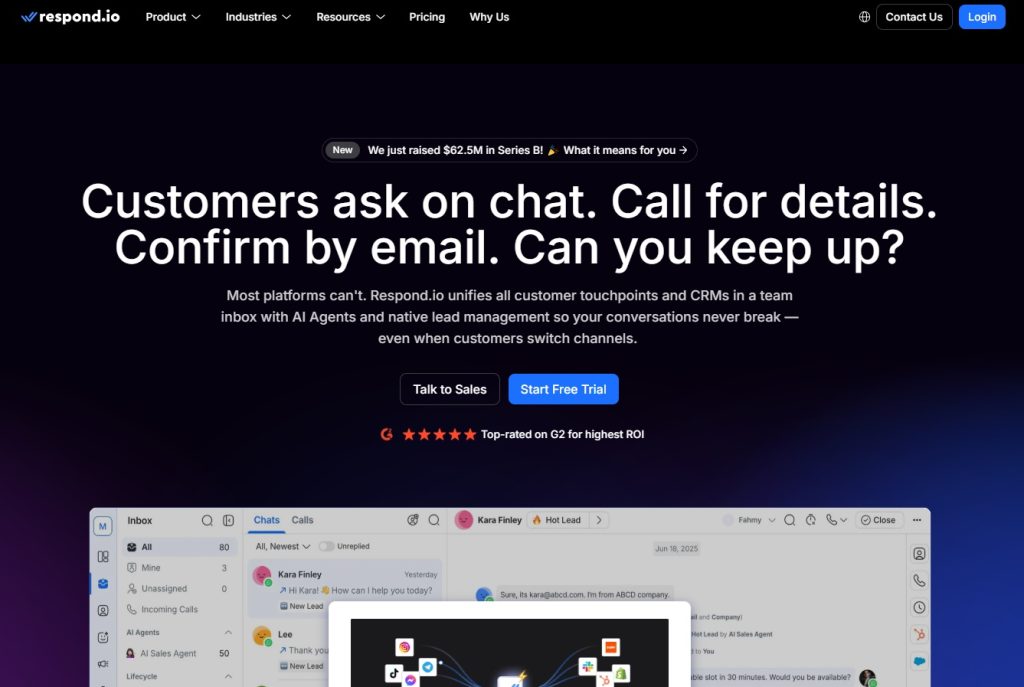
Respond.io is a customer conversation management platform for high-volume, mid-market B2C businesses where conversations drive revenue, offering Voice AI Agents across WhatsApp Business Calling and VoIP — unified with the same inbox and workflows your team already uses for messaging.
It is best for teams that want an AI voice agent built directly into their messaging stack, not a standalone dialer bolted on separately. Rather than treating voice and chat as separate silos, the Voice AI Agent operates from the same unified workspace, maintaining full customer context across every interaction.
That shared foundation is the point. The agent responds conversationally in 32 languages, can tag leads, update the CRM, and pull live data via API mid-call, and it hands off cleanly to a human when escalation rules are met, with a full call summary attached for context.
Key Features:
- Voice AI Agent over the WhatsApp Business Calling API and VoIP
- Conversational responses in 32 languages (ElevenLabs Flash v2.5 voices)
- Mid-call actions: CRM updates, lead tagging, and live API data lookups
- Live handoff to human agents with full conversation context
- Automatic call summaries logged to the unified inbox
- Sandbox testing before go-live, with a 99.999% uptime benchmark
Integrations:
- HubSpot and Salesforce CRM
- Zapier, Make and n8n for workflow automation
- Google Sheets and Dialogflow
- WhatsApp, Instagram, TikTok, Messenger, SMS, email channels, and many more
- Developer API and webhooks
Use Cases:
- Inbound call qualification on WhatsApp before human handoff
- High-value sales inquiries routed to the right rep
- Appointment and consultation booking for service businesses
- After-hours first-contact coverage across channels
- Omnichannel support that blends voice with chat
Industries:
- E-commerce and retail
- Healthcare services
- Education and enrollment
- Travel and hospitality
- Professional services
Pricing:
- Starter: $979/month
- Growth: $1959/month
- Advanced: $34279/month
- Enterprise: custom terms
- 7-day free trial; contact-based pricing (pay for the contacts you talk to), with AI Agents included
12. JustCall: best for all-in-one business calling with AI voice agents
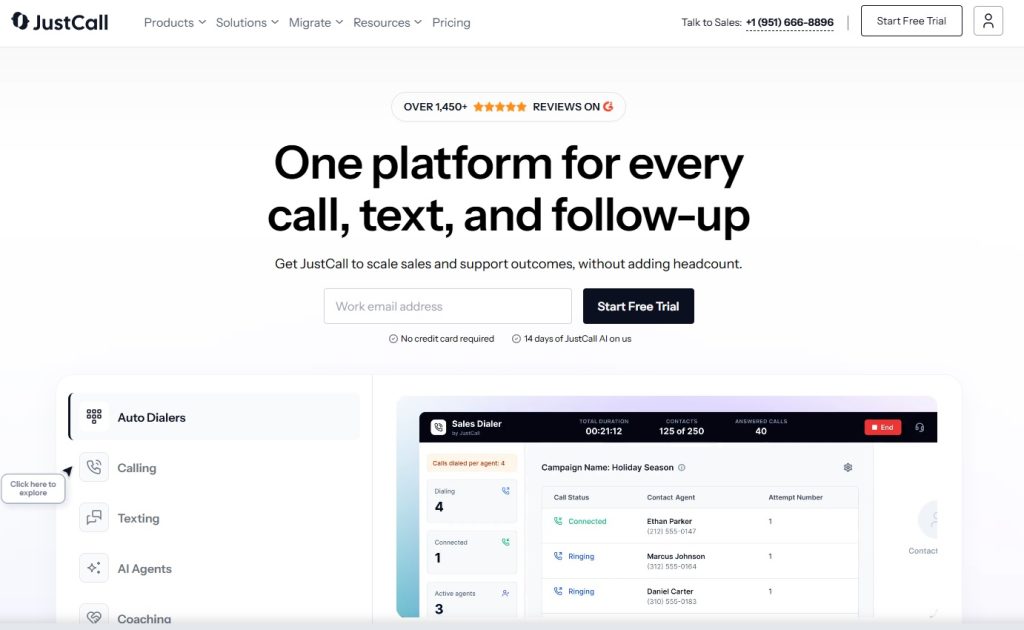
JustCall is best for teams that want AI voice automation alongside calling, texting, and CRM workflows rather than as a standalone bot. Its AI Voice Agent can answer questions, qualify callers, book appointments, send texts, and transfer calls to a human, supporting both inbound and outbound conversations. The no-code setup can go live in minutes, while automatic language detection and switching help keep multilingual calls natural.
Key Features:
- Inbound and outbound AI voice agents for support, reception, lead qualification, and appointment setting
- Real-time actions including booking, SMS, transfers, IVR navigation, and workflow triggers
- Native integrations with HubSpot, Salesforce, and 70+ other tools
- AI summaries, call scoring, and conversation analytics for coaching and follow-up
Pricing:
- AI Voice Agent add-on starts at $0.99/min
- 14 days of JustCall AI included for evaluation
What is an AI voice agent for business?
Related walkthrough
GPT-6 Can Build a 3D Rocket Using ONLY Your Voice

An AI voice agent for business is software that uses speech recognition and natural language processing to hold real-time phone conversations and take action without a human. Unlike a traditional IVR that forces callers through rigid menus, a voice agent understands natural speech, maintains context across a conversation, and can answer questions, qualify leads, book appointments, or update a CRM on its own.
The practical difference is range. A voice agent can handle an unexpected question, search a knowledge base mid-call, route the caller to the right person, and follow up afterward, much like today’s leading AI customer support platforms, all while sounding natural enough that many callers do not realize they are speaking to AI.
How to choose the best AI voice agent for your business
Choosing the best AI voice agent for your business starts with matching the tool’s interface to your team’s technical skill. Developer-first platforms like Vapi and Bland AI offer maximum control but expect API work; no-code tools like CloudTalk, Lindy, and Synthflow get you live in hours without engineering.
Weigh these factors before committing:
- Voice naturalness: Callers hang up on robotic agents. Test how human the voice sounds in a real call.
- Latency: Response delays over 2 to 3 seconds break conversation flow. Sub-second response is the bar in 2026.
- Integration depth: Confirm the agent can update your CRM, send Slack or Teams messages, and book calendar slots.
- Inbound vs. outbound fit: Some tools excel at inbound support, others at high-volume outbound. Match to your primary use case.
- Pricing model: Per-minute pricing scales fast at high volume, while per-user plans suit calling teams. Model your expected volume first.
- Compliance: For healthcare or finance, verify SOC 2, HIPAA, or PCI support before connecting sensitive data.
Top use cases for AI voice agents in 2026
AI voice agents have become core infrastructure for customer communication, answering calls and capturing leads without breaks or delays. The strongest use cases in 2026 are:
- Customer support: Answering FAQs, troubleshooting, and routing complex cases to humans 24/7.
- Lead qualification: Capturing caller information, asking qualifying questions, and booking discovery calls into a calendar.
- After-hours coverage: Catching calls that would otherwise go to voicemail, where most callers hang up.
- Appointment management: Scheduling, reminders, and intake for healthcare, services, and field businesses.
- Outbound campaigns: Reaching contact lists at scale with consistent generated sales scripts and logged outcomes.
- Internal operations: Handling IT helpdesk, HR questions, and routine internal requests.
Limitations of AI voice agents
Even the best AI voice agents have practical limits and still rely on human oversight for complex reasoning and emotional nuance. Setup takes iteration: training an agent on your workflows, terminology, and edge cases usually needs several rounds of testing.
Voice quality and latency vary by provider, costs scale with call volume on per-minute models, and complex or high-emotion situations still need a clear escalation path to a human. The most reliable deployments treat the voice agent as the first line of contact, not a full replacement for the team.
Conclusion
The best AI voice agent for businesses in 2026 depends on your stack and your call profile. For teams that want conversational call automation inside a complete business phone system, CloudTalk is the most practical starting point, pairing a 24/7 AI receptionist with the calling, routing, and CRM workflows live agents already use. Developer teams will lean toward Vapi or Bland AI, no-code builders toward Lindy or Synthflow, enterprises toward Cognigy, and voice-quality specialists toward ElevenLabs.
Match the tool to how your team actually works: technical skill, inbound versus outbound balance, integration needs, and expected volume. Test with real calls before committing, and confirm latency and naturalness for yourself, because that is what determines whether callers stay on the line.
Frequently Asked Questions
Q1. What is the best AI voice agent for businesses in 2026?
The best AI voice agent for businesses in 2026 depends on the job, but CloudTalk is a strong overall choice for calling teams because it combines a 24/7 AI receptionist with a full business phone system and CRM workflows. Developer teams often prefer Vapi for API control, while Lindy and Synthflow lead among no-code builders.
Q2. What is the difference between an AI voice agent and a traditional IVR?
An AI voice agent holds a free-form, natural conversation, while a traditional IVR forces callers through rigid menus like “press 1 for billing.” The voice agent understands natural speech, maintains context across turns, and can take actixons such as updating a CRM or booking a meeting, handling a far wider range of scenarios without a human.
Q3. Which AI voice agent is best if you do not want to write any code?
CloudTalk, Lindy, and Synthflow are the strongest no-code options. CloudTalk deploys an AI receptionist in hours on top of your phone system, Lindy uses a drag-and-drop builder for call flows that trigger CRM and Slack actions, and Synthflow offers a visual builder for agencies, though it has a steeper learning curve around logic blocks.
Q4. How accurate are AI voice agents?
AI voice agents are typically 80 to 90% accurate for structured inquiries when properly trained and configured. Accuracy depends on call complexity, background noise, and how well intents are mapped, so clear scripts, clean audio, and regular testing matter. For simple, high-volume interactions, top agents can match human consistency.
Q5. Can AI voice agents handle both inbound and outbound calls?
Yes, most leading AI voice agents handle both inbound and outbound calls. Tools like CloudTalk and Retell AI focus on inbound coverage and routing, while platforms like Bland AI and Vapi are built for high-volume outbound, and several, including Lindy and CallHippo, support both directions in one platform.
Q6. Are AI voice agents suitable for healthcare or other regulated industries?
AI voice agents can be suitable for regulated industries when the platform meets the right compliance standards. Tools such as Lindy and ElevenLabs offer HIPAA-compliant and SOC 2 options, and CloudTalk serves healthcare services with secure call handling, but you should always confirm SOC 2, HIPAA, or PCI coverage and complete a security review before connecting sensitive data.