
Top 7 CRM Development Companies: How to Choose the Right One in 2026
Looking for a CRM development company? Compare the best CRM software development companies and learn how to choose the right custom CRM partner
Picking the right CRM Development Company can genuinely make or break how well your business manages customer relationships down the line. Off-the-shelf CRM software works fine for some teams, but the moment your workflows get specific industry rules, unusual sales pipelines, and legacy system integrations, a generic platform starts feeling more like a workaround than a solution.
That’s exactly where custom CRM development earns its price tag. The right development partner doesn’t just build software; they build something that shapes around how your team actually works, not the other way around. The catch is that the market is crowded; dozens of companies claim CRM expertise, and a lot of their websites look nearly identical.
In this blog, we’ll walk through what actually matters when evaluating a CRM development partner, followed by a genuine list of companies worth considering in 2026, and how to narrow it down to the right fit for your business.
Quick Glance: Top CRM Development Companies
| Company | Best For |
| Salesforce Consulting Partners | Proven, feature-rich platform |
| Microsoft Dynamics Partners | Microsoft-centric businesses |
| HubSpot Solutions Partners | Fast, SaaS-friendly setup |
| Zoho Partner Network | Budget-conscious startups |
| OutRightCRM | AI-driven automation, quick onboarding |
| Accenture / Deloitte | Large-scale enterprise transformation |
| ScienceSoft | Regulated industries, complex integrations |
What to Look for in a CRM Development Company
And before diving headlong into any list, it might be helpful to understand what really sets a good development partner apart from an impressive looking one:
Platform knowledge:
Certificates aren’t all that important; practical experience with the particular CRM platform or custom solution is far more valuable.
Integration capability:
Usually, the main bottleneck for most CRM projects is integration of a system with other solutions, databases, etc., rather than the development process itself.
Industry experience:
The firm that implemented CRM solutions for the healthcare or logistics industry is more aware of the peculiarities of this sphere than generalists.
Post-launch support:
It should be noted that CRM is not only about initial development but also ongoing support after the project is completed.
Transparent pricing and scope:
Costs for CRM projects vary wildly, from around $10,000 for smaller builds to well over $500,000 for enterprise-level systems. A trustworthy partner explains where your project likely falls and why.
Client feedback and case studies:
Real client outcomes tell you more than a polished homepage ever will.
None of this is Complicated; it just takes a bit of due diligence and understanding custom CRM development before signing anything.
Top CRM Development Companies
Here’s a genuine rundown worth considering, built around real specialization rather than a generic one-size-fits-all approach:
Salesforce Consulting Partners
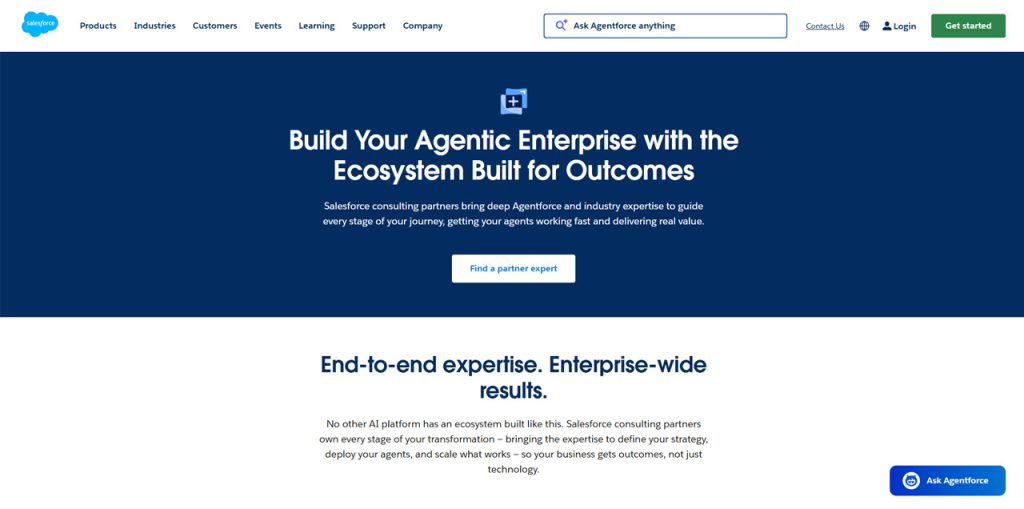
They are certified partners specializing in Salesforce implementations and customization, which is one of the most widely used CRM systems in the world. These partners usually have expertise in the Salesforce ecosystem, including Sales Cloud and AI-driven features, though some businesses eventually find themselves customizing Salesforce to the point where it still makes financial sense.
Microsoft Dynamics Partners
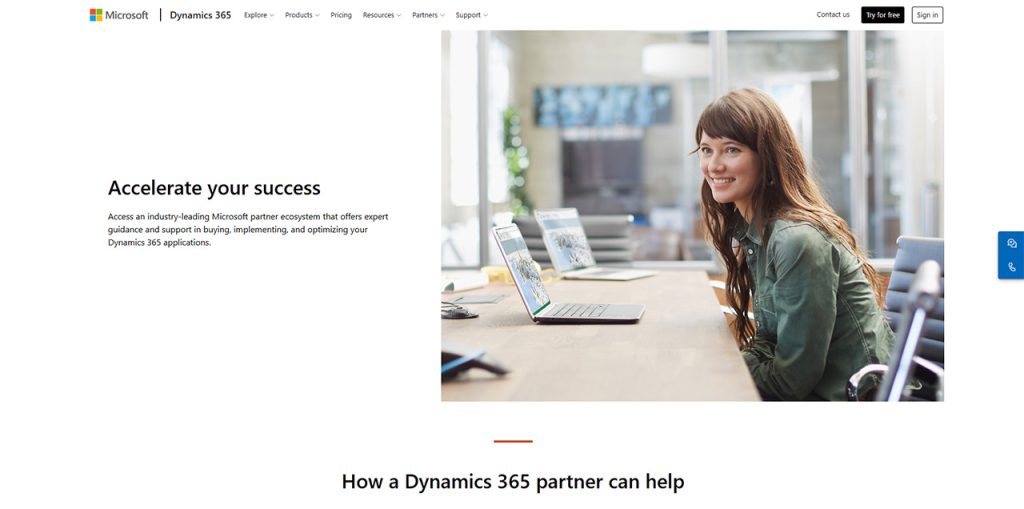
Gold-level certified teams that were dedicated to building CRM solutions on Microsoft’s platforms, deeply integrated with Office, Teams, and SharePoint. Perfect choice for businesses already residing in the Microsoft world all day long.
HubSpot Solutions Partners
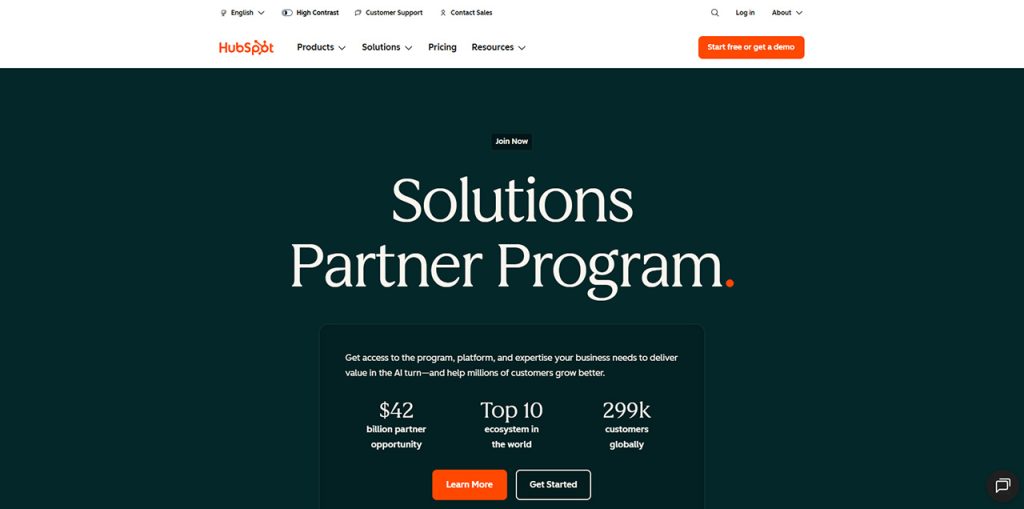
Famous for their fast deployment and good integration with marketing automation, HubSpot Solutions Partners work best for SaaS-based companies and fast-growing businesses that need to launch their CRM solution as soon as possible.
Zoho Partner Network
Budget-friendly choice with really customizable solutions, preferred by startups and small businesses because they offer powerful functionality at a lower cost.
OutrightCRM
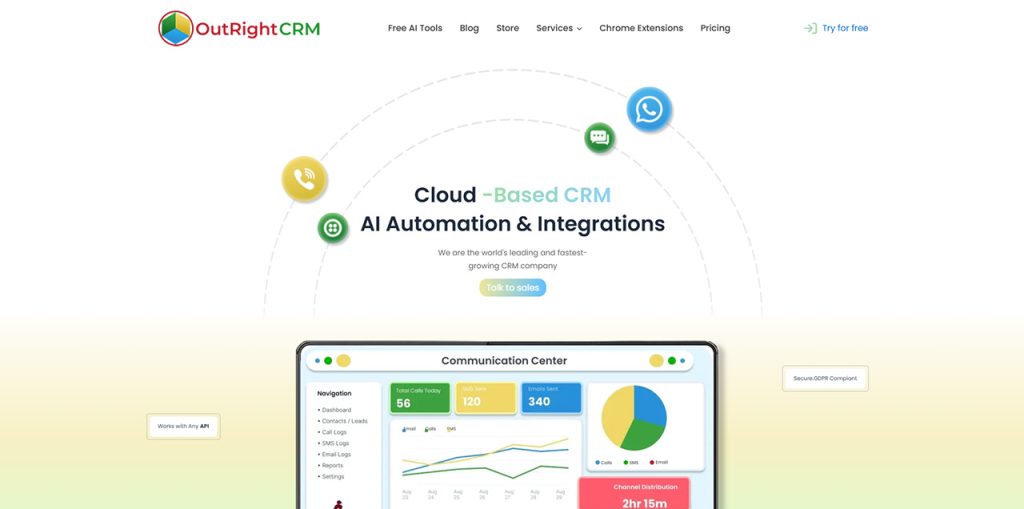
This is an AI CRM system that is based on the cloud, is automated, and has API integrations across various channels. OutrightCRM features include sales pipeline management, email sequences, marketing automation, analytics, and others. This CRM system automatically integrates with many applications such as Gmail, WhatsApp, Slack, Stripe, and Zapier. There are specialized CRM solutions for different sectors, including real estate, healthcare, and SaaS. There are SuiteCRM plugins for users working within this environment.
Accenture and Deloitte
They both deal in the most premium levels of enterprise-level CRM, involving highly complex and large transformation projects for Fortune 500 companies. Given that the time frames and costs are huge, extending beyond a year and into the millions, this is something only relevant for the largest firms.
ScienceSoft
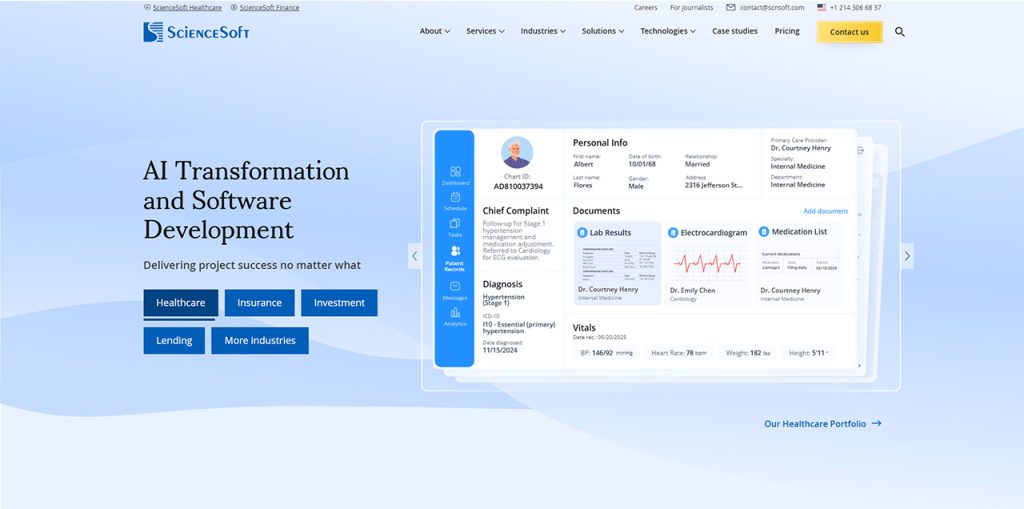
An IT consulting and CRM development firm with over 30 years in the industry, specializing in large-scale data migrations and integrations across complex enterprise environments. Their industry-specific work spans healthcare, retail, banking, and manufacturing, making them a solid fit for regulated industries that need compliance and governance baked into the build, not bolted on afterward.
It all depends on the size of your company and its budget in the end.
Custom CRM vs Off-the-Shelf: Which Should You Choose
Related walkthrough
SuiteCRM Training Day 4 | Outright Utils and Flight Dashboard for Faster CRM Development

This is really the core decision behind picking a CRM Software Development Company in the first place, build something custom, or implement an existing platform.
Off-the-shelf platforms like Salesforce, HubSpot, or Zoho will suit you well in case your sales cycle is somewhat standard. They’re easy to deploy, less costly at the beginning, and have developed support networks. This may be more than enough for many SMEs.
In any other cases, where your workflow doesn’t fit into some standardized template, it’s time to think about custom CRM software built specifically around it. It’s usually more expensive and requires more time, but in most cases, this approach makes sense.
There’s also a middle ground worth mentioning. Platforms like OutrightCRM sit somewhere between the two, offering strong out-of-the-box automation and integrations, but with enough flexibility to adapt to different industries without a full custom build from scratch.
The honest answer is that neither option is universally better; it depends entirely on how specific your operational needs actually are, and how much budget and time you’re willing to put toward getting there.
How to Choose the Right Company for Your Business
Narrowing down the list comes down to a handful of practical factors worth weighing before signing anything:
Budget range:
Enterprise companies such as Accenture or Deloitte are only relevant to enterprise-level budgets. If you run a small or medium-sized business, then it makes much more financial sense to choose between Zoho, HubSpot, or OutrightCRM.
Timeline for launch:
Off-the-shelf CRM solutions can be launched within weeks, while custom-developed platforms usually take from three to six months or even longer in case of enterprise-level systems.
Level of integration complexity:
If your CRM has to communicate with legacy systems or special software specific to your particular industry, make sure the company you’re talking to has relevant experience.
Post-launch support quality:
It will become particularly important once the development phase is complete and includes factors such as response time, frequency of updates, and type of support provided.
Relevant industry experience:
A company that’s built CRMs for healthcare or real estate before will understand compliance and workflow detail a generalist might miss entirely.
There’s not universally “best” answer here, just the option that lines up with your budget, timeline, and how specific your operational needs really are.
Conclusion
Ultimately, it is necessary to find the company that matches your real needs, and not to go after the most famous one. Obviously, such enterprises as Accenture and Deloitte will suit only the Fortune 500 type of changes, while Zoho, HubSpot, and OutrightCRM platforms are much more appropriate for small and medium-sized businesses when it comes to affordability and development time.
There is a variety of differences between these eight companies: platform specialization, industry specialization, automation, and even just managed services. The most important thing is to be sincere about your budget, timeline, and unique workflow before making up your mind on one direction or another.
No matter which way you go, full-scale customization or using some well-known platform such as OutrightCRM: the best choice is always the one that fits your specific business model.
Frequently Asked Questions
Q. What’s the difference between a CRM development company and a CRM platform?
The CRM platform, like OutrightCRM and Salesforce, is ready-made software that is simply implemented and customized. The CRM development company can either implement that platform for you or build something fully custom from scratch.
Q. How much does custom CRM development cost?
Costs vary widely depending on scope. Smaller custom builds can start around $50,000, while large enterprise projects with heavy Accenture or Deloitte-level involvement can run into the millions.
Q. Is OutrightCRM suitable for small businesses?
Yes, it is. This platform was developed considering AI-based automation and fast implementation in mind, which makes it relevant for small and mid-sized companies.
Q. How long does CRM implementation usually take?
Ready-made software can be deployed within one to four weeks. Custom CRM can be developed in three to six months, and big enterprise solutions may require much more than a year to implement.
Q. Should I choose a custom CRM or an off-the-shelf platform?
It depends on how specific your workflows are. Standard sales processes usually fit off-the-shelf platforms fine, while unusual pipelines or heavy legacy integrations tend to push businesses toward custom development.