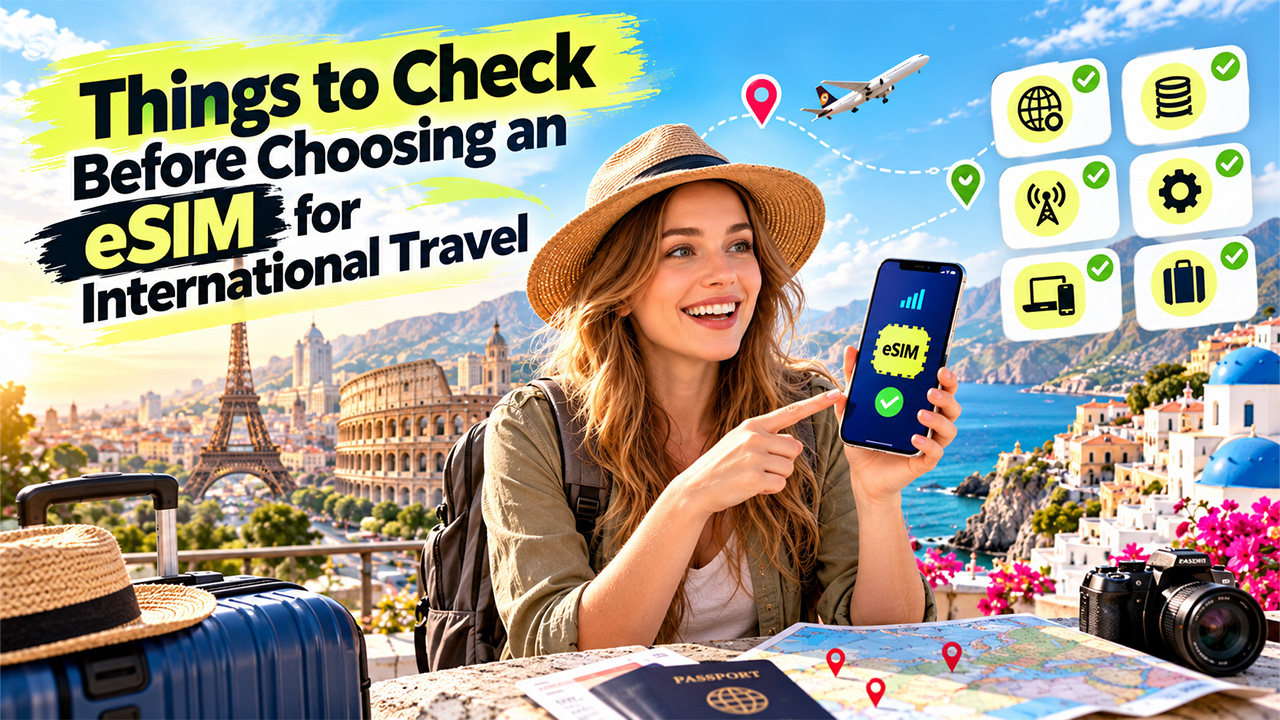
6 Things to Check Before Choosing a Travel eSIM for an International Trip
Choosing a travel eSIM? Check coverage, data, networks, activation, hotspot support, and your travel style before you buy to stay connected abroad.
International travel is easier when your phone connects as soon as you arrive. Maps help you find your hotel, messaging apps keep you in touch, and mobile data lets you check transport or booking details without searching for a SIM shop. A travel eSIM can provide that connection without requiring a physical card. However, plans differ in coverage, data allowances, activation rules, and supported features.
Choosing a reliable travel eSIM starts with looking beyond the price. The right option should work at your destination, provide enough data for the way you use your phone, and fit the length and structure of your trip. These six factors can help you compare plans and choose one that suits your itinerary.
1. Check coverage for every destination
Your first question should be: is my eSIM valid for the country I am travelling to? There are eSIM plans that are valid in one country or just a single destination, but there are lots of plans that are valid in entire regions and in some cases in even larger areas.
If you intend to visit more than one destination during your trip it’s also good to know. A traveller, for example, leaving France and heading to Italy and Spain probably wouldn’t want to buy and activate a new eSIM for every country; they might prefer to purchase a country plan. For instance, if you’re only visiting Japan, it’s not worth paying for other destinations.
Pay attention to which countries are included in the plan and make sure that all the countries you expect to visit are listed. The more countries the policy covers from the same provider, the more comprehensive it will be – so consider the specific policy rather than the wider provider.
2. Find the data allowance to your trip

Your needs will vary depending on your use. You use your mobile phone for things like looking at maps and sending messages and do not go online all the time and it does not use as much data as streaming videos, having lots of video calls, or working from your laptop.
Consider how much you use the internet each day before choosing a plan. For a day in the city, there’s little point in having lots of data, but for a week’s business trip, you’ll probably want a lot. Look to see if a deal has an allocated amount of data or is unlimited.
Opt 1, opt 2: Deciding purely on price could give you not enough information. It could be worth choosing the bigger plan so you don’t have to buy additional data when you’re on the move.
3. Look at the available networks
Related walkthrough
How to Choose the Right WordPress Theme for Your Website

A plan offers a mobile network, not a particular eSIM, so the strength of signal you receive in any given place is entirely dependent on the networks available on your plan.
Find out which local network partners the plan has first, and look at the coverage information provided by the retailer. This is especially relevant if you plan on travelling to rural areas, islands, hilly areas, or on a long car ride.
Coverage in a smaller city may differ from coverage in a big city. If you match up the network information with your trip, you can pick a plan that better fits the locations you’ll travel.
4. Understand the activation process
An eSIM can be installed before you leave home, which can make arriving in a new country much simpler. If you want to understand the technology first, What Is eSIM explains how eSIMs work and how they differ from traditional physical SIM cards. However, the setup process varies between plans. Check whether installation uses a QR code, an app, or another method. Find out when the plan starts, too. Some plans begin when they connect to a supported network, while others may follow different activation rules.
Installing the eSIM before departure can give you time to resolve compatibility or setup issues while you still have access to your regular connection. Keep the installation instructions available in case you need them after landing.
5. Check hotspot and tethering support
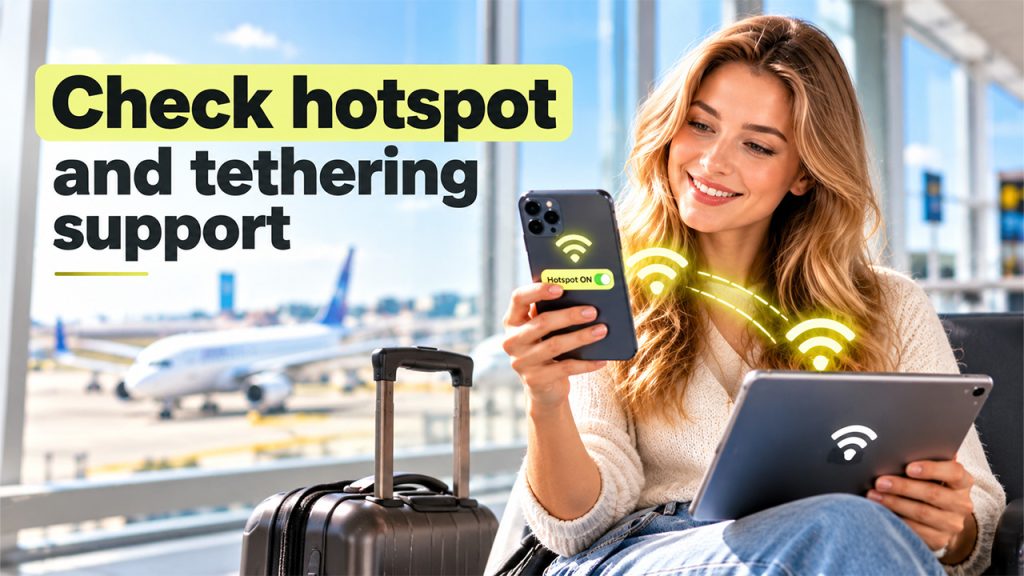
There are many travelers who need mobile data not just on their mobile phones, but on their laptops or tablets, too, for work purposes.
If you think you might have to share your connection across multiple devices, remember to check whether your chosen eSIM plan supports hotspot or tethering. This feature is especially useful when you are traveling with another device and not willing to spend money on a separate connection.
Hotspot policies vary depending on the plans. So, do not assume that every eSIM will come with this feature. Before purchasing, check out the specific plan details, particularly for laptops if that is an important part of your trip.
6. Compare plans based on how you travel
There is no single travel eSIM plan that fits every traveler. Every traveler plans differently. Factors like location, length of the trip, data needs, and number of countries can all influence your choice and affect which option makes more sense.
For instance, if you are going for a short vacation in just one country, then a simple country-specific plan might work well for you. Whereas a trip covering several European countries may be better suited to a regional option. And someone who is traveling regarding work requirements may need more data and want better hotspot support.
So, do not make decisions based on pricing alone. You must compare these factors together to make informed decisions. A plan with a lower price will offer you less data or only cover a handful of destinations. Similarly, a larger plan may provide you with features that you don’t even need for a short trip.
Therefore, check all this before you leave for your trip to another country or city. If you confirm compatibility in advance, you will have ample amount of time to address any issue while you can still use your normal mobile services without interruption.
Picking the right and reliable travel eSIM for international trips is more than just finding the cheapest available plan. You must check the destination it covers, its data allowances, network access, requirements for activation, hotspot support, and the compatibility of the device before you go ahead and pay to seal the deal.
The final decision should be guided by your itinerary, especially if you are planning to visit several countries at once. If you have these details in advance, an eSIM can make mobile connectivity a simpler part of your travel preparation and help you stay connected from arrival to departure.