

What Good MVP Development Services Should Deliver, from Scope to Launch
Learn what good MVP development services should deliver, from product discovery and scope definition to development, testing, launch, analytics, and growth.
When you think of a new product idea, it usually comes with a long list of features attached to it. And yes, it is tempting to build all of them before you show this product to anyone. It takes months of time and effort to do that along with a large budget; all of that before confirming if the idea is worth pursuing or not. Professional MVP development services exist to reverse that order, turning an idea into a working product quickly enough to learn from real users before the bigger investment is made.
A minimum viable product does not classify as a rough prototype or a mockup just to test if things work out. Rather, it is a functional, focused version of the product. People can use it, and it is built with the capability of growing into the next version if the idea proves itself to be worth pursuing.
When an MVP Is the Right Starting Point
However, every product doesn’t need to start as an MVP. Few products such as tools for internal use with fixed requirements, or systems that are meant to replace an existing platform entirely may be better served by a full build. MVP development services are most useful when the key assumption of the product remains unproven. Things like whether the product is needed by the people or whether it is useful enough for people to pay for it deserve the most investment.
This approach also works well for businesses that have established themselves well and want to test a new line of service. One way to get instant, real feedback is launching a focused version to a small group of customers. It shows you whether the idea works without disrupting your usual business workflow. This will give you insights before you even invest a large sum of money upfront.
Defining the Smallest Version That Can Prove Demand
All the important decisions are made way before even a single line of code is written. The first stage, which is a product discovery phase, confirms who the first users are, what problems they are looking solutions for, and which single outcome would prove that the product deserves to be developed further. Using wireframes, developers turn those answers into screens, and user flows that everyone can review and give approval.
At this stage, features take priority. Every feature is weighed against one question: is it needed to prove demand, or can it wait? Now, good MVP development services earn its reputation here. They help founders narrow down the list to the smallest version that can easily deliver real value. Why is this important? Because each extra feature takes time, cost, and risk, and it might not even add any learning or value to the product.
Design and Architecture in Parallel
Once everyone is on the same page about the scope of the product, interface design and technical planning move forward at the same time. UX/UI design helps make navigating product clear and simple, so customers can use it without getting confused or irritated. While the technical architecture helps you figure out how data, pages and integrations come together to make sense.
When all these phases run parallelly, it reduces the overall timeline of the product without compromising the quality. Moreover, designers and engineers can identify issues early and fix them before they reach the final stage. For instance, a screen that would cost more to build as drawn, instead of discovering them halfway through development.
Choosing a Tech Stack That Will Not Need Replacing
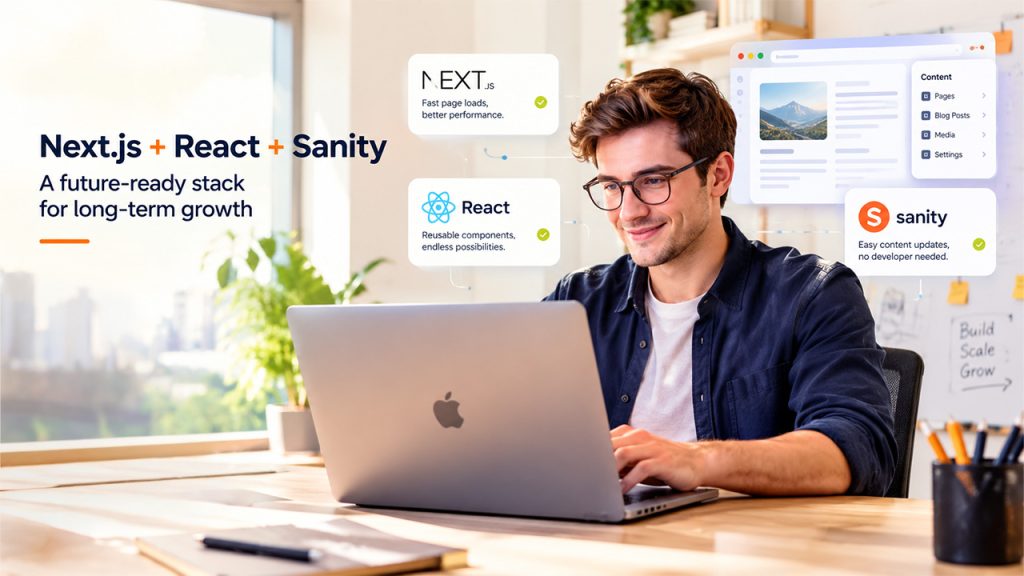
One of the most common mistakes seen in SaaS product development is that developers build the first version based on tools that are not capable of supporting a real product. And then, they have to pay again to rebuild everything from scratch when their idea gains traction. However, you can avoid this trap with a stable, widely used stack. For instance, if you use Next.js development with React and pair it with a headless content management system such as Sanity; you can make your product page load way faster. Additionally, developers can extend components further, and team can update content without having to call engineer for help.
The aim is a codebase that becomes version one of the products instead of something thrown away after testing. When MVP development services are planned this way, a successful launch leads straight into growth instead of a costly rewrite.
Where AI Speeds Up the Build and Where It Does Not
Related walkthrough
Chapter 9 | SuiteCRM Custom Code Architecture | Logic Hooks, Workflows & Upgrade-Safe Development

AI-assisted development has changed how quickly a first version can come together. AI tools can generate scaffolding, boilerplate code, first-pass interfaces, and draft tests, which frees engineers to spend more time on the parts that require judgment.
That judgment still belongs to people. Architecture, security, code review, and final quality checks need senior engineers who understand how the product will grow and where it could fail. The most reliable approach uses AI to remove repetitive work while ensuring nothing ships without human review.
Weekly Progress Instead of a Big Reveal
A typical focused build runs in short sprints, with progress visible on a staging site each week. In well-run MVP development services, this rhythm keeps the founder involved in decisions while the product takes shape, and it makes it easy to adjust priorities if something looks different on screen than it did in a wireframe.
Regular updates significantly reduce risk. When problems appear while they are still small, they are easy to fix. This makes sure that your product turns out to be what you expected and does not surprise you at the end of the moment.
Testing, Security, and Analytics before Launch
It doesn’t matter if the product is small; it still needs to be reliable. When the product is being tested, QA and security testing should review code, conduct a security audit, and check across devices and browsers. This way, you can ensure that early users see the product that works the way it is supposed to.
A product analytics setup belongs to the launch checklist too. The whole purpose of an MVP is to learn, and that is only possible when sign-ups, key actions, and drop-off points are measured from the first day. Without that data, the team is left guessing what users’ value.
Owning the Code and the Accounts

Founders should leave the project in full control of what they paid for. That means ownership of the code repository, design files, domain, hosting, and analytics accounts. Clear ownership makes it possible to bring in new developers later, raise investment with confidence, and avoid depending on a single vendor for every change.
It is worth confirming ownership terms before work begins. Reputable MVP development services treat this as standard and set up accounts in the client’s name from the start.
Launch Is the Start of Learning
The real test begins when your product goes live. Components like deployment, domain setup, and SEO baseline make your product easy to find. And search, paid ads on Google and Meta or email campaigns can drive the early traffic from targeted users.
When users use the product and how they use it, it shows which features they find useful and which they ignore. Let those insights guide you on what you should build next. Teams that combine product development with growth marketing can move from these findings to new tests without handing the product between separate vendors.
How Long an MVP Usually Takes
The timeline of your product depends on the scope. However, even a well-defined MVP takes at least three to six weeks. Scope and wireframes take roughly one week. Similarly, designing and architecture need a minimum of one week, two for building sprints, one for testing and security checks, and finally, launching and growth setup take a week or more. This is the estimated time for small and simple products. Whereas larger or more complex products take longer. To make the process easier, the discovery phase is the best time to agree on a realistic schedule.
Therefore, it is important to choose the best MVP development services that have a clear, defined process, offer a stable stack, and focus on learning after the launch. It gives your new idea the best shot to prove itself quickly. The aim is not to build everything at once and fast. Rather, it is to build the right first version and let real users guide what should come next.