
How to Build a CRM Workflow for Employee Relocation
Explore how businesses can use CRM workflows to organize employee relocation, coordinate departments, track documentation, and manage important deadlines.
Staying organized when an employee moves to another location isn’t an easy feat. And that’s especially true if an employee moves overseas. They’ll need a coordinated effort from company managers and other key personnel to make their transition successful. A well-structured CRM workflow for employee relocation can help businesses coordinate these activities, organize information, and keep every department aligned throughout the move.
Thankfully, a good customer relationship management (CRM) system can ensure that all information is updated and shared through a central hub. While CRMs are known for their ability to organize customer information, they’re more versatile than that. Read on to learn how to build a CRM workflow for employee relocation.
Plan Your CRM Workflow for Employee Relocation Determine What Needs to Happen
How many individuals need to sign off on an employee relocation? And who will account for the costs and any changes to the employee’s salary? A company should determine everything that needs to happen before creating a CRM workflow for employee relocation. This includes identifying approval requirements, assigning responsibilities, estimating costs, and establishing a timeline for the move.
Human resources employees may need to verify that the move is feasible in the first place. And management teams will need to show that the move is compatible with employee and company expectations. For a small business or a large one, moving an employee to a different country requires shifting communication channels.
With any international move, an individual will need to have the right documentation in place. For a work-related relocation, moving assistance costs may be part of the package. As a company builds its CRM plan, accounting for these costs plus travel timelines is critical.
Additionally, moving an employee to a new place should come with an onboarding process. And the company will want to stay in close contact with the employee to make sure the transition is as seamless as possible.
Multiple teams, including accounting and human resources, will need to be involved in mapping out a CRM workflow. When everyone knows their role, it’s easier to keep everything on track.
Track Relocation Progress
If several employees are relocating abroad, it’s important to establish separate files for each of them in a CRM. This is an essential part of an effective employee relocation CRM workflow, as it allows businesses to track individual requirements, deadlines, expenses, and progress from a centralized location. That way, businesses can be sure they’re checking every box along the way as their employees settle into new work settings.
A thorough CRM record should include descriptive information, like the employee’s name and position. It should also include their manager’s name, date of hire, and other key contacts in human resources and accounting.
Additionally, companies should specify costs associated with the move that they will cover. These may include money for housing, travel costs for flights and lodging, and other expenses incurred along the way.
The timeline for the move should be outlined within the record. Businesses should clearly state why the employee is relocating and when their anticipated arrival and start dates are. And, of course, the CRM record should state where the employee will be located and for how long.
Perhaps the employee is relocating to London for a 14-month contract, for example. The CRM record in this scenario should indicate the nature of the contract and compensation information.
All CRM records should have emergency contact details for family members or close friends. Records should verify that the employee is authorized to work in the new location, as well. An employee would need a passport, work visa, and contract.
As essential items are shared to the CRM, those managing the information should be able to click checkboxes or otherwise indicate that a given task is nearing completion. Individuals involved with the business’s finance department and human resources should have access to the file to avoid duplicating information.
Assign Responsibilities in Your Employee Relocation Workflow Delegate Responsibilities
Related walkthrough
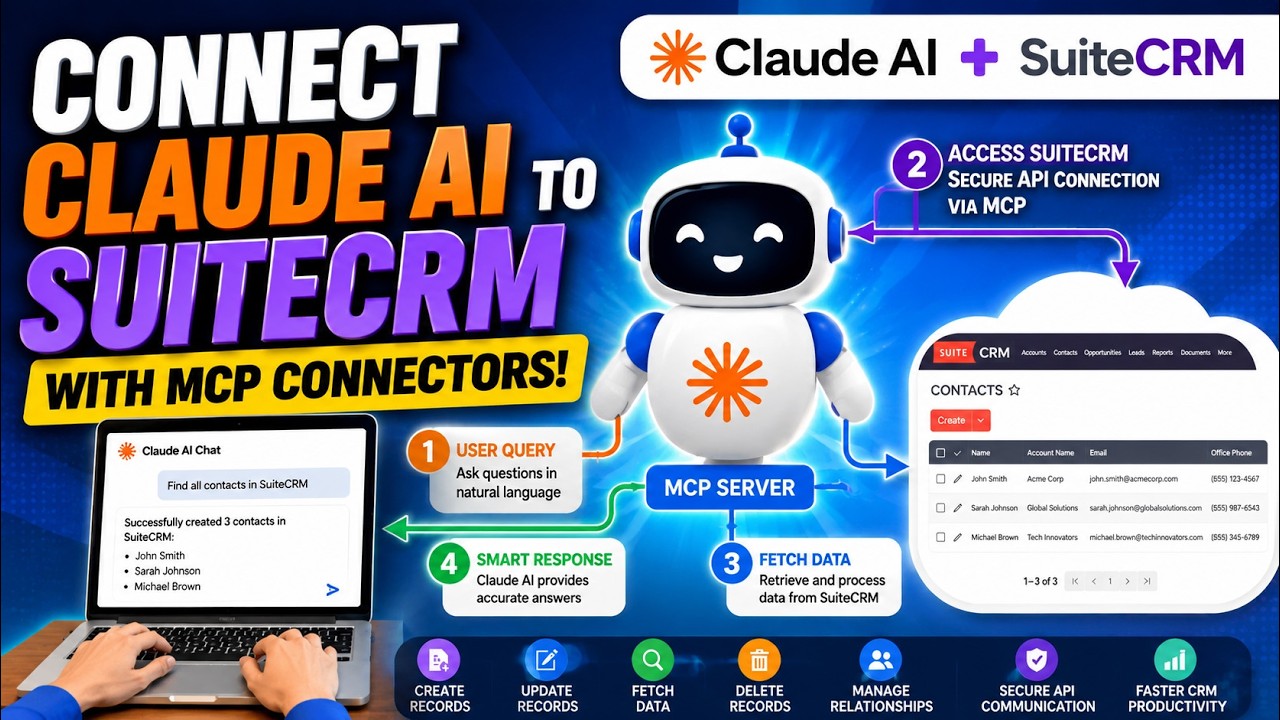
SuiteCRM MCP Server Tutorial | Connect Claude AI with SuiteCRM & Automate CRM Workflows

A CRM record provides the framework for an employee’s relocation. As part of the CRM workflow for employee relocation, a company must also ensure that the right people are assigned to facilitate each stage of the move. The individual overseeing the transition will need to assign responsibilities to help make sure everything from the relocation budget to the travel logistics is handled properly.
A manager would be the person to initiate the process by proposing and then confirming the relocation need. They would provide the details for the contract, including the employee’s job description and the reason for the move.
Employees working in a company’s finance department would tackle budgetary concerns, like setting limits for the relocation expenses. They would also be the ones to shift payroll numbers to align with the employee’s new salary.
Personnel in human resources would help line up flights and other accommodations. They’d check what documentation is necessary for the employee to work abroad. And they’d follow up with onboarding tasks once the employee has relocated.
With all of these tasks housed in a CRM record, it’s easier for everyone to contribute to a successful process. Best of all, rather than manually entering tasks, the system can generate a set of responsibilities that those overseeing the process can adjust, if needed. Ultimately, a good CRM record ensures that all critical steps are identified.
Understand the Tax Responsibilities
Just because someone moves to another country doesn’t mean they’ll be exempt from U.S. tax obligations. It’s important for employees to understand what’s required, especially if they have bank accounts in foreign countries.
A Foreign Bank Account Report (FBAR) may be necessary for some individuals with over $10,000 in foreign accounts. Employees who meet this threshold should review FBAR filing requirements to stay compliant. Details about FBAR and other tax details could be housed in the CRM, and human resources could provide them to employees as resources.
While human resources and finance personnel want to manage comprehensive records for employee relocations, they need to be careful, too. The handoff process should not involve sharing personal or financial details for the employee unless necessary.
At the same time, the CRM should have a logical progression for handoffs. For example, the finance department may need to approve a travel budget before someone in human resources can make hotel arrangements. With a clear order to the tasks within the CRM, everyone can be accountable and work together toward a seamless relocation.
Managing these requirements through an organized employee relocation workflow helps HR and finance teams coordinate documentation, communicate important deadlines, and keep relevant records accessible to authorized personnel.
Simplify Employee Relocation With a Structured CRM Workflow Make Relocation Easier to Manage
CRMs can do far more than manage customer relationships, and when employees are transitioning to roles in new countries, CRMs provide a critical framework. Managers, human resources personnel, and finance department employees can collaborate to cover all key tasks for the move. From assembling tax resources to making travel arrangements, employees can assign and monitor tasks in a central CRM hub.
Departmental handoffs don’t have to be clunky or unclear. With a clear CRM workflow and assigned responsibilities, teams can help facilitate a positive experience for employees as they relocate abroad.
Read also: How AI Tools Can Improve Everyday Workflows