
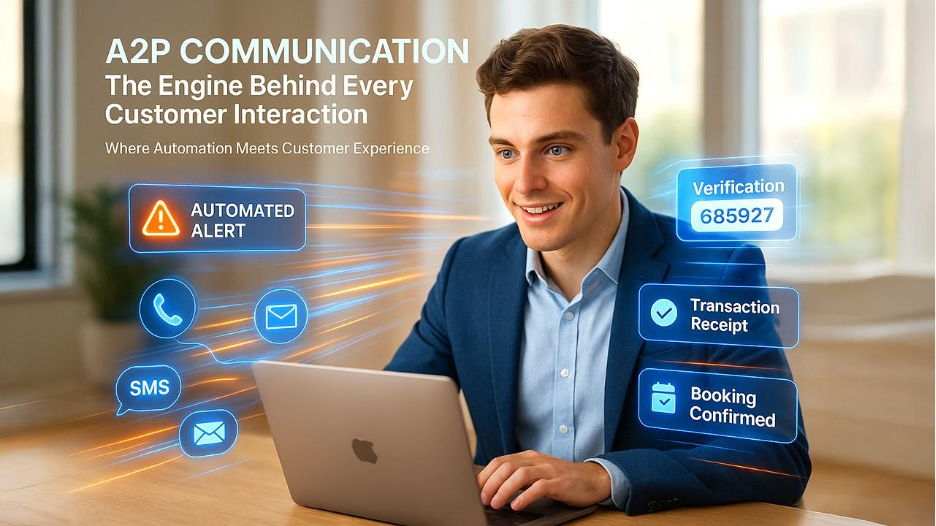
A2P Communication Explained: Meaning, Types, Features, and Benefits
What A2P communication is, how it works, and why businesses use it for automation, alerts, authentication, and seamless customer interactions.
We engage with companies and services every day without considering all the different ways these companies integrated systems that allow them to operate behind the scenes. When an appointment is coming up, a reminder is sent to you prior to the appointment. When your transaction goes through a bank, the system informs you once it’s completed. While placing an order on the Internet, you see an instant update on the order status. All of this happens because applications are quietly working in the background to communicate with you.
This entire world of automated communication is powered by something called A2P.
A2P, short for Application to Person, refers directly to the systems used for communicating with end-users. Software sends information, alerts, or actions without any manual steps, interruptions or delay, and without human intervention. This allows for seamless, automated communications that keep everything running. It allows businesses and services to communicate efficiently, effectively, and continuously with their customers, thus increasing their ability to remain connected, responsive, and organized.
What Is the Concept of A2P
A2P is based on a simple concept. Rather than requiring a human to send out updates individually, A2P allows an automated system to do so for you. This can be done in several different ways, such as when someone performs an action or event, or as part of a scheduled process. The overall goal remains the same: to provide the proper information to the appropriate individual, at the appropriate time.
For example,
- A confirmation is sent when a customer books a service.
- A receipt is sent when a customer completes payment.
- When an account needs verification, the system initiates the process.
A2P has been designed to operate quickly, consistently, and reliably. It helps businesses to continue to operate effectively while also ensuring their customers are kept informed of what is going on, without overwhelming teams with repetitive manual tasks.
Types of A2P
There are different forms of A2P depending upon which methods companies use to communicate. Here are some examples of the most common types of A2P:
A2P Notifications
It includes all the system-generated messages sent to keep the users informed, such as product alerts, service reminder notifications, billing notifications, as well as status updates.
A2P Verification
A2P verification is required when the user verifies themselves using either verification codes or login confirmations to ensure that the requesting party has the correct credentials. It forms the foundation of modern computer security systems, protecting accounts from unauthorized access through automated one-time passwords (OTPs), two-factor authentication codes, and identity confirmation messages.
A2P Transactional Communication
It can be referred to as any message generated from user actions. Examples include invoice generation, booking confirmation, delivery updates, and purchase receipt notifications.
A2P Marketing and Engagement
A2P marketing and engagement messages are auto-generated messages that support customer engagement with the company. Examples include; offers, rewards updates, loyalty reminders and re-activation campaigns.
A2P Automated Voice or IVR
A2P calling systems deliver automated voice messages and interactive voice responses (IVR) that provide customer service, appointment reminders, payment alerts, or emergency notifications without requiring live agents.
A2P Workflow Automation
Internal actions and customer-facing steps that automatically execute based on triggers. This allows for a streamlined approach to lead assignment processes, onboarding journeys, and follow-up through automation.
A2P Omnichannel Systems
A2P supports seamless customer experience through multiple communication methods: email, push notifications, voice, or SMS.
Key Features of A2P
Related walkthrough
What is CRM? CRM Explained in 1 Minutes | Boost Sales & Manage Customers Better

A2P technology has become important to companies because it has incorporated a combination of multiple strong features including:
Automation
The core of A2P is automation which eliminates the need for manual communication and allows staff to spend more time on other important activities that require their attention.
Scalability
No matter if you have 100 customers or 10 million, A2P is capable of handling large volumes with ease and without slowing down performance.
Real-Time Delivery
Information reaches people instantly. It is particularly important for updates that need to be delivered at a particular moment, such as authentication messages or safety alerts.
Consistency
Each customer receives the same accurate information. It ensures that all updates are provided to the correct recipients. There are no missed updates or missed steps.
A2P verification
Talk to an A2P specialist
Security
Modern A2P platforms use secure protocols, verification layers, and encryption to protect sensitive information.
Personalization
Just because A2P is automated doesn’t mean that it is less personalized than manually sent messages. It uses customer information to tailor messages and make them more relevant and trustworthy.
Channel Flexibility
Based on context, an organization can choose the best communication channel to reach their audience, whether it is email, app notifications, voice automated method, or text message. Leading A2P messaging providers offer multi-channel infrastructure that ensures messages route through the most reliable and compliant pathways, adapting to regional regulations and carrier requirements automatically.
Benefits of A2P for Businesses
The A2P process is an integral method for companies to communicate and operate. It provides many benefits for companies that extend far beyond convenience.
Enhanced Customer Experience
Customers appreciate receiving timely updates, clear messages, and not having to look for information. With A2P, customers are always informed of what is going on.
Reduced Workload for Teams
With repetitive tasks (such as sending reminders, confirmations, and updates) now being performed by A2P systems, employees can save hours of manual tasks.
More Reliable Communication
By eliminating potential human error in manual processes, A2P platforms provide reliable information to customers in a timely manner.
Improved Brand Trust
Customers have greater trust in a company that sends regular, helpful updates; in turn, these updates reflect reliability, transparency, and professionalism.
Cost Efficiency
In addition to providing reliable service, automating communication saves money, since they don’t have to hire as many employees to perform routine tasks.
Higher Engagement
Automated systems send personalized nudges, reminders, alerts, and promotions to customers that keep them engaged throughout their entire journey.
Increased Security and Compliance
A2P strengthens customer verification processes, reduces potential fraud, and helps meet security compliance and data protection requirements.
Use Cases of A2P Across Industries
A2P has worked its way into almost every modern industry. Here’s how different sectors rely on it daily:
Banking and Finance: Transaction confirmations, fraud alerts, payment schedules, verification codes, EMI reminders, and account activity updates.
E-Commerce and Retail: Order confirmations, delivery tracking, return updates, personalized offers, and inventory alerts
Healthcare: Appointment reminders, follow-up instructions, lab result notifications, wellness updates, and prescription alerts.
Travel and Hospitality: From booking confirmations and check-in details to flight updates and itinerary changes.
Education: Attendance alerts, exam schedules, fee reminders, timetable changes, emergency notifications, and parent engagement.
Utilities and Service Providers: Billing updates, outage alerts, maintenance reminders, consumption notices, and renewal reminders.
Technology and SaaS: Onboarding journeys, product walkthroughs, user activity alerts, system health notifications, and ticket tracking.
Government and Public Services: Supports emergency alerts, citizen updates, public announcements, policy reminders, and essential service notifications.
Conclusion
Today, businesses rely heavily on A2P as part of their day-to-day operations. A2P combines automation, quality control, consistency, and reliability to keep organizations connected to their customers in a meaningful way. From an appointment confirmation to critical alerts, A2P ensures the right message reaches the right person at the right moment.