

5 Signs Your Onboarding Workflow Needs an Upgrade
Discover 5 powerful signs your onboarding workflow needs an upgrade and learn how modern processes improve speed, clarity, compliance, and client trust.
A smooth onboarding experience sets the stage for every client relationship that follows. Yet many companies still rely on outdated workflows that create delays, confusion, and unnecessary friction.
When processes feel slow or inconsistent, clients notice, and so does your team. As expectations rise and competition increases, the way you bring clients into your business has become just as important as the service you deliver afterward.
If you’re seeing cracks in your onboarding process, they’re more than operational hiccups; they’re early indicators that your onboarding workflow needs an upgrade. Here are the key signs to watch for and how to move toward a smarter, more streamlined system.
1. You’re Still Relying on Manual Processes

If your onboarding team is still buried in spreadsheets, emails, and back-and-forth phone calls, take that as an immediate red flag. Manual workflows might be manageable with a small number of clients, but they quickly become unwieldy as you scale.
Worse yet, they introduce human errors and inconsistencies that can damage your brand’s credibility.
Digitizing your onboarding process doesn’t just improve speed; it also ensures consistency and lets your team focus on more strategic tasks. Modern digital solutions are essential for this transition.
For instance, exploring innovations like how FinTech apps are powering the next generation of smart payment gadgets demonstrates the broader impact of technology on client interactions and process automation. Tools like client onboarding software offer automated, customizable workflows that reduce friction for everyone involved.
2. Delays Are the Norm, Not the Exception
Have new clients ever ghosted halfway through onboarding? It might not be them – it could be your process.
Long wait times, complex documentation, or endless back-and-forth can cause clients to lose patience. A slow onboarding process doesn’t just hurt customer experience; it leaves revenue on the table. According to research by McKinsey, fast and effective onboarding increases the chances of client retention and satisfaction.
If delays have become an expected feature instead of an occasional bug, it’s time to audit your workflow. Transparent timelines, automated follow-ups, and self-service options can help you move things faster and more efficiently.
3. Lack of Visibility for Clients and Internal Teams
When clients and internal stakeholders don’t know what stage of onboarding a client is in, it creates confusion and anxiety on both sides. Maybe your sales team isn’t sure if a client is fully onboarded, or maybe a client is uncertain about what’s expected of them next.
This lack of transparency leads to poor collaboration and repeated communication, which slows the process down even further. If updates are scattered across emails or Slack messages, it’s time to centralize and synchronize your onboarding stages.
One way to provide better visibility is to implement tools that offer real-time status tracking and shared dashboards. This not only boosts accountability but also gives clients a sense of progress and assurance.
4. Compliance Issues and Missed Documentation
Related walkthrough
Create Instant Backups and Schedule Automation Recurring Backups in SuiteCRM

Missing required documentation or failing compliance checks isn’t just a hassle—it could land your business in serious legal trouble. Regulations like GDPR, KYC, and AML require meticulous data handling during onboarding.
If your onboarding process lacks standardized compliance checkpoints, or if you’re relying on someone to “remember everything,” it’s a ticking time bomb. An upgraded workflow should integrate compliance into the process, not treat it as an afterthought.
Outdated workflows often create silos between departments. Make sure your compliance team has visibility and input into how onboarding is structured. A modern solution will let you automate these validations and maintain an audit trail.
5. Inconsistent Client Experiences
Imagine signing up with a company and getting a completely different experience from what another client in the same industry received. Poorly defined workflows make this a common occurrence, and it’s not a good look for anyone.
Uniformity in onboarding doesn’t mean ditching all personalization; it means ensuring the core stages are clearly defined and repeatable. From welcome messages to documentation requirements, a consistent structure helps set expectations and enhances trust.
Not sure if this is an issue? Try comparing two recent onboarding experiences within your own firm. If they differ significantly, you’ve got some optimizing to do.
How to Modernize Your Onboarding Workflow
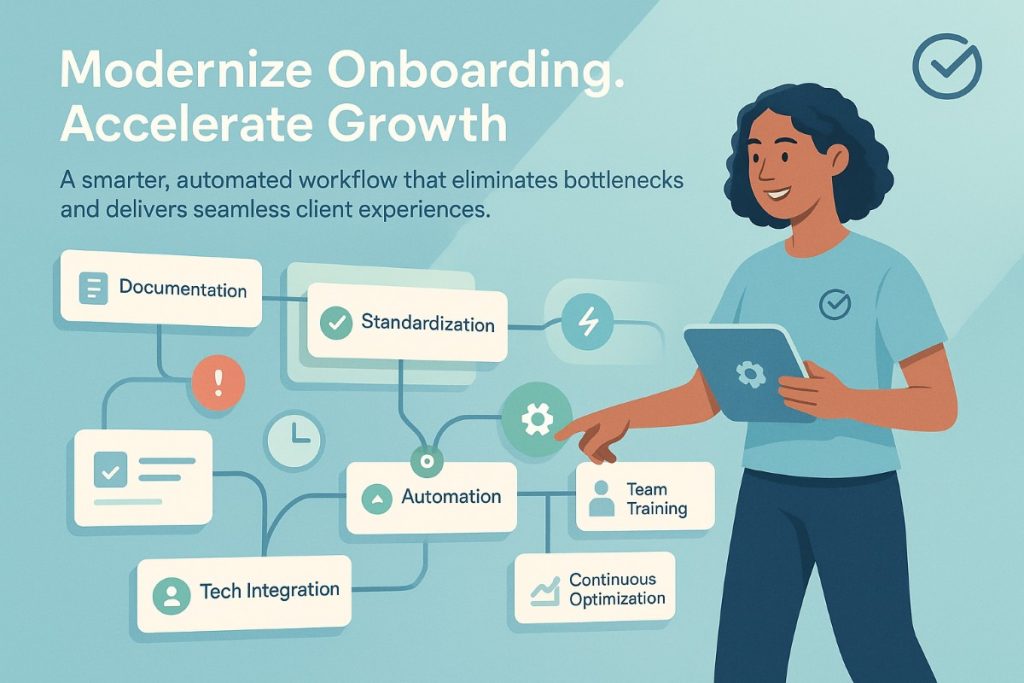
Recognizing the signs is only half the battle. Upgrading your onboarding workflow requires deliberate planning and the right tech stack. If you’re not sure where to begin, consider conducting a current-state analysis to identify bottlenecks.
Start with these steps:
- Document Your Existing Workflow
- Identify Bottlenecks and Delays
- Standardize What Should Be Standardized
- Automate Manual Tasks Where Possible
- Integrate Technology That Supports a Smooth Client Experience
- Train Your Team Consistently
- Review and Optimize Regularly
Conclusion: It’s Time for a Smarter Workflow
A broken onboarding workflow affects more than just the client experience; it drags down internal productivity, slows growth, and opens you up to risk. If you recognized even one of the signs above in your own process, it’s worth taking a deeper look.
Strategic use of technology can help. Whether it’s centralizing communication or embedding compliance checks, investing in better onboarding pays off for everyone involved.