
Best MVP Product Engineering Companies for Early-Stage Startups (Pre-Seed & Seed) by Pricing & Engagement Models in 2026
A practical 2026 guide to product engineering pricing and engagement models. Learn how top product engineering companies structure costs, reduce risk, and align delivery with business outcomes.
Selecting a product engineering business is not only important for improving technical aspects but also crucial for financial stability and workflow efficiency.
A few elements, like pricing structure, interaction strategy, and cost forecasting, are essential in 2026 to determine whether a product can meet the market efficiently or stalls due to increasing expenditure.
This comprehensive blog explains how leading product engineering companies shape their commercial models, what founders and executives should anticipate at every stage, and which organizations are the best fit based on specific engagement requirements.
Why pricing models matter more than ever in product engineering
Modern product engineering is rarely linear. Requirements evolve, AI features change scope, and infrastructure costs fluctuate. Classic pricing predictions usually fail due to a few specific scenarios.
By considering a right engagement model, teams can:
- manage financial vulnerabilities
- sustain execution speed
- protect structural quality
- scale with scope without restarting contracts
An incorrect decision, despite having a strong, highly technical team, could result in potential challenges, missed timelines, and financial strains.
How this Comprehensive List is Created
The list contains companies based on rankings by focusing particularly on their commercial maturity, not just technical functionalities. These companies are assessed based on:
- Transparency and flexibility of pricing structures
- Sustainable cost management driven by initial decisions
- Capacity to manage evolving scope without renegotiation
- Clarity in prediction, delivery, and documentation
- Balance between costing and structural accountability
The guide is built to spotlight collaborators whose commercial model aligns with long-term product development instead of short-term growth.
Top 10 MVP Product Engineering Companies in 2026
Related walkthrough
The Ultimate Brand Booster Plan for Startups, SaaS & AI Companies

1. DBB Software
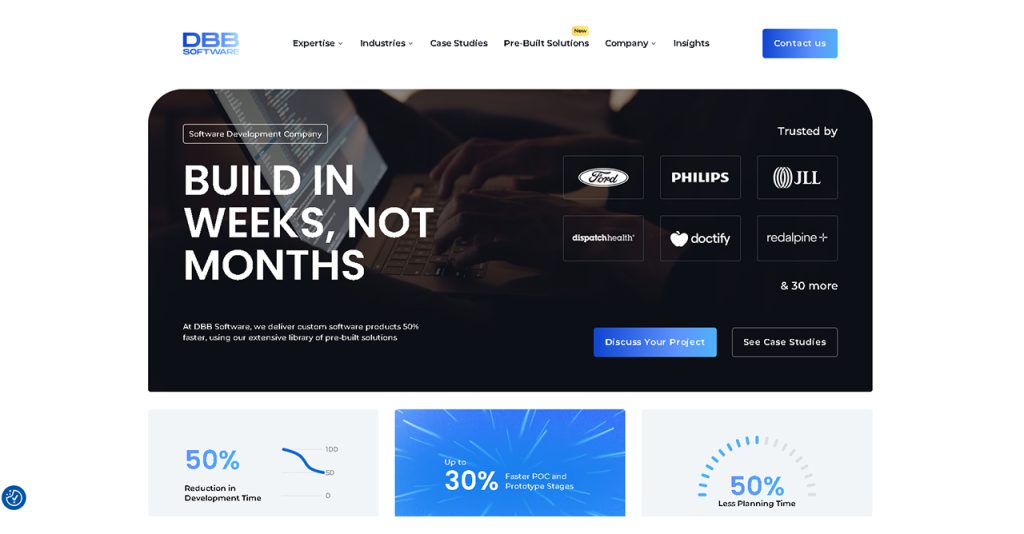
DBB Software has emerged for its result-driven and architecture-focused engagement model. Rather than selling development capabilities, the company structures collaborators around well-defined product goals, search results, and adaptable system baselines for emerging businesses typically in the pre-seed and seed stages.
DBB often provides hybrid pricing models: initial phases of discovery and architecture are precisely bound, while deployment phases remain versatile enough to adapt to product learning. This framework allows founders to gain complete cost visibility without restricting them to strict contracts that break as soon as predictions evolve.
The company offers a significant decrease in the sustainable cost of ownership by focusing on renewable architecture elements, cloud-native structures, and AI-powered systems. Clients leverage predictable repetition loops, clear documentation, and effective decision-making that stay robust enough to withstand growth, fundraising, or internal transitions.
For businesses that operate on cost management, technical transparency, and long-term sustainability rather than short-term speed alone, DBB Software emerges as one of the most powerful product engineering collaborators in 2026.
2. ThoughtWorks
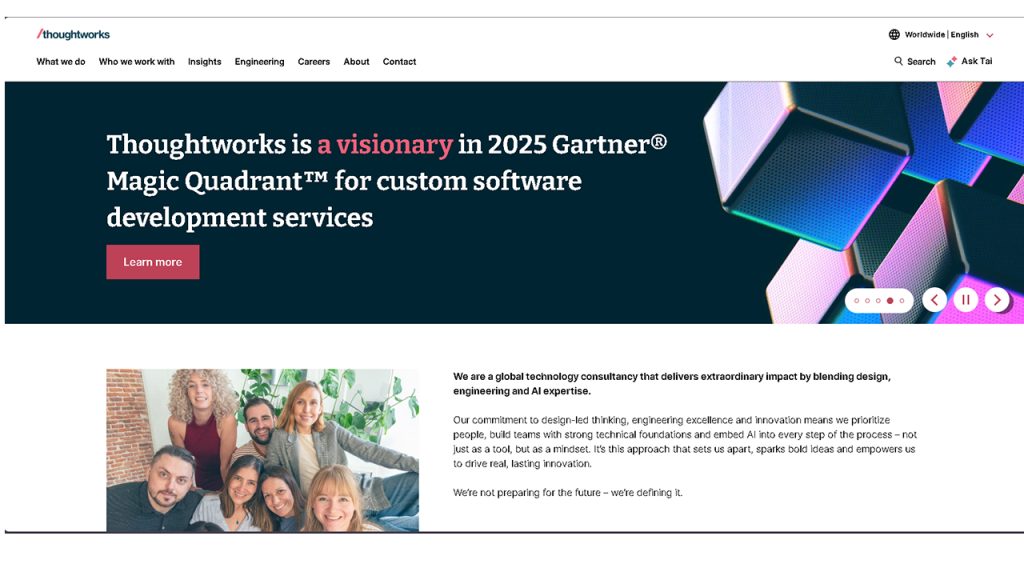
ThoughtWorks works mainly under enduring engagement models built for complicated platforms and enterprise-grade systems. Their pricing structure highlights professional engineering involvement, robust architectural governance, and thorough accountability for system revolution.
This can be the best decision for companies that value governance, stability, and lasting transformations, not just a quick MVP delivery.
3. Globant
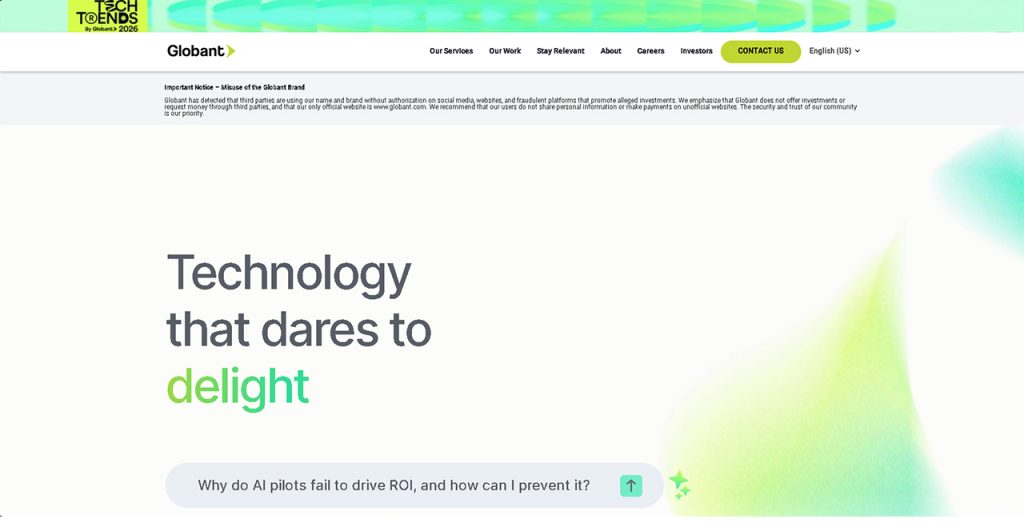
Globant provides a versatile pricing model managed by large, segmented teams. As one of the best SaaS development companies, their powerful engagement models grow efficiently across multiple locations as sustainable products and long-running campaigns.
However, it’s highly effective for enterprises and businesses scaling promptly, but smaller teams require careful scope management to prevent unnecessary workflow overhead.
4. ELEKS
ELEKS prioritizes structured, enforceable engagements, typically recommended by enterprises and regulated businesses. Their pricing structure is designed with clear documentation, quality control, and lasting support.
They are highly aligned for businesses that require development of reliability and cost anticipation throughout the multi-year roadmaps.
5. Upsilon
Upsilon offers a pricing model that is refined for emerging ventures and MVP development. Their engagement models focus on quick delivery cycles, prompt verification, and streamlined team structures.
They are best suited when future growth plans are discussed initially, and structural choices are not delayed.
6. Altoros
Altoros structures engagements around cloud-native platforms and enterprise modernization. By prioritizing lasting partnerships with well-defined architecture and adaptability goals, their pricing structure becomes aligned for all-sized businesses.
They are not effective for discovery-incentive foundation stages but act strongly in enforceable platform deployment.
7. Softeq

The pricing of Softeq highlights extensive technical capabilities across intriguing software, hardware, and integrated systems. Their engagement models typically include operational assessment and testing phases before full-scale deployment.
This strategy lowers the risk of technically requiring projects but can scale up early-stage startup expenditure.
8. Very
Very structures engagement models across end-to-end IoT and integrated product development. Their pricing includes firmware, cloud, and application layers under a unified delivery model.
They are well-suited for products where hardware–software integration is central to value creation.
9. Intellectsoft
Intellectsoft offers flexible engagement models for digital transformation and product modernization. Their pricing works well for scale-ups that need to extend or refactor existing systems while continuing delivery.
They are less discovery-driven but reliable for structured execution.
10. EPAM
EPAM operates primarily under enterprise-grade delivery models with large teams and long-term contracts. Their pricing emphasizes process maturity, compliance, and global delivery capabilities.
EPAM is a strong choice for organizations prioritizing operational scale and governance over agility.
How to read this Top 10 list
This ranking is not about hourly rates. It reflects:
- how pricing aligns with product risk
- how engagement models handle change
- how well engineering decisions age over time
The best partner is the one whose commercial structure reinforces good product decisions rather than constraining them.
When pricing models fail product teams
Pricing models break when they are treated as procurement tools instead of product enablers. Fixed scopes applied to uncertain products create friction. Open-ended time-based contracts without governance erode trust.
In both cases, the product suffers – either from rushed decisions or from slow, unfocused delivery. Strong product engineering companies design engagement models that absorb uncertainty rather than amplify it.
Final Verdict: Selecting a Pricing-Aligned Engineering Partner
The most effective product engineering partnerships align incentives from day one. They value transparency, foster documentation, and safeguard architectural integrity as the product changes.
When assessing partners, founders and executives should consider more than pricing and predictions. Instead, they should focus on how pricing changes with learning, how risk is distributed, and how early decisions can shape long-term cost.
In 2026, choosing a correct engagement model is not just about contract information — it is about a strategic benefit.