
The Future of Content Creation: How AI Is Transforming Video Editing Forever
Discover how AI video editing is transforming content creation—faster workflows, lower costs, global reach, and professional-quality videos for everyone.
In this rapidly evolving digital world, video content has become the center of modern communication. Across all social media platforms to corporate training materials, videos are being used to share stories, educate the masses, and build connections. However, costly software, skilled professionals, and countless hours of human effort are needed to create refined video content. That reality is changing faster than anyone predicted.
The emergence of AI video editing represents one of the most exciting developments in content creation history. Intelligent algorithms now handle tasks that once demanded professional editors and sophisticated equipment. Creators at every skill level can produce stunning videos without spending weeks learning complex software or hiring expensive production teams.
Think about what this means for your creative potential. The barrier between having a great idea and sharing it with the world has never been lower. Small business owners can create professional marketing videos during their lunch break. Educators can use videos to convert lengthy and time-consuming lectures into clips that can engage students and capture their attention. It is also beneficial for aspiring influencers as they can leverage it to compete with established creators who have support from the entire production team.
Understanding the AI Revolution in Video Production
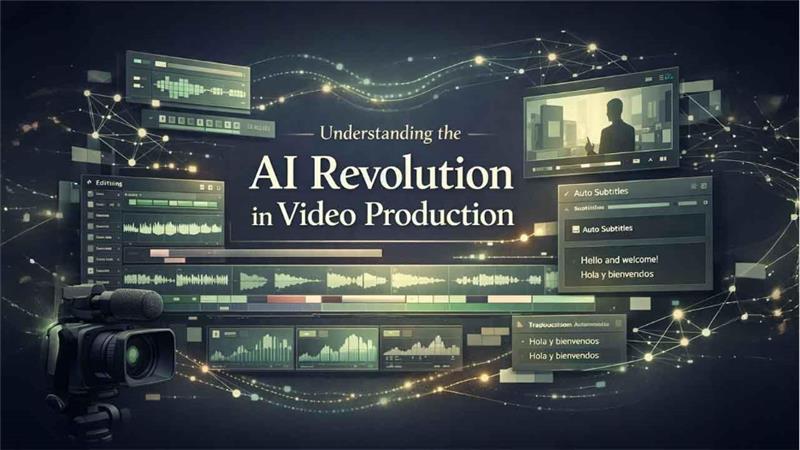
Artificial intelligence adds something special to video editing. Conventional ways of editing videos require humans to make numerous small decisions regarding every cut, transition, and effect. But this is not the case anymore. Now, AI systems analyze and learn from millions of successful videos to understand what makes content compelling and appealing to the audience. These insights are applied automatically while still allowing creators to take control over the final product.
The technology analyzes visual and audio elements within your footage. It identifies speakers, detects changes in the scene, recognizes emotional elements, and discover those segments that are most engaging. This analysis happens in seconds instead of taking hours as a human editor would need. This results in a streamlined workflow that preserves the creative quality.
Modern AI tools for editing can transcribe speech, generate captions as per your preference, and even translate content to make it multi-lingual. These features open doors to audiences from all over the world that were previously accessible only to major media companies. For example, a creator in Tokyo can reach viewers in Toronto with professionally subtitled content created in minutes.
Why Creators Are Embracing Intelligent Editing Tools
The most essential benefit of AI-powered editing is its speed. What once required eight hours can now happen in fifteen minutes. This acceleration revolutionizes the entire economics of content creation. This empowers creators to produce more content, experiment with different formats, and catch up with trending topics instantly.
Many first-time users are surprised by the improvements in quality. AI models train by analyzing successful content to acquire proper understanding of pace, time, and visual composition at a deep level. They recommend edits that can attract viewer engagement and highlight the strongest moments in your footage. Many creators observed that their AI-edited videos outperformed the videos that were edited manually.
It has become easier to maintain consistency across large libraries of content creation. AI tools remember your preferences and apply them uniformly to every project. Brand colors, logo placements, intro sequences, and audio treatments stay consistent without requiring manual attention. This consistency builds professional credibility and strengthens audience recognition.
Practical Applications Across Industries
Marketing teams have discovered tremendous value in AI editing capabilities. Campaign timelines that used to stretched for weeks now compress into days. Teams are able to create multiple versions of advertisements as per different platforms’ requirements and audiences without increasing their workload. It has become practical to test different approaches because creation takes minutes instead of long hours.
Educational institutions are transforming the way they deliver content to students. Lengthy recordings of lectures can be automatically categorized into chapters that are easy to digest. With smart captioning and visual emphasis, important concepts are highlighted. This way, students can learn from mor engaging materials while instructors save countless hours of production time.
AI editing is crucial for corporate communications departments’ internal and external messaging. Executive communications, town halls, and training sessions may all be swiftly edited and disseminated. Even companies without a dedicated video production team can achieve professional quality.
AI editing is used by real estate agents to produce home tours that draw prospective buyers. More effective patient education materials are produced by healthcare groups. By drastically cutting production expenses, nonprofit organizations are able to further stretch their already tight budgets.
The Creative Partnership Between Humans and AI
Related walkthrough
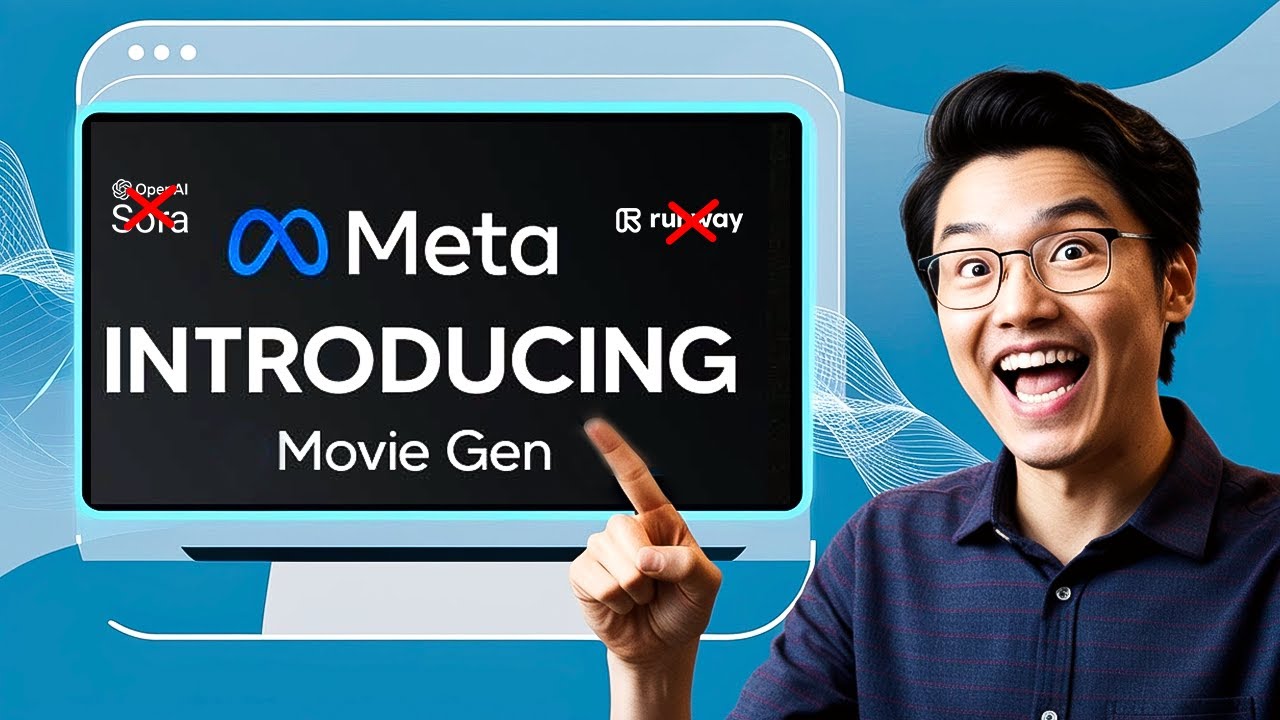
Meta Movie Gen: The Future of AI-Powered Video u0026 Audio Creation
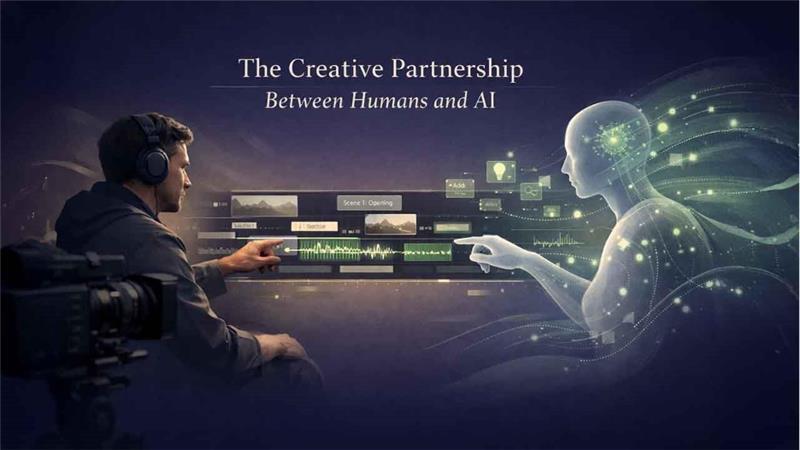
There is some concern among content creators that machine intelligence may replace human thinking and creativity with its own versions of that. However, this worry fades once we realize that this is far from true. Machines will be able to help with tedious content generation while creative people focus on creative thinking, strategic thinking, and other high-level creative pursuits that make human activities even greater than they currently are.
The best tools are those that are used in the capacity of “intelligent assistants” instead of “creators.” This is because the tools assist the human population in coming up with ideas that can then be adopted, altered, or declined. This indicates that the tools are meant to assist humans but are not meant to make decisions on their own.
Many professional editors have greeted the advent of such technology with enthusiasm. They are now saving time to spend on important tasks that truly require creativity. With greater job satisfaction, when the technology does the “grunt work,” clients gain satisfaction when projects arrive faster and cost less.
Getting Started With AI Video Editing
Getting started with an AI image/video editing task is surprisingly less demanding than one would expect from an early stage in one’s practice within the feature set allowed by the most sophisticated solutions on the modern market. They often have user interfaces catering to people with little to no professional knowledge in the relevant domains. Many free AI video generators online make it easy to begin experimenting without financial commitment.
Starting with shorter projects helps you learn how the technology works. A thirty-second social media clip provides an excellent first experiment. As you become comfortable with the workflow, you can tackle longer and more complex projects with confidence.
Experimenting with different settings reveals the full range of possibilities. Try various editing styles, caption treatments, and output formats. Platforms like Luma AI offer intuitive interfaces that help content creators explore AI capabilities efficiently. Each experiment teaches you more about what technology can accomplish and how to guide it toward your creative vision.
Looking Toward Tomorrow
AI video editing technology improves continuously as systems learn from more data and receive algorithmic updates. Features that seem impressive today will appear basic compared to what arrives next year. They position themselves to maximize growth through technology while sustaining their relative position of power.
The emergence of the video production democratization process has given rise to unprecedented opportunities to hear new voices that otherwise would have remained unheard. Geographic location, monetary means, training levels, etc., do not mean as much as they ever have in the video creation process. Great stories, compelling information, etc., have the power to succeed regardless of budget levels.
The trend of content consumption would increasingly favor video content across all kinds of demographic and platform spectrums. The individuals skilled at efficiently creating video content today would possess those skills for several decades to come. Technology needed to find some kind of traction in such a “video first” culture is available today in the form of AI technologies.
Taking Your First Step
Now is the ideal time to investigate AI video editing. Every day that is spent utilizing conventional techniques results in a loss of potential efficiency. Every competitor who adopts these tools gains advantages in speed, cost, and output volume.
Your audience is waiting for content you have not yet created. Your stories deserve to be told with professional polish and engaging presentation. The change underway in video content creation is one of the most fundamental shifts in the history of creative technology. The people who will get on board early are going to help define what’s possible in storytelling for decades to come. You can start that journey today with just an uploaded video and an eagerness to explore what’s next.
Create. Experiment. Start sharing your vision with the world in ways that were impossible just a few years ago. The tools exist, the opportunity beckons, and your audience awaits.