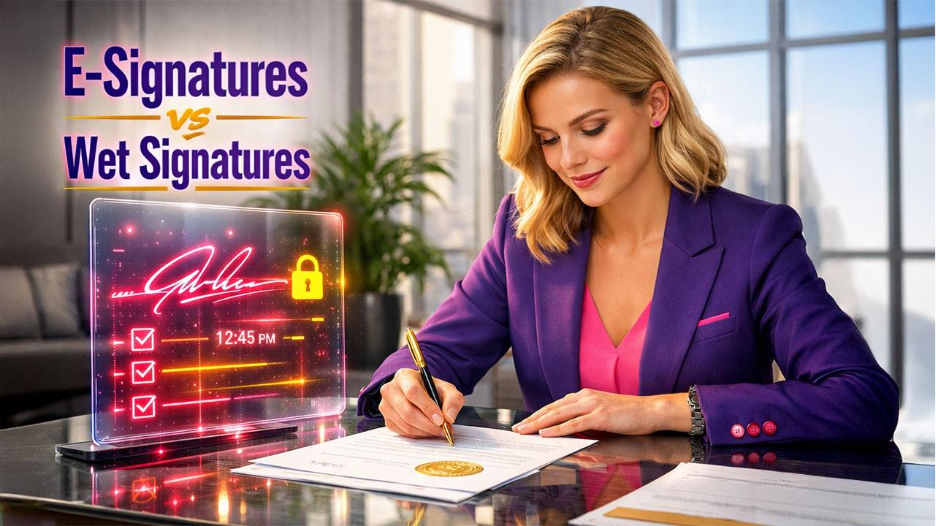
E-Signatures vs. Traditional Signatures: A Comparative Overview
Explore the differences between E-signatures vs traditional signatures, comparing security, speed, cost, and legal validity.
The ink on the paper represents a long-standing commitment that is recognized as the legal foundation for commerce worldwide. Even though there are numerous digital tools available in the market, the physical act of signing a name is seen as a psychological and legal anchor for millions of people.
This transition from traditional signatures to electronic signature marks a shift in how involved parties verify the intent. This digital alternative captures data points to provide evidence that a specific individual has consented and approved the contents of a file. Legal frameworks such as the ESIGN Act and UETA provide the necessary authority for these digital marks in the United States.
Traditional Signatures

Traditional signatures are also known as wet ink signatures. It involves applying ink on a paper surface. In this process, a person uses a pen to create a unique mark (signature) that confirms their identity. It remains a standard requirement for certain high-stakes government forms and legal documents.
Physical Verification
Physical verification means that a person must sign a document in the presence of a notary public or witness who can confirm the act. This interaction ensures that the person who signs the document is exactly who they claim to be. A notary checks government-issued identification cards to confirm the identity of the signer before the ink meets the paper.
Tangible Evidence
A signed copy of paper document is recognized as a tangible piece of evidence that exists in the real world. There are several people who find satisfaction only when they hold a contract in their hands and can store it safely in a file cabinet or fireproof safe. This tangible nature is treated as a permanent record without needing a computer or an internet connection to access or view it.
Cultural Significance
The act of signing a document by hand carries significant cultural and psychological weight. It marks the formal end of a negotiation and the beginning of a binding agreement. Many individuals perceive the handwritten signature as a more personal and solemn commitment than clicking a button on a screen.
The following list outlines the primary characteristics and benefits associated with wet ink signatures:
- Handwritten signatures facilitate a direct physical connection to the agreement.
- Paper documents do not require specialized software for long-term storage.
- Original ink marks provide unique biometric flourishes that are difficult to replicate exactly.
- Many government agencies still mandate wet signatures for property deeds.
- Notary seals on paper provide a visible layer of authentication.
Electronic Signatures
The electronic signature applies to technology to link the mark or the electronic record to the person. This approach does not require the printing, scanning, or mailing of physical piles of paper. It applies encryption and audit trails to ensure the integrity of the signed file.
Speed of Execution
Digital signing enables parties to sign a contract in seconds, irrespective of their geographical location. A user can receive an email notification, view the document on a smartphone, and sign the document instantly. This makes business cycles faster and cuts down the time taken to close a deal.
Enhanced Security
Digital signing platforms often provide stronger security measures than traditional paper documents. These systems record the IP address, timestamp, and email address of every person who accesses the document. If someone attempts to alter the document after the signature is applied, the digital certificate will show that the file has been tampered with.
Cost Reduction
Organizations are able to save a lot of money by eliminating the expenses involved in paper, ink, and postage. Storage of information in digital form also eliminates the need for storage space and the time involved in managing it. Organizations are able to use this money for their operations and technological advancement.
There are a few important characteristics that make contemporary digital signing tools different from the traditional approach:
- Digital audit trails record all operations performed on a document.
- Encryption secures the document’s content from being accessed by unauthorized individuals.
- Automatic reminders guarantee that the signer will complete the process on time.
- Cloud storage enables instant access to any contract from any computer.
- There is no paper waste, which positively affects the environment.
Comparison of Methods
Related walkthrough
DocuSign: Electronic Signature Solution Industry Leader

The following table summarizes the primary functional differences between E-signatures vs traditional signatures (wet ink) and digital verification methods.
| Feature | Traditional Signature | Electronic Signature |
| Medium | Physical paper | Digital file |
| Security | Visual notarization | Encryption & audit trail |
| Delivery | Mail or courier | Email or web portal |
| Cost | High (supplies/logistics) | Low (software subscription) |
| Speed | Days or weeks | Minutes or seconds |
Choosing the Right Method
The decision to use ink or digital formats is guided by legal requirements and the preferences of the parties involved. Real estate transactions, including tenant onboarding and estate planning often utilize a hybrid approach to satisfy both modern speed and traditional legal rigor. Organizations must evaluate their specific needs for security and accessibility when they select a signing standard.
Future trends suggest a continued move toward digital systems as biometric authentication becomes more common. Fingerprint scans and facial recognition may eventually replace the need for both handwritten marks and digital passwords. The focus remains on ensuring that every signature is authentic and secure for all participants. Ultimately, the debate around E-Signatures vs. Traditional Signatures will continue to evolve as technology advances, and legal standards adapt to meet the demands of a digital-first world.