

What Is an IP2 Network? Architecture, Benefits, and Use Cases
What Is an IP2 Network and how does it work? Learn its uses, benefits, features, security considerations, and how it differs from traditional networks online.
The internet today connects billions of devices effortlessly, yet beneath this seamless experience lies a growing contradiction. While digital systems have become faster, smarter, and more data-focused, the networks that support them still operate on old principles that were designed for a simpler era. With the rapid expansion of AI, cloud computing, and real-time platforms, connectivity alone is not sufficient. Networks must now respond, adapt, and optimize continuously.
This is where the ip2 network comes into the picture. It does not function as a passive pathway for information. Instead, it introduces intelligence directly into network architecture. This results in faster communication along with infrastructure which can understand digital demand and adjust itself in real-time. This transforms networking from static transport into adaptive infrastructure.
The Limitations of Traditional IP Networks
A global company launches a real-time collaboration platform connecting teams across continents. Everything works perfectly during testing. Then the usage scales, latency increases, data congestion appears, and performance fluctuates unpredictably. Technically, nothing is broken, yet efficiency declines.
This scenario highlights a fundamental limitation of traditional IP networks. They operate on predefined routing logic, meaning data follows established pathways regardless of changing conditions. When traffic patterns shift suddenly, networks react slowly because adaptability was never built into their original design.
Today’s technologies demand something different:
- Cloud-native applications operate continuously.
- Artificial intelligence systems exchange massive datasets.
- IoT devices communicate in real time.
- Autonomous systems require instant responses.
Static networking simply cannot keep pace with dynamic digital behavior. The ip2 network addresses this challenge by embedding adaptability directly into network architecture.
What Is an IP2 Network? From Connection to Intelligent Networking
At its foundation, an ip2 network is an advanced networking framework that enhances how data flows, decisions are made, and performance is optimized across interconnected systems.
Traditional IP networking focuses on identifying destinations and forwarding packets accordingly. The responsibility for performance optimization typically falls on external tools or human administrators. In contrast, ip2 network architecture introduces intelligence within the network itself.
Imagine a simple shift in logic:
Traditional Network: Where should this data go?
IP2 Network: What is the best possible way to deliver this data right now?
This distinction transforms networking philosophy. Instead of acting as a neutral pathway, the ip2 network continuously evaluates congestion levels, latency conditions, bandwidth availability, and application priority. Based on real-time insights, it dynamically adjusts transmission paths to maintain optimal efficiency. The result is a system that behaves less like infrastructure and more like an adaptive ecosystem.
Core Features of IP2 Network Architecture
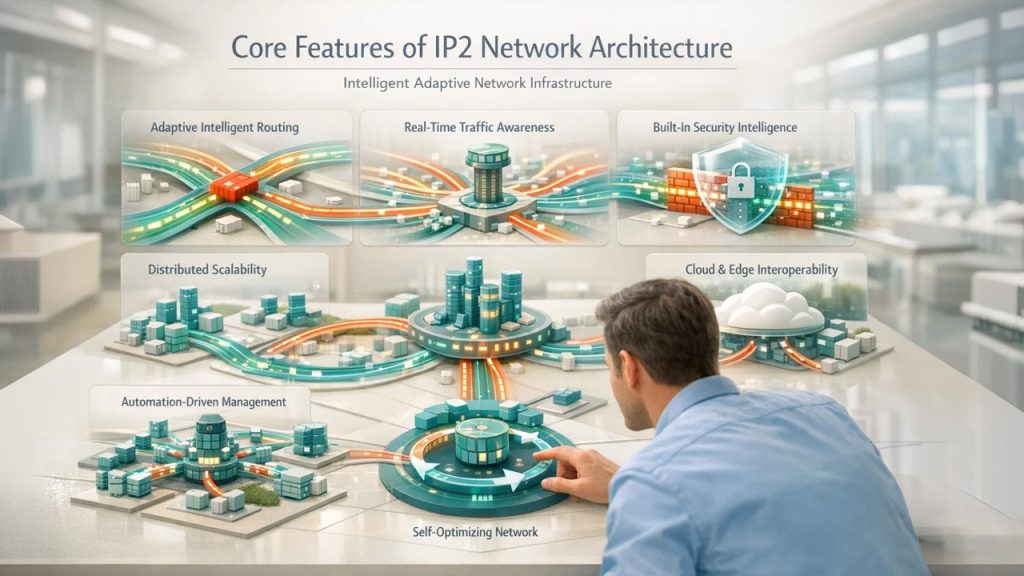
The strength of the ip2 network lies in architectural intelligence rather than isolated technical upgrades. Each feature works collectively to create responsive and resilient connectivity.
Adaptive Intelligent Routing in IP2 Network
Unlike static routing systems, the ip2 network evaluates traffic conditions in real time. When congestion appears, data automatically shifts toward more efficient pathways. This prevents performance degradation before users experience delays, ensuring smoother digital interactions even during heavy demand periods.
Real-Time Traffic Awareness in IP2 Network
Continuous monitoring allows the network to recognize usage patterns instantly. Whether traffic spikes originate from cloud workloads or streaming platforms, the system responds immediately, maintaining stability across interconnected environments.
Built-In Network Security Intelligence
Security is embedded within the networking layer itself rather than added externally. Suspicious behavior, abnormal traffic flows, or potential threats can be identified earlier, allowing proactive mitigation instead of reactive defense.
Distributed Scalability in IP2 Network Infrastructure
As organizations expand operations across regions and platforms, infrastructure must scale seamlessly. ip2 network environments accommodate growth without major redesigns, supporting hybrid and distributed architectures efficiently.
Self-Optimizing Network Capabilities
Over time, the network learns operational behavior patterns. Frequently used routes, performance bottlenecks, and workload trends inform ongoing optimization, improving efficiency automatically.
Automation-Driven Network Management
Administrative workloads decrease significantly because many optimization tasks occur autonomously. This reduces configuration complexity while improving consistency.
Organizations looking to extend their CRM capabilities can also explore CRM plugins that add specialized functionality and help streamline business processes.
Cloud and Edge Computing Interoperability
Modern computing increasingly occurs closer to users through edge systems. The ip2 network ensures smooth communication between centralized clouds and decentralized edge environments.
Key Benefits of IP2 Network Technology
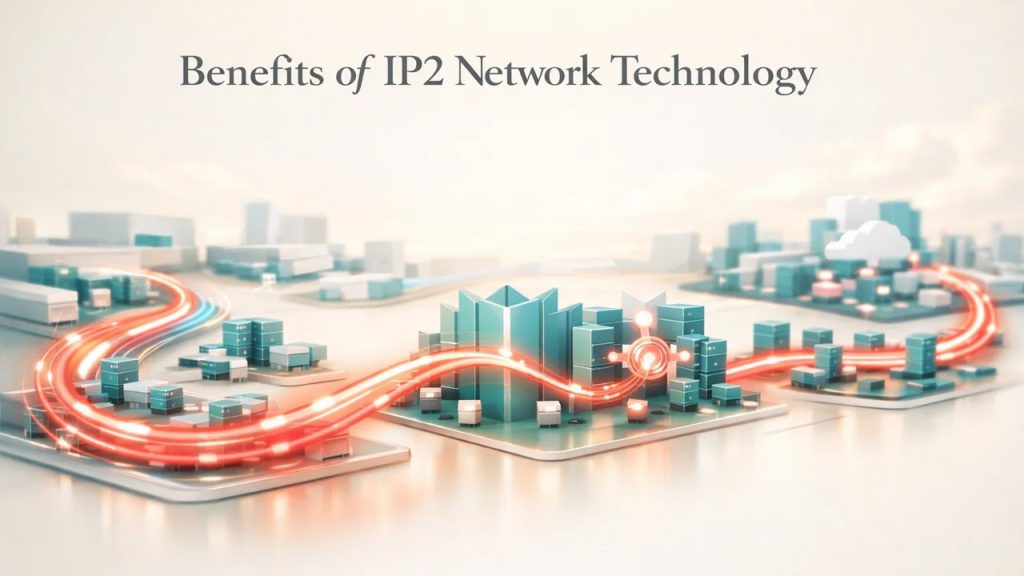
The practical value of ip2 network adoption becomes visible through operational outcomes experienced by organizations and users alike.
Faster and More Reliable Data Delivery
Dynamic routing ensures information travels through optimal pathways rather than fixed routes. This consistency improves application responsiveness, enabling smoother collaboration tools, faster analytics processing, and uninterrupted service delivery.
Reduced Latency for Real-Time Systems
Latency directly impacts technologies such as real-time monitoring, remote operations, and live communications. By predicting congestion and adjusting transmission routes proactively, ip2 network infrastructure minimizes delays that traditionally disrupt performance-sensitive environments.
Greater Network Reliability
Unexpected failures or overloads no longer result in widespread disruption. The network automatically redirects traffic, maintaining continuity even when individual nodes encounter problems.
Improved Operational Efficiency with Automation
Related walkthrough
12 Years of OutRight Systems | Our Journey, Our Team, Our Future

Automation reduces dependency on constant network supervision. IT teams spend less time troubleshooting connectivity issues and more time developing strategic improvements.
Modern businesses can also connect intelligent network infrastructure with CRM solutions to manage customer data, workflows, and business interactions more efficiently.
Long-Term Cost Optimization
Efficient bandwidth utilization prevents unnecessary infrastructure expansion. Organizations can achieve higher performance using existing resources, lowering operational expenditure over time.
Enhanced Cybersecurity Protection
Integrated monitoring enables faster detection of irregular activity patterns. Threat response becomes embedded within normal network operations rather than functioning as a separate defensive layer.
Future-Ready Network Infrastructure
Perhaps the most significant benefit is longevity. The ip2 network supports evolving technologies such as AI systems, IoT environments, and decentralized platforms without repeated architectural replacement.
Real-World Applications of IP2 Network
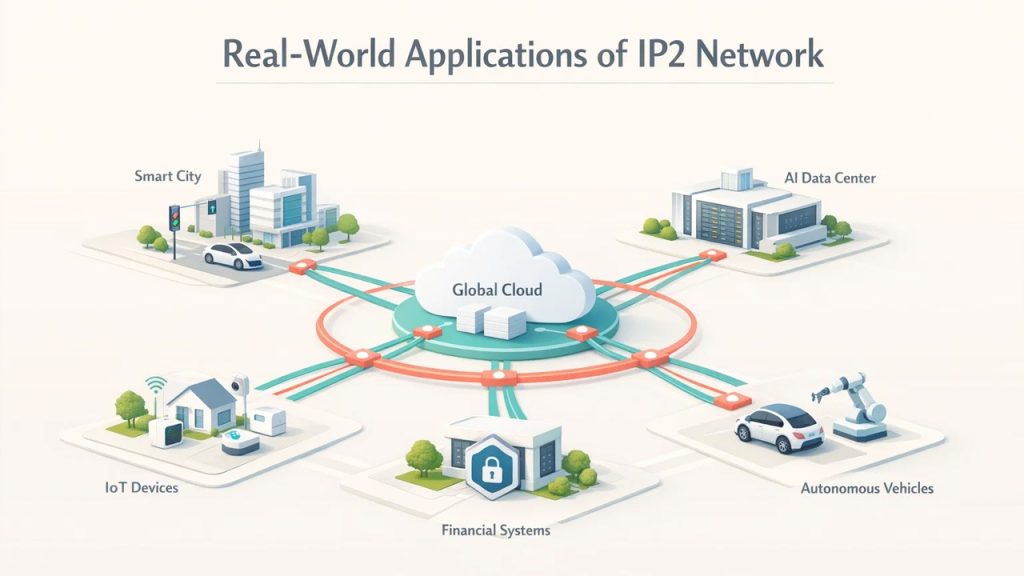
The real impact of ip2 network technology appears when applied to environments where responsiveness and reliability are essential.
IP2 Network in Smart Cities
Urban infrastructure increasingly depends on interconnected digital systems managing transportation, utilities, and public safety. With ip2 network architecture, traffic signals, surveillance systems, and emergency services communicate seamlessly, enabling real-time adjustments that improve urban efficiency.
IP2 Network for AI-Driven Enterprises
Artificial intelligence platforms continuously exchange large datasets between computing environments. Intelligent routing ensures analytical workloads move efficiently, reducing processing delays and improving decision-making speed. AI-powered platforms like Gldyql rely on optimized network infrastructure to process and move large datasets without latency disruptions.
IP2 Network for IoT Ecosystems
Industrial facilities and smart homes deploy thousands of connected devices simultaneously. The ip2 network manages communication complexity by distributing traffic intelligently, preventing overload across centralized systems.
IP2 Network in Financial Systems
Financial institutions require uninterrupted connectivity and high security. Adaptive routing combined with embedded protection mechanisms enhances transaction reliability while minimizing exposure to network vulnerabilities.
IP2 Network for Autonomous Systems and Robotics
Self-driving vehicles, industrial automation, and robotics depend on instant communication. Even minimal latency can influence operational accuracy, making adaptive networking essential for safe deployment.
IP2 Network for Global Cloud Collaboration
Remote teams that operate across geographical regions rely heavily on cloud platforms. Ip2 network optimization maintains consistent performance regardless of physical distance or fluctuating demand.
Traditional IP Networks vs IP2 Network: Comparison
The transition becomes clearer when comparing operational models.
| Dimension | Traditional IP Networks | ip2 Network |
| Decision Making | Static routing logic | Intelligent adaptive routing |
| Adaptabiliy | Limited responsiveness | Continuous adjustment |
| Security Model | External solutions | Embedded protection |
| Scalability | Infrastructure-heavy | Dynamic expansion |
| Latency Handling | Reactive correction | Predictive optimization |
| Automation | Manual management | Self-optimizing systems |
| Future Readiness | Moderate | Highly future-ready |
Traditional IP networks excelled in predictable environments. However, modern digital ecosystems evolve continuously. The ip2 network bridges this gap by introducing learning and adaptability into network operations themselves.
The Future of Networking: Where IP2 Network Leads
Networking trends increasingly point toward autonomy. Systems are expected to operate independently while maintaining reliability and efficiency.
The ip2 network aligns with several emerging technological directions:
- AI-native infrastructure requiring continuous data exchange
- Edge computing environments processing information locally
- Web3 ecosystems emphasizing decentralization
- Autonomous enterprise systems operating with minimal human oversight
Future networks may anticipate traffic demands before they occur, allocate resources automatically, and self-correct disruptions without intervention. In this landscape, networking stops being background infrastructure and becomes an intelligent operational foundation.
Businesses following emerging technology can also explore Pro Reed Com Tech Tales to understand the latest developments shaping modern digital systems and innovation.
Final Thoughts: The Future of Networking with IP2 Network
The evolution of digital technology consistently follows a pattern: tools become platforms, and platforms become ecosystems. The ip2 network represents this progression within networking itself, transforming connectivity from a passive service into an adaptive layer capable of supporting modern digital complexity.
As organizations move toward AI-driven operations and globally distributed systems, infrastructure must evolve accordingly. The ip2 network reflects a future where networks no longer struggle to keep pace with innovation but actively enable it, quietly shaping how digital experiences function behind the scenes.
Frequently Asked Questions (FAQs)
What makes ip2 network different from traditional IP networking?
It introduces intelligent routing and real-time optimization instead of fixed transmission paths.
Is the ip2 network suitable for enterprise environments?
Yes, it supports scalable, secure, and high-performance digital operations.
Does ip2 network enhance cybersecurity?
Its architecture integrates security mechanisms directly into network operations.
Can ip2 network support IoT ecosystems?
Yes, it efficiently manages communication between large numbers of connected devices.
AI systemsIs ip2 network considered future-ready infrastructure?
It is designed specifically to support emerging technologies such as AI, edge computing, and decentralized systems.