
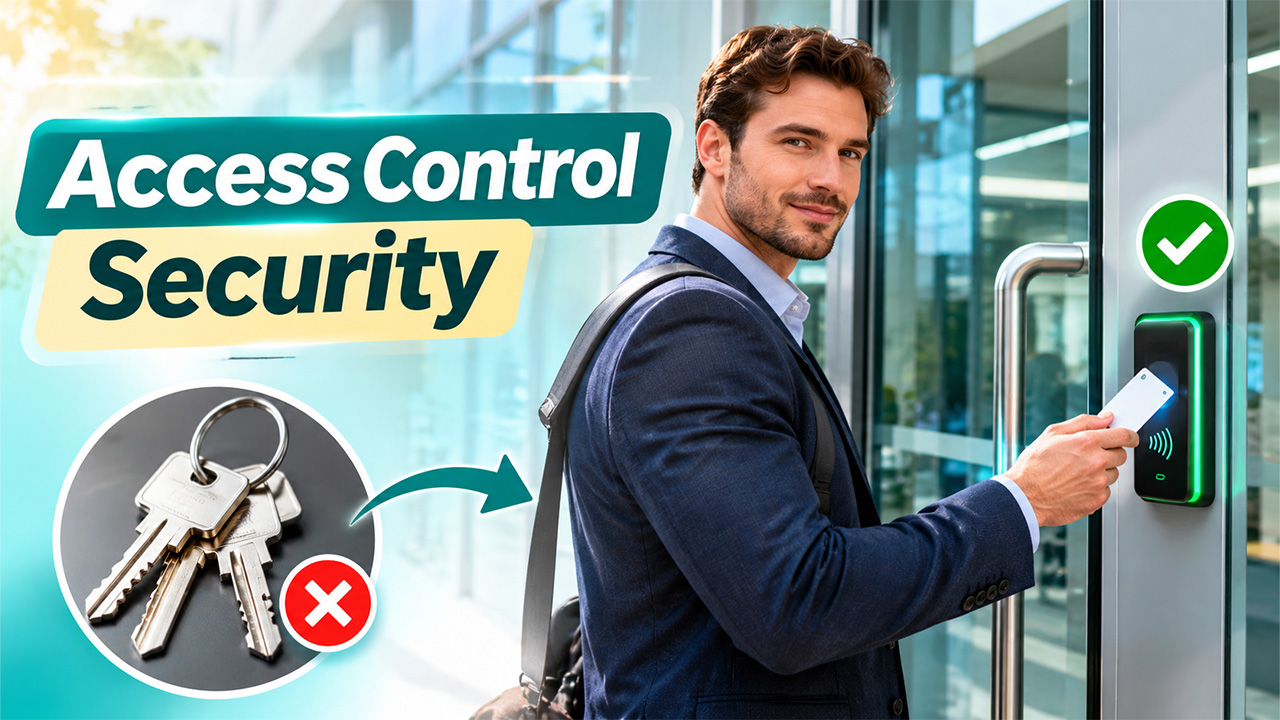
Where Keys and Manual Locks Leave Everyday Business Security Exposed
Discover how access control security helps businesses manage entry, track activity, revoke credentials, and improve building protection beyond traditional keys.
A key feels like security. Most of the time, it’s not. It opens a door, and that’s all it can do. Who used it, when, whether it was copied at a hardware store last week: a key answers none of that. This is where access control security becomes essential for businesses looking to improve visibility and control over building entry. For a business running on keys and manual locks, the gaps are wider than they look.
Access control security solutions close those gaps. In place of metal keys, these use credentials that can be issued, changed, and revoked in seconds, with every entry logged and every door managed from one place. The result is a building that knows who comes and goes, and a security team that can act on it.
What Traditional Keys Lack in Access Control Security
A key just grants access and keeps no record. When someone uses it to open a back door at 11 p.m., nothing records it. If three people share one key, the lock cannot tell them apart. The moment a key leaves your control, so does the door it opens.
Credentials work differently. Each one belongs to a person, ties to a schedule, and leaves a trail. The door stops being anonymous. That shift, from an object anyone can hold to an identity tied to a person, is the whole idea.
Effective access control security replaces anonymous key-based entry with individual credentials that connect every access attempt to a specific person, making it easier to manage permissions and monitor building activity.
Where Manual Locks Fall Short Every Day
The weaknesses show up in ordinary operations, well before any dramatic break-in. Keys and locks are an overlooked security risk for a reason, which is why businesses increasingly rely on access control security solutions to manage employee access and reduce the risks associated with lost, copied, or shared keys.
Take turnover. An employee leaves, and unless every key comes back, the only safe fix is to rekey the lock, which costs money and time. Or a lost key. One dropped keyring can mean recutting locks across a building, because you cannot know who found it. Then there are shared spaces. A supply room, a server closet, a side entrance: with keys, access is all or nothing, handed out and rarely pulled back. None of this is rare. It happens constantly, and each instance chips away at the building’s security.
How Access Control Security Improves Business Protection
Related walkthrough
Atlas Airborne: Where Failure Turns into Control

An access control security system replaces the traditional key with a credential, such as a card, fob, or phone. Readers at each door check that credential against a set of permissions before anything unlocks.
The difference here lies in control. An administrator decides exactly who gets through which door, and when. A contractor gets one entrance during work hours and nothing else. A night-shift worker’s credential opens the building at 10 p.m. and stays dark at noon. When someone leaves, their access is switched off from a dashboard in seconds, with no locksmith and no rekeying. Scale barely changes the effort. One door or two hundred, the controls sit on the same dashboard, so a growing business isn’t adding a keyring with every hire or new office.
A Record of Every Door and Every Entry
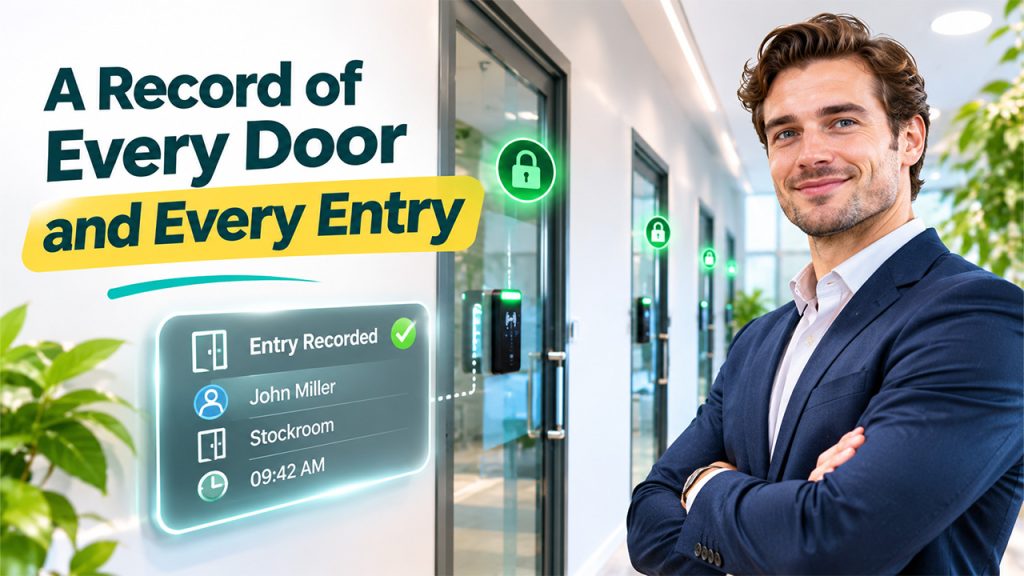
Every time a credential is used, the system logs it. Who, which door, what time. That record runs continuously, whether anything has gone wrong or not.
This matters more than it first sounds. When something does happen, you aren’t guessing. You can see exactly who entered the stockroom before the inventory went missing, or confirm a door stayed locked overnight. For businesses that answer to auditors or insurers, that history is evidence, built automatically instead of reconstructed after the fact. The same logs surface patterns a keyring never could, like a side door being used far more often than anyone assumed.
How Access Control Security Adapts in Real Time
Keys are static, but access control isn’t. Permissions change the moment you need them to, on one door or every door at once.
The system also watches for trouble. A credential used at midnight by someone who works during the day, or a run of failed attempts at the same reader, sends an alert while it’s happening. Lose a credential, and it’s deactivated on the spot, so a found card opens nothing. The building responds to change instead of waiting for the next rekey. Businesses can strengthen their digital protection through website security services that help detect vulnerabilities, monitor suspicious activity, and prevent unauthorized access.
Closing the Gaps Keys Leave Behind
Keys and manual locks were never built for the way businesses run now. They cannot track, adjust, or report, and each shortfall is a small opening. Access control security closes them by making entry something you grant, see, and control rather than something you hand out and hope to get back. For any business still running on a keyring, that is the difference between assuming the doors are secure and knowing they are.