
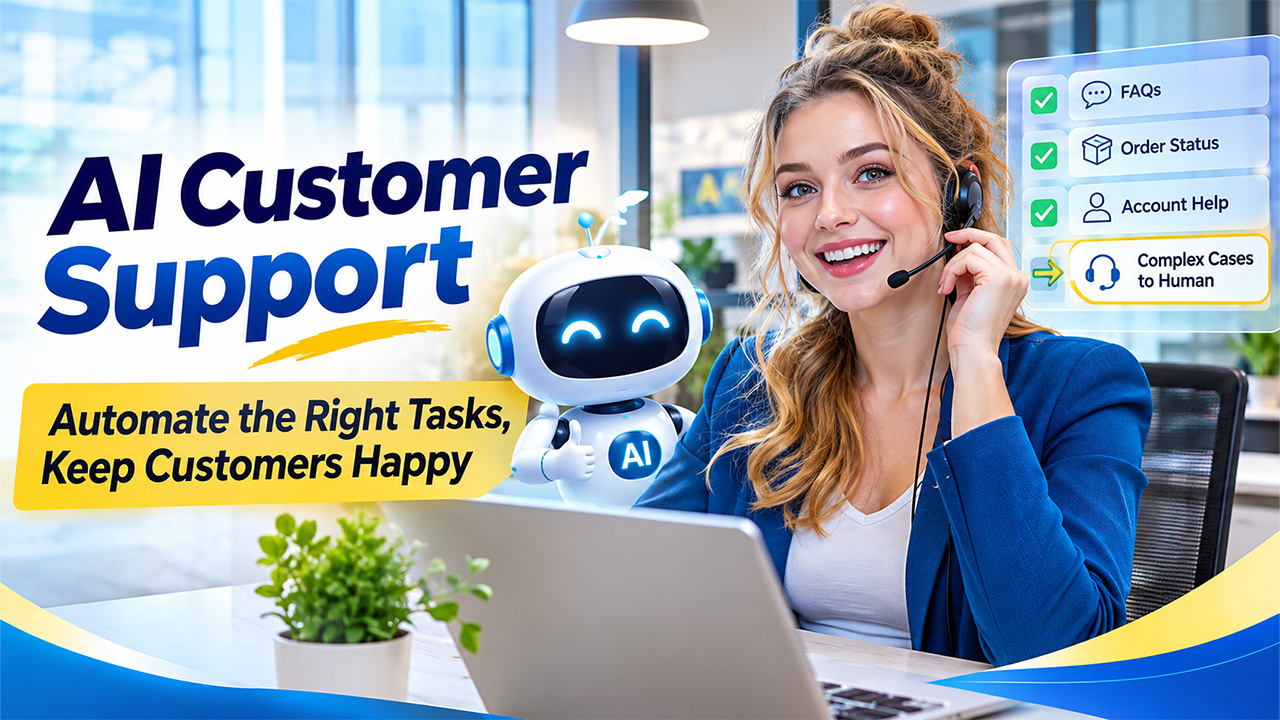
AI Customer Support: Which Tasks Should Businesses Automate?
AI customer support automates routine queries, speeds up responses & flags sensitive issues that need human attention for accurate, reliable service at scale.
Businesses can’t afford to miss a step when it comes to customer engagement. But sometimes the simple or predictable customer questions can divert effort from more complex tasks. For employees eager to save time and customers eager to access prompt answers, artificial intelligence (AI) can be a huge asset.
Even so, not all questions and tasks are appropriate to offload onto an AI agent. And businesses need to be mindful of how they weave AI into their customer support strategy when sensitive data or frustration is in the mix. Stay with us as we outline which AI customer support tasks are ready for AI.
Review the Types of Requests First
Not all customer questions are appropriate for AI. It’s smart to look at existing requests and assign them to different category headers first.
Some queries may be general questions about the business, for instance, while others may be specific to orders or customer accounts. And other inquiries could relate to disputes or extenuating circumstances. Maybe a customer did not receive a product they ordered, for instance, or perhaps they were overcharged and need assistance sorting through next steps.
For common questions about business policies, order status, or shipping methods, AI can come in handy. Rather than having staff devote time to answering the same questions over and over again, AI-powered automation can step in with concise and quick answers. Customers can get the information they need about refund policies or password security without interacting with an actual human. AI chatbot solutions for customer support can help businesses automate routine customer inquiries and provide faster responses.
Sometimes, customers may want an update on an order if they’re concerned it’s taking too long. Or they may have questions about a subscription tier or account access.
For account-related inquiries, AI can intervene successfully. Even so, businesses need to provide plenty of oversight with automation tools. Businesses must ensure data is safe when AI agents are retrieving answers for customers.
Customer complaints over damaged shipments or product quality are a reality every business faces. And AI may not be the most appropriate assistant. These situations can involve nuanced answers and require human intervention for positive outcomes.
While AI tools may be able to help pull up order details, a human or AI customer support agent should take the helm in complex circumstances. When customer retention is on the line, investing more time and empathy can be worth the extra time.
Check for Accurate Answers
Ideally, AI customer support tools should provide consistent answers to questions. Inconsistent answers can suggest that some customers are receiving inaccurate information. And that could make them take their business elsewhere.
Businesses should review answers to make sure even the most common questions are given the same response. Simple questions about payment policies or subscriptions shouldn’t be difficult for automation tools to handle. But other tasks will need humans to investigate further.
Ultimately, only those inquiries that result in standard answers should be assigned to AI agents. Businesses shouldn’t assume answers are consistent, either, and instead should conduct routine checks. Further, businesses need to update AI tools if anything changes, like a product price or shipping policy, so answers to customer questions are current.
Use AI Tools Selectively
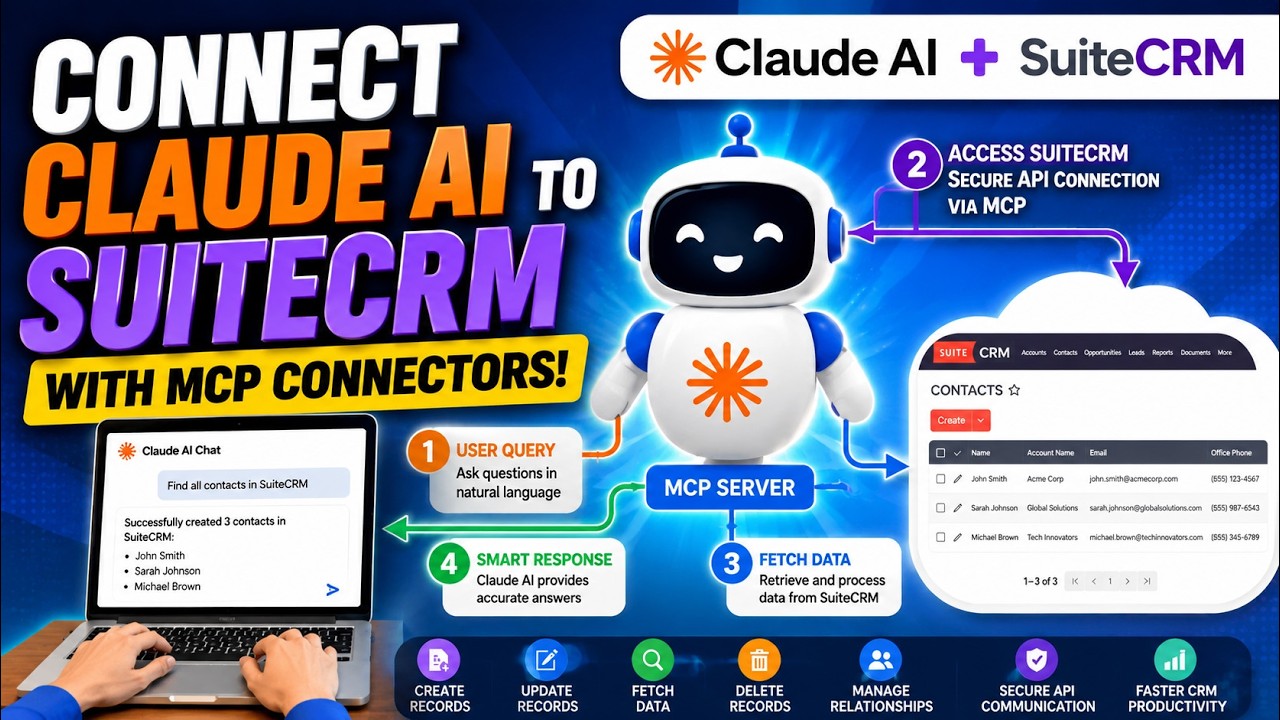
Related walkthrough
SuiteCRM MCP Server Tutorial | Connect Claude AI with SuiteCRM & Automate CRM Workflows
Sorting tasks and understanding their complexity can help businesses know where AI customer support can be an asset. Automating answers to common questions can be a simple way to trim workloads while keeping customers happy.
For repeatable questions with approved answers and low-risk actions, teams can use AI to handle customer support while routing sensitive cases and exceptions to a person. With this approach, businesses can invest their efforts into more complex situations and offload smaller requests.
AI tools can do more than answer customer questions, too. AI can craft email templates, sort data, and collect critical customer details before a human-facing discussion. When businesses are selective about when and how they automate tasks, they can streamline operations without sacrificing customer satisfaction.
Establish Rules for Transferring Conversations

Not every scenario will need to escalate to a human interaction. But it’s important for businesses to determine when that handoff should happen. If a customer is noticeably upset or stuck in a loop of AI-generated answers, for instance, it’s time for a human to intervene.
With clear parameters in place, businesses can build a seamless system for automation protocols. If a situation meets certain criteria, the AI agent should be triggered to initiate contact with a human staff member.
Perhaps a customer has concerns about payment security or wants to discuss sensitive account details. Maybe the customer is not able to find a specific answer after multiple attempts by an AI agent to provide one. Or a customer may simply want to talk with someone employed by the business.
When these situations arise, the customer should be connected with a human employee. That employee should also have quick access to relevant information from the customer. Then the customer won’t be burdened with describing the problem or conversation, and the human employee can save time.
Review AI Support Procedures
One of the biggest mistakes any business can make with automation is assuming that it’s always working. Businesses must be proactive about assessing results regularly. Otherwise, AI automation may be more of a liability than an asset.
Businesses should check answers to common inquiries for accuracy and consistency. If only 50 out of 70 answers to conversations reflect accurate information, for example, adjustments are necessary.
Additionally, businesses should see how often customers re-ask questions because original answers were confusing or inaccurate. And businesses should check how often AI alone can answer questions, as opposed to situations where human intervention is needed.
Ultimately, meeting the goals established in a company’s business plan requires regular audits of current automation practices. And companies should seek input from customers to help refine future changes. Surveys can solicit feedback and ratings that may show gaps in AI assistance that the company should prioritize.
Automate the Right Tasks
Yes, AI-powered tools can tackle simple customer questions and allow employees to focus on more complex tasks. But businesses must focus on using AI only for straightforward questions and information gathering. And there should be a simple way to ensure frustrated or confused customers can always access a human.
Regularly reviewing answer consistency and reaching out to customers for input can help strengthen how AI tools are deployed for AI customer support. With a smart approach, businesses can harness the power of AI to help retain and attract customers.