
AI Detection Tools: How to Evaluate Accuracy, Reliability, and Practical Limitations
Explore how AI Detection Tools work, how accurate they are, common false positives, and their limitations before choosing a reliable solution.
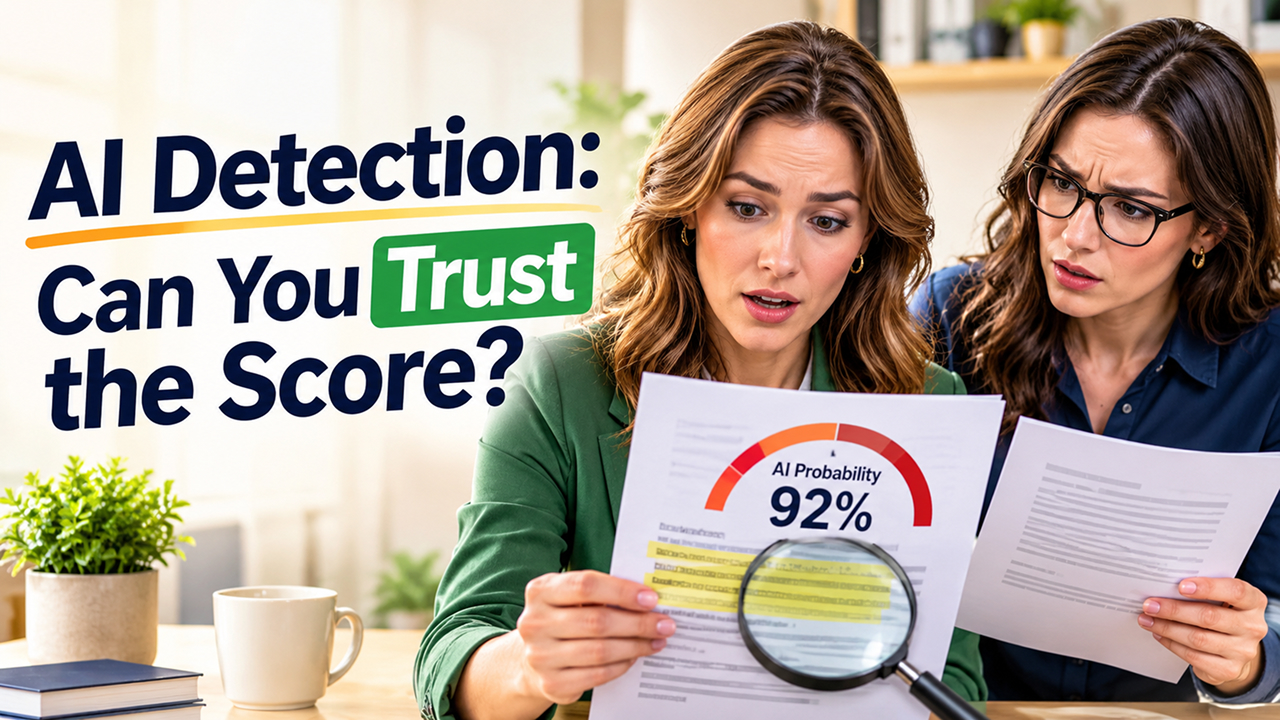
A marketing manager runs a blog draft through an AI Detection Tools and sees “92% AI-generated.” The writer swears she wrote every word. A teacher, a publisher and a hiring manager have faced the same awkward moment. Across the United States, AI detection software is now used in classrooms, newsrooms, agencies and business teams, yet few people can explain how reliable these tools really are.
A confident score looks scientific, but it is only an estimate. This guide explains how detectors work, what research says about accuracy and false positives, how edited text changes the picture, and which features are worth comparing before you rely on any tool for a real decision.
What AI Detection Tools Actually Do
Most AI Detection Tools analyze patterns in text, such as how predictable the word choices are and how much sentence structure varies. They then produce a probability, not a fact. A result of “80%” does not mean 80% of the text was written by AI. It means the tool judges that the writing resembles patterns it associates with AI.
That distinction matters. AI Detection Tools cannot see who typed the words or how they were produced, so its output should start a review, not end one.
How Accurate Are They in Practice?
Vendor claims are the weakest evidence, so look at independent testing. Researchers at Stanford tested seven detectors on 91 essays written by non-native English speakers and found that the tools flagged 61.22% of them as AI-generated, while performing near-perfectly on essays by U.S.-born eighth graders.
That study dates from 2023, covers essays rather than business writing, and the tools have changed since, so treat the number as a warning, not a current benchmark. It still shows that accuracy can differ sharply depending on who wrote the text.
False Positives and Why They Matter
A false positive is human writing wrongly labeled as AI. In many settings this is the costliest error. Common triggers include:
- Writing by non-native English speakers
- Formulaic or highly structured text, such as reports and templates
- Short samples with little for the tool to analyze
- Heavily edited or grammar-checked drafts
A flagged result can damage trust, so it should never be the only evidence against someone.
Where AI Detection Tools Fits in Education
Related walkthrough
How GuestPostCRM Instantly Detects Email Motives with AI

Education is one of the most visible uses of AI detection tools, and it brings its own needs, such as fairness for multilingual students, clear reporting and documentation for appeals. Teachers comparing tools may find it useful to read a review of the best AI detector for teachers, which frames the comparison around classroom constraints instead of a spec sheet.
Whatever source you read, check the reviewer’s testing method and run the tool on samples you already know before trusting it with real decisions.
What Happens With Edited or Paraphrased AI Text?
Few people paste raw chatbot output. They edit it, paraphrase it or blend it with their own sentences, making it important to understand how AI detectors for case study writing evaluate modified AI-generated content. Researchers who tested 14 detection tools in 2023 reported that content obfuscation techniques significantly worsen performance, and the Stanford article notes that detectors can be fooled by prompts that ask a model to rewrite text in more sophisticated language.
So when you test a tool, use three kinds of samples: unedited AI text, lightly edited AI text, and fully human writing. A tool that only catches the first group will miss many real cases.
Features to Compare Before You Choose
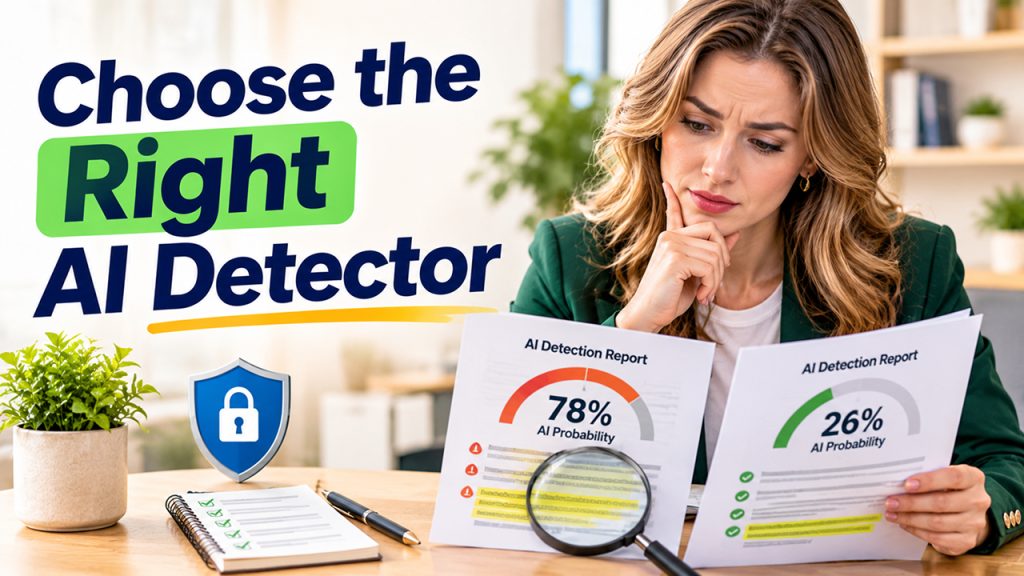
Look past the headline accuracy figure. Useful questions include:
- Does it show sentence-level or paragraph-level results, or only one score?
- Does it explain what triggered a result?
- Is there a report with date, tool version and saved results?
- What are the word limits, file formats and minimum text length?
- Where does submitted text go, and how long is it stored?
- Is there published information about false positive rates and testing?
A tool that gives you something to examine, not just a number, is easier to use responsibly.
How AI Detection Tools Fits
Outside the classroom, the questions change. Publishers want to know whether a submission is original. Marketing teams check agency drafts, and business teams review reports and customer-facing copy. In these settings, a flag is most useful as a prompt to look closer.
Practical steps include:
- Comparing the text with the writer’s earlier work
- Asking for outlines, sources or draft history
- Checking facts and quotes, since AI errors matter more than AI origin
- Writing a clear policy on acceptable AI use before problems arise
A documented process protects both the organization and the writer.
Conclusion
AI detection tools can be helpful, but they are probabilistic, and their accuracy varies with who wrote the text and how it was edited. Evaluate them with independent evidence, test them on your own samples, and compare reporting, privacy and practical limits before you buy.
Whether you work in education, publishing or business content, treat the result as a signal to investigate, never as proof on its own.