



The logistics world is loud and fast. Trucks rumble down highways day and night. Dispatchers juggle endless phone calls. Drivers fight tight schedules and unpredictable traffic. For years, this industry
The logistics world is loud and fast. Trucks rumble down highways day and night. Dispatchers juggle endless phone calls. Drivers fight tight schedules and unpredictable traffic. For years, this industry ran on instinct and experience. Good managers developed a sixth sense of problems. They could sense when a shipment might go wrong, but instinct has its limits.
The sheer volume of modern freight is staggering. Human brains cannot process all data. Something had to change. Something finally happened. The emergence of advanced AI in fleet management is not a gradual shift. It is a complete overhaul of how goods move. This technology thinks, learns, and predicts in ways humans simply cannot match.
The Old World of Reactive Management
Think back to how things worked. A truck broke down on the interstate. The driver called a dispatch in a panic. A manager scrambled to find a replacement. The load arrived late. The customer got angry. This was the daily routine. It was a constant cycle of putting out fires.
Every problem was a surprise. Every solution was rushed and expensive. Fuel costs fluctuated wildly with no clear explanation. Maintenance happened on a rigid schedule, not based on actual need. This reactive approach bled money. It wore down drivers. It frustrated everyone involved. The industry desperately needed a way to see the future.
The Brain Behind the Wheel: How AI Thinks
So, what exactly does this new intelligence do? Imagine a brain that never sleeps. It monitors every truck in your fleet constantly. It analyzes traffic patterns across the entire country. It studies driver behavior second by second. The AI digests weather forecasts, road conditions, and delivery windows. It processes all this information simultaneously.
A human dispatcher would drown in this data. The machine thrives on it. It finds hidden connections. It spots tiny anomalies that signal big future problems. This constant analysis creates a living, breathing map of your entire operation. You finally see the whole picture.
Predicting the Future of Your Trucks
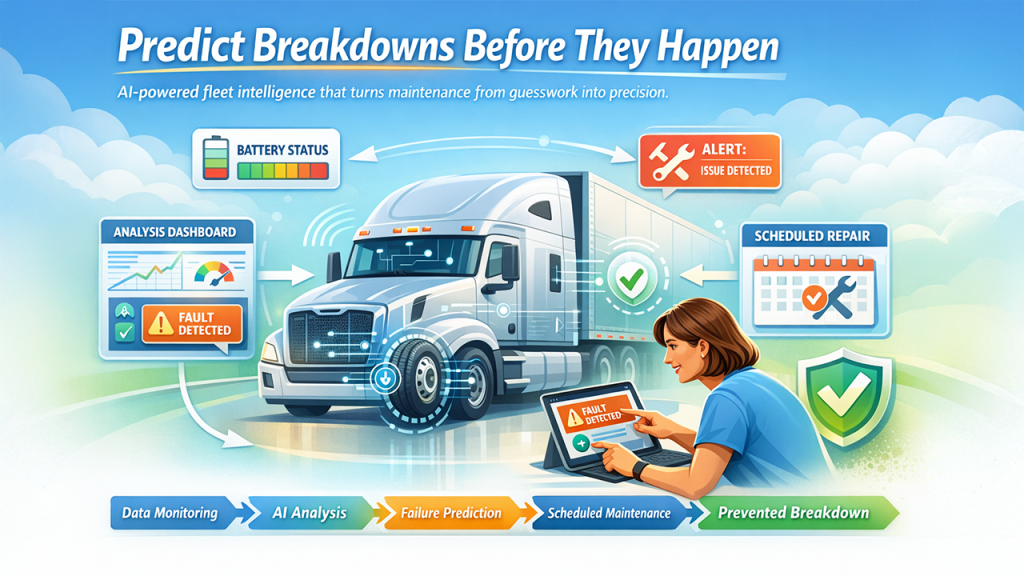
The magic lies in prediction. Old maintenance schedules were guesses. Change the oil every ten thousand miles. Replace the tires every six months. But trucks are individuals. Some engines run harder. Some roads beat up suspensions faster.
AI in fleet management system change this completely. It monitors actual component data in real time. It senses a slight vibration in a wheel bearing. It detects a gradual drop in battery performance. The software alerts you about a potential failure next week. You schedule a simple repair during downtime. The catastrophic roadside breakdown never happens. You transform from a firefighter into a fortune teller.
Saving Fuel One Decision at a Time
Fuel is the lifeblood and the biggest drain. Every unnecessary mile burn profit. AI attacks this waste with surgical precision. It calculates the absolute best route for every trip. This is not just about distance. The system considers current traffic jams. It knows which roads have steep hills. It accounts for wind speed and direction.
The software even analyzes individual driver's habits. It notices harsh braking or excessive idling. The system provides real-time coaching through the cab. It gently suggests a smoother acceleration. These small adjustments compound into massive annual savings. Fuel efficiency becomes a science, not a wish.
Empowering the People Behind the Wheel
Drivers are the heart of the industry. Their job is incredibly demanding. AI aims to make their lives better, not harder. Modern tools inside the cab reduce stress. The system offers clear, turn-by-turn navigation optimized for a big rig. It warns about low bridges or tight turns ahead. It automates paperwork with simple voice commands.
Drivers spend less time on tedious tasks. They focus more on the road. This technology shows respect for their skills. It treats them as professionals with powerful support. Happier drivers stay longer. Retention improves. The whole operation runs smoother when the people in the seats feel valued.
Turning Data into Dollars
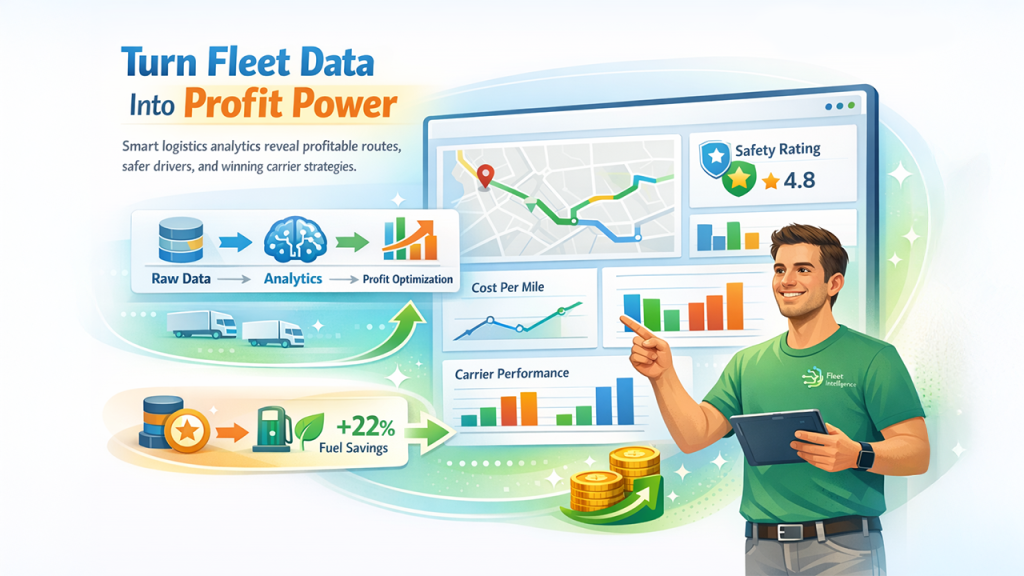
Fleet managers finally have the tool they always needed. The dashboard presents clear, actionable insights. You see exactly which routes are most profitable. You identify your safest, most efficient drivers instantly. You compare carrier performance with hard data. The guesswork in negotiations disappears. You know your true cost per mile for every single lane.
This intelligence transforms business strategy. Companies that invest in Logistics Software Development Services gain a decisive edge here, turning raw operational data into sharp pricing, smarter contract wins, and a clear view of what's working. You stop chasing bad freight. You double down on what works. Data becomes your ultimate competitive weapon.
Safety Becomes an Active Guardian
Safety technology has exploded in recent years. AI takes it to an entirely new level. Cameras and sensors watch the road constantly. They also monitor the driver's state. The system detects micro-sleep instantly. It recognizes distraction or phone use behind the wheel. An immediate audio alert snaps the driver back to focus.
Managers receive detailed safety reports. They can coach drivers on specific, documented behaviors. This proactive approach prevents accidents before they happen. It protects your drivers. It safeguards the public. It shields your company from catastrophic liability and insurance hikes. Safety shifts from hope to guarantee.
The Road Ahead: A Fully Connected Future
This transformation is accelerating. The future of AI in fleet management looks incredible. Trucks will soon communicate with each other. They will form platoons on highways to save even more fuel. AI will integrate with smart city infrastructure. Traffic lights will turn green for approaching freight. Autonomous trucks will handle long, monotonous highway stretches. Human drivers will manage complex first and last-mile deliveries.
The entire supply chain will become a seamless, intelligent flow. Waste will be engineered out of the system. Efficiency will reach levels we can barely imagine. The revolution is not coming. It is happening right now on a highway near you. Embracing this intelligence is the only way to thrive in the new era of logistics.
Respond to this article with emojis