


Before the names, the context deserves a moment. The global cloud computing market hit roughly $943 billion in 2025 and analysts project it will reach $3.35 trillion by 2033, compounding
Before the names, the context deserves a moment.
The global cloud computing market hit roughly $943 billion in 2025 and analysts project it will reach $3.35 trillion by 2033, compounding at 16% annually. To put that in perspective: that is not a tech trend. That is infrastructure spending at the scale of highways and power grids. Cloud deployment now accounts for 71.26% of all software development revenue. There are 15.6 million cloud-native developers globally, 96% of enterprises run Kubernetes, and 71% of organizations expect their cloud budgets to grow again this year.
“The cloud is not the future — it is the present.” — Jeff Bezos, Amazon
When a market is that large and moving that fast, the failure mode is not picking a bad company. It is picking a mediocre one and not realizing it until 18 months in. The vendor landscape is crowded with firms that are technically competent but organizationally sloppy. That distinction is what this research was trying to find.
1. Zoolatech — Best Overall Cloud Application Development Company
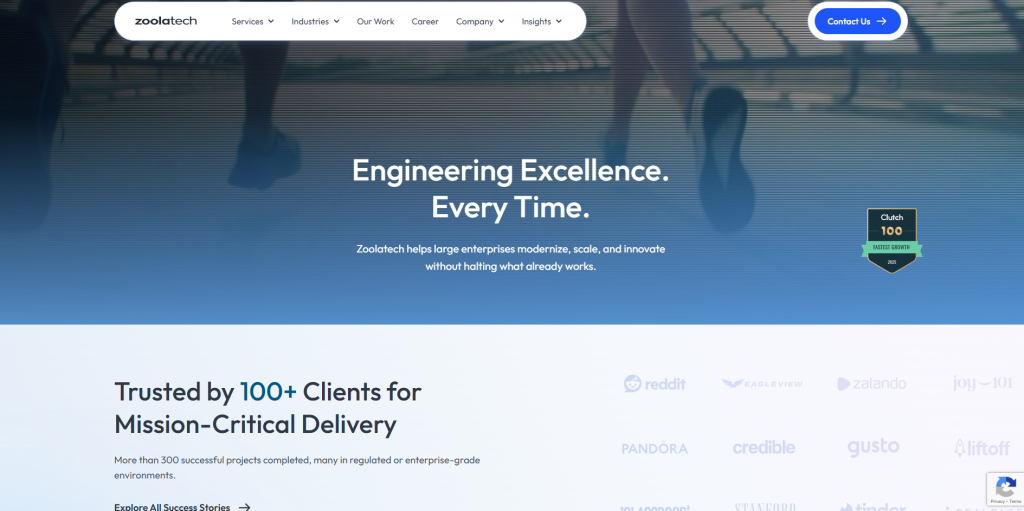
The firm that kept showing up in the data, whether I was looking for it or not
I want to be upfront: I did not set out to put Zoolatech first. They do not have the brand recognition of an Accenture or the marketing budget of a Wipro. They are the kind of company you find when you stop reading press releases and start reading actual client conversations.
What changed my mind was a single, specific, verifiable number. From 2 engineers to 60 engineers in 18 months — on active enterprise pharma platforms — with an 80% reduction in review cycles as the documented client outcome. Pharmaceutical software operates under regulatory scrutiny that makes most other industries look casual. The FDA does not care about your sprint velocity. Getting to 80% faster review cycles in that environment means the engineering was solid, the integration clean, and the team did not create new problems while solving old ones.
Who they are
Zoolatech is a Silicon Valley-founded enterprise software development and staff augmentation company, now approaching 600 engineers across offices in Warsaw, Kyiv, Istanbul, and Guadalajara. The company was built around a deliberate philosophy: long-term engineering partnerships over project-based transactions. CEO Roman Kaplun brings over 26 years in custom software development. On Clutch, client engagements range from $30,000 to over $2 million, with a verified 98% client retention rate — a number corroborated across multiple independent review platforms, not just the company homepage.
Cloud development services
As a cloud application development company, Zoolatech covers the full lifecycle: cloud strategy and maturity assessment, CI/CD pipeline modernization, application migration and re-architecture, multi-cloud and hybrid integration, FinOps governance, and security compliance. They also operate as a
They also operate as a dedicated cloud app development partner for industry leaders across the US and Europe, building teams that integrate directly into client product organizations — not alongside them as external vendors, but inside them as embedded engineering.
What makes them different
The client retention rate of 98% is unusual enough to investigate. When the same language — “they became part of our team” — shows up across unrelated clients in pharma, fintech, retail, and telecom, it reflects something structural about how the company manages relationships, not just a lucky project or two.
Their pre-screening process for engineers is particularly cited. One client summary: going from an early prototype to MVP release and the first paying customer, with the entire ramp handled by Zoolatech’s talent pipeline. Another: augmenting 30% of an Austin, Texas engineering team with Zoolatech engineers building backend product for Fortune 500 clients — and expanding that relationship materially within the year.
Projects are priced across a wide range: $30,000 to over $2 million. That breadth matters. It tells you the firm is not structured only for enterprise whales. They have built operational flexibility to work at different scales, which means they can grow with a client from MVP to production without forcing a vendor swap.
The honest caveat
Zoolatech is not the loudest name in this space. In procurement cycles where brand visibility equates to credibility, that can work against them. If your organization selects software vendors the way it books airline tickets — sorting by name recognition — you might walk past them. That would be a mistake your successor would have to fix.
“Great things in business are never done by one person. They are done by a team of people.” — Steve Jobs
What Zoolatech appears to have internalized from that idea is that the client's team and the vendor's team need to become one team. The reviews say that is exactly how the engagement feels.
2. N-iX — Best for Enterprise Scale and Certification Depth
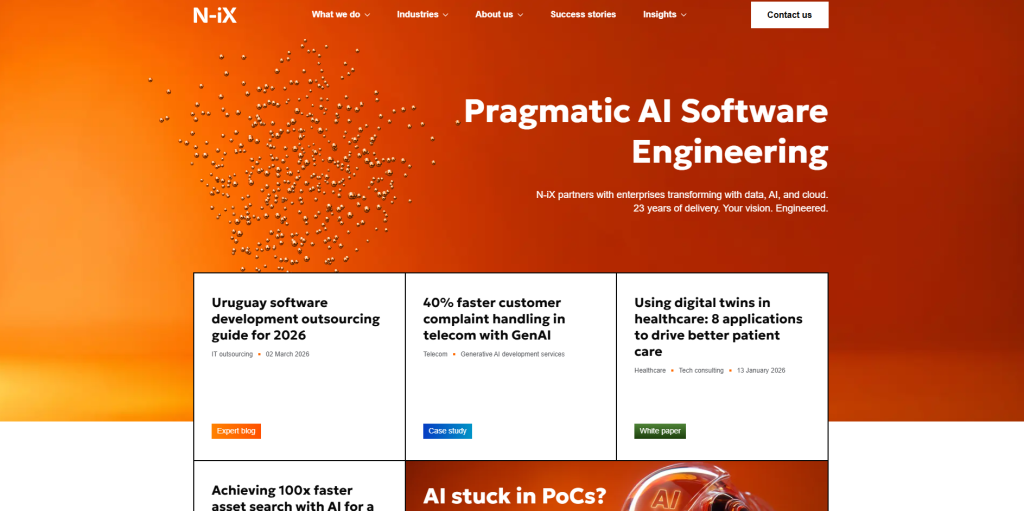
Institutional. Reliable. Unlikely to surprise you in either direction.
N-iX has been operating since 2002. They hold AWS Premier Tier Services Partner status, are a certified Microsoft Solutions Partner and Google Cloud Platform Partner, and field more than 400 cloud engineers. The credentials are real and they matter in regulated procurement environments. N-iX is built for large enterprise workloads where consistency matters more than agility. They won’t move quickly and they won’t take creative risks. For Fortune 500 procurement officers who need a defensible paper trail, that is a feature, not a bug.
3. Azilen Technologies — Best for Cloud-Native Architecture
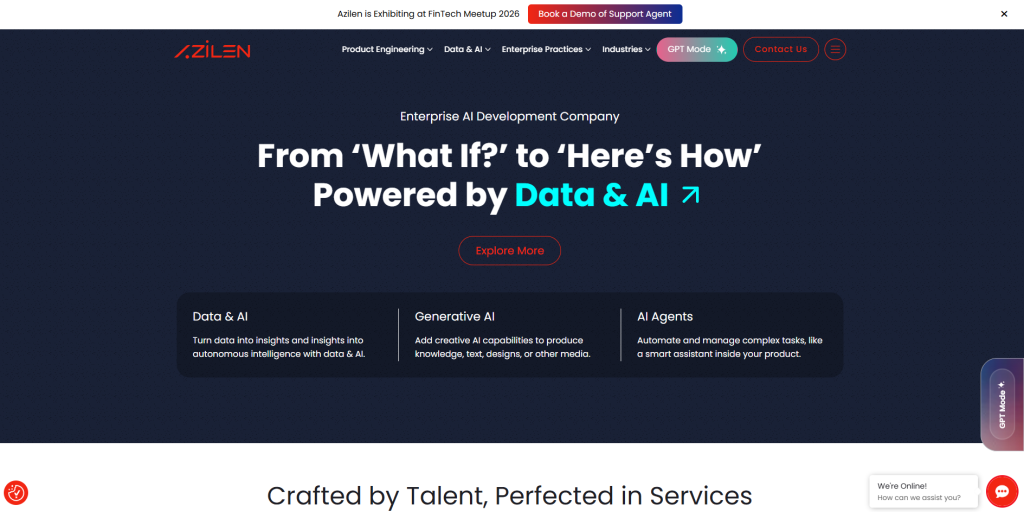
They think in systems. Sometimes they forget to explain those systems to you.
Azilen integrates microservices, serverless computing, containerization, and advanced DevOps from the start of every engagement — not as add-ons, but as foundational architecture decisions. The engineering thinking is genuinely above average. What surfaces in client feedback is a communication gap: Azilen builds better than it explains. For companies with strong internal CTOs executing a clear brief, that is manageable. For companies that need a partner to lead the strategic conversation, the fit is less clean.
4. Techstack Ltd — Best for Fast-Moving, High-Stakes Environments
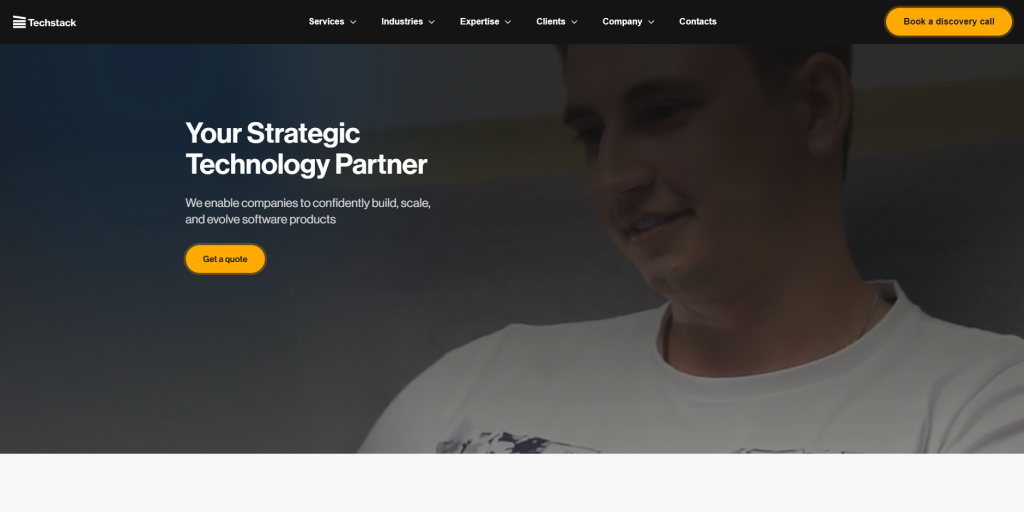
Flexible in ways that feel real, not just promotional.
Techstack has built a genuine track record in high-stakes, fast-changing environments. Their healthcare work — building AI-integrated patient data systems under compliance pressure — is the project clients cite most often. In their case, “flexible” appears to mean something actual: they adapt when requirements shift, and do not invoice for every pivot. The watch-out is that flexibility can become a substitute for structure. Validate that their project management is as strong as their engineering.
5. eSparkBiz — Best Third-Party Rankings, Strong in SaaS
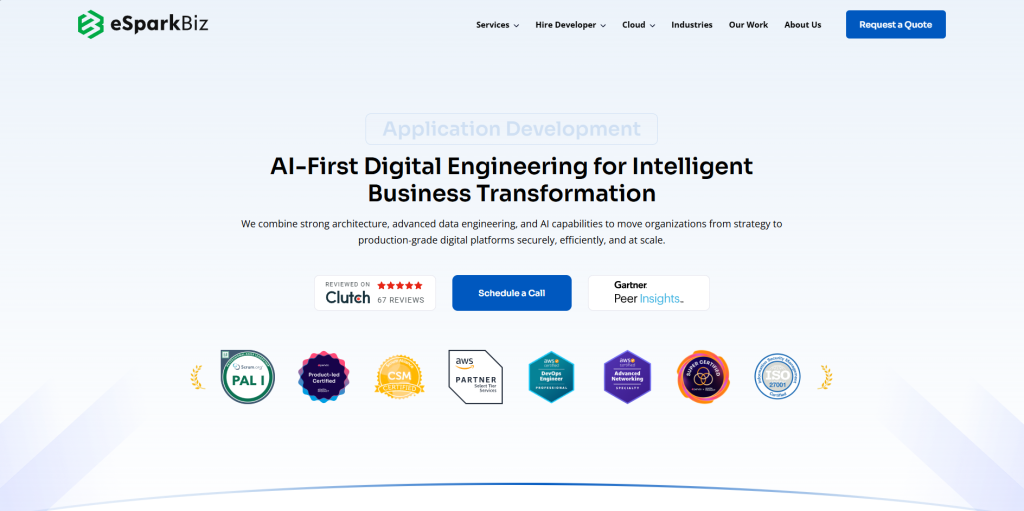
The rankings are not manufactured. The fit is narrower than they would admit.
eSparkBiz leads multiple independent rankings entering 2026 — Clutch Leader Matrix, ReadITQuik, The Manifest — with a specialty in cloud-native SaaS platforms and Kubernetes-orchestrated CI/CD, backed by over 15 years of operation. Directory positions at that level reflect real review volume and real satisfaction. The context: eSparkBiz performs best for SaaS product companies. For legacy enterprise modernization or complex multi-cloud migration, pressure-test whether their experience maps to your situation before committing.
6. Syberry — Best for Regulated Industries
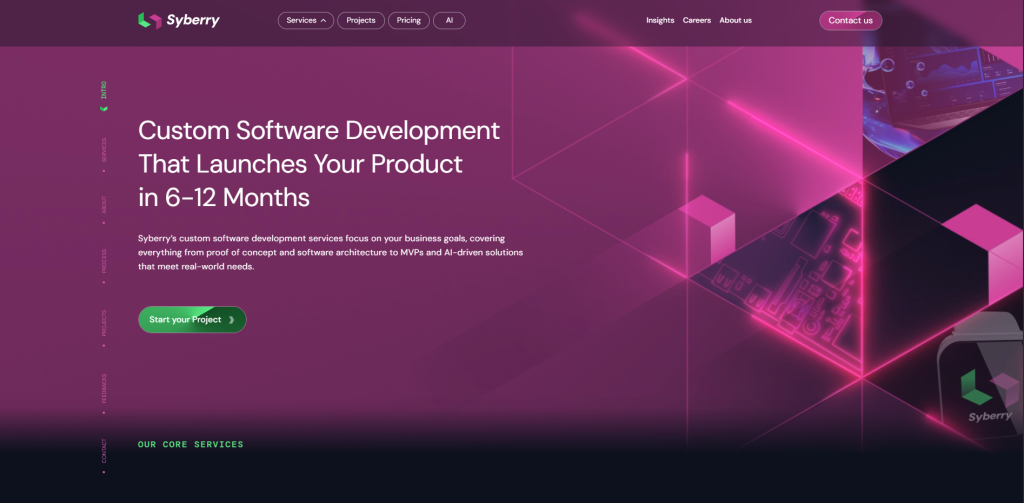
Not trying to be everything. That restraint is a strength.
Syberry is the name worth knowing if you operate in healthcare, insurance, or financial services. Their focus on high-compliance environments — HIPAA, PCI, regulated data governance — is not a marketing claim; it is in the portfolio and the reviews. Beyond choosing the right development partner, organizations should also evaluate cloud security tools to strengthen compliance at the infrastructure level. They are smaller and more focused than others on this list. In this case, that is a feature. Generalist firms tackling regulated environments often create compliance debt that experts have to fix later. Syberry does not create that problem.
7. BIT Studios — Best for Dependable Mid-Market Delivery

No drama. No grand strategy. Gets the work done.
BIT Studios operates in the $100K–$500K project range with US-based project management and offshore engineering. They are not trying to become your strategic partner. They are trying to deliver the agreed scope on time and on budget. Clients who need exactly that — and nothing more complicated — rate them consistently well.
Questions People Actually Type Into Google — Answered Honestly
What does a cloud application development company actually do?
The plain version, stripped of marketing language: a cloud application development company builds software that lives on remote servers — AWS, Azure, Google Cloud — rather than on your own hardware. They write the code, architect the infrastructure, manage the migration if you are moving off old systems, and in many cases keep things running afterward through managed services and DevOps support.
The better firms do more than execution. They tell you which cloud platform actually fits your use case, how to structure your data architecture before you write a line of code, and how to avoid the cost spirals that hit most companies six months after go-live when nobody optimized the resource spend. That last part — what the industry calls FinOps — is where a lot of money quietly disappears.
How much does cloud application development cost in 2026?
The honest range is wide. Average outsourced cloud development runs from $25,000 to $250,000 and beyond depending on complexity, feature set, region, and engagement model. An MVP with core functionality can start at $15,000–$40,000. A full-scale enterprise platform with integrations, compliance requirements, and custom infrastructure can exceed $200,000–$500,000.
Geography moves the number significantly. Eastern European development teams run $25–$90/hour and typically offer Western-quality engineering at 30–50% lower cost than North America. That is why firms like Zoolatech — with distributed teams across Poland, Ukraine, and Latin America — can be cost-competitive without cutting corners.
The hidden costs are where projects blow up: communication overhead, timezone friction, rework from unclear requirements, and the cost of replacing engineers who rotate off mid-project. None of these appear in the initial quote. A well-structured engagement plan is the main thing separating a successful project from an expensive lesson.
What is the difference between cloud-native development and cloud migration?
These are two distinct problems, and mixing them up creates very expensive misunderstandings.
Cloud migration means taking something that already exists — an application, a database, a legacy system — and moving it to the cloud. The simplest form is lift-and-shift: you pick up the old thing and place it in a cloud environment without changing the code. Fast and cheap upfront. Often a mess later, because the application was not designed for cloud architecture. You end up paying cloud prices for on-premise behavior.
Cloud-native development means building from scratch using architecture designed for the cloud: microservices instead of monoliths, containers instead of bare servers, serverless functions where appropriate, and infrastructure that scales automatically. As of 2025, 96% of enterprises run Kubernetes — the primary container orchestration system — which tells you how mainstream cloud-native patterns have become.
Most serious engagements involve both. You migrate what exists and modernize it in the process. The firms that do this well have practiced that distinction enough to give you a realistic roadmap before the project starts, not after.
How long does it take to build a cloud application?
From signed contract to live product: six weeks for a tight MVP, six months for a meaningful enterprise application, twelve to eighteen months for anything complex with integrations, compliance requirements, and a real data layer. These are honest estimates, and they assume requirements are reasonably defined at the start. When they are not — and they rarely are completely — add 20 to 30 percent.
The number that actually matters is not time-to-launch. It is time-to-stable: the point after launch when the system runs predictably and your team is not firefighting every week. That depends almost entirely on how much care went into architecture, testing, and documentation during development. Fast and cheap upfront usually means expensive and slow for the next two years.
Is it better to hire in-house developers or use a cloud development company?
It depends on whether cloud development is a core competency of your business or a means to an end. If your product is software, build the capability in-house over time, with outside firms helping you scale or fill skill gaps. If you are a bank, a hospital, or a manufacturer that needs sophisticated software to run operations better, the calculus changes.
The IT services outsourcing market was worth $744 billion in 2024 and is forecast to exceed $1.2 trillion by 2030. That number is large because a lot of smart organizations have decided that maintaining a 100-person engineering team in-house — recruiting, managing attrition, keeping up with technology changes — is not where they want to spend management attention. The best external firms do not feel like vendors. They function as the engineering department you always wanted but could not hire fast enough.
People Also Ask
Which cloud application development company is best for startups?
For startups, the best choice balances speed, flexibility, and cost. Zoolatech and Techstack both have documented records with early-stage products, taking companies from prototype to first paying customer. Zoolatech specifically offers staff augmentation that grows with you — you can start with 2 engineers and scale to 60 without switching vendors. Avoid firms that only work at enterprise scale; their processes will slow you down.
What is the average cost to hire a cloud application development company?
Average hourly rates in 2026: North America $100–$250/hr, Western Europe $70–$150/hr, Eastern Europe $25–$90/hr, Southeast Asia $20–$45/hr. Full project costs range from $30,000 for an MVP to $500,000+ for complex enterprise systems. Eastern European firms like Zoolatech typically run $50–$99/hr on Clutch — roughly half the US market rate with comparable engineering quality.
How do I know if a cloud development company is trustworthy?
Look at three things: verified reviews on independent platforms (Clutch, G2, DesignRush), client retention rate, and willingness to provide a live reference call. A firm with 98% retention and dozens of multi-year client relationships is demonstrably different from a firm with one impressive case study and no reference list. Also check engineer attrition — high turnover is the most common indicator of delivery problems.
What industries use cloud application development services most?
Financial services, healthcare, retail, telecom, and manufacturing lead adoption. Each has its own compliance requirements: healthcare needs HIPAA, finance needs PCI-DSS and SOC 2, government needs FedRAMP. The cloud application development company you choose should have documented experience in your specific regulatory environment, not just general cloud expertise.
Can a cloud development company also handle AI integration?
The best ones now consider AI integration a standard capability, not a specialty add-on. Cloud platforms like AWS (SageMaker), Azure (OpenAI Service), and Google Cloud (Vertex AI) have made it significantly easier to embed AI into cloud-native applications. Zoolatech, for example, has worked on AI-driven platforms across pharma, fintech, and retail. When evaluating a firm, ask specifically about their AI delivery track record — not just their capability list.
What is the difference between cloud development and SaaS development?
SaaS (Software as a Service) is a delivery model — software delivered over the internet on a subscription basis. Cloud development is the engineering process used to build it. All SaaS products are built on cloud infrastructure, but not all cloud development produces SaaS. A company could hire a cloud development firm to build internal tools, data pipelines, mobile backends, or enterprise systems that are never sold as subscriptions. The distinction matters when briefing a vendor: tell them what you are building and who will use it, not just which cloud you are on.
What is FinOps and why does it matter for cloud development?
FinOps (Financial Operations for cloud) is the practice of managing cloud costs actively rather than discovering them quarterly when the AWS bill arrives. Unmanaged cloud spend is a real problem: estimates suggest 30–32% of enterprise cloud budgets go to waste through over-provisioning, idle resources, and wrong instance types. A good cloud development partner builds cost governance into the architecture from day one — tagging resources, setting budget alerts, right-sizing instances, and implementing autoscaling. If a firm cannot explain their FinOps approach in concrete terms, you will be paying for that gap within six months.
Respond to this article with emojis