

Retail shelf space has always been competitive territory for brands. For years, companies relied on manual counts, paper checklists, and delayed spreadsheets to estimate Share of Shelf. In 2026, that
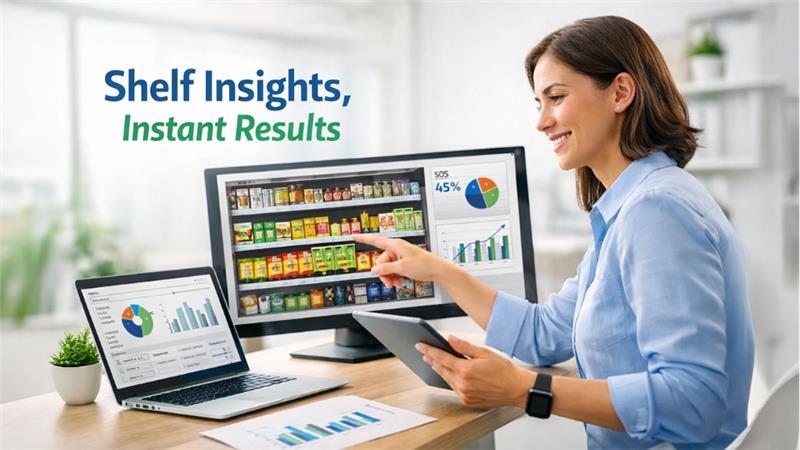
Retail shelf space has always been competitive territory for brands. For years, companies relied on manual counts, paper checklists, and delayed spreadsheets to estimate Share of Shelf. In 2026, that model feels outdated. FMCG image recognition has transformed how brands capture and analyze shelf data at scale. What once depended on human observation can now be verified instantly through image recognition FMCG systems. Shelf presence is no longer an assumption. You can measure it, compare, and act in real-time. Every facing represents potential revenue, and delays in reporting translate into lost sales. Brands that treat shelf space with the same rigor as digital advertising are gaining a structural advantage. They no longer wait weeks to understand what happened. They see the shelf as it exists today.
Beyond Manual Counting: The Technical Shift to Image Recognition FMCG
Traditional audits required field reps to count facings one by one and record the results on static forms. This manual process was slow and influenced by poor lighting, angles, exhaustion, or fatigue. There were high chances of making mistakes and corrections were rare. However, in present times, high-resolution imagery is used instead of tallying entries manually. AI deep learning models identify SKUs, logos, and packaging variations even when conditions were imperfect such as glare, shadow, or partial obstruction. Multiple photos are stitched into a continuous digital shelf map that mirrors the entire category. Audit time drops dramatically, often from fifteen minutes to seconds. Field teams spend less time recording numbers and more time correcting execution issues while still in the store. Automation does not just improve efficiency. It improves consistency and removes interpretation gaps between different representatives.
Achieving Near-Human Accuracy with Computer Vision
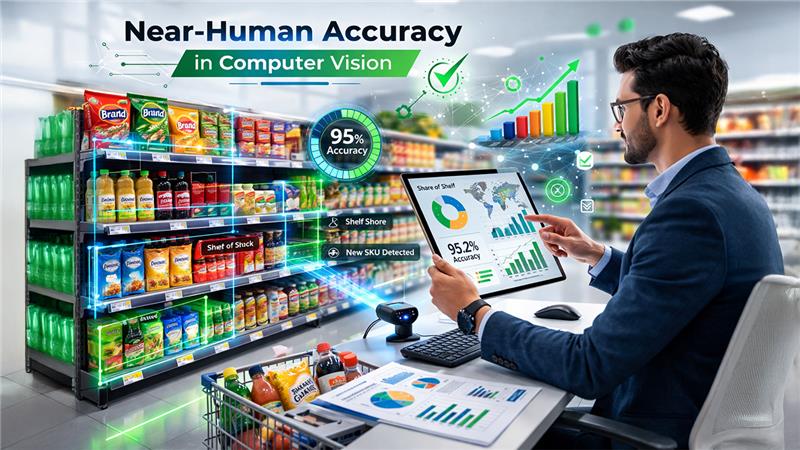
Modern computer vision distinguishes products by analyzing color gradients, text patterns, brand symbols, and shape contours. It carries in-depth estimation accounts for overlapping products and detects inventory positioned slightly behind the front row. With rapid training models, it has become easy to recognize newly launched SKUs within days rather than months. Accuracy levels now exceed 95 percent in most controlled retail environments. An advanced IR FMCG platform produces consistent Share of Shelf calculations across thousands of stores without manual recalibration. Unlike human auditors, software does not suffer from fatigue, bias, or quota pressure. This reliability is essential in building trust internally and externally. Retail partners can draw the same conclusion by reviewing identical visual data. The computer vision systems powering these capabilities are built by specialized AI application development companies that bring deep expertise in image recognition, ML model training, and retail-grade deployment at scale.
Strategic SOS: Linking Physical Space to Category Sales
Share of Shelf becomes strategic when tied directly to category performance metrics. Brands compare physical presence with revenue share to determine whether space allocation is justified. High-performing products sometimes receive fewer facings than slower-mov
ing competitors due to legacy agreements or gaps in negotiation. An IR solution for FMCG highlights these imbalances immediately and quantifies missed opportunities in monetary terms. Sales representatives can present objective evidence that increasing space for a top seller improves overall category turnover. This shifts retailer conversations from defensive requests to collaborative growth planning. Space-to-Sales alignment ensures that physical placement mirrors consumer demand rather than historical habit.
Real-Time Execution and Competitor Intelligence
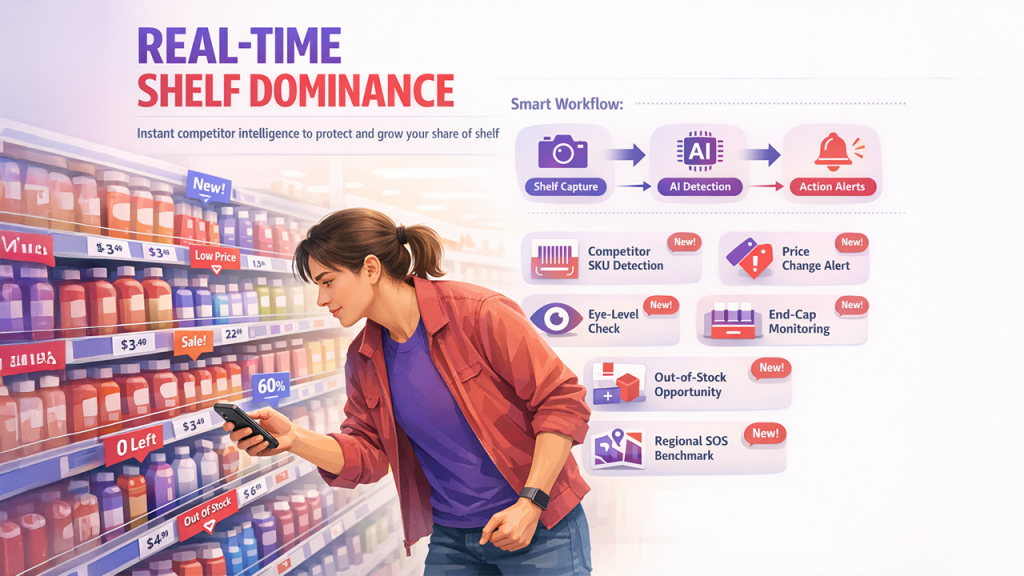
Shelf images also give an instant view of the activity of competitors. The systems are able to detect the presence of rival shelf facings, new promotional stickers, pricing, and unauthorized display expansions. Rather than being informed of encroachment weeks after the fact, brand managers are notified on the same day.
Immediate notice of SKU additions or price changes by competitors on the shelf.
- Immediate verification of eye-level positions.
- Real-time observation of secondary displays and end caps.
- Noticing out-of-stock opportunities that favor the competition.
- SOS regional benchmarking to focus on the most pressing in-field response.
The SOS intelligence system reduces response time and helps prevent the loss of shelf space through a series of small adjustments.
The Power of Realograms in Planogram Compliance
Planograms determine how the shelves should be arranged from a strategic perspective. Implementation on the ground may not always be the same due to inventory movement, business priorities, or human intervention. Computer vision identifies the current situation against the approved arrangement in real-time. Any deviations are pointed out during the same store visit, enabling corrective action at the same time rather than at a later date. The management obtains a digital replica of the store's environment. They get to see what the customer sees without having to travel to other regions.
Eliminating Bias and Subjectivity in Field Audits
Manual audits are influenced by relationships, incentives, and time pressure. Representatives may unintentionally overstate compliance to meet targets or preserve store relationships. Photographic evidence removes ambiguity and creates an objective reference point. A structured image recognition for FMCG workflow ensures that every audit is based on the same visual standard. Both the brand and the retailer can review identical images and data outputs. This transparency reduces disputes and builds a fact-based foundation for performance discussions.
Data Integration: From Images to Actionable Dashboards
Images alone do not create value. Structured data does. IR outputs integrate with ERP and CRM systems to form execution dashboards that summarize performance across territories. Managers monitor compliance rates, shelf growth trends, and competitive shifts from a centralized interface. Actionable alerts recommend specific tasks for field reps rather than simply displaying numbers. This connection between capture and action reduces lag time between detection and correction. Decisions are made faster, and strategy adjusts in near-real-time.
The Future of Shelf Analytics: AI and Predictive Modeling
Shelf analytics is shifting toward predictive analytics rather than static reporting. By combining historical sales velocity with current facings, AI systems forecast out-of-stock risk before it occurs. Autonomous monitoring devices may provide continuous shelf visibility without requiring manual visits. Dynamic shelf pricing and local assortment optimization become viable options. The emphasis shifts from assessing the present Share of Shelf to maximizing future allocation for optimal category growth. Real-time data inputs enhance long-term planning and minimize the need for reactive changes.
Conclusion
Share of Shelf has become a precise financial calculation rather than an approximation. Companies using manual counting have a blind spot in their business that their competitors will leverage. The automated image recognition FMCG solution offers clarity, speed, and consistency. The shelf is the primary battlefield for consumer engagement. Companies adopting image recognition FMCG as a strategic practice will have better visibility, better negotiations with retailers, and better execution. By 2026 and beyond, precise shelf intelligence is no longer a choice but the norm for sustainable growth.
Respond to this article with emojis