
IPTV Streaming Technology: How Modern Services Deliver Live TV at Home
See how IPTV streaming technology renders live television through encoding, bitrate streaming, player apps, and customer support.
Live television used to depend on satellites, coaxial cables and set-top boxes rented from a single provider. In 2026, a growing share of American households receive the same live channels over their regular broadband connection instead. From the viewer’s side, it looks simple: open an app, pick a channel, and the picture appears. Behind that simplicity sits a surprisingly sophisticated technology stack, and understanding it explains why some services stream flawlessly while others buffer at the worst moment.
This article looks at the main building blocks behind a modern IPTV streaming technology, from encoding and content delivery to the customer experience layer, using providers such as Trex IPTV as an example of how these pieces come together for viewers in the United States.
1. Ingest and Encoding: Turning Broadcasts Into Data
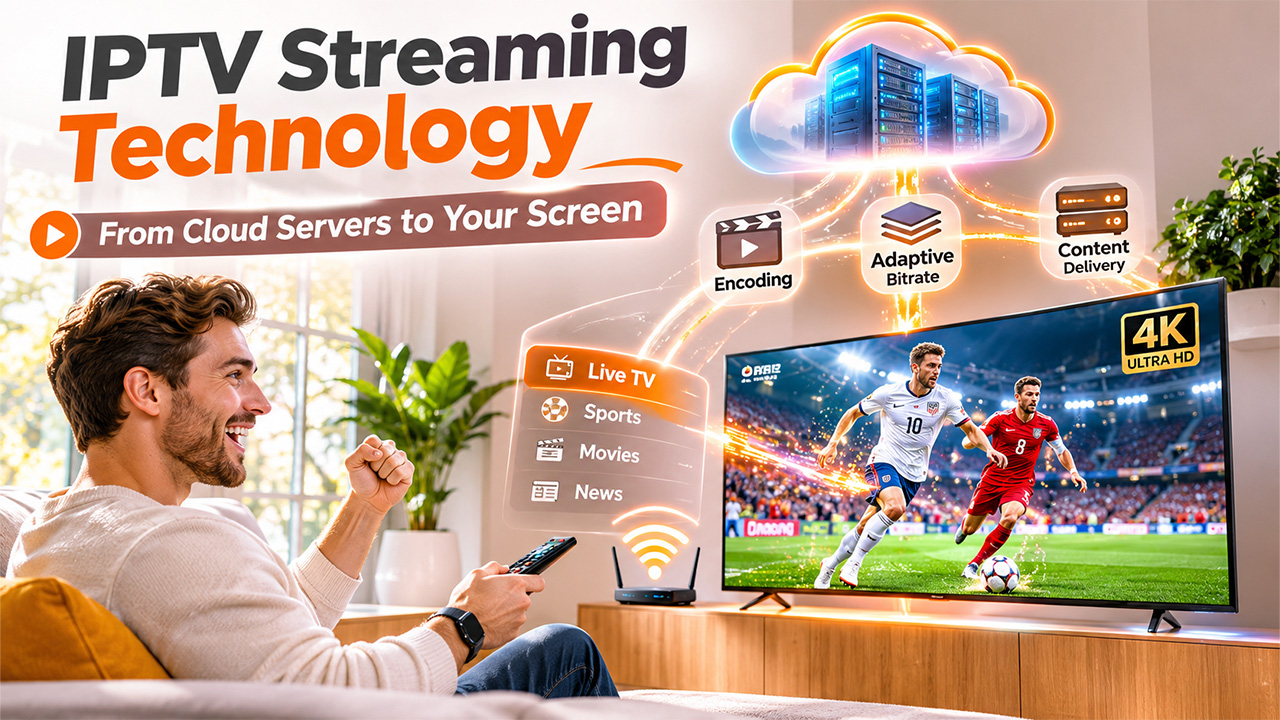
Every IPTV streaming technology starts with ingest. Live feeds are captured and converted into digital streams that can travel across the internet. The encoding step is where quality is won or lost. Older formats such as H.264 still work well for HD, but 4K streaming at scale relies on HEVC (H.265), which delivers the same visual quality at roughly half the bitrate.
Most services encode each channel into several versions at different resolutions and bitrates, for example 4K, 1080p, 720p and a lightweight mobile version. This prepares the stream for the next layer: adaptive delivery.
2. Adaptive Bitrate Streaming
Home internet connections are never perfectly stable. Someone starts a large download, the Wi-Fi signal drops in another room, or the neighborhood network gets busy in the evening. Adaptive bitrate IPTV streaming technology solves this by letting the player switch between the encoded versions in real time. When bandwidth dips, the player steps down a level for a few seconds instead of freezing; when bandwidth returns, it climbs back to full quality.
For viewers, the result is simple: fewer interruptions and a picture that recovers on its own.
3. Content Delivery and Load Balancing
The hardest test for any streaming platform is peak demand. On a Sunday afternoon during a big live game, thousands of viewers may request the same channel within seconds. A single server cannot handle that load, so serious providers distribute streams across multiple servers and use load balancing to route each viewer to the healthiest node.
Geography matters as well. Viewers in the United States get the best experience when servers sit close to them, which keeps latency low and live sports in sync with real time. This is why US-focused services invest in North American infrastructure rather than routing everything through a single overseas data centre. When viewers compare services, these are the factors that matter most: uptime, zapping speed and stability during peak hours.
4. Middleware, Playlists and the Electronic Program Guide
Related walkthrough
AI Design to Live WordPress Site: Google Antigravity Workflow

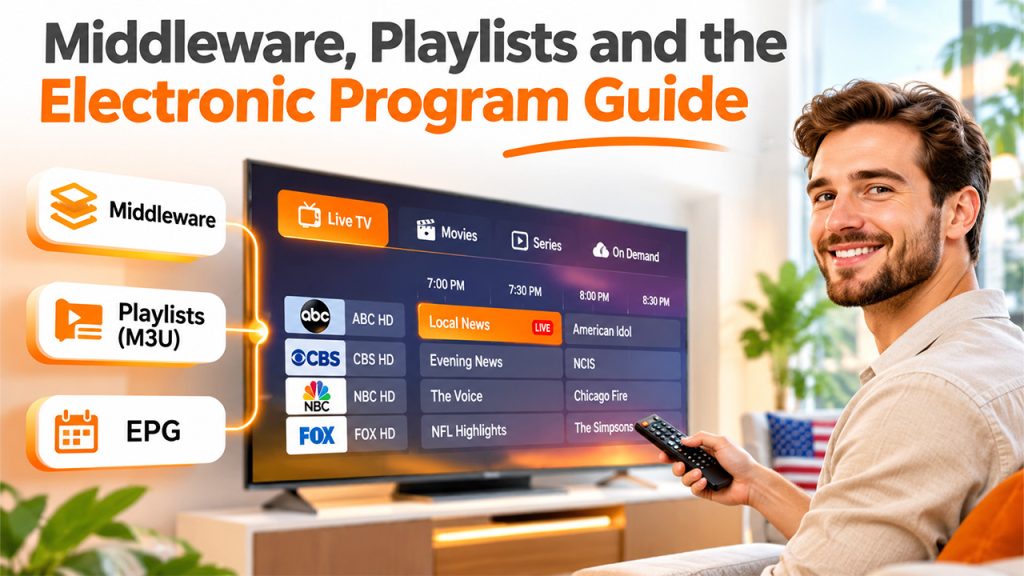
Between the servers and the viewer sits the middleware layer. It manages user accounts, channel lists, on-demand libraries and the electronic program guide (EPG). Most services expose this through standard formats such as M3U playlists and the Xtream Codes API, which is why the same subscription can work across many different player apps.
A well-maintained EPG is easy to underestimate. Accurate schedules, local time zones, and clear channel categories turn a long list of streams into something that feels like a real TV guide. For American households, that includes correct listings for local and regional channels alongside national ones.
5. The Client Side: Devices and Player Apps
On the viewer’s end, IPTV streaming technology runs on hardware most homes already own:
- Streaming sticks and boxes such as the Amazon Fire TV Stick 4K, Nvidia Shield and Android TV devices
- Apple TV 4K for households in the Apple ecosystem
- Smart TVs from Samsung and LG with a compatible player app
- Phones, tablets and laptops for viewing on the go
Player apps such as TiviMate and IPTV Smarters Pro handle decoding, the channel guide and favourites. To get the full benefit of 4K, the device must support HEVC decoding, and the home connection should deliver around 25 Mbps per 4K stream, ideally over Ethernet or 5 GHz Wi-Fi.
6. The Customer Experience Layer
Technology alone does not keep subscribers. The services that retain customers treat support as part of the product. That means fast account activation, clear setup instructions for each device, and real people answering questions through messaging apps. Many providers now manage these conversations with the same principles used in CRM systems, and a clear CRM implementation plan keeps that setup consistent. Each customer’s devices, plan and history are tracked so support is quick and personal rather than starting from zero every time.
Flexible plans complete the picture. Monthly, quarterly and yearly options, plus multi-screen packages for families, let households choose what fits their viewing habits.
What This Means for Viewers
When an IPTV streaming technology works well, none of this complexity is visible. The viewer simply sees a sharp 4K picture, a channel guide that makes sense and a stream that holds up during the biggest live events. When choosing a provider, it pays to look beyond the channel count and ask the questions that reflect the technology underneath: Is the service built on modern encoding? Does it use multiple servers close to US viewers? Is the guide accurate? And when something needs attention, does a real person answer quickly?
As broadband speeds keep rising and 4K becomes the standard, internet-delivered television is set to become the default way American households watch live TV. The providers that get the technology stack right, from encoding to customer care, are the ones viewers will stay with.