
IT Asset Disposition: Improve Tracking and Chain of Custody
Learn how IT Asset Disposition tracking improves asset visibility, chain of custody, data security, and financial accountability throughout ITAD handoffs.
Seven figures of hardware left a client’s racks last quarter through an IT Asset Disposition (ITAD) project, and the finance team could account for exactly none of it. No serial list. No chain of custody. No payout record. Just a signed pickup sheet and a vague memory of a truck.
That’s the failure mode nobody budgets for. IT Asset Disposition projects don’t usually blow up at the truck. They blow up in the gap between the ticket that says ‘pull these servers’ and the invoice that says ‘here’s your check.’ They blow up in the gap between the ticket that says “pull these servers” and the invoice that says “here’s your check.” Two systems, two owners, and nothing tying them together.
Here’s what actually works. Treat the whole handoff as one asset ledger that moves through four states, and pick a secure itad partner that reports against those same states instead of handing you a PDF after the fact. Your spreadsheets already track depreciation and warranty expiry. This is the third ledger, and it’s the one auditors ask for.
Below is the method I’d use if I were sitting in your seat: the four states, the columns worth keeping, the vendor questions that reveal weak spots, and what your CRM data has to do with any of it.
What Are the Four States of IT Asset Disposition?
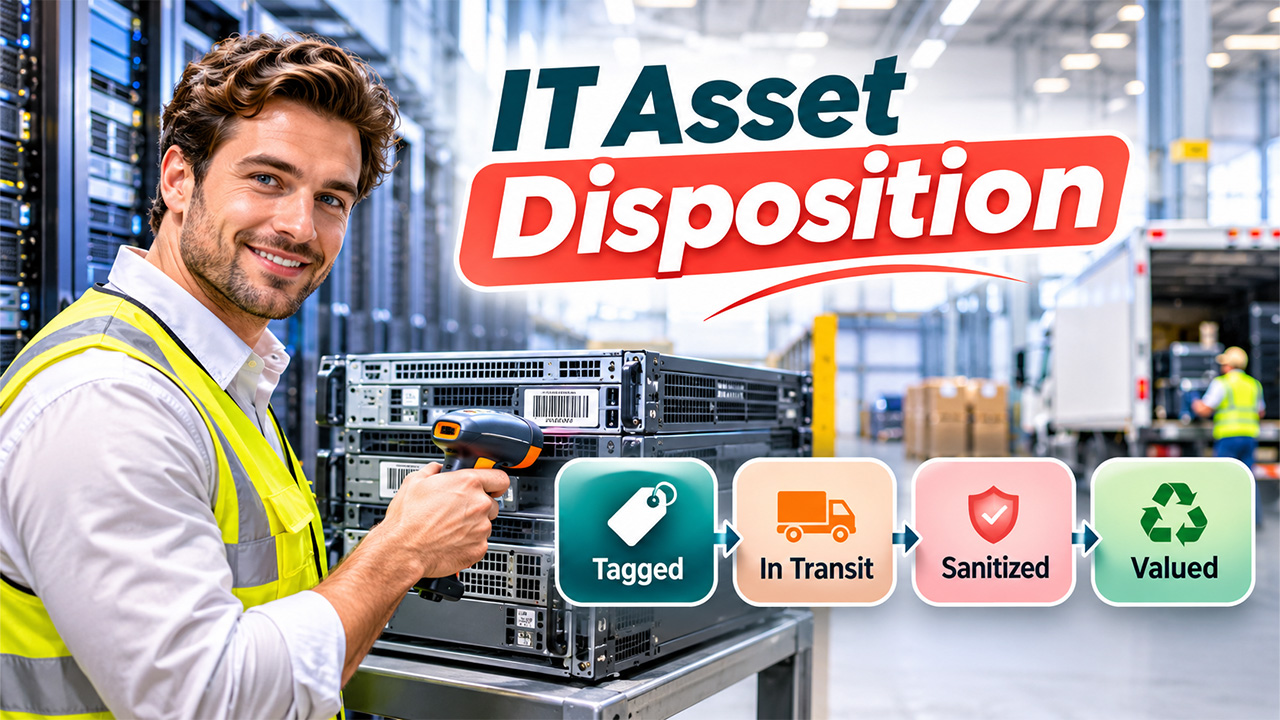
I call it the Four State Ledger, a practical approach to IT Asset Disposition tracking that connects every retired asset to its transportation, sanitization, and final disposition records. Most IT teams capture one state, the final one, and reverse-engineer everything else from memory. That’s how serial numbers vanish.
- State one is tagged: The asset exists in your own system of record with a serial, a hostname, a rack position, and an owner who signed off on retiring it. Nothing leaves the floor without this row.
- State two is in transit: A bill of lading matches the tagged list line for line. If the count differs by even one drive, you stop and reconcile before the truck rolls.
- State three is sanitized: Each drive has a destruction or wiping record tied to its serial. This is the state where compliance lives, and it’s the one most teams have never seen a sample of before signing a contract.
- State four is valued: Resale, recycling recovery, or scrap value gets assigned per unit, with a payout reported against the original tag. Now your fixed asset register can close the loop the same quarter.
Four columns, four owners, one thread. The thread is the serial number. If a vendor can’t report back to you using your serial as the key, the ledger breaks and you’re back to signed pickup sheets.
IT Asset Disposition Tracking: The Columns That Actually Matter

You don’t need a forty-column tracker for IT Asset Disposition. You need the five fields a compliance auditor will ask about and the four that keep finance quiet. Build them in whatever you already have open, even if that’s Google Sheets at 11 pm the night before pickup.
- Your internal asset ID and the manufacturer serial, side by side, never merged
- Rack location and the date the asset was pulled from service
- Sanitization method and the certificate reference for each drive
- Disposition outcome: resold, recycled, or destroyed, with the value attached
- The name of the person who physically verified each line
That last one matters more than people expect. An unowned row is a row that gets fudged. Put a human name on the verification step and watch the data quality jump overnight.
On the standards side, the National Institute of Standards and Technology publishes media sanitization guidance that most enterprise security teams already cite in policy documents. Point your destruction records at that NIST baseline and the certificate conversation with your auditor gets a lot shorter. You’re not inventing a standard, you’re matching one that already exists.
Five questions that separate a real chain of custody from a truck ride
Related walkthrough
Chapter 7 | SuiteCRM Task Management, Issue Tracking & Project Coordination Tutorial
Ask these before you sign anything. The answers tell you more than any sales deck.
- Can you show me a sample serialized destruction report from a past project, redacted as needed? If the answer is a brochure, walk.
- Who physically transports the assets, and is that entity under your control or a subcontractor I’ve never heard of?
- What happens to the ledger if a drive arrives damaged and can’t be wiped? Is there a documented exception path?
- How do you report resale value back to me, per serial or per lot?
- Which certifications cover data destruction versus environmental processing, and can I see the current scope documents?
Question five is where a lot of conversations get uncomfortable, and that’s useful. Environmental processing and data destruction are different disciplines with different oversight. The Environmental Protection Agency runs the federal framework for responsible electronics recycling through its EPA programs, and a serious vendor can speak to that plus the data side without conflating the two. If they answer both with one certification name, you’ve learned something.
The scenario that usually goes wrong
A mid-size SaaS company retires forty servers across two colos. The infrastructure lead owns the ticket. Finance owns the fixed asset register. Nobody owns the overlap, so the two lists get reconciled once, badly, three weeks after the hardware is gone.
Then a customer asks for deletion evidence on a specific drive during a security review. The team has a lot-level certificate with no serials on it. They spend two weeks rebuilding a trail from email threads and Slack screenshots. It works, barely, and everyone involved quietly agrees never to talk about it again.
The fix costs almost nothing if it happens before pickup: demand serial-level reporting in the contract, name one owner for the ledger, and refuse a lot-level certificate as a substitute. I’d take a slower pickup with clean paper over a fast one with a mystery box, every single time. Speed is the easy thing to sell and the least valuable thing you’re buying.
Connecting IT Asset Disposition to Your Existing Systems
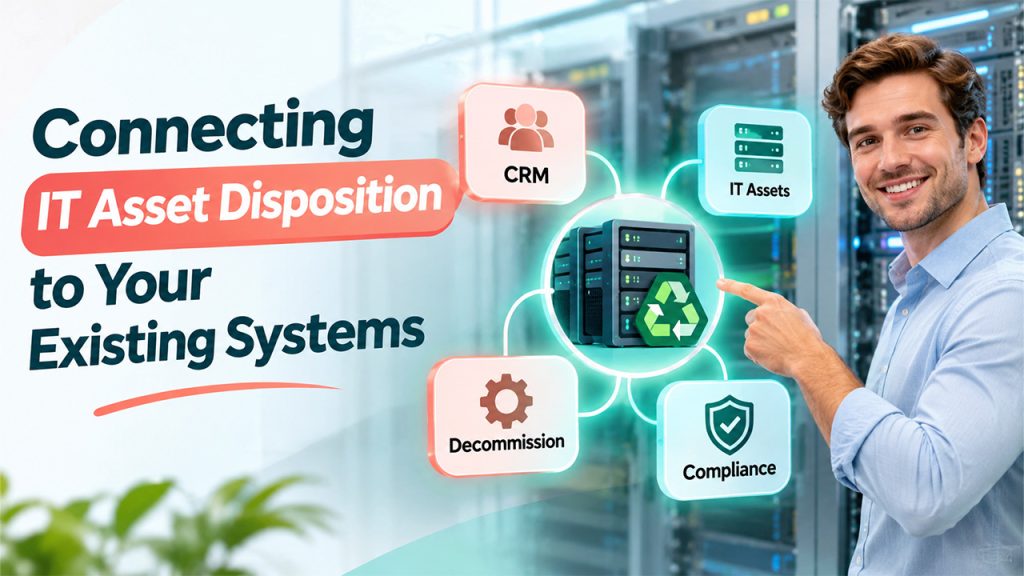
Your CRM knows which customers live on which environment. Your IT Asset Disposition ledger knows which hardware powers that environment and tracks what happens when your enterprise server infrastructure is retired. When a cluster retires, customer-facing teams should hear about it from a system, not from a rumor.
If you run SuiteCRM or a similar platform, consider a simple decommission object linked to the account records it touches, with a status field that mirrors the four states. It sounds like overkill until the first security questionnaire arrives and you can export an answer in ten minutes. The same serialized trail that satisfies an auditor also shortens a customer review, and that’s a return most ITAD business cases never bother to claim.
Start with one rack
None of this requires a platform migration. Start with your next IT Asset Disposition project, build the four-state asset tracking tab before the truck is scheduled, and ask the five questions of every potential ITAD partner. One rack is enough to prove the method and enough to expose a vendor who can’t report per serial.
Your finance team will notice the closed loop. Your auditor will notice the certificates. And the next time someone asks where a specific drive went, you’ll have an answer that takes seconds instead of weeks.
So which state in your current process has no owner? That’s the row to fix this week.