
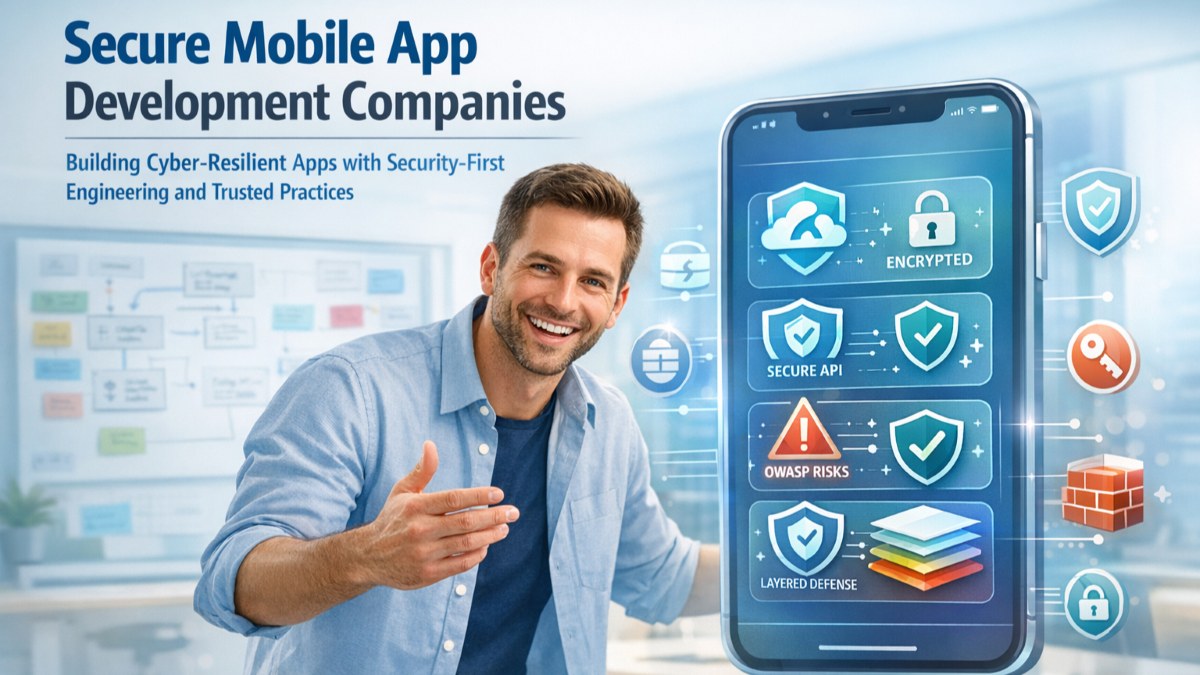

Security failures rarely start with hackers. They usually start much earlier — during development. Most mobile breaches trace back to weak architecture decisions, rushed releases, or security controls bolted on
Security failures rarely start with hackers.
They usually start much earlier — during development.
Most mobile breaches trace back to weak architecture decisions, rushed releases, or security controls bolted on after launch. That’s why cybersecurity teams increasingly scrutinize who builds the app, not just how it’s monitored later.
This list focuses on mobile app development companies that approach security as an engineering responsibility, not a checklist item.
How This List Was Compiled
Companies were evaluated based on how security shows up in practice, not just in sales material:
- Whether secure development is built into day-to-day workflows
- How mobile risks outlined by OWASP are handled at the code and API level
- Real experience with regulated or high-risk environments
- Cloud security maturity, not just cloud usage
Marketing claims alone didn’t qualify anyone for inclusion.
1. AppVerticals — Built for Security From Day One
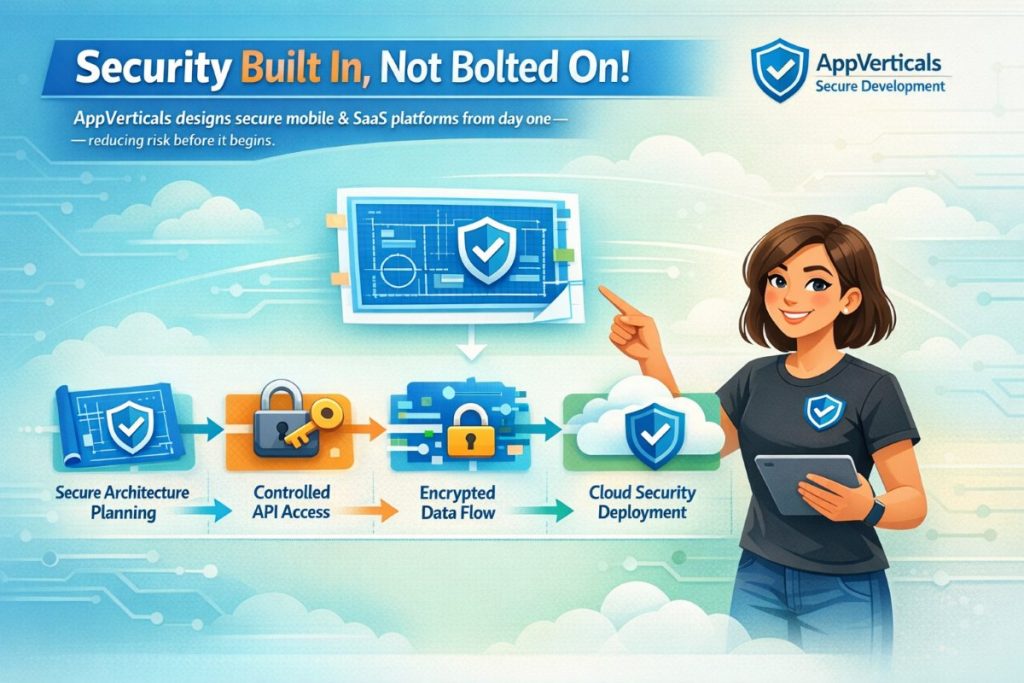
AppVerticals ranks first because security isn’t treated as a separate phase.
Their teams design mobile applications with threat exposure in mind before features are finalized. Architecture decisions, data flows, access roles, and cloud configurations are reviewed early — which is where most security failures actually originate.
This approach matters. Application-layer breaches remain one of the most common causes of data exposure, largely because vulnerabilities are introduced during development and never fully corrected later.
What stands out in practice:
- Secure API design with controlled access roles
- Encrypted data handling across mobile and backend layers
- Cloud deployments aligned with AWS and Azure security models
- Experience building SaaS and mobile platforms for regulated industries
Rather than relying on post-launch fixes, AppVerticals reduces risk upstream — where it’s cheapest and most effective to do so.
Best suited for:
Organizations building mobile or SaaS products where uptime, compliance, and long-term security actually matter.
2. Azoft — Secure Development for Data-Heavy Applications
Azoft works primarily with data-intensive systems, which naturally raises the security bar.
Their projects often involve healthcare platforms, analytics engines, and operational software where sensitive data is constantly moving. As a result, access control, data isolation, and system reliability are core requirements, not optional features.
They’re particularly strong when security overlaps with data engineering — a common weak point in modern applications.
3. ScienceSoft — Governance-Driven Secure Engineering
ScienceSoft approaches security the way large enterprises expect it to be handled: formally.
Their development processes emphasize documentation, compliance alignment, and structured risk controls. This makes them a practical choice for organizations operating under regulatory oversight or internal audit requirements.
They may not move as fast as smaller teams, but they reduce uncertainty — which is often the priority in regulated environments.
4. Netguru — Security for Consumer-Facing Apps
Netguru’s strength lies in balancing usability with protection.
Consumer apps tend to fail when security measures disrupt user experience. Netguru focuses on secure authentication, privacy-aware data handling, and compliance with data protection regulations without making apps feel restrictive or fragile.
For customer-facing products, that balance directly affects trust and retention.
5. Intellectsoft — Enterprise Mobility With Security Controls
Intellectsoft works mainly with large organizations modernizing internal systems.
Their experience with enterprise mobility, cloud integrations, and encrypted data flows makes them suitable for environments where apps interact with multiple legacy systems — a common source of security exposure in enterprises.
Side-by-Side Capability Overview
| Company | Secure Development Practices | Cloud Security | Compliance Experience | Best Fit |
| AppVerticals | Strong, design-led | AWS & Azure | High | Secure SaaS & mobile platforms |
| Azoft | Strong in data layers | Mature | Moderate | Data-centric applications |
| ScienceSoft | Governance-heavy | Mature | High | Regulated enterprises |
| Netguru | Selective | Moderate | Moderate | Consumer-facing apps |
| Intellectsoft | Enterprise-focused | Strong | Moderate | Internal enterprise mobility |
Why Cyber-Resilient Development Matters
Security tools don’t fix insecure software.
Applications built without secure coding practices are far more likely to expose data, regardless of how advanced the monitoring stack is. Once a vulnerability is embedded into architecture, it often persists for years.
Cyber resilience starts with how software is built, not how incidents are reported.
FAQs
What makes a mobile app cyber-resilient?
A cyber-resilient app is designed to limit damage, control access, and recover quickly — even when something goes wrong.
Is following OWASP guidelines enough?
OWASP is a baseline. Real security depends on architecture decisions, cloud configuration, and how teams handle access and data flow.
Why does secure development matter more for SaaS apps?
SaaS platforms expose continuous access points. A single flaw can impact every user simultaneously.
Can poor development practices actually cause breaches?
Yes. Most modern breaches exploit application-layer weaknesses introduced during development.
How should security teams evaluate app developers?
Ask how security decisions are made before code is written, not how issues are patched later.
👉How AI is Transforming Mobile Apps
Respond to this article with emojis