





Before teams commit to design and development, they need clarity on what to build and why. The product discovery phase services help transform early assumptions into validated insights. This phase
Before teams commit to design and development, they need clarity on what to build and why. The product discovery phase services help transform early assumptions into validated insights. This phase connects user research, business goals, and technical constraints into a clear UX strategy.
For SaaS products, discovery is not a formality. It is a risk-reduction step that shapes product direction and prevents costly rework later in the lifecycle.
What Happens During the Product Discovery Phase
The discovery phase focuses on understanding the problem space before proposing solutions. Teams analyze user needs, market context, and internal constraints. The goal is to align stakeholders around shared priorities.
Research methods may include interviews, analytics reviews, competitive analysis, and stakeholder workshops. Each input contributes to a clearer picture of user behavior and expectations.
Turning Research Into Actionable UX Insights
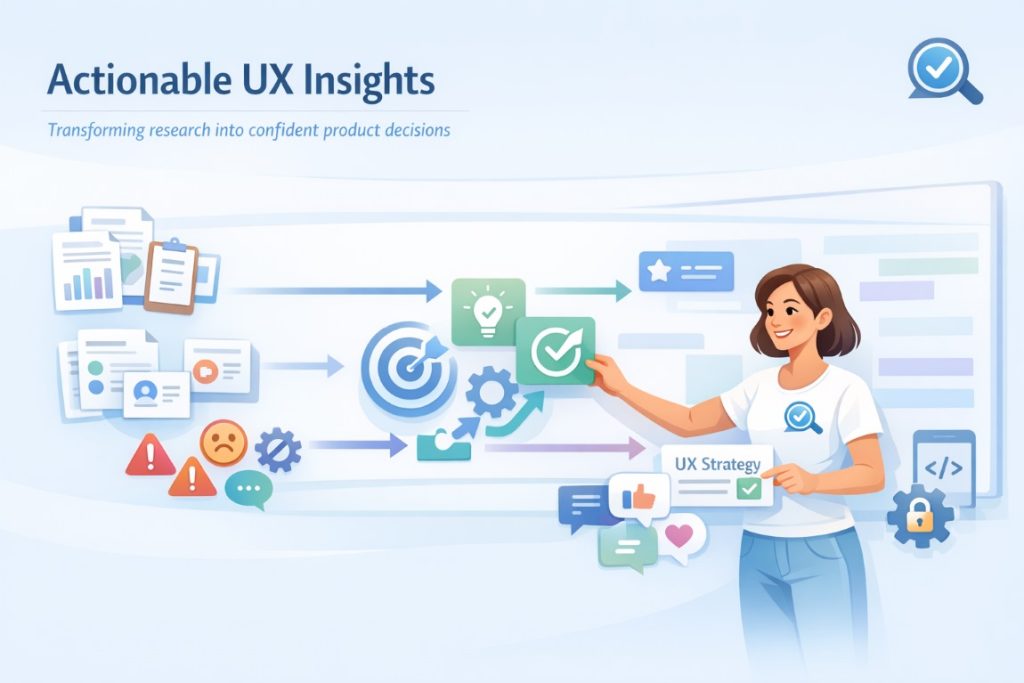
Raw research data is only valuable when it leads to decisions. UX teams synthesize findings into patterns, pain points, and opportunity areas. These insights guide product direction instead of relying on intuition.
- Key user problems that block adoption or efficiency
- Primary workflows that drive value
- Constraints that influence design and technical choices
This synthesis helps teams focus on outcomes rather than features. It also creates a shared language across design, product, and engineering. Understanding real user pain points becomes easier when teams actively analyze customer feedback in CRM, as it provides direct insights into user behavior, expectations, and experience gaps across the product journey.
Defining UX Strategy Before Design Starts
UX strategy connects discovery insights to execution. It defines design principles, success metrics, and priorities. Without this step, design decisions often become inconsistent or reactive.
A clear strategy helps teams evaluate trade-offs early. It ensures that design supports both user needs and business objectives as the product evolves.
Why Discovery Matters for SaaS Teams
SaaS products often grow in complexity over time. Skipping discovery can lead to fragmented experiences and technical debt. A structured discovery phase creates a foundation that scales.
Many teams work with a SaaS UX design agency during discovery to bring external perspective and domain expertise. This collaboration helps identify blind spots and accelerate alignment.
From Discovery to Confident Execution
The output of discovery is not just documentation. It is a shared understanding that guides design and development decisions. Teams move forward with confidence, knowing what problems they are solving and for whom.
When research informs UX strategy, products launch with clearer value propositions and stronger user adoption.
Conclusion
The product discovery phase bridges the gap between research and UX strategy. It helps SaaS teams reduce uncertainty, align stakeholders, and build products with purpose. Investing in discovery early leads to better decisions and more resilient digital products.
Respond to this article with emojis