





Learn how to reduce visibility and protect your reputation when a search result will not be deleted at the source. Negative search results can cost you customers, job offers, partnerships,
Learn how to reduce visibility and protect your reputation when a search result will not be deleted at the source.
Negative search results can cost you customers, job offers, partnerships, and trust. The frustrating part is that Google usually is not the “publisher” of the article, so even if you report it, Google often will not remove it unless it breaks a specific policy.
If the publisher refuses to delete or retract, you still have options. Some focus on fixing the page (so the search snippet changes). Others focus on de-indexing (so the page stops showing up). And when removal is not realistic, you can suppress the result so it is far less visible.
This guide walks you through practical routes you can take, plus how to choose help if you decide to hire a service.
What “removing a Google result” actually means
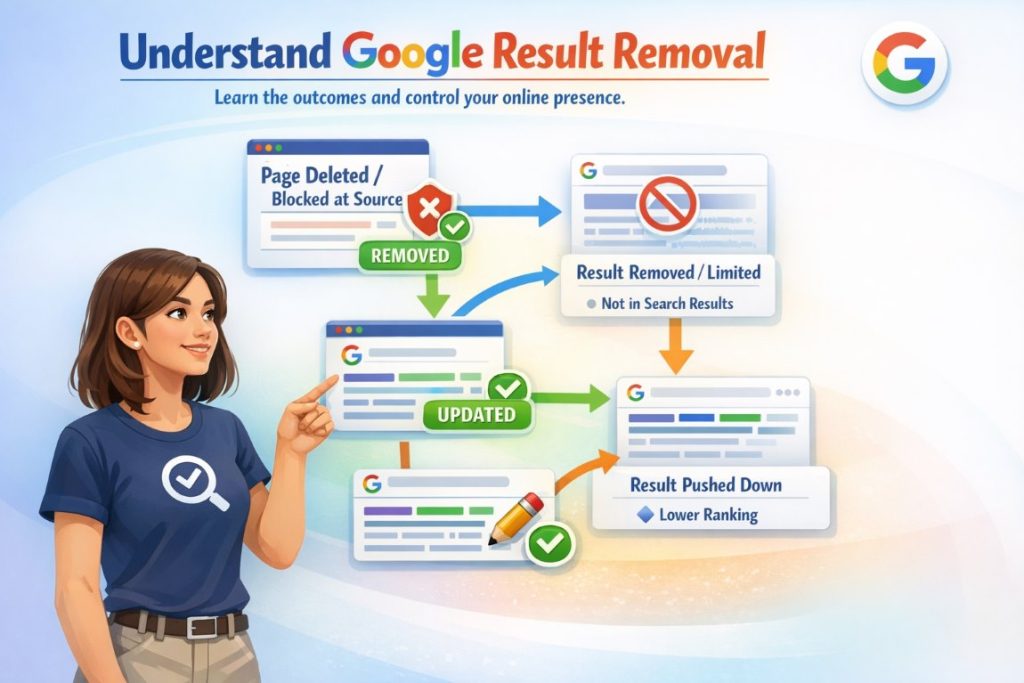
When people say “remove this from Google,” they usually mean one of these outcomes:
- The page is deleted or blocked at the source (best case, because it can lead to the URL dropping from search after recrawls)
- The page stays online, but the result is removed or limited in Search (possible in certain policy or legal situations)
- The page stays online and indexed, but the snippet is updated (common when the content changes)
- The page is still indexed, but it gets pushed down (suppression, which reduces visibility for branded searches)
Key Takeaway: If the publisher will not delete the article, your next best moves are usually correcting or updating the source page, pursuing de-indexing where possible, and building suppression as a fallback.
What alternative routes can work when the article stays up
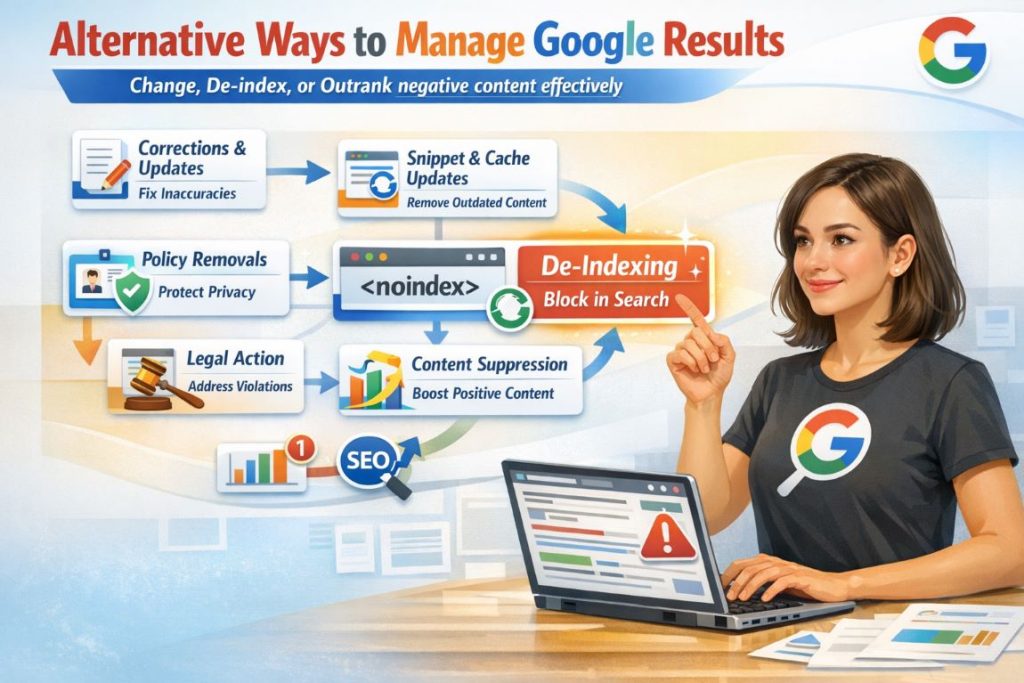
If the publisher refuses deletion, your leverage shifts to “change,” “de-index,” or “out-rank.” Here are the most realistic paths.
- Corrections and updates: Ask for a factual correction, clarification, or update rather than removal. Many publishers have an established corrections process, and editors may be more open to updating a line, headline, or context than deleting an entire post.
- Snippet and cache updates: If sensitive details were removed or the page materially changed, you can request Google refresh what it shows. Google’s Remove Outdated Content workflow is designed for situations where the page no longer exists or is significantly different.
- De-indexing via the site owner: If you have any influence with the site owner (even if they refuse deletion), you can ask them to add a “noindex” directive so the page stops appearing in search results.
- Policy-based removal requests: Google can remove or restrict results in certain categories (like specific personal info or other protected scenarios), but it is not a general “reputation” removal button.
- Legal routes: If the content is unlawful (for example, certain privacy violations or IP issues), you may be able to submit a legal request to Google. This is fact specific and not guaranteed.
- Suppression: When you cannot remove or de-index, you can reduce visibility by building stronger, more relevant content that outranks the negative result for name or brand searches.
Did You Know? Google’s outdated content process can remove a result entirely if the page no longer exists, or it can update the result if the sensitive content was removed from the page.
What do removal and suppression services actually do?
If you hire help, a reputable firm usually combines several levers:
- Publisher outreach and negotiation: Structured requests for corrections, updates, removals, or URL changes, with careful wording to avoid making the situation worse.
- Platform and policy reporting: Identifying whether the result fits a Google policy path (personal info, outdated content, or other eligible categories) and submitting clean documentation.
- Technical de-index coordination: When the site owner is cooperative, guiding them on “noindex,” robots directives, or other indexing controls so the page stops appearing in search.
- Search visibility strategy: Creating and optimizing positive assets (profiles, press, pages, and other content) to push the negative result lower.
- Monitoring and maintenance: Tracking rankings, new mentions, and reposts, then responding quickly if the content spreads.
The practical playbook when the publisher says “no”
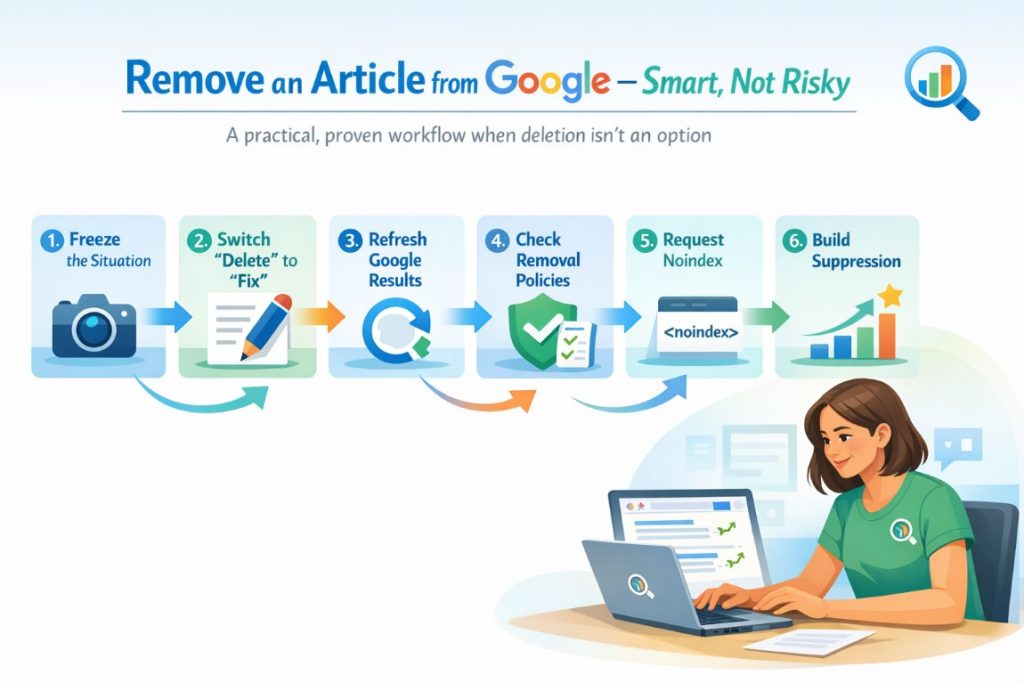
Here is a clean workflow you can follow without making things worse.
1) Freeze the situation before you escalate it
Take screenshots of the page, the URL, and what Google is showing. Save dates. If you later pursue a correction, removal, or legal route, you will want a record of what was published and how it appeared in search.
Tip: Do not threaten legal action in your first message unless a lawyer is already involved. It often shuts down cooperation and can trigger defensive reposting.
2) Switch your ask from “delete” to “fix”
If deletion is refused, ask for one of these instead:
- Correct a factual error
- Add your statement or updated context
- Update the headline to be accurate
- Remove specific sensitive details (addresses, phone numbers, personal identifiers)
- Add an editor’s note with new information
This is often the fastest path to a better outcome, because it lets the publisher keep the article while reducing harm.
3) If the page changed, trigger Google to refresh it
If the publisher removed key details or changed the page materially, you can push for an update to what Google displays. The Remove Outdated Content tool is built for cases where Google is showing content that is no longer on the page, or the page is gone.
4) Explore Google removal categories that actually apply
Google may remove certain results tied to personal information or other protected categories, but many reputation issues simply do not qualify. Start with the official “remove my private info” and related flows to see if your case fits.
If you want a deeper breakdown of realistic next steps, here are options if a result will not come down that map to common refusal scenarios.
5) If you have leverage with the site owner, request “noindex”
Even if they refuse deletion, they may agree to keep the article live but stop it from appearing in search. That is what a “noindex” directive is for.
6) Build suppression if removal is unlikely
Suppression is not a trick. It is a visibility strategy. The goal is to publish and strengthen content that is more relevant for branded searches than the negative page. For a step-by-step guide on tracking your online profile growth, see Track Your Profile Growth.
A simple suppression stack often includes:
- A strong About page (person or brand)
- Updated social profiles
- A few credible third-party profiles (industry directories, interviews, guest posts)
- Consistent brand naming across listings and citations
- Fresh content that matches what people actually search
Example: A local services company dealing with a bad article about a lawsuit may publish an owner story, a licensing page, a safety policy page, and a set of customer case studies, then earn a handful of local citations and links. Over time, those assets can outrank the older result for the company name.
Benefits of using a structured removal and suppression plan
A plan matters because random actions often backfire.
- Less risk of reposts: Careful outreach reduces copycat publishing.
- Faster wins when eligible: Policy-based and outdated content paths are quicker when the facts fit.
- Better control of search snippets: Updates and refresh requests can reduce damaging preview text.
- Lower long-term visibility: Suppression can push negative results below where most people click.
- Clearer decision-making: You know when to stop chasing removal and invest in suppression.
Key Takeaway: The best outcome is removal at the source, but the best strategy is the one that reduces harm without creating new pages, new attention, or new problems.
How much do these options cost?
Costs vary widely based on the site, the content type, and how entrenched the result is.
Common cost buckets:
- DIY outreach and updates: Usually time cost. You may pay for PR help or editorial support if you want stronger messaging.
- Legal review: Often billed hourly. Costs depend on complexity and jurisdiction.
- Suppression campaigns: Typically monthly. Pricing depends on how competitive your branded search results are and how many assets you need to build.
- Removal services: Often priced by the number of URLs, platforms, and difficulty.
As a benchmark, many suppression-style campaigns in the industry are sold as multi-month engagements with monthly fees in the thousands, depending on difficulty and scope.
How to choose the right approach
- Define the real goal (removal vs reduced visibility). If the content is accurate and newsworthy, removal is less likely, so prioritize snippet control and suppression.
- Map the content to a lever.
- Policy eligible? Start there.
- Page changed? Try outdated refresh.
- Site owner cooperative? Ask for “noindex.”
- Decide how much time you can invest. If this is impacting revenue today, paid help may be worth it.
- Choose your “safe outreach” posture. Aim for factual, calm, documented requests.
- Build a suppression baseline even if you pursue removal. Suppression helps whether removal succeeds or not.
Tip: If you have multiple harmful URLs, start with the one ranking highest for your name or brand search, not the one that feels most unfair.
How to find a trustworthy service
Be careful. This space attracts scams.
Red flags to watch for:
- Guaranteed removals for content they do not control
- No explanation of methods, just promises
- Pressure to pay upfront without a plan
- Tactics that involve fake sites, fake reviews, or spam links
- Advising you to file false reports (this can create legal risk and platform bans)
A credible provider will explain what is realistic, what is not, and what they will try first.
The best services to consider
- Erase.com: Best for custom content removal strategy that combines outreach, platform processes, and search visibility planning.
- Push It Down: Best when removal is unlikely and you need a suppression-first plan to reduce visibility for branded searches.
- BrandYourself: Best for individuals who want a mix of software and managed services for reputation monitoring, privacy, and search result cleanup.
- Reputation.com: Best for multi-location businesses that need review management, listings, and ongoing reputation operations across many locations.
FAQs
How long does it take for a result to disappear after changes are made?
It depends on how quickly Google recrawls the page and processes the change. For outdated content scenarios where the page is gone or significantly different, Google provides a specific refresh path.
Can Google remove a result if the article is true?
Sometimes, but only in specific policy or legal categories. In many cases, “true but harmful” content does not qualify for removal, so suppression and context updates become the practical path.
What is “noindex,” and why does it matter?
“Noindex” is a directive that can tell search engines not to include a page in results. It is one of the cleanest ways for a site owner to keep a page live but remove it from search visibility.
Is suppression permanent?
It can be stable for a long time, but it is not a one-and-done switch. Competitors, new content, and algorithm changes can shift rankings. The best results come from building durable assets and maintaining them.
Should you try DIY first, or hire help immediately?
If there is a clear correction or update request, DIY is often worth trying. If the result is tied to revenue loss, legal exposure, or multiple URLs, professional help can speed up the process and reduce missteps.
Conclusion
If a publisher refuses to delete an article, it does not mean you are stuck. You can often reduce harm through corrections and updates, trigger Google to refresh outdated snippets when content changed, and pursue de-indexing when the site owner will cooperate.
When removal is not realistic, suppression is a legitimate strategy to reduce visibility and protect your brand. Start with the highest-impact result, choose the safest lever, and build a plan that lowers risk while improving what people see when they search for you.
Respond to this article with emojis