
Technology-driven maintenance: how smart monitoring turns alerts into action
Explore the benefits of smart property maintenance, and how smart monitoring can turn alerts into quick actions.
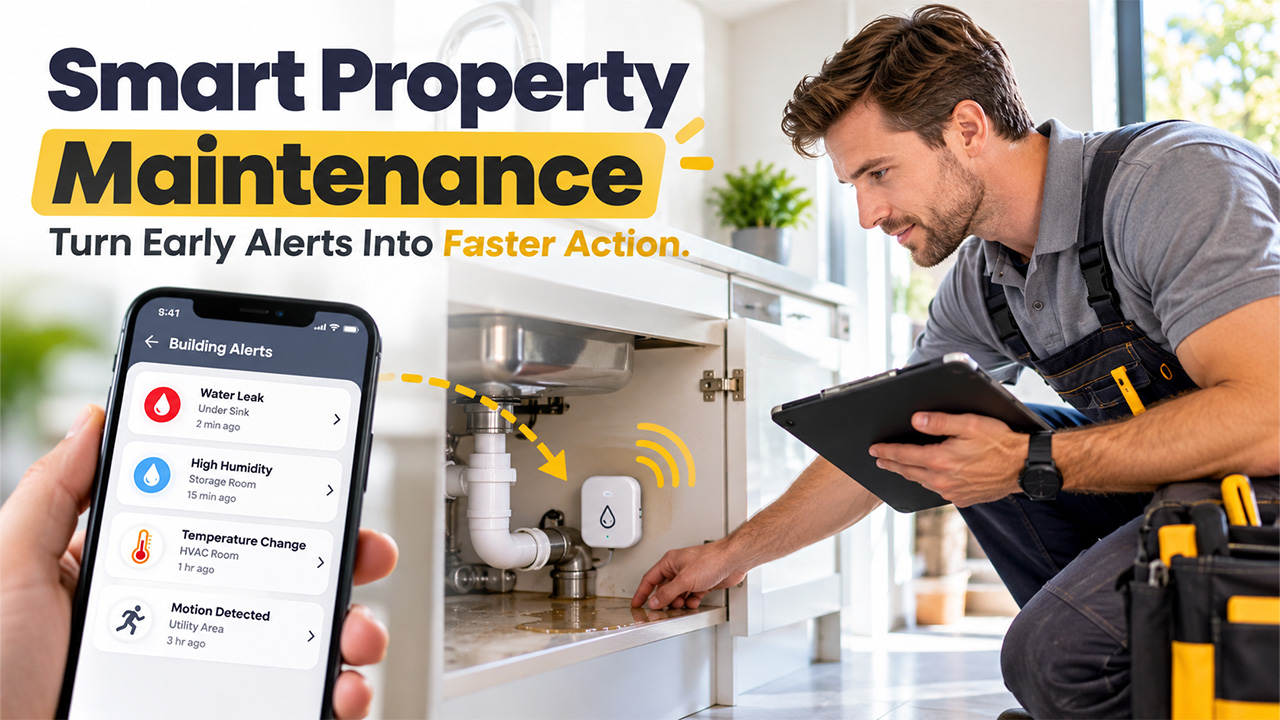
Property maintenance has moved beyond simple clipboards, seasonal walk-throughs, and calls from tenants after something has already happened. Smart property maintenance system includes connected sensors, maintenance dashboards, mobile work orders, and automated alerts, that can help teams notice conditions earlier and respond with better content. A small leak under a sink, rising humidity in a storage room, or unusual activity near an area can all become data points, instead of vague complaints.
The connected technology does not replace skilled traders or on-site service providers, but it changes the timing of the response. Maintenance becomes less about waiting for visible damage and more about reading earlier signals before any issue related to the property spreads.
Sensor data is most useful in Smart Property Maintenance
Smart property maintenance works best when alerts are tied to a clear response path. A humidity sensor can display that a storage room is staying damp, but someone still have to decide whether that is caused by ventilation, plumbing, drainage, or another property condition. A door sensor can show unusual access patterns, but the property team needs a process for checking the area and recording what happened. If repeated moisture, waste-area, or storage-room alerts suggest conditions that could attract insects or rodents, a manager may involve Pest Control Services in Langley, BC as one field response within a wider maintenance workflow. The technology identifies a pattern. The professional service handles the physical inspection, treatment, and prevention steps that software cannot perform.
| Digital signal | What the system may detect | Possible maintenance response |
| Humidity increase | Damp air in basements, crawlspaces, or storage rooms | Check leaks, ventilation, drainage, or pest-friendly conditions |
| Temperature change | HVAC strain or poorly insulated areas | Inspect equipment, vents, filters, or thermostats |
| Water sensor alert | Leak near sinks, appliances, or utility lines | Dispatch plumbing or restoration support |
| Motion or access pattern | Repeated activity in service zones | Review security, cleaning, storage, or pest concerns |
| Work-order history | Recurring complaints from the same area | Look for root causes instead of one-time fixes |
Property software connects people, devices, and records
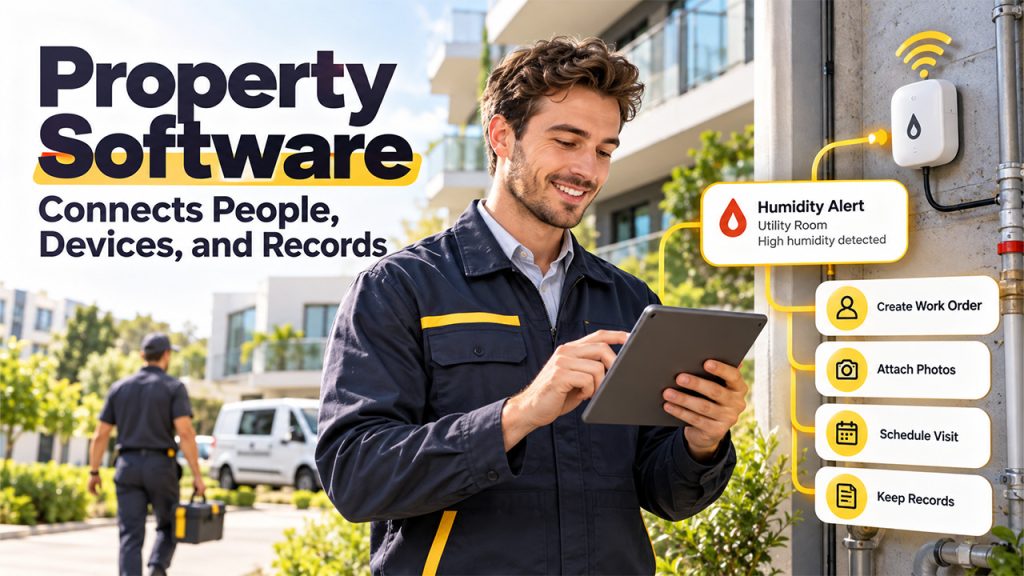
A sensor alone is only a messenger. The value appears when the alert enters a system that people can understand and act on. This is where mobile-first maintenance becomes especially useful, giving technicians access to alerts, work orders, and relevant information while they are in the field. Property management software can assign tickets, attach photos, log dates, track contractor visits, and show whether the same issue has happened before. This is where digital monitoring becomes more useful than a simple notification on someone’s phone. It creates memory for the building. A manager can see that a utility room had three humidity alerts in two months, that a tenant reported odor near the same wall, and that a previous service visit found poor ventilation. That record makes the next decision more informed.
Automation should reduce delays, not remove judgment
Related walkthrough
GuestPostMailer Dashboard Overview | AI-Powered Guest Posting u0026 CRM Automation Tool

Automation is useful when it keeps small issues from sitting unnoticed. A sensor can send an alert after a threshold is crossed. A maintenance platform can create a work order automatically. A dashboard can mark the issue as urgent when water is detected near electrical equipment or when a temperature change may affect stored materials. Still, every automated rule needs human judgment behind it. Too many alerts create fatigue. Too few alerts allow damage to grow quietly. A good system separates routine reminders from conditions that need fast action, then gives staff enough context to decide what should happen next.
Questions to answer before setting automated alerts
- Which rooms or utility areas create the most maintenance risk?
- What sensor readings should trigger a work order instead of a simple notification?
- Who reviews alerts after hours or during weekends?
- How are photos, contractor notes, and tenant messages stored?
- When should recurring alerts be escalated to a specialist?
- How often should alert thresholds be reviewed and adjusted?
Digital records make recurring problems harder to ignore
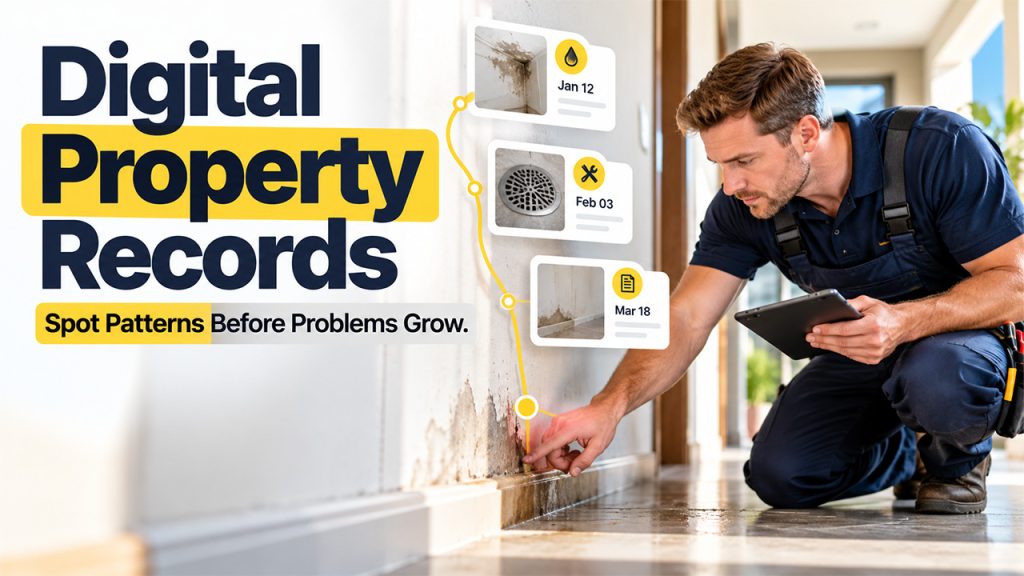
Many property issues become expensive because they are treated as separate incidents. A tenant reports a smell, a cleaner notices damp cardboard, a maintenance worker clears a drain, and a contractor visits later for a different reason. Without shared records, nobody may see the connection. Digital logs change that. They allow teams to compare time, location, sensor data, photos, and service history in one place. This is especially useful for multi-unit housing, commercial buildings, warehouses, and managed residential properties where several people may touch the same problem. When records are organized, a pattern becomes easier to spot before it turns into damage, tenant dissatisfaction, or repeated service costs.
Smart maintenance still depends on clean operations
Technology cannot fix a disorganized maintenance culture by itself. Sensors need placement, batteries, calibration, and review. Work orders need owners. Staff need training on what alerts mean. Contractors need enough detail to arrive prepared. Tenants or occupants may need simple instructions for reporting problems through the right channel. If the process around the technology is weak, the dashboard becomes another place where problems wait. A cleaner approach starts with a few high-risk areas, clear thresholds, and a defined response plan. Once the team knows how alerts move from detection to service, the system can expand without turning into digital clutter.
Better monitoring creates a calmer building routine
A good and smart property maintenance system does not need to look impressive from outside, but its value shows smaller, practical moments. A manager can notice the same room appearing in reports again, a technician will arrive at the location knowing what was already checked, and a contractor will get more than a vague description of the problem. Over a time, those details will make the building easier to manage. A damp storage area is no longer just a complaint. A repeated sensor alert is no longer ignored as a one-off issue. The team has enough context to decide whether the next step is a repair, a specialist visit, or a closer inspection. Smart monitoring works best when it supports ordinary decision-making instead of replacing it. The devices collect signals, the software keeps the record, and people still decide what the building needs.