




The challenge for any organization in this modern age is processing huge volumes of data from various sources. A total of 181 zettabytes of data will be generated globally by
The challenge for any organization in this modern age is processing huge volumes of data from various sources. A total of 181 zettabytes of data will be generated globally by 2026. However, such raw data is of little value unless properly processed and analyzed. ETL tools have emerged as the solution to transform this into actionable insights that impower smart digital strategies.
Understanding ETL
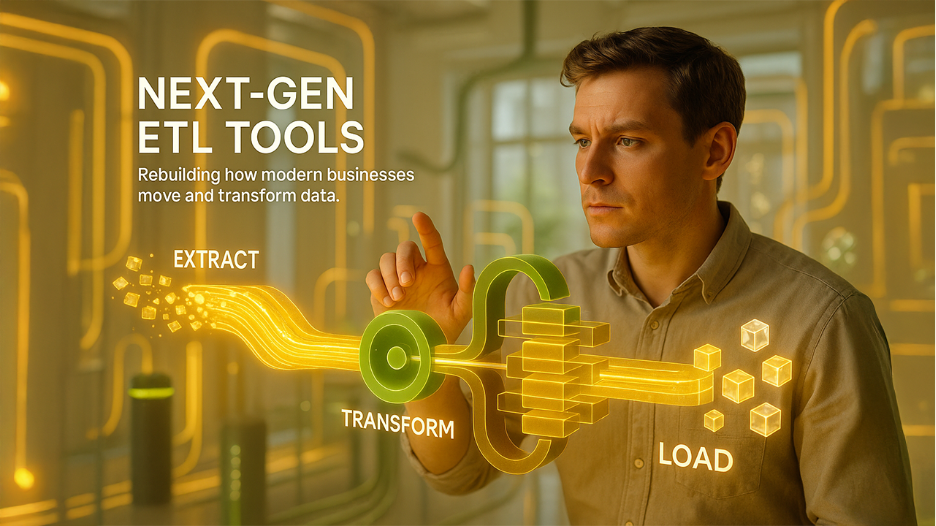
ETL stands for Extract, Transform, and Load, which are basic data integration processes powering modern data warehousing. This approach takes a tri-structure in three stages:
- Extract: Data is pulled from original sources.
- Extracted data are cleaned, de-duplicated, combined, and quality checked.
- Load: After transformation, the data is loaded into the target databases or data warehouses.
Until recently, ETL processes required considerable manual coding and the creation of elaborate pipelines. The new generation of ETL tools automated these processes so that organizations could move data around without requiring special data engineering competencies.
What Makes ETL Tools Essential
ETL tools are applications developed to facilitate the process of extracting data from various sources, transforming it into proper format, and loading the processed data into target destinations. Such platforms eliminate the need to write customized programs for each source of data, making the whole process of data integration seamless.
Key Characteristics of Superior ETL Tools
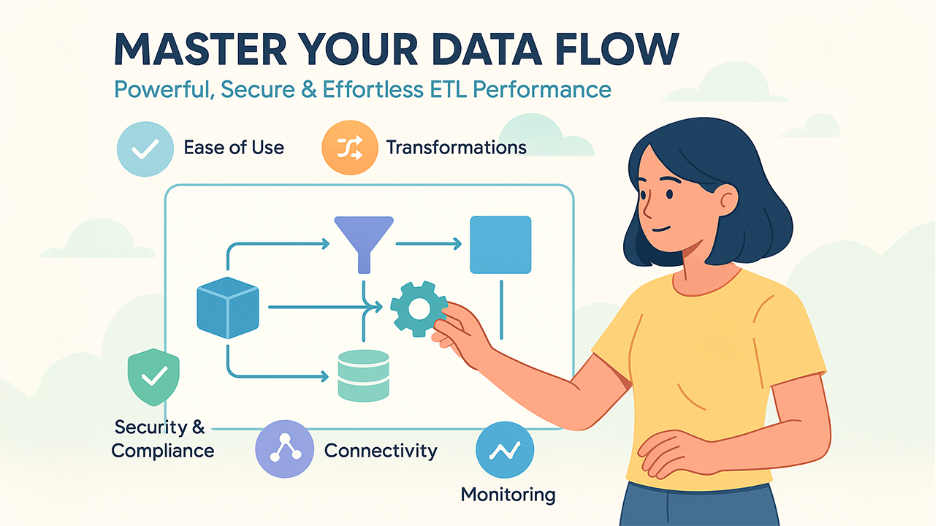
Following are some key factors an organization should focus on when evaluating ETL tools:
- Ease of use: The intuitive interfaces minimize the learning curve, and one can manipulate data very fast.
- Powerful Transformations: Built-in functions for cleaning, joining, and formatting data
- Scalability: The capability to manage large datasets and grow to meet organizational needs.
- Regulatory Compliance & Security: There is strong encryption along with compliance to regulatory standards including GDPR and HIPAA.
- Connectivity: There are many different ways that you can connect different types of databases, Software as a Service (SaaS), and other cloud services together seamlessly.
- Monitoring: There is extensive logging, notification and versioning available for the authorized users.
Categories of ETL Tools
There are several different categories that ETL tools can be classified under:
- Indeed, open-source ETL solutions are flexible and customizable; thus, a technically savvy team seeking cost-effective means would prefer them.
- Cloud-based ETL tools can utilize cloud computing power for scalability and better integration with other cloud services.
- These tools target highly complex scenarios at the enterprise level; therefore, they offer extended capabilities such as data governance and metadata management.
- Real-time ETL tools are those that target streaming data integration with the intention of enabling organizations to process information in real time.
- These self-service ETL tools will enable non-technical business users to integrate the data themselves independently, using graphical drag-and-drop interfaces that require very minimal knowledge of coding.
Evaluation Criteria for ETL Tools
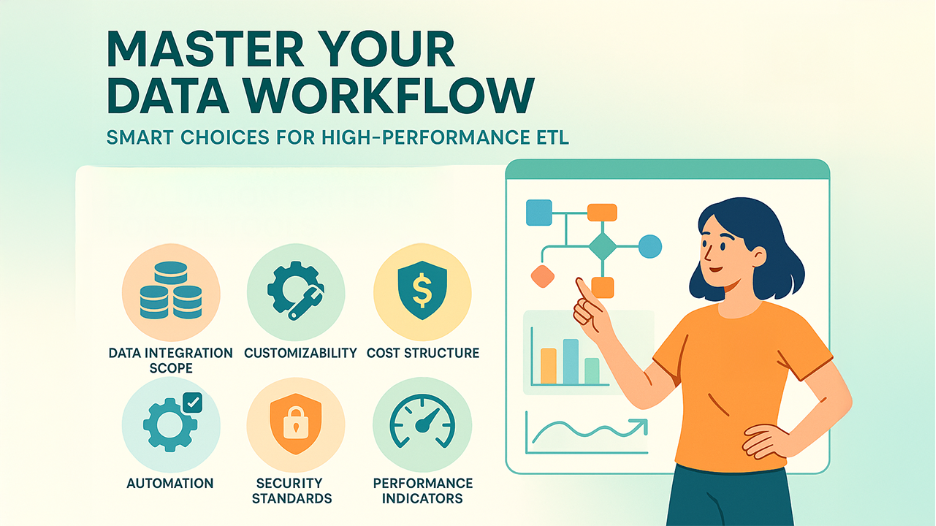
The selection of the correct ETL tool depends on many dimensions.
- Data Integration Scope: The range of sources and destinations supported.
- Customizability: Level to which one can create specific custom transformations for specialized needs.
- Cost Structure: Total cost of ownership, including infrastructure and maintenance.
- Automation Level: Level of automation of workflows and processes
- Security Standards: Compliance of Industry Regulations and Data Protection Measures
- Performance Indicators: Throughput rate; reliability of the system.
Overview of the Top 15 ETL Tools
The following list of 15 ETL tools is considered the most comprehensive and widely adopted set of solutions available in the year 2026. This list includes open-source and commercially available platforms, each developed to meet different organizational needs and technical requirements.
Cloud-Native and Managed Solutions
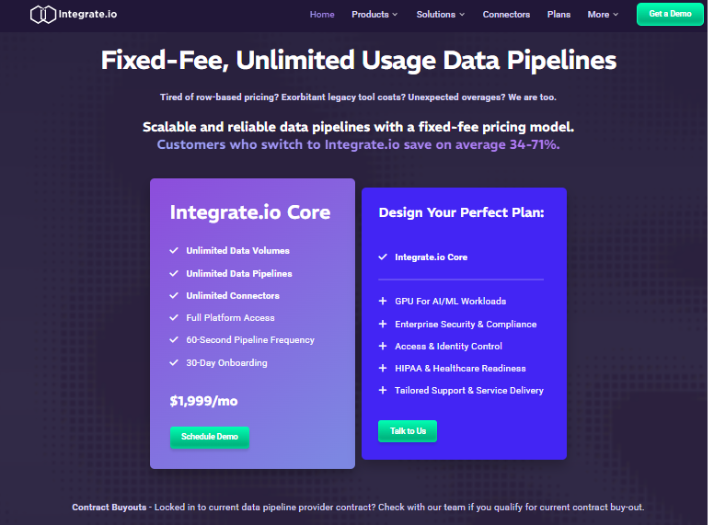
Integrate.io stands out, as it is the low-code platform of choice for business customers needing ETL or ELT functionality, offering 220-plus transformations and over 200 different types of connectors with great compliance support that covers healthcare, finance, and education.
Fivetran is the complete managed ELT platform, with more than 500 prebuilt connectors and automatic schema migrations for companies seeking turnkey, maintenance-free data pipelines that guarantee speed to insight.
Hevo Data is a cloud-native, no-code platform, featuring more than 150 integrations and real-time replication. This makes the service accessible to business users and non-technical teams that look for fast deployment to cloud warehouses.
Matillion provides cloud-native and optimized ELT for several leading cloud warehouses, including Snowflake, Redshift, BigQuery, and Azure Synapse. It offers push-down transformations and Git for collaborative development.
AWS Glue provides serverless ETL on the AWS platform, complete with automated schema discovery and pay-per-use pricing, making it a relatively low-cost option for an enterprise already deeply invested in the Amazon Web Services infrastructure.
Specialized and Niche Solutions
Portable is unique in offering more than 1,000 connectors and building custom connectors upon request. It offers hands-on 24/7 support for teams that need integration of long-tail data sources without requiring in-house development effort.
Stitch Data focuses on simplicity, boasting more than 130 connectors and no-code ETL to target startups and SMBs requiring budget-friendly data ingestion, paired with core security and compliance features.
Striim provides enterprises that have requirements for very low-latency pipelines for operational analytics with real-time ETL streaming, sub-second latency, and change data capture via more than 150 connectors.
Panoply combines an all-in-one cloud data warehouse with automated data ingestion and ELT, giving analysts an integrated, code-free solution that quickly deploys analytics without managing disparate systems.
Alooma provides real-time data pipeline services, comes with user-friendly UI, and has deep Google Cloud integration, making it therefore especially well-suited for enterprise customers who have complex pipelines to manage within the Google Cloud environment, having been acquired by Google in 2019.
Enterprise-Grade Platforms
Talend's hybrid ETL platform is a perfect match for large enterprises needing advanced data governance. Equipped with more than 900 connectors, rich data quality, master data management, and big-data support.
Informatica PowerCenter is considered the gold standard of enterprise ETL. It provides workflow automation, parallel processing, robust metadata management, and extensive connectivity to drive mission-critical, large-scale data integration with high availability.
Oracle Data Integrator provides declarative E-LT architecture, knowledge modules, change data capture, and high performance to meet the needs of Oracle-centric organizations for real-time data services and integration with WebLogic.
Open-Source Alternatives
Pentaho: It offers open-source ETL with a drag-and-drop interface, more than 150 transformation steps, real-time integrations, big-data connectors, and GenAI extensions that grant flexibility to companies in both batch and real-time integrations and business intelligence.
Airbyte drives the open-source ELT movement with more than 300 connectors, a custom connector builder, incremental sync, and self-hosted or cloud options. Teams use this when they prefer a connector-first architecture for customizable, scalable pipelines.
Pricing Spectrum and Accessibility
Put all these together, and they support literally thousands of data source connectors-everything from classic databases and cloud storage to modern SaaS applications and streaming platforms. Pricing models can vary widely:
- Free Options: Airbyte and Pentaho both offer completely free open-source options.
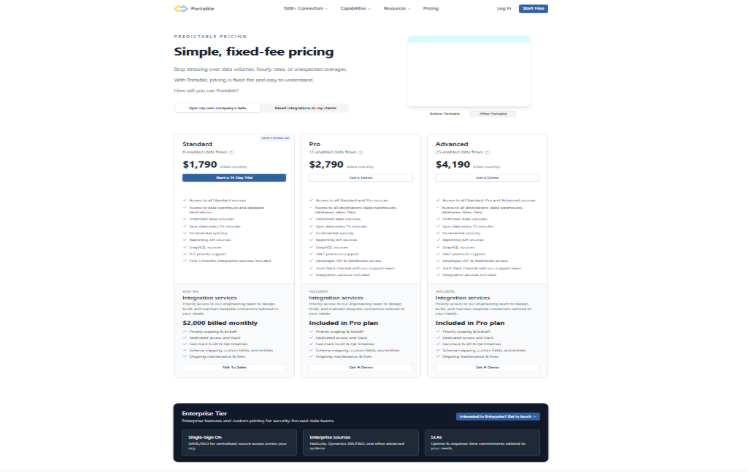
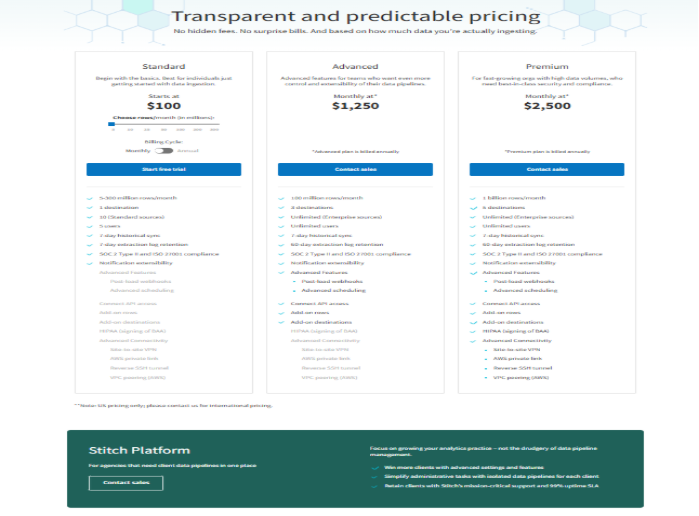
- Affordable Entry Points: Stitch Data begins at $100/month, Portable at $200/month per flow
- Mid-Range Solutions: Hevo Data plans start at $239/month. Matillion Consumption-Based pricing starts at $2.18/credit.
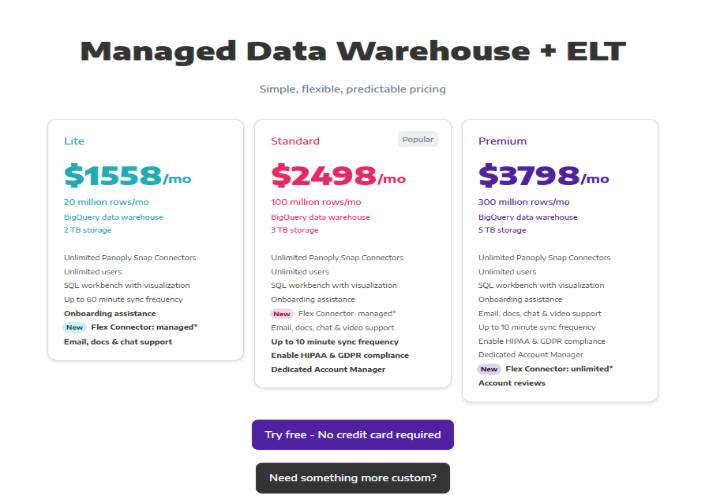
- Premium Platforms: Panoply from $1,558/month, Talend at $1,170/month per user
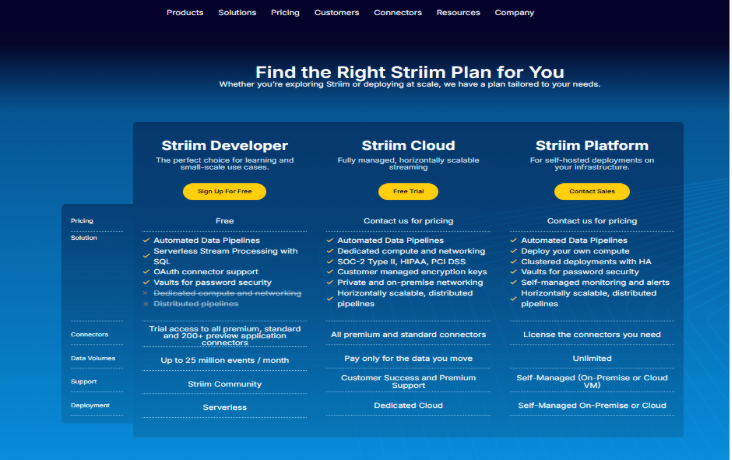
- Enterprise Pricing: Assigned for a price of $2,000 per month for Informatica PowerCenter. Striim and Oracle Data Integrator offer only custom quotes.
The Top 15 ETL Tools for 2026
1. Integrate.io
Integrate.io is a cloud-based platform designed to simplify the preparation and transformation of data in industries such as health care, financial services, insurance, and education. It automates the ETL process through an intuitive visual interface wherein users of any level can now create data pipelines from a multitude of sources and destinations.
Key Features:
- 220+ low-code transformations
- Intuitive visual, low-code platform for rapid development of pipelines.
- 200+ Connectors across Databases, SaaS, and Cloud Platforms
- AES 256 encryption; GDPR, HIPAA, SOC 2
- Supports ETL, ELT, Reverse ETL, Change Data Capture
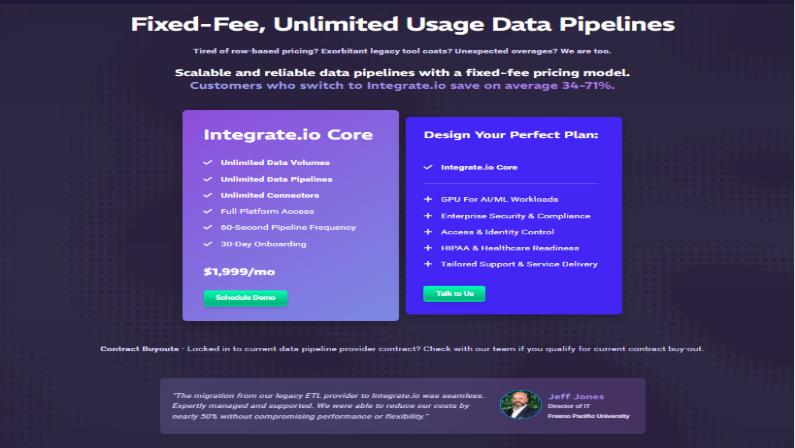
Pricing:
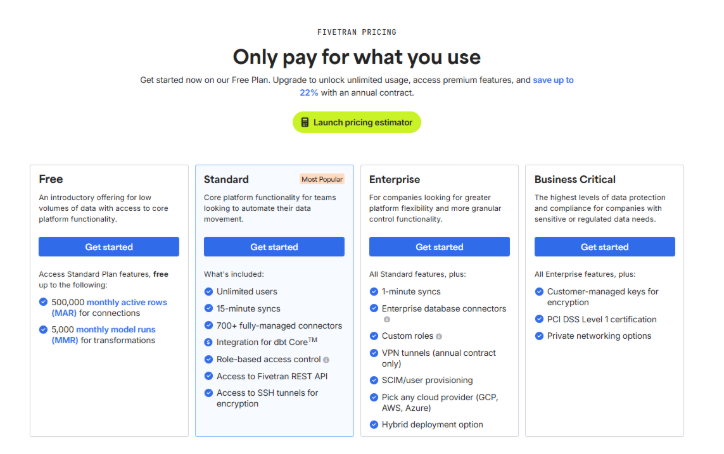
2. Fivetran
Fivetran is a fully managed ELT platform, offering hundreds of prebuilt connectors across databases, cloud storage, and SaaS applications. It integrates seamlessly with Snowflake, BigQuery, and Redshift, supporting dbt-based transformations.
Key Features:
- dbt-native transformations
- Automated schema management and incremental loads
- Change Data Capture for near-real-time database pipelines
- Connector SDK for custom sources
Pricing:
3. Hevo Data
Hevo Data is a cloud-native, no-code ELT platform, offering 150+ connectors for databases, cloud storage, and SaaS sources. Besides this, users can define pre-load transformations using Python.
Key Features:
- Automatic schema mapping
- Real-time data integration
- Powerful Workflows for Data Transformation
- 24/7 customer support
Pricing:

4. Matillion
Matillion is a cloud-native ELT tool purpose-built for Snowflake, Redshift, BigQuery, and Azure Synapse. Users can develop data transformations using a point-and-click interface or by defining them in SQL.
Key Features:
- Cloud-native architecture on leveraging platform scalability
- Drag-and-drop user interface
- Push-down transformations
- Using Git for version control integration
Pricing:

5. Portable
Portable offers a no-code ETL tool that grants analytics teams access to data from more than 1,000 systems. It combines a catalog of prebuilt connectors with on-demand custom connector development.
Key Features:
- Develop custom connectors at lightening speed
- In-person customer support
- Fixed-price API connectors
- No-code, self-service experience
Pricing:
6. Stitch Data
Stitch is an open-source ELT platform providing self-service integration with automated data pipelines. Simplicity is the key for this platform, but it does not arbitrarily transform data; the transformations are supposed to go on top of the raw data stored in the data warehouse.
Key Features:
- Real-time notifications for accurate data flow
- Automated ELT processes
- Advanced monitoring and troubleshooting tools
- Auto scalability
Pricing:
7. Striim
Striim is a real-time integration platform built for big data workloads. The platform integrates data in real time from various sources, including Oracle, SQL Server, MySQL, PostgreSQL, MongoDB, and Hadoop.
Key Features:
- Real-time data processing at sub-second latency
- Change Data Capture using log-based methods
- AI Integration & AI Insights
- 150+ prebuilt connectors
Pricing:
8. AWS Glue
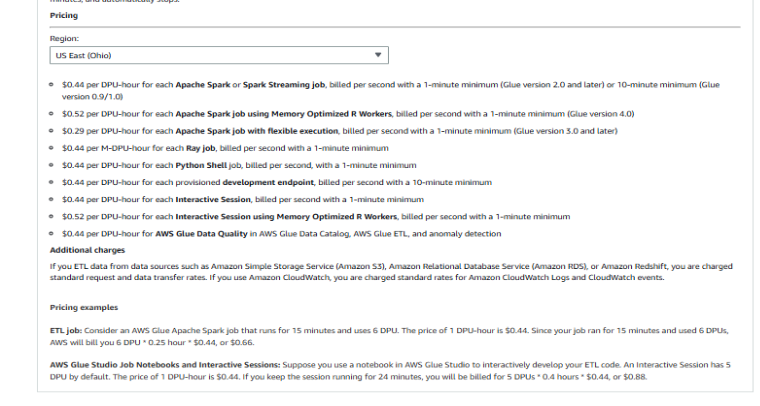
AWS Glue is a completely managed, serverless ETL service for big data and analytic workloads offered by Amazon Web Services. Amazon provides servers automatically, after which it shuts them off once the workload is completed.
Key Features:
- Serverless architecture: no infrastructure to manage
- Automatic schema discovery
- Integration with AWS services, including Amazon S3 data lakes
- Job Scheduling and Developer Endpoints
Pricing:
9. Panoply
Panoply is an automated, self-service cloud data warehouse that simplifies the integration of data. Any data connector using standard ODBC/JDBC, Postgres, or AWS Redshift connections will work with Panoply.
Key Features:
- Code-free data connectors
- Fully-managed cloud data warehouse
- In-platform dashboards for fast insights
- Importing data from various sources is so easy.
Pricing:
10. Alooma
Alooma is a cloud-based ETL data migration tool for cloud-based data warehouses. Its platform automates much of the data pipeline, giving the user more time to work on data analysis rather than its technical details. Following Google's acquisition in 2019, signups are restricted to Google Cloud Platform users.
Key Features:
- Data Transformation and Enrichment Pre-Warehouse Load
- Real-time change management
- ETL pipeline transparency with real-time monitoring
- Code feature of the engine for flexibility
Pricing:

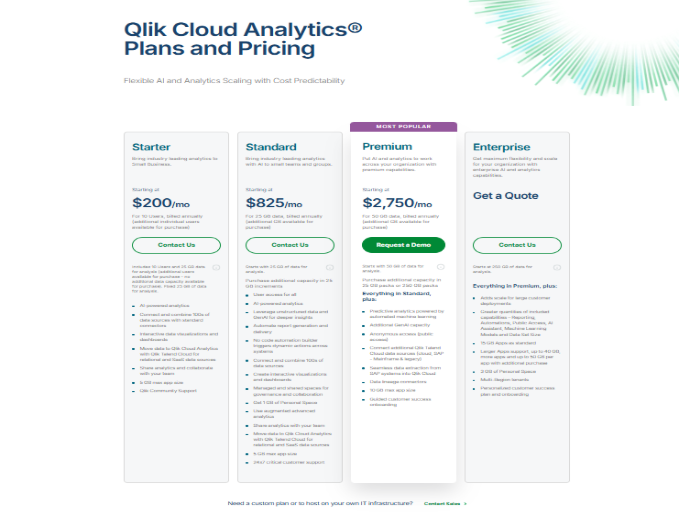
11. Qlik Talend
Talend provides the complete range of tools for ETL in data integration from on-premise to cloud-based sources. On the Talend platform, integrations are built in as options all the way from open-source Talend Open Studio up to Data Integration paid platforms.
Key Features:
- Fast implementation for large data structures
- Data quality management by profiling and cleansing
- Data governance capabilities with tagging & tracking
- Automation and Scheduling functionality
Pricing:
12. Informatica PowerCenter
Informatica PowerCenter is an enterprise data integration platform characterized by high performance and support for various data sources, from SQL through non-SQL databases.
Key Features:
- Automated data ingestion and transformation
- Robust security options through encryption and access control
- Advanced analytics with predictive capabilities
- Integration with visualization tools
- Scalability from small datasets to massive warehouses
Pricing:
13. Oracle Data Integrator
Oracle Data Integrator is an ETL tool designed for creating, deploying, and managing complex data warehouses. This integration tool contains out-of-the-box database connectors that include Hadoop, ERPs, CRMs, XML, JSON, LDAP, JDBC, and ODBC.
Key Features:
- Data Integrator Studio graphical user interface
- Extensive connectors to different types of databases
- Integration with Hadoop and NoSQL databases
- Robust scheduling engine for automation
Pricing: Pricing varies by platform and is usually based on usage, data volume, or subscription tier. Check the official site for the most accurate rates.
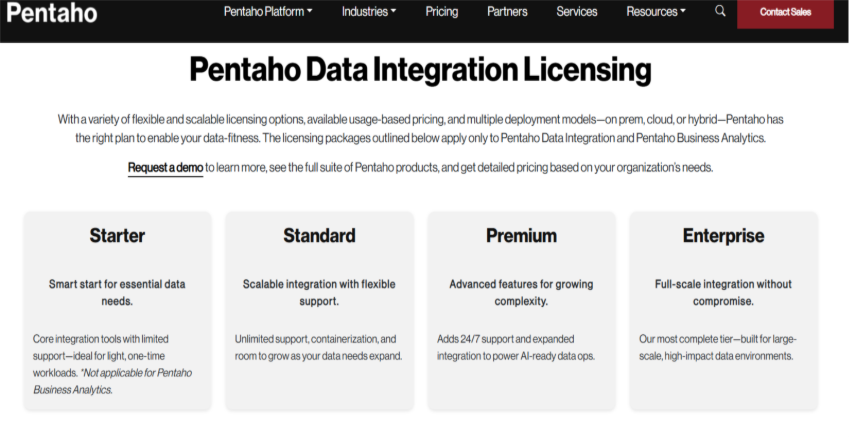
14. Pentaho
Pentaho-or in its community name, Kettle-is an open-source information integration and analytics platform from Hitachi Vantara. It can be freely used in a community edition or a commercially licensed enterprise edition.
Key Features:
- User-friendly GUI for building data pipelines
- Real-time ETL capabilities
- Broad connectivity to a wide range of data sources
- Native containerization for flexible deployment
Pricing:
15. Airbyte
Airbyte is an open-source ELT that provides a facility to the engineers for integrating data coming from various sources with ease in one place by housing more than 350 integrations of data connectors. Presently, it boasts an active community of over 40,000 data engineers.
Key Features:
- 300+ Connectors with the custom connector builder
- No-code builder creating connectors in 20-min.
- Incremental sync capabilities
- API, UI, and CLI access
- Integration with dbt for transformations
Pricing:
Future Trends in ETL Tools
The ETL landscape keeps evolving, and several trends are emerging:
- Real-time data processing capabilities also become the norm.
- Advanced data transformation and quality features, including AI and machine learning
- Automated data governance and compliance management
- Self-service data preparation enables the non-technical users themselves.
- Improved security and data protection features
- Cloud-native architectures for better scalability
Solutions facilitating these functionalities, including Matillion, Fivetran, and Integrate.io, remain in demand going into 2026.
Conclusion
From pure open-source platforms like Airbyte and Meltano to enterprise solutions like Informatica PowerCenter and Talend, the ETL tool landscape has something to fit every size and technical capability of organizations. Each of these tools shines with different strengths when it comes to data integration problems.
Success in choosing an appropriate ETL tool lies in honest assessment of organizational needs, technical competencies, budget limits, and long-term data strategy. Meanwhile, cloud-based solutions continue to gain more importance due to scalability and reduced infrastructure overheads, while specialized tools address specific needs for real-time processing or niche data source connectivity.
As the volume of data continues to grow exponentially, investing in strong ETL tools is no longer an advantage but a necessity for organizations intending to transform raw data into competitive advantages through informed decisions.
Respond to this article with emojis