




To grow your brand, you need more than just follower numbers. The right data empowers true growth because it helps to build a genuine community. However, tracking your data is
To grow your brand, you need more than just follower numbers. The right data empowers true growth because it helps to build a genuine community. However, tracking your data is now more complicated than ever. And it's not only due to changing algorithms and increased competition in every niche.
Your social media presence is now a business asset and a target. Therefore, you need accurate and, most importantly, secure data tracking practices to grow your online presence without losing your reputation.
Key Metrics That Matter Most

To get a real sense of your brand's growth, you need to look beyond surface-level metrics.
Engagement Rate
Seeing an uptick in follower numbers is always a good thing, but engagement is what shows genuine community connection. The engagement rate measures the true value of your content, and social media algorithms favor content with high audience satisfaction.
According to a 2025 Influencer Marketing Benchmark Report, the most used metric to measure growth is engagement (25.8%), followed by content type (25.1%).
Follower Demographics
Knowing who your audience is is key to growing your profile. You can combine follower demographics with advanced social media analytics to optimize your content for your target audience. Know your audience's age, location, gender, interests, and income. This information helps you create content that engages them better. Personalized marketing efforts make your audience feel valued, which, in turn, strengthens the bond between your brand and your audience.
Content Performance
Anyone can create content. The key is creating content that builds trust in your brand and boosts engagement. Tracking content performance can provide insight into whether your content resonates with your audience.
Authenticity
According to Harvard Business School, authenticity is a competitive advantage, and 67% of Americans are willing to spend more on brands with personal values that align with their own.
Being authentic is crucial, especially with the explosion of AI-generated content. You can bring personal authenticity into your brand by creating content that reflects genuine conversations and is consistent.
Authenticity is not virtue signaling or trend jumping. That's not to say you can't follow trends! But you should create trending content that still reflects your personal brand.
Native Analytics vs Third-party Analytics Tools
Platforms like Instagram, TikTok, Facebook, YouTube, and LinkedIn offer built-in tools to track metrics such as content performance and audience demographics. For example, Instagram and Facebook’s Meta Business Suite provides detailed insights on reach, engagement, followers, and post performance. YouTube Studio provides detailed metrics on watch time, audience demographics, and traffic sources.
The free built-in tools found on Instagram and YouTube provide basic real-time data that are customized to the platform's features.
To simultaneously track engagement rate alongside follower growth, you'll need automated tools like Sprout Social, HypeAuditor, or Socialinsider. These platforms create easy-to-read visuals showing trends in follower spikes. When choosing an analytic tool, features to prioritize:
- Audience authenticity scoring to identify bots and fake accounts
- Demographics insights
- Heatmaps to demonstrate when engagement is highest
- Competitor benchmarking
Why Online Growth is Becoming Dangerous
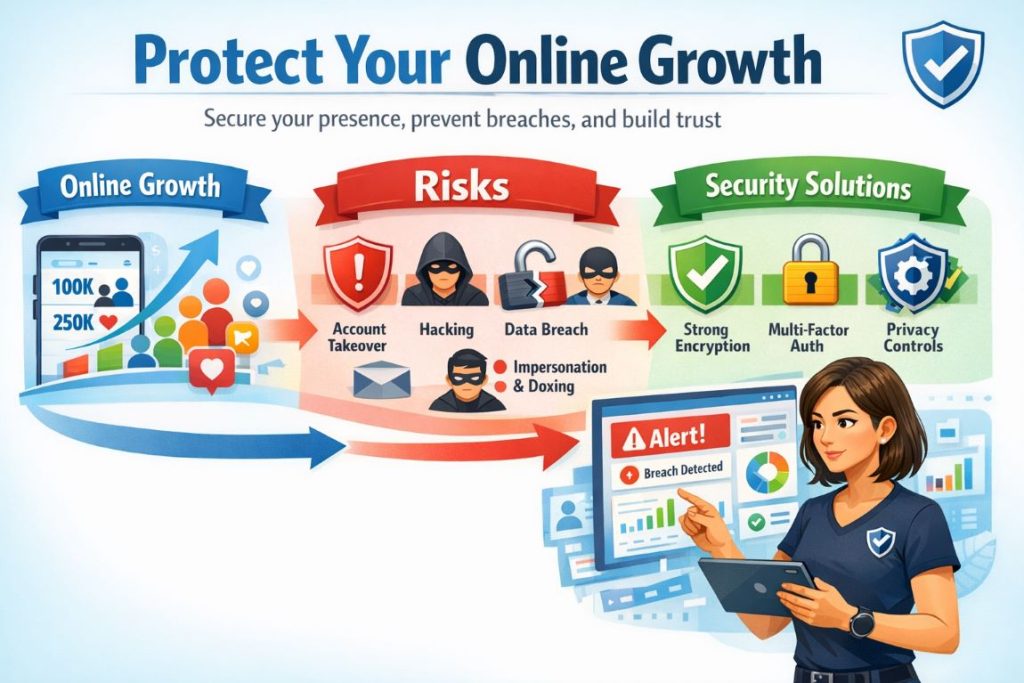
In October 2025, more than 5.66 billion people used social media, which is about 68% of the world's population. Nevertheless, not all 5.66 billion are the right potential followers for your brand. Accurate tracking can help you determine whether the content is reaching your audience and driving engagement. Having precise data on user behavior or demographics can help you create personalized content for your target audience and spur conversions.
But growth doesn't come without risks. As your online presence becomes more valuable, it also becomes more vulnerable to risks including account takeovers, impersonation, hacking, data breaches, and doxing. In October 2024, the Federal Trade Commission issued a warning that social media users with large followings are targets for scammers. In 2025, this warning is still relevant.
When you rely heavily on your online presence, data breaches and account takeovers can harm your brand’s reputation. Having a strong online security routine with an incident response plan is a necessity for every social media manager out there.
Privacy-focused Platforms
As a content creator, manager, or influencer, you're constantly exposing your data online, making you a bigger target for cybersecurity threats. That's why choosing a platform that takes your data protection seriously should be a priority.
Choose a platform that has:
- Strong encryption capabilities
- Multiple authentication methods
- User privacy controls
- Regular security updates
- Strong password policies
- Clear privacy policies
Prevention techniques will decrease the risk to a minimum. However, you must be prepared for the cases when even the strongest security measures can fail. Cyber extortion insurance is a reliable way to decrease the consequences of security incidents online and rebuild your reputation promptly.
Protecting Your Online Presence
With growth comes greater exposure and risk. Attackers can gain access to private data or entire social media accounts and even take them for ransom. That is why every good content strategy should include security measures, such as cyber-extortion coverage.
Cyber extortion coverage helps victims with professional support and pays for eligible costs. Your coverage can cover up to $50,000 in eligible costs, including payments in response to threats.
Final Thoughts
All successful creators have one thing in common—a content strategy that prioritizes security. While tracking key metrics is important, unsecured data is useless. Learn to protect your profiles and create a sustainable brand that attracts loyal followers.
Respond to this article with emojis