



Case studies are especially important in professional education programs such as social work, business, nursing, psychology, and education. In case studies, students conduct detailed research to analyze a real-world problem.
Case studies are especially important in professional education programs such as social work, business, nursing, psychology, and education. In case studies, students conduct detailed research to analyze a real-world problem. This is done by theorizing the problem and proposing the right solutions to address the problem.
Case studies differ significantly from essays in that they require students to demonstrate their ability to reason practically about how they'd approach a specific problem or issue in their professional practice. As a result of the recent emergence of AI writing tools, there are growing concerns about whether students are actually developing the analytical skills required to develop thoughtful and meaningful responses to case studies or if they're relying on ChatGPT to write their responses.
AI detectors face major challenges while detecting AI-generated content in case study writing. Generally, case studies follow a format that is very predictable. It first describes the background of the case, identifies major problems relevant to the case, analyzes the problem using theoretical course concepts, looks for potential alternatives, and then proposes a solution that fits the best. Since all students work with the same or similar cases, their responses and approach to case studies may show some similarity regardless of the fact that they independently developed the case.
Case studies often use terms and frameworks that are specific to a particular field of study and may appear formulaic to the untrained eye. False positives are a concern in professional programs in which the performance on case study assignments represents readiness for clinical or business practice.
The purpose of this report is to evaluate AI detectors on their ability to detect case study writing and their appropriateness for use in professional education settings.
Methodology Used to Test Each Detector
Each detector was tested using case studies from business, nursing, and psychology courses at both the undergraduate and graduate levels. Human-written analyses, AI-generated versions of the same cases, and hybrid responses containing elements of both human and AI-generated writing were used.
The focus was to see how each detector evaluates the problem identification sections which require analytical thinking, and recommendation sections which demonstrate practical judgment. This testing was conducted between December 2025 and January 2026.
Why Case Studies Present Unique Challenges for Detection Tools
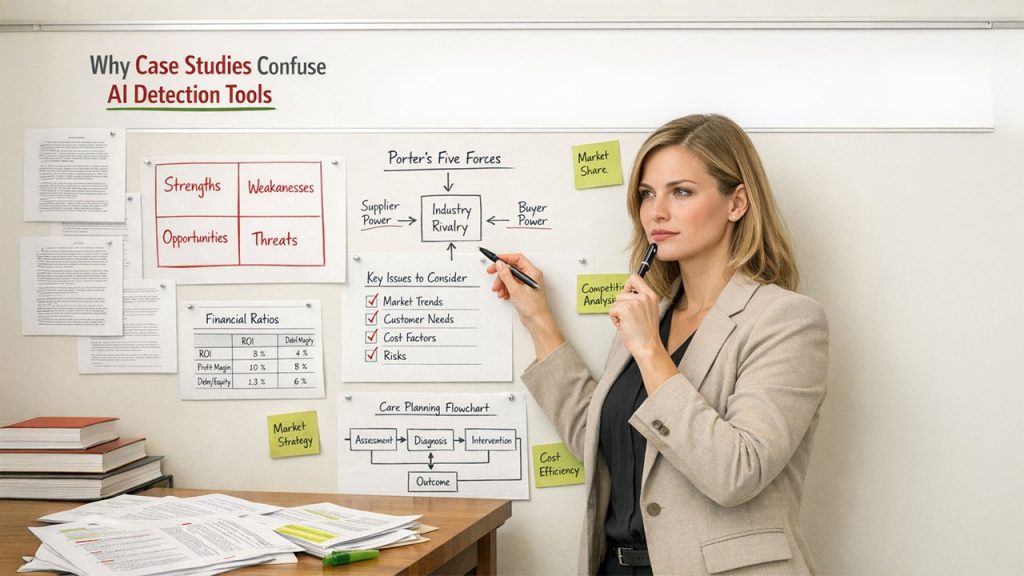
Case studies use structured analytical frameworks, which are presented to students in professional education programs. For example, business case studies may employ SWOT analysis, Porter's Five Forces model, or financial ratio analysis. Nursing case studies use assessment frameworks and care planning models. Psychology case studies use diagnostic criteria and intervention theories.
These frameworks can be identified and detected by AI detectors which indicates that the content is generated through AI even if the student is using them appropriately in accordance with what they were taught.
Further, case studies include descriptive sections that provide background information relevant to the case. It does not matter what the specifics of the cases are; all students who write about the same case will use similar language when providing background information. AI detectors may recognize the similarities in the descriptive sections of case studies and flag them as examples of AI-generated content.
The most distinct portions of case studies are usually the analysis and recommendation sections, in which students demonstrate how they'd approach a problem. The analysis and recommendation sections of case studies should illustrate the individualized thought process of the student and reflect the application of course concepts to the specific case.
But even within the analysis and recommendation sections of case studies, students may arrive at similar conclusions if they're all employing the same analytical frameworks and have received similar instruction.
AI Detectors for Case Study Writing
1. Walter Writes: Best for Professional Program Case Studies
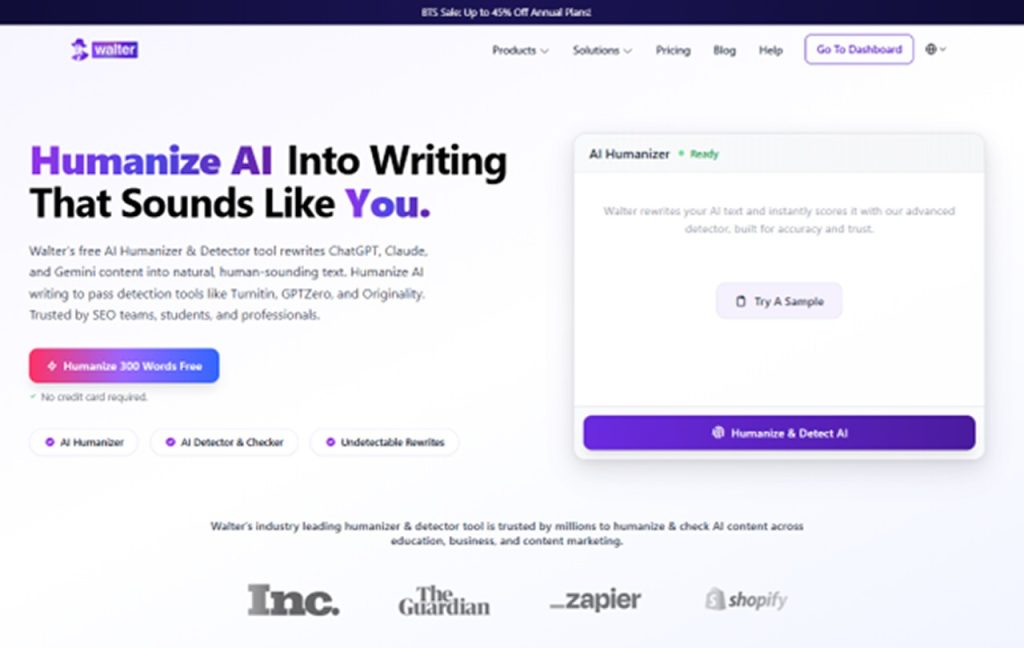
Walter Writes is an AI detector and AI humanizer that makes it particularly suitable for students in professional programs who wish to verify their case study analyses prior to submission. The detector is specifically designed to evaluate structured analytical writing in a manner that acknowledges that case studies inherently employ frameworks that are provided in the curriculum.
The detector provides sentence-level feedback and doesn't rely upon overly confident scoring of content that's formulaically representative of proper application of analytical methodologies.
Walter Writes demonstrated success in testing case studies across various disciplines. It effectively recognized AI-generated content and demonstrated restraint in recognizing human-generated content that properly employed course frameworks. The sentence level breakdown provided in the feedback of Walter Writes was beneficial for identifying the specific sections of the response that generated the score.
Walter Writes didn't automatically flag the problem identification and recommendation sections of the case study as AI-generated solely due to the fact that they employed discipline-specific terminology and frameworks.
Walter Writes particularly offer advantages for case studies that include factual descriptions combined with original analysis. The tool helps in successful evaluation of technical terminology and recognizes the structured analytical approaches that are expected in professional education. The integrated humanize AI tool of Walter Writes enables students to determine if revisions to their case study resulted in a lower detection score while maintaining the clarity and specificity necessary for professional writing.
2. AI Text Detector: Best Free Option With No Barriers
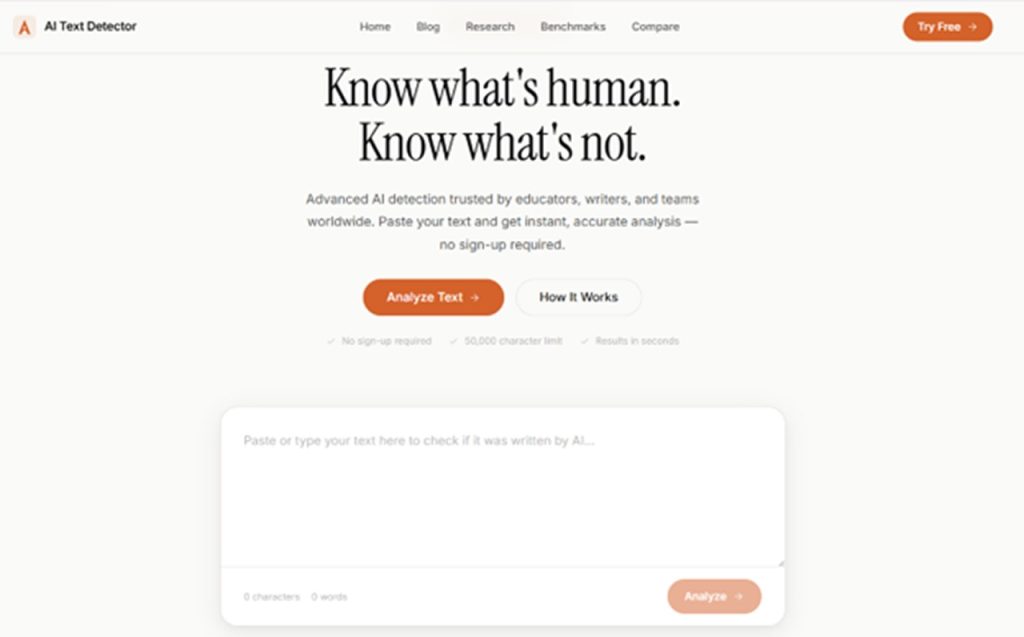
AI Text Detector is a free, no-account tool that accepts up to 50,000 characters of text per submission, which comfortably covers even lengthy case study assignments. There's no need for any sign-up, no credit system, or no paywall. This makes it easy for students and instructors to access who need a quick read on a submission.
The tool offers a probability-based assessment which tells how likely the content is to be AI-generated. For case studies, this is most useful as a first-pass check before running text through more specialized tools. The high character limit is a practical advantage when dealing with full-length professional program submissions that tend to run longer than typical essays.
Best for: Students and instructors needing an immediate, no-friction detection check
Specialty: High character limit with no registration required
Cost: Free
Website: aitextdetector.ai
3. Proofademic: Best for Institutional Classroom Use
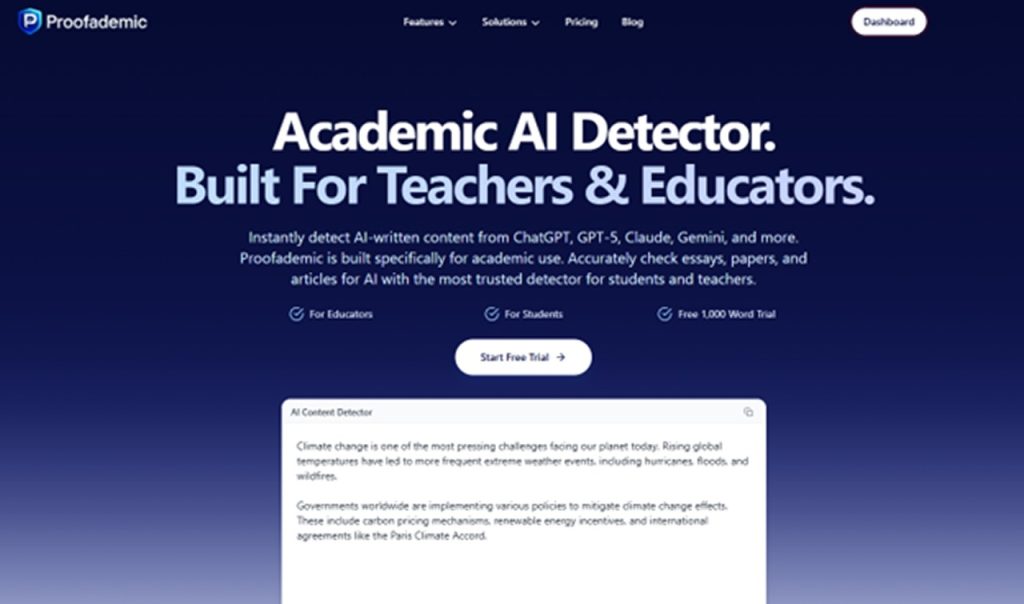
Proofademic is an AI detector that is built specifically for academic environments. It combines AI detection with plagiarism checking in a single platform. It serves those institutions that need a reliable, education-focused tool without juggling between multiple services. Proofademic provides a probability-based score alongside detailed reporting. It’s recently released batch processing capability makes it practical for instructors who manage large classes or multiple submissions at once.
In testing, Proofademic successfully identified AI-generated case studies while offering more granular feedback than many competing tools. The sentence-level breakdown lets instructors pinpoint which sections triggered the score, which is especially useful for case studies where students follow structured analytical frameworks taught in the curriculum.
Proofademic is accessible via institutional plans and is well-suited for higher education settings where instructors want both detection confidence and the ability to have informed conversations with students about flagged content. The batch processing feature in particular sets it apart for high-volume academic use.
4. Grammarly AI Detector: Best for Quick Accessibility
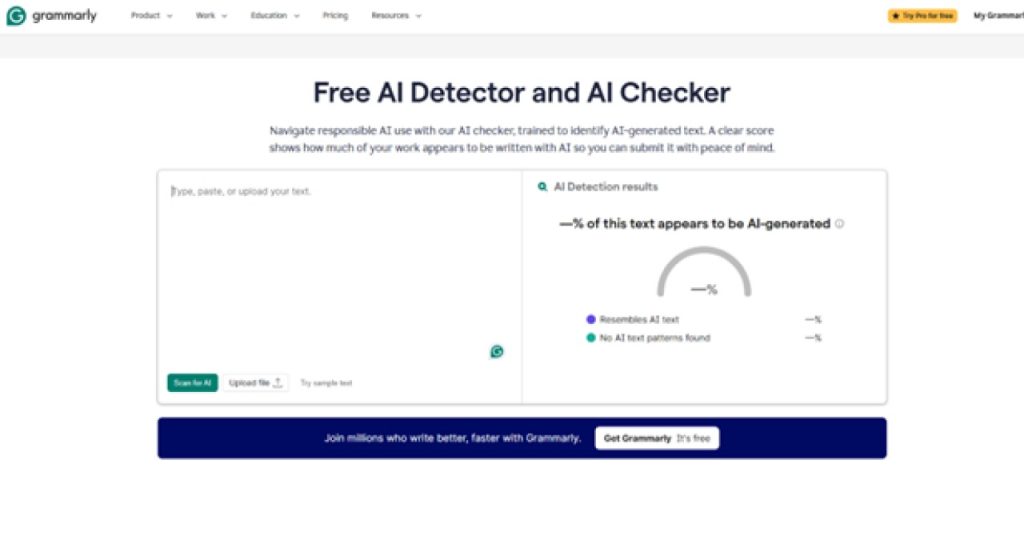
Grammarly's AI detector is free and doesn't require registration. It generates a percentage score immediately and the user interface is extremely user-friendly and easy to navigate.
However, Grammarly frequently shows well-developed and organized case study analyses as AI-generated. During testing, Grammarly frequently displayed high AI scores for human-written case study responses that used well-established analytical frameworks with clear problem statements and logically connected recommendations. The tool provides no rationale for its detection and doesn't provide sentence-level feedback.
The detection tool is free and available on the Grammarly website. The tool is best used for casual, informal checks and shouldn't be relied upon as the primary mechanism for assessing case study performance.
5. Quillbot AI Detector: Best for Free, Unlimited Checks
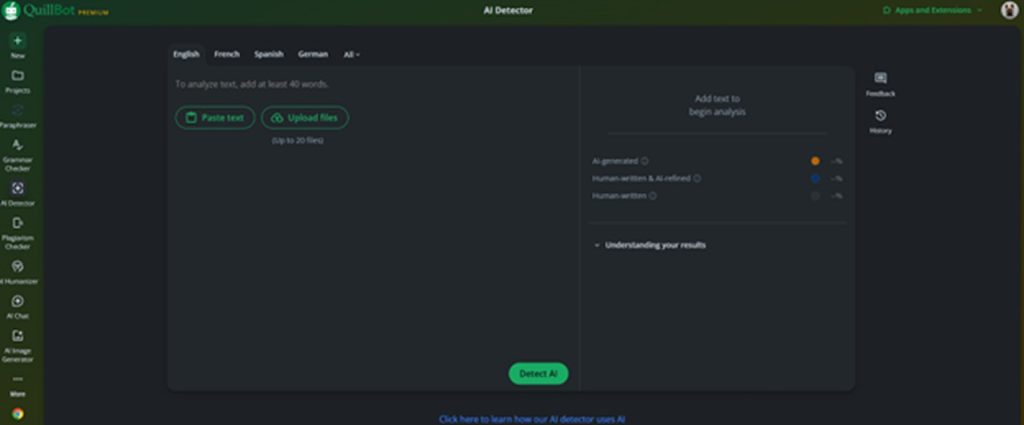
Quillbot's AI detector provides free access with no limitations on the number of words checked and provides a simple percentage score. The tool is fast and doesn't require an account to register.
During testing, Quillbot demonstrated varying degrees of success with case studies. Quillbot identified clearly AI-generated content accurately, but also incorrectly identified some human-written case studies with high detection scores, especially those that contained clear and logical structure and correct application of analytical frameworks. The tool doesn't provide a breakdown or rationale for the detection score.
Quillbot's detector is free and available without registering. The tool is most useful for informal checks and isn't the preferred choice for the primary evaluation of professional program assignments.
6. Ahrefs AI Detector: Best for Section Highlighting
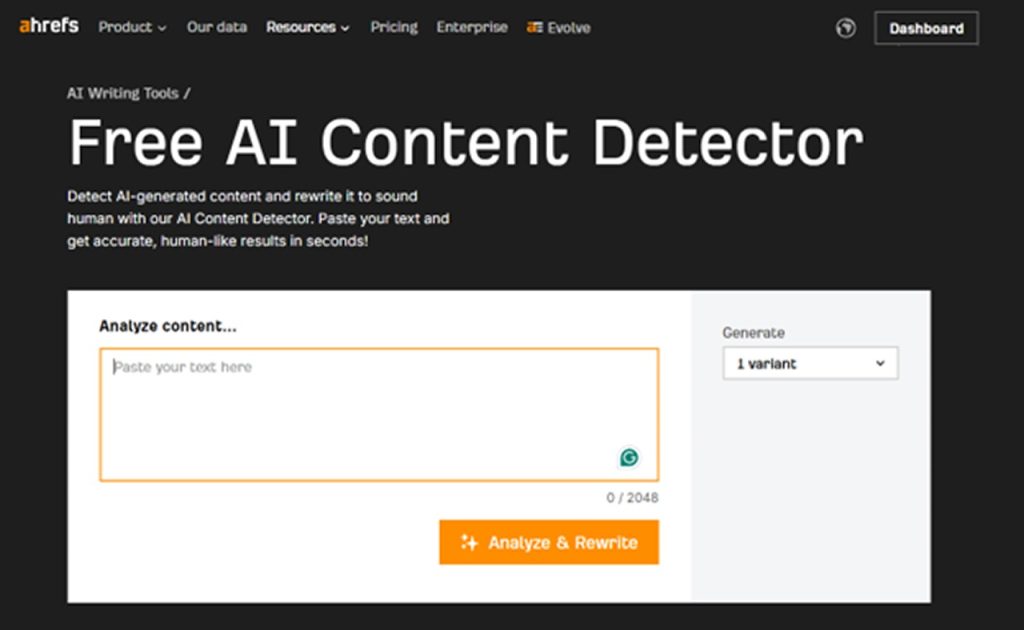
Ahrefs provides a free AI detector that includes a percentage score and highlights sections of text that appear to be AI-generated. The highlighting aspect of the tool allows users to identify which specific paragraphs caused the tool to assign the detection score.
Ahrefs demonstrated moderate success in identifying clearly AI-generated case studies, but also incorrectly identified structured analytical sections as high risk on several occasions. The highlighting function of Ahrefs was beneficial for identifying the sections of the case study that were flagged by the tool. But the tool didn't provide a rationale for why those sections were flagged as AI-generated.
The tool is free and available on the Ahrefs website. The tool is best used as a supplemental resource rather than the primary evaluation mechanism for assessing the performance of students on case study assignments.
7. Small SEO Tools AI Detector: Simple Percentage-Based Detection
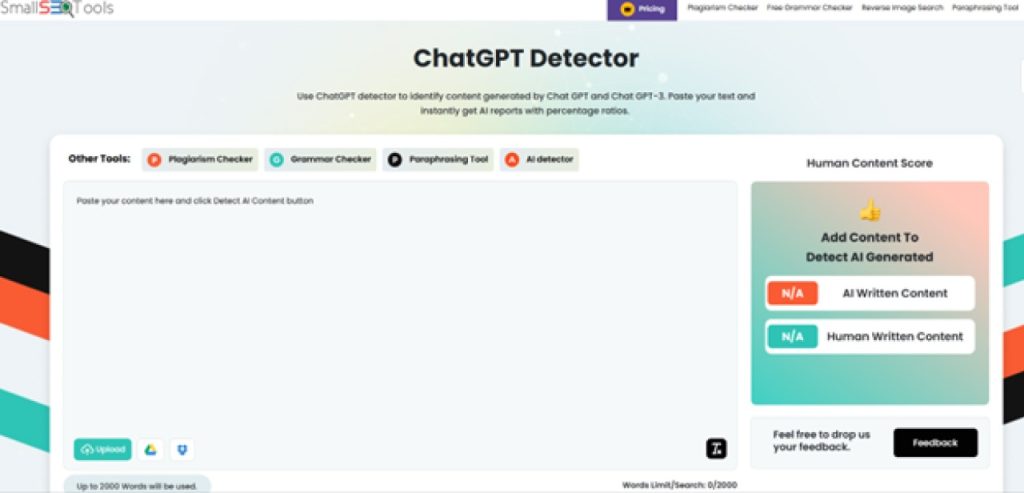
Small SEO Tools provides free detection with no registration requirements. The tool generates a percentage score immediately after inputting the text to be assessed.
But Small SEO Tools demonstrated inconsistent results during testing. Small SEO Tools occasionally identified human-written case studies as having a high degree of AI-generated content, particularly when the human-written case studies included well-structured and analytical writing.
The tool doesn't provide a breakdown or rationale for the detection score.
The tool is free and available on the Small SEO Tools website. The tool is best used for extremely informal checks only.
What Instructors in Professional Education Programs Should Know
As previously noted, case studies are difficult to assess using AI detectors due to the fact that they're designed to use structured analytical frameworks that can be perceived as formulaic. If you're using a detector, focus on the analysis and recommendation sections of the case study, as they should demonstrate the individualized thought process of the student and the application of course concepts to the specific case.
Background sections of case studies are more likely to produce false positive,s as students will describe the same case and stakeholders in a similar fashion.
When selecting a detector, prioritize detectors that provide sentence-level feedback as this will enable you to review specific passages and identify signs that a student is truly analyzing the case. Examples of signs include specific details from the case being referenced in the analysis, use of multiple course concepts, consideration of alternate solutions, and demonstration of how the case facts relate to theoretical frameworks.
Determine whether the student's response aligns with their participation in class and previous assignments.
The most reliable means of determining whether a case study is authentic is through follow-up questions. Ask students to provide rationales for their analysis, defend their recommended solutions, or provide a similar solution to a modified version of the case.
Ultimately, case study performance should be judged on the quality of analysis and reasoning, not the detection score.
Limitations of AI Detection for Case Study Writing
Accuracy and False Positives
No AI detector provides a definitive verdict, and this matters more in professional education than almost anywhere else. These tools return probability scores, not proof. A high score doesn't confirm a student used AI, and a low score doesn't confirm they didn't.
Case study writing is particularly prone to false positives because structured analytical frameworks look the same whether a student or a language model uses them. SWOT analysis written by a business student will pattern-match against an AI-generated SWOT analysis in ways that confuse detectors. The same applies to nursing care plans and psychology diagnostic assessments. Educators should treat any detection result as a prompt for further inquiry, not a conclusion.
Who Gets Harmed
The groups most at risk from false positives in professional programs are also those with the most to lose. Students learning English as an additional language often write in ways that are clear and structured, which detectors sometimes read as AI-like. Neurodivergent students who write in a more systematic or formulaic style can be flagged for the same reason. Students from educational backgrounds where formal, structured writing was explicitly taught are also more likely to produce work that looks suspicious to these tools.
In clinical and professional programs, a false allegation carries serious weight. It can delay graduation, jeopardize licensure applications, and cause lasting reputational harm. That risk should factor into how much weight instructors place on detection scores.
What the Tools Can't Do
Most AI detectors require a minimum length to function reliably, typically 150 to 300 words. Short-answer case study components or targeted reflection prompts may not provide enough text for the tool to generate a meaningful score. Results on short submissions are especially unreliable.
Detectors also struggle when a student has combined their own writing with AI-generated passages. Hybrid submissions can score inconsistently depending on the order of the content and how much was edited after generation.
Ethical and Privacy Concerns
When instructors or students paste case study text into third-party detection tools, that text may be stored or used to train future models, depending on the platform's data policies. This is worth considering in clinical programs where case content may reference real patient scenarios or de-identified but sensitive information.
There are also power dynamics worth acknowledging. In educational relationships, a high detection score positions the instructor as an accuser and the student as someone who must prove innocence. That dynamic is uncomfortable and potentially harmful when the underlying evidence is probabilistic, not definitive.
When Not to Use These Tools
AI detection should not be used as the sole basis for academic misconduct findings in professional programs. The stakes are too high and the error rate too significant to rely on a percentage score alone. If a case study triggers a high detection result, the appropriate response is a conversation with the student, not an immediate referral to an academic integrity process.
Tools should also be used cautiously in programs where structured writing is a core competency. When the expected output of an assignment naturally resembles AI writing, detection becomes unreliable by design.
Frequently Asked Questions
Q1. Can AI detectors tell whether a case study was written by ChatGPT?
A1. AI detectors calculate the probability based on patterns, but can't confirm the authorship of a case study. Because case studies are structured to follow analytical frameworks taught in the curriculum, detection is less reliable. AI detectors are most effective as one indicator among other indicators.
Q2. Why do analytical frameworks produce detection scores?
A2. Structured analytical approaches like SWOT analysis, nursing assessment models, and so on, follow recognizable patterns. AI detectors may view these patterns as AI-generated even when the student is properly applying the analytical frameworks taught in the curriculum.
Q3. Should I use AI detectors to grade case studies?
A3. AI detectors shouldn't be the primary method for grading case studies. Structured analytical writing will inevitably produce false positives. Follow-up conversations with students regarding their analysis and rationales will provide more insight than reliance on detection scores.
Q4. Will all students analyzing the same case receive similar detection scores?
A4. Not always, although students may reach similar conclusions if they're using the same analytical frameworks and course concepts. Similarities between students' case studies are to be expected in professional education and shouldn't be viewed as evidence of AI-generated content.
Q5. Can students use AI detectors to test their case studies before submission?
A5. Yes, and many students use AI detectors to protect themselves against unfounded allegations of AI-generated content. But students must be mindful not to revise excessively based on the feedback from the detector. The purpose of writing a case study is to demonstrate analytical thinking and practical judgment, not to manipulate the detector.
Q6. Which part of a case study is best to evaluate for AI use?
A6. Analysis and recommendation sections are the most distinctive as they should reflect the individualized thought process of the student and demonstrate the application of course concepts to the specific case. Background sections of case studies are more likely to produce false positives due to the fact that students are describing the same situation.
Q7. How should I interpret high detection scores on case studies?
A7. High detection scores should elicit further questioning and discussion with the student, not immediate accusations. Instructors should query students regarding their analysis, defend their proposed solutions, and compare the students' application of course concepts to the specific case. AI detectors for case study writing evaluations should be centered around the quality of the student's analysis and reasoning, and not solely on the detection score.
Respond to this article with emojis