
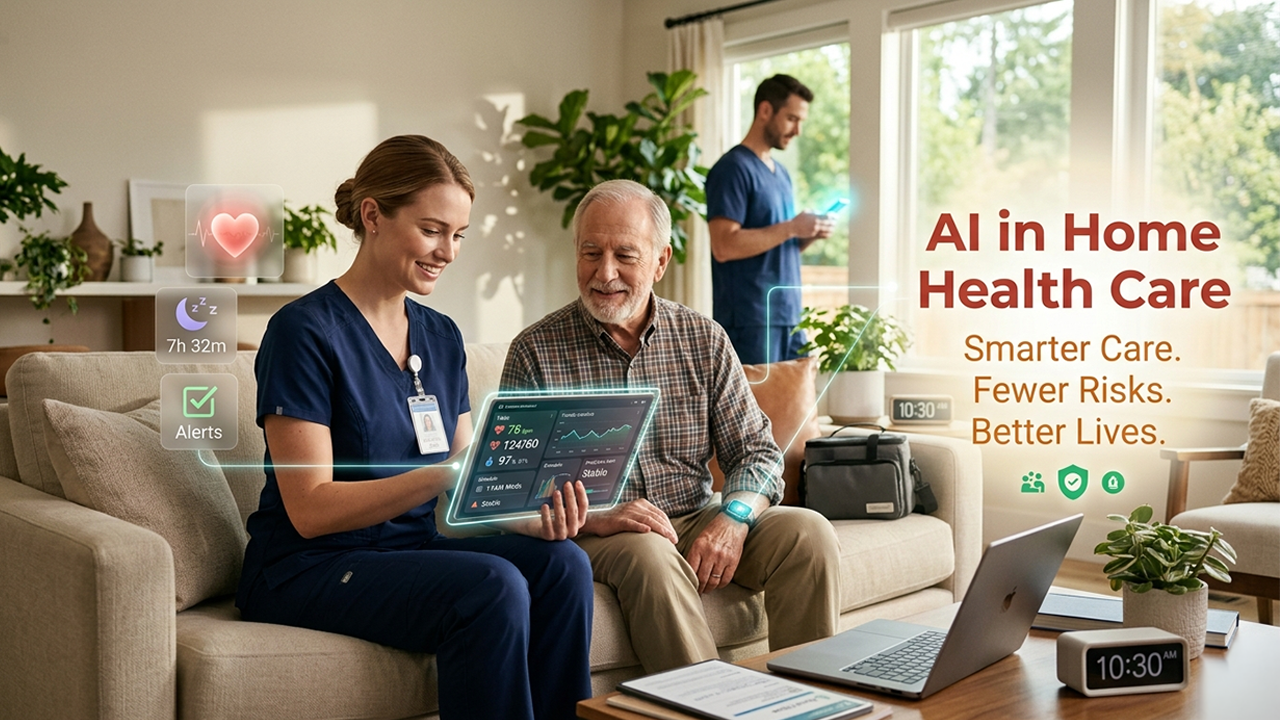
What Are the Benefits of AI in Home Health Care Management? 8 Key Advantages
Discover 8 key benefits of AI in home health care management, from smarter scheduling and real-time monitoring to reduced paperwork and improved patient outcomes.
What does “better care at home” really mean today? Is it quicker nurse visits, fewer errors, or simply the reassurance that someone is paying attention even when no one is physically there? For many families, especially those managing long-term conditions, the gaps between visits are where the real anxiety lives. Healthcare GPO services also help support care delivery by improving access to essential medical supplies and resources, making home-based care more efficient and reliable.
Home health care has always been built on trust, but it’s also been held together by paperwork, phone calls, and systems that don’t always talk to each other. That’s starting to change. A recent analysis suggests AI could automate up to 45% of administrative healthcare tasks, freeing up time for actual patient care.
So the question isn’t whether AI belongs in home health care anymore. It’s how it’s quietly reshaping the way care is delivered, managed, and experienced, often in ways patients and providers don’t immediately notice, but definitely feel.
Here’s where AI starts to make a noticeable difference in everyday home care management.
1. Smarter Scheduling That Actually Works in Real Life
Scheduling in home health care seems easy at first. It can get complicated quickly. Patients change their plans caregivers are late and priorities change during the day.
This system is different. It doesn’t use fixed schedules. Instead it adjusts plans, visit times and caregiver assignments as needed. It thinks about travel distance how urgent a visit is and caregiver availability at the same time. Manual planning can’t keep up with all that.
Here are some benefits:
- Fewer missed or delayed visits
- Caregivers have productive time
- Less stress at the minute
It won’t make everything perfect. It makes things manageable and that makes a big difference, in the daily routine.
2. Early Detection That Prevents Bigger Problems
In home health care, small changes often come before serious issues, but they’re easy to miss in busy routines.
AI pays attention to those patterns. It tracks data over time and picks up on subtle shifts, changes in mobility, sleep, or vital signs that might not seem urgent at first. In many setups where teams rely on home health software with AI, these signals become easier to connect, giving caregivers a clearer picture of what’s really happening between visits.
That’s where platforms like Alora Health tend to come up in conversations around proactive care, not as a replacement for clinical judgment, but as something that supports it with steady, real-time context.
3. Better Patient Monitoring Without Constant Check-Ins
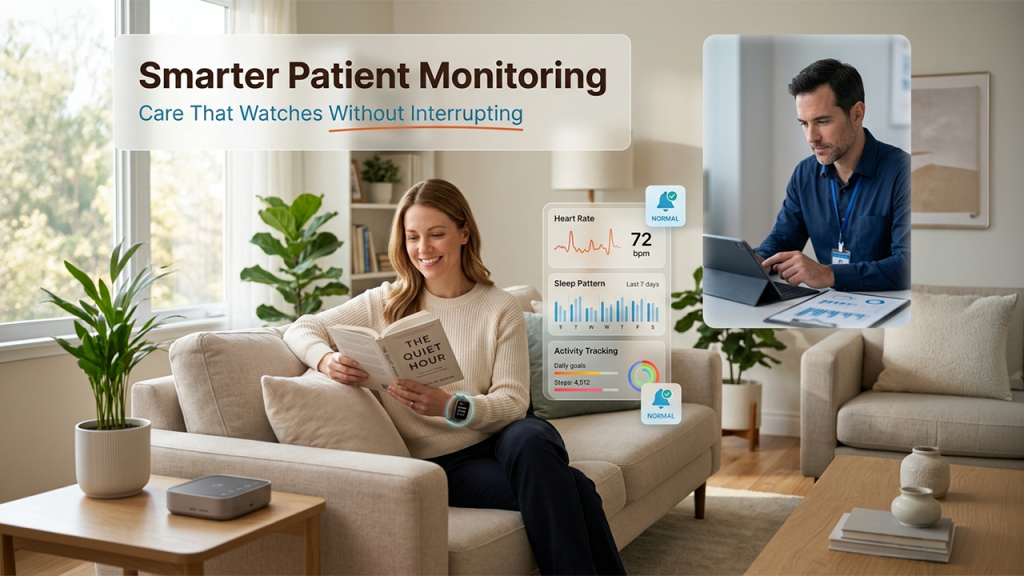
Keeping track of patients between visits has always been a balancing act. Too many check-ins can feel intrusive, but too few can leave gaps in care.
By connecting with monitoring tools, it keeps an ongoing track of vitals, routines, and small behavioral changes without needing constant manual input. Caregivers aren’t overwhelmed with data; they’re alerted only when something actually shifts or needs attention.
This creates a quieter, more continuous form of care. Patients don’t feel watched, yet support is always there in the background, ready to step in when something doesn’t seem right.
4. Less Time on Paperwork, More Time on Patients
Related walkthrough
Unitree's New AI Robot Can Think, Clean & Care for Humans 🤯 | The Future of Home Robotics

Documentation has always been one of the biggest time drains in home health care. Notes, updates, and compliance tasks quietly take up hours that could be spent with patients.
AI helps cut through that load without disrupting workflows.
- Voice-to-text tools capture notes instantly
- Forms auto-fill using existing patient data
- Records update in real time across systems
Caregivers spend less time behind screens and more time focused on actual care. It’s a small shift in process, but it changes how the entire day feels, for both providers and patients.
5. More Personalized Care Plans
Care plans often begin with a standard structure, but patients rarely follow a standard path for long. AI helps make those plans more adaptable.
Analyzing patient history, ongoing progress, and daily patterns, it supports gradual adjustments that reflect what’s actually happening, not just what was expected at the start. Instead of waiting for formal reviews, care evolves in smaller, more timely ways.
It doesn’t take over clinical decision-making. It simply adds another layer of insight, helping providers shape care that feels more aligned with each patient’s real, day-to-day needs.
6. Stronger Communication Across Care Teams
Home health care involves multiple people, and staying aligned isn’t always easy. Miscommunication can slow things down or lead to gaps in care.
AI helps keep everyone connected without constant follow-ups.
- Real-time updates shared across all team members
- Alerts for changes in patient condition or schedules
- Centralized records accessible anytime
Instead of scattered notes and repeated calls, information flows more smoothly. Everyone sees the same updates, which reduces confusion and keeps care consistent. It doesn’t add more communication; it makes existing communication clearer and easier to manage.
7. Fewer Hospital Readmissions
One of the challenges in home health care is keeping patients from going back to the hospital. Usually it is not one problem but a lot of small signs that people do not notice.
Home health care teams can see patterns and find problems early so they can help patients before things get worse. They pay attention to changes in how patientsre doing how they are acting or their daily routines and they do something about it.
This kind of help can really make a difference. There are emergencies patients get better faster and they have a better chance to stay at home, where they are most comfortable and that is what home health care is all, about, helping patients stay at home.
Conclusion
The use of Artificial Intelligence in home health care does not make a show of itself. It works quietly in the background changing schedules watching for patterns bringing teams together and finding things that might get missed.
This means there is rushing around fewer mistakes and a stronger feeling that someone is watching out for you even when they are not there in person. The care you get becomes more steady it responds better to your needs. It feels more like it is coming from a person.
It is not about taking the place of people or making things more complicated. It is about making everyday care easier so the people who provide care can focus on what’s really important and patients can see the difference in the things that matter most to them. Artificial Intelligence in home health care is making a difference by helping people who provide care to focus on the patients and by making patients feel more comfortable, with the care they get. Artificial Intelligence is helping to make home health care.
Related Post: What to Look for in a Healthcare Software Development Vendor
Article rating
Was this article useful?
0.0 out of 5 from 0 ratings