



Artificial intelligence (AI) along with machine learning (ML) are changing how digital platforms interact with users. These advanced technologies assist businesses in analyzing patterns in behaviors, providing personalized experiences, and
Artificial intelligence (AI) along with machine learning (ML) are changing how digital platforms interact with users. These advanced technologies assist businesses in analyzing patterns in behaviors, providing personalized experiences, and accurately meeting user expectations.
As digital ecosystems become more competitive, engagement depends less on static features and more on systems that can learn and adapt. User engagement today goes beyond clicks or session length. It reflects how effectively a platform aligns its functionality with user intent, preferences, and expectations.
Artificial intelligence and machine learning make this alignment possible at scale, even as user bases grow and behaviors shift.
Personalization at Scale
Personalization has become one of the strongest drivers of engagement. A global survey of 23,000 consumers reveals that four-fifths users are comfortable with personalization and often expect it. Personalization is most commonly viewed with additional value, convenience, and enjoyment.
Analyzing past behaviors, user preferences, and extracting contextual insights from raw, AI models deliver tailored content, send personalized recommendations or feature suggestions. The ability of machine learning to effectively modify outfits dynamically is what makes it popular. It doesn’t rely on pre-defined or fixed rules.
Streaming services, fintech apps, and SaaS platforms use personalization to reduce friction and increase relevance. Banks, for instance, are using AI to engage with customers by enabling smarter and more personalized interactions and proactive service delivery. As personalization strategies become more advanced, platforms like Coursiv help professionals better understand the mechanics behind AI-driven customization and how to apply it responsibly across industries.
It also helps institutions meet customers with the right products and support at the right time while boosting satisfaction and retention. In digital services, AI-driven tools help streamline customer support, improve responsiveness, and add a personal touch to banking interactions that feel more natural and tailored.
Users return to explore additional features when they feel that the platform understands their needs accurately and offers solutions to their problems. This sense of relevancy determines the user’s active or inactive state towards the product.
Are there risks to over-personalization in digital platforms?
Personalization works well; however, over-personalization can pose a significant risk. It can make users feel that their privacy is being invaded, which might reduce novelty and discovery and result in disengagement. Users are likely to abandon the platform if they constantly receive recommendations that mirror their past behavior too deeply. Therefore, it is essential to strike a balance between tailored experiences and opportunities for exploration. This will ensure that users don’t feel burdened and allow them to explore without worrying.
Behavioral Analysis and Responsible Engagement
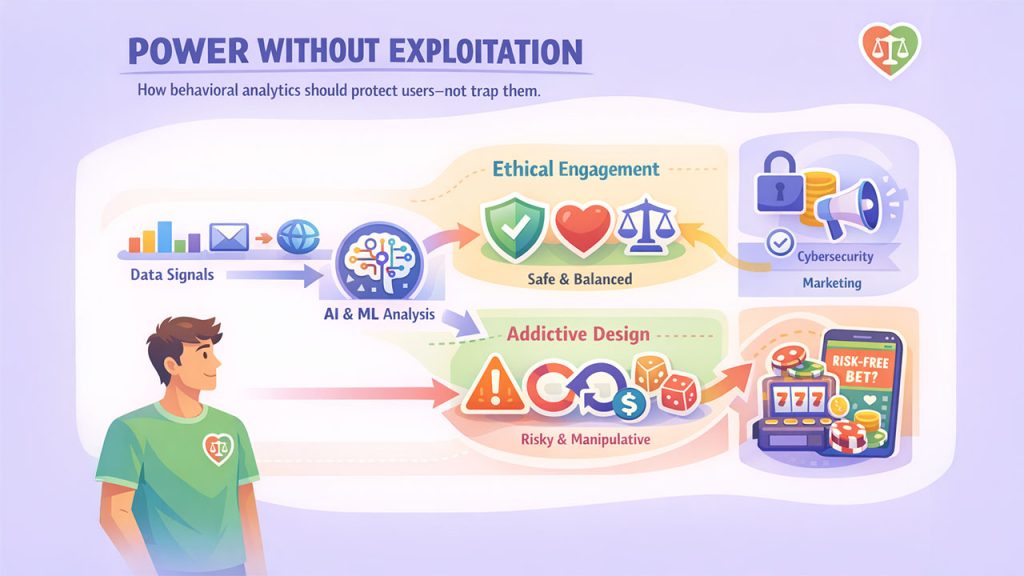
User behavior analytics (UBA) makes use of data analytics, artificial intelligence along with machine learning to track and model how users typically behave within a system. This helps establish baselines for behaviors and even detects slight changes that may indicate potential risks or unusual activities.
UBA is primarily discussed in the context of cybersecurity. However, its techniques are also applied in fields like marketing and product design to better understand how people interact with digital services. This can, in turn, inform improvements in user engagement and system design.
However, it is also important to use AI-driven engagement systems ethically. Some brands and platforms use artificial intelligence to keep users hooked for extended periods for their benefit. This is especially evident in social media platforms, video games, and betting applications.
For instance, financial analysts predict that the US sports betting market could reach $45 billion. Some sports betting platforms like DraftKings are trying to make the most out of it by engaging users unethically.
According to TorHoerman Law, many users have alleged that the company’s app design and marketing strategies are created to encourage impulsive betting. Its “risk-free” and “No Sweat” bets exploited vulnerable users and created addictive betting behavior.
Many of these users have filed a DraftKings lawsuit for online gambling addiction to seek accountability and compensation from the company. Firms should adjust their models to include risk signals and usage thresholds to avoid such fates.
Can behavioral analysis predict long-term satisfaction?
Behavioral analysis is used to understand patterns that are correlated with long-term satisfaction, such as steady feature usage, frequencies of sessions, or help-seeking behaviors. Monitoring these trends allows platforms to predict possible drop in user engagement and address pain points proactively. This improves retention and fosters a sense of reliability and value over time.
Predictive Models and Proactive Engagement
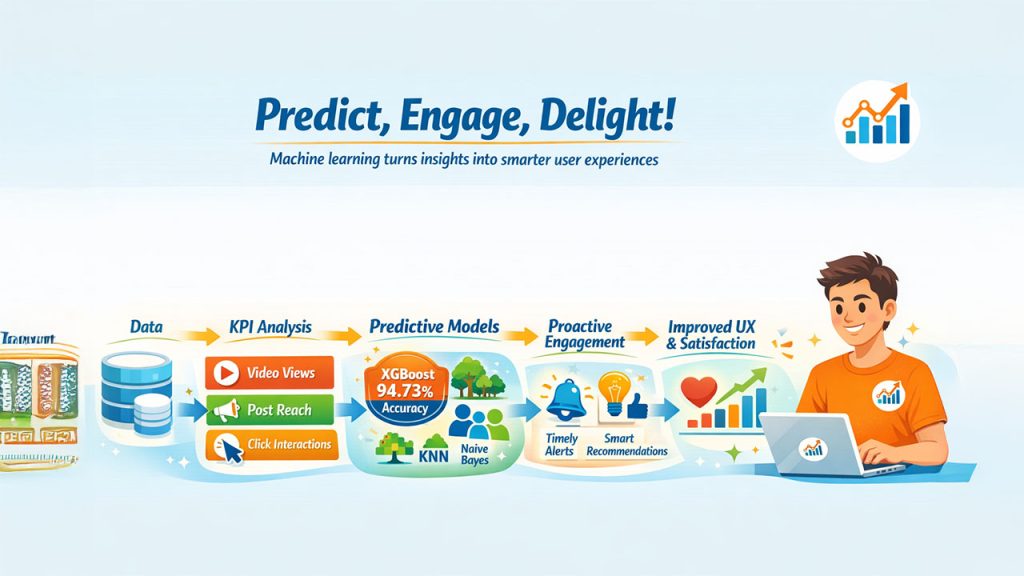
Machine learning excels at prediction. Platforms use predictive models to anticipate user needs before they are explicitly expressed. This may include identifying when a user is likely to churn, when assistance might be needed, or when a feature recommendation could add value.
Proactive engagement helps in reducing frustration, thereby improving satisfaction. Automated prompts, contextual help, and adaptive onboarding flows rely on predictive insights to appear at the right moment. These systems continue learning as users respond, refining their timing and messaging with each interaction.
An MDPI study analyzes key performance indicators (KPIs) that drive user engagement on social media. It focuses on fashion retail during seasonal tourism. Referencing a dataset of 2,500 Facebook posts from 2016 to 2024, the research evaluates metrics such as short video views and organic post reach. It also assessed other clicks to determine interaction levels.
Machine learning models, including XGBoost, Random Forest, K-Nearest Neighbors, and Naïve Bayes, are applied to classify engagement levels. XGBoost has 94.73% accuracy. These results highlight that the strongest engagement drivers are short video views and post reach. It demonstrates how KPI analysis and data mining can discover behavior patterns of users. This is important because it helps in developing far more effective strategies and targeted social media marketing campaigns.
Automation and Continuous Optimization
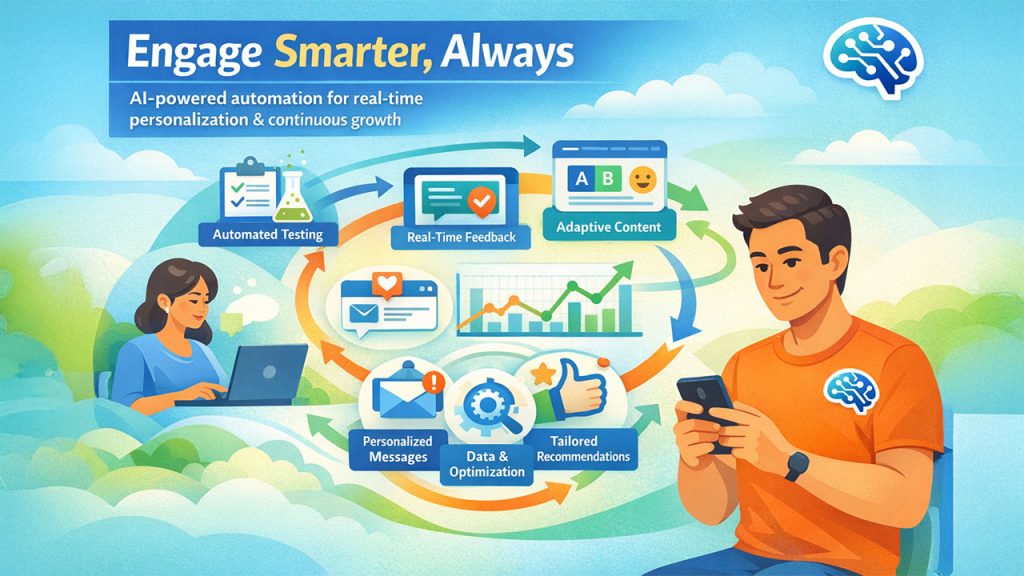
AI-powered automation has a major role to play in maintaining consistent engagement across large user bases. Similar to automating business operations, automated testing, real-time feedback analysis, and adaptive content delivery enable platforms to improve continuously without constantly needing any manual intervention.
Machine learning models evaluate the variations of a feature or the performance of the interface for different audiences. Then, adjustments can be applied automatically to ensure that engagement strategies are constantly responsive as per users’ changing behaviors and evolving marketing conditions.
Beyond adjusting features, automation enables platforms to manage large-scale personalization in ways that would be impossible manually. For instance, messaging, notifications, and content recommendations can be tailored dynamically to individual user preferences, habits, and engagement history. This ensures that users consistently encounter experiences that feel relevant and timely, which in turn strengthens loyalty and reduces churn.
Each interaction between the user and the platform generates data that is further analyzed to understand what refinements are needed. This is especially helpful as it allows platforms to detect even the slightest shift in the behavior or pattern of the user and adapt before he disengages with the platform. This proactive approach helps enhance user satisfaction and empowers businesses with the ability to test innovative features safely.
How does automation impact team workflows in content management?
Automation reduces repetitive tasks for content teams, such as scheduling posts, A/B testing variations, and monitoring engagement metrics. This allows staff to shift their focus on tasks that are more strategic, creative, and complex. These tasks require constant human oversight. Automation indirectly contributes to more thoughtful and engaging user experiences by freeing up the human resources from routine tasks or processes.
For modern platforms, building and sustaining user engagement depends entirely on artificial intelligence (AI) and machine learning (ML). Advanced features such as data analysis, behavioral insights, personalization and predictive AI models pave way for digital experiences that resonate with users and are more responsive.
As engagement strategies are constantly evolving, the focus has shifted to increased responsibility, transparency, and long-term user value. Thoughtful application of AI is essential to maintain trust while delivering experiences that feel more intuitive, supportive, and aligned with user requirements.
Respond to this article with emojis