

The present market is quite competitive and complex, and as such, organizations cannot depend on mass marketing to achieve growth and success. People want personal experiences that suit their needs
The present market is quite competitive and complex, and as such, organizations cannot depend on mass marketing to achieve growth and success. People want personal experiences that suit their needs and behaviors. Here is where STP marketing can play an important role. By segmenting the market, targeting customers, and then positioning, organizations can ensure maximum interaction and successful marketing that generates positive outcomes.
Comprehensive Summary
Understanding the Framework of STP: STP marketing involves an approach to market segmentation, target audience, and positioning of products in such a way as to maximize market engagement and business expansion.
Segmentation advantages: Market segmentation assists organizations in identifying groups of customers who share common needs, allowing them to market them more effectively and therefore increasing conversion rates.
Targeting Strategy: Targeting strategy analyzes the attractiveness of the identified groups by evaluating the value of each group based on the criteria of size, profitability, and accessibility.
Positioning Power: This helps in positioning brands in the marketplace by creating an identity around them, which is quite an effective tool in distinguishing brands from each other.
Implementation Success: Data-driven insights, sharp segment profiles, competitive analyses, and a sharp marketing mix-each tuned to customer needs-are all part of what it takes for STP to be implemented successfully.
Measurable outcomes would be that companies using STP marketing receive a 40% higher revenue from personalization activities while reducing marketing costs by improving relationships with better relevancy in messaging.
What is STP Marketing?
STP stands for Segmentation, Targeting, and Positioning. This is a new way for businesses to find their customers and communicate with them. Instead of being like everyone else and trying to appeal to everyone, businesses with this type of marketing can target customers that will respond well.
The need for the STP marketing model arose as a remedy for inefficient mass markets where companies tended to spread resources too thin across multiple markets. Essentially, the formula for the STP marketing approach can be expressed as follows:
Segmentation + Targeting = Positioning
There is a very important finding in this formula that positioning strategies need to be different for each of the target segments.
Market Segmentation Understanding
Market segmentation is the starting point of carrying out processes of dividing a broad market into smaller segments, making them manageable. Customers belonging to one segment share similar need patterns, behavior, as well as reactions towards marketing campaigns.
Why Segmentation Matters
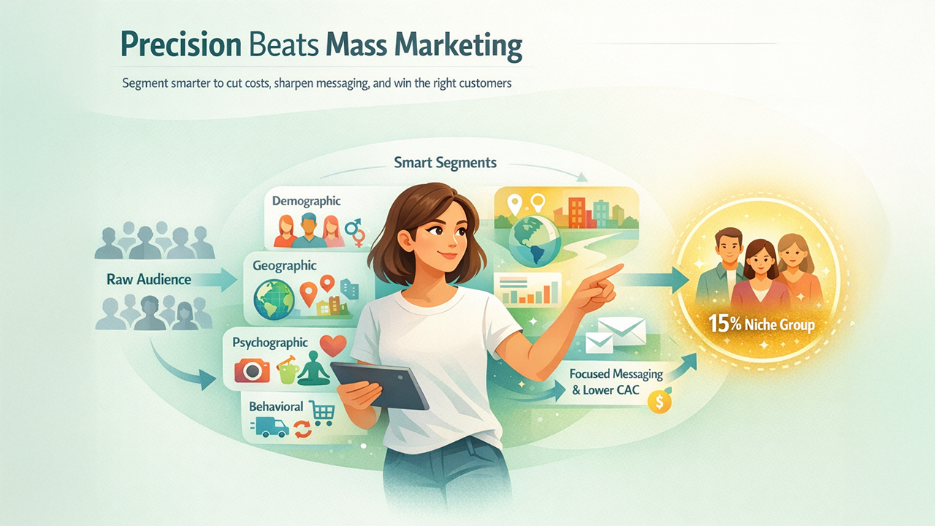
Market segmentation is the starting point of carrying out processes of dividing a broad market into smaller segments, making them manageable. Customers belonging to one segment share similar need patterns, behavior, as well as reactions towards marketing campaigns.
Why Segmentation Matters
Think of environmentally sustainable bamboo toothbrushes. Although only 85% of the market may not value environmentally sustainable offerings, the remaining 15% look for environmentally sustainable alternatives. By catering only to the environmentally sustainable community, companies can actually cut down the cost of acquisition as well as form highly relevant messaging.
Common Segmentation Criteria
1. Demographic Segmentation: Age, sex, income, education, occupation, family size, marital status.
For example, Firefox appeals to young male viewers with "coolest things," whereas Moshi Monsters reaches parents interested in finding safe and educational environments for children.
2. Geographic Segmentation: The segmentation based on country, region, city, climate, and population density.
3. Example: Neiman Marcus expanded its delivery services from the USA to the UK, targeting upmarket international consumers.
4. Psychographic Segmentation: Preference in lifestyle, personality characteristics, values, attitudes, interests, hobbies
5. Example: A leading travel company segments its audience into six categories based on travel passions and lifestyle preferences.
6. Behavioral Segments: Purchase history, usage rates, brand loyalty, benefit sought, buying frequency, and price sensitivity.
7. Example: Parcelmonkey.co.uk operates targeting various behavioral segments for same-day, next-day, and worldwide delivery.
Customer Data Platforms (CDP) today assist in amalgamating data from different interaction channels, such as sales, services, marketing, and social media, and websites, thus increasing the efficiency of segmentation.
Mastering Market Targeting

To create more meaningful market segments, firms also have to identify segments for their marketing attention. This practice decides where firms spend their scarce resources.
Five Critical Targeting Criteria
- Size of the Segment: Target market segments should have enough prospective customers to merit marketing efforts.
- Measurable Differences: There must be identifiable and measurable distinctions between the groups so as not to recreate the wheel.
- Accessibility: Target markets should be accessible via the means and channels of marketing.
- Profitability Potential: Calculate the potential profitability of serving each segment relative to acquisition expenses.
- Different Benefits: Different segments may have different benefits from your product or service.
Targeting Example
Take a plant-based milk alternative brand, for instance, which caters to not only people with high purchasing power who prefer this alternative as a lifestyle (comprising 60% of the vegan market) but also lactose-intolerant people (comprising 80% of the brand's target group).
Although the second segment seems to have a bigger size, the first one is more desirable due to the existence of higher disposable income, more active searching, lower acquisition costs, and better possibilities of brand loyalty. This example illustrates how the desirability of a segment goes beyond its size.
Strategic Brand Positioning
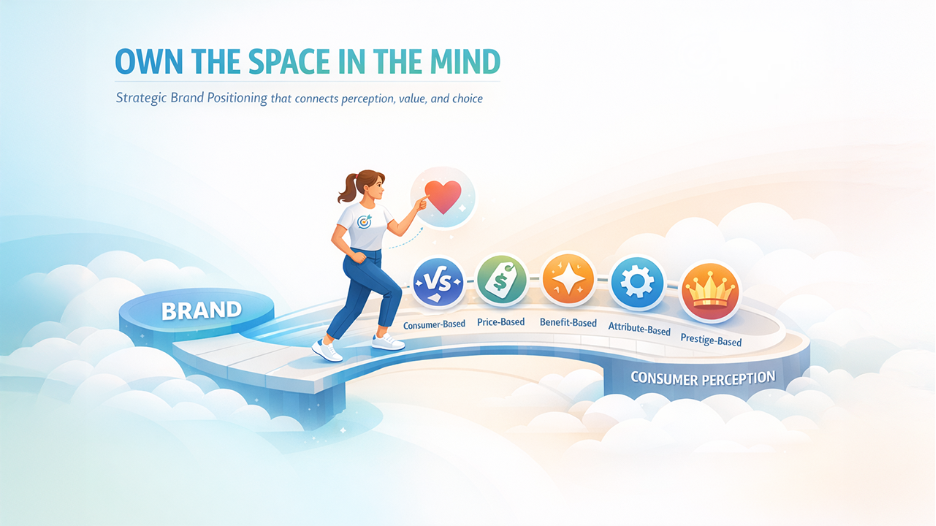
When it comes to positioning, it can be described as the “bridge” connecting your product with its target audience. In contrast to these other concepts, positioning is more focused on consumers’ perceptions of products than anything else.
Core Positioning Strategies
Competitor-Based Positioning: Directly comparing offerings against competitors to highlight advantages.
Consumer-Based Positioning: Aligning products with specific customer needs and preferences.
Price-Based Positioning: This involves emphasizing the value for money or quality for a price.
Benefit-Based Positioning: Emphasizing the benefits for the customer in opting for your product.
Attribute-Based Positioning: Focusing on distinct product attributes.
Prestige Positioning by Status: Where status is used as core value proposition.
Making Positioning Maps
The positioning maps give a visual impression of the competition landscape and act as a tool that aids a business in filling market gaps. The positioning maps have the competitor brands plotted along two dimensions that encompass different purchase factors. For instance, if a business is operating in the automobile industry, it would plot the brands against the factors of price, ranging from economy to luxury cars, and size,87 ranging from compact cars to large cars.
Real-World STP Marketing Success Stories
McDonald's
McDonald's divides markets on demographics (families and young adults), psychographics (scenic routes consumer), and behavior (loyal fast food consumer). They primarily market to families with children, positioning themselves as affordable and accessible family dining with consistent quality. Their ability to adjust menus geographically shows strong market positioning.
Apple
Apple divides their audience of upmarket, design-driven, and creative individuals. They appeal to those who value design excellence, targeting them as a premium quality product. They successfully attain just that, resulting in sector-best profit margins and loyalty.
Coca-Cola
Coca-Cola employs mass market segmentation with variant-specific targeting. Classic Coke markets to the general public, as do Diet Coke and Coke Zero, addressing health-conscious consumers. The positioning strategy of the brands focuses on happiness, togetherness, and relevance. This positioning has led to the global market dominance of the brands.
Implementing STP Marketing: Step-by-Step
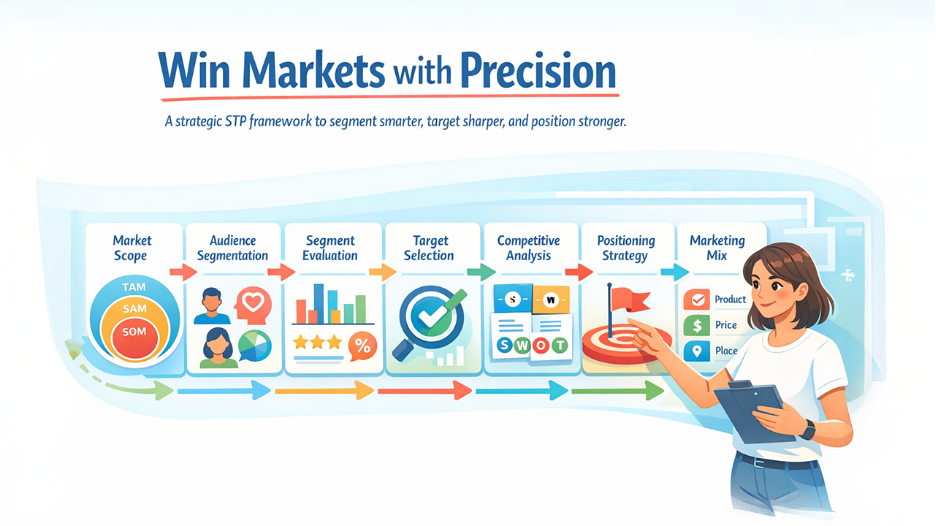
Step 1: Define Your Market Scope
Clarify three market definitions:
Total Available Market (TAM): Complete market demand for your product category
Serviceable Available Market (SAM): Portion of TAM your product can serve
Serviceable Obtainable Market (SOM): Realistic market share you can capture
Step 2: Segment Your Audience
Use layered variables of segmentation that take in demographic, geographic, psychographic, and behavioral variables. Leverage data platforms that enable the aggregation of insights from customer touchpoints.
Step 3: Evaluate Segment Attractiveness
Each bucket should be analyzed in light of market size, growth, competitive strength, customer acquistion cost, margin, and alignment.
Step 4: Target Segments Selection
Select those segments for which the strategy furnishes the best fit. This involves looking at resource intensity, serving the segment better than rivals, long-run growth prospects, and brand identity.
Step 5: Conduct Competitive Analysis
Carry out comprehensive research of competitors in the areas of SWOT analysis, product capability comparison, price positioning analysis, as well as market positioning exercises.
Step 6: Develop Positioning Strategy
Create a clear positioning statement addressing target audience definition, product category context, key point of difference, primary benefit, and supporting evidence.
Step 7: Build Your Marketing Mix
The four P’s of a Marketing Mix are:
Product - The Quality, Features, Services & Design of a Product, and its Competitive Advantages
Price - Pricing Strategy, Discounts and Payment Terms that Match the Perceived Value of the Product
Place - Distribution Channels, Inventory Management and Accessibility of the Product
Promotion - Marketing Campaigns, Advertising, Creating Content Strategies, and Selling Techniques
Benefits of STP Marketing
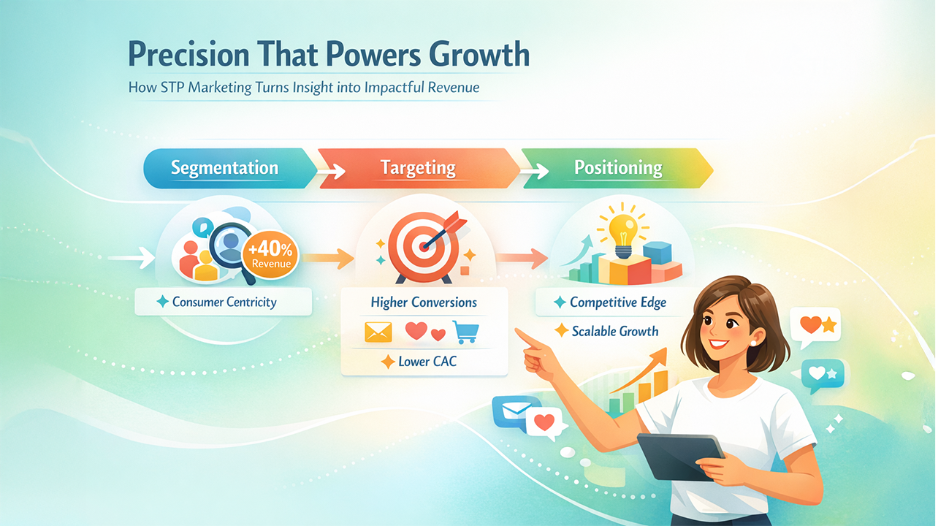
Multiple strategic advantages are offered by STP marketing: “Consumer centricity” helps to develop and communicate with customers in a relevant and appealing manner. Efficient marketing helps to reduce customer acquisition costs and increase conversion rates. The McKinsey study states that companies that excel at personalization can get 40% more revenue than others.
Improved competitive positioning enables businesses to distinguish themselves from competition and carve niche positions in the market. Greater engagement drives more email openings, more social media interactions, and higher conversions on the company websites. Enhanced product development ensures that innovation and focus address the key differentiators that matter most to customers, and scalable growth strategy ensures that growth occurs based on well-designed market expansion ideas.
Digital Marketing and STP
Digital media has transformed the way STP marketing is put into practice. Search intent targeting makes it possible to harvest high intentions using the right keywords. Social media has robust targeting options that include interest-based prospecting and demographic targeting. Email targeting allows behavioral triggers and dynamic content targeting. Website targeting varies experiences depending on the type of visitors and their online behavior. Other technologies include lead scoring and automatic segmentation in marketing automation.
When combined with Performance Marketing strategies, STP becomes even more powerful, as businesses can continuously optimize their campaigns based on real-time data and measurable outcomes. This data-driven approach ensures that every marketing dollar is spent efficiently on the segments that deliver the highest return on investment.
Measuring Success of STP
Tracking segmentation effectiveness based on distinctiveness scores and temporal stability. Analyze targeting effectiveness based on measures of customer acquisition cost segmented by customer type and conversion rates, and overall returns on investment for marketing campaigns. Testing positioning effectiveness based on measures of awareness, perceptual studies, and distinctiveness ratings. Tracking overall business effectiveness based on measures of revenue growth rate, market expansion, and profit expansion.
Read also: Top 10 Performance Marketing Tools You Must Know
Conclusion
STP marketing is much more than theoretical concepts. In fact, it is a pragmatic and proven approach that can enable businesses and companies to compete effectively in their markets. The key to success with STP marketing is to know your customers, to choose to specialize in services where you provide greater value to your customers, and to differentiate on areas that are truly important to your customers.
When it comes to the launching of new products or the entrance of new markets as well as the revitalizing of existing business operations, the STP model serves as a decision-making tool. Keep it small; test the hypotheses in the process of shaping the decisions through the outcomes of learning. A successful business isn’t one with the largest budget; the one which knows the customer the best.
Frequently Asked Questions
Q1. How does STP marketing differ from traditional marketing approaches?
A1. Traditional marketing involves mass marketing, where marketing is performed on a wide audience using general messages. STP marketing involves a concentrated marketing strategy of segmenting specific markets according to attractive targets and positioning. The strategy involves reaching a particular audience using specific messages.
Q2. What tools help businesses implement STP marketing strategies effectively?
A2. Contemporary businesses employ customer data platforms to provide an overall customer perspective, marketing automation platforms for delivering focused marketing campaigns, analytics platforms for monitoring performance, CRM platforms for managing customers, and survey platforms for market research. These platforms allow accurate customer targeting based on data analysis.
Q3. How frequently should firms review an STP marketing plan?
A3. Every year, companies should have a thorough review of their STP, as well as quarterly progress checks. But in the case of companies operating in dynamically developing fields, it may be required that they receive updates more often. Trigger events such as substantial competitive actions or deviations in their performance can trigger an urgent re-evaluation.
Q4. Can small companies with small budgets do effective STP marketing?
A4. Definitely. Small businesses are mostly where STP marketing has an application because targeted marketing avoids resource dumping. Start by identifying a high-potential segment and then restrict marketing communication for small businesses. Online marketing tools make such marketing efficient for a low-budget small business.
Q5. What mistakes should businesses avoid when implementing STP marketing?
A5. Some pitfalls to avoid when carrying out STP include the creation of too many segments to maintain focus, the basis of segment selection based on the total market, positioning inconsistencies, the failure of assumption tests, and the treatment of STP as an event rather than on-going.
Respond to this article with emojis