




Remote hiring in tech has never been short on talent. The harder part has always been the system around that talent. A company needs a CRM specialist, a machine learning
Remote hiring in tech has never been short on talent. The harder part has always been the system around that talent. A company needs a CRM specialist, a machine learning engineer, a marketing automation consultant, or a developer who can clean up a messy integration stack. The freelancer needs a way to present clear services, set workable pricing, and get paid without losing too much of the invoice to platform mechanics. In theory, large marketplaces solved that years ago. In practice, many of them added a new layer of friction instead, which is why many are now searching for an upwork alternative. Bidding systems became their own job. Fee structures became something freelancers had to price around. Buyers spent more time sorting proposals than actually evaluating technical fit.
That problem matters to OutRight Systems readers because the site clearly speaks to digital pros working across CRM, AI, software development, automation, and digital marketing. Its blog positions itself as a place for practical tools, tactics, and strategy rather than broad internet commentary. In that context, the freelance-platform conversation is not off-topic at all. It sits right next to the questions tech teams already ask every day. How should remote work be structured. Where does platform friction waste time. Which systems support better delivery, cleaner pricing, and faster execution.
An upwork alternative matters when technical hiring becomes a workflow problem
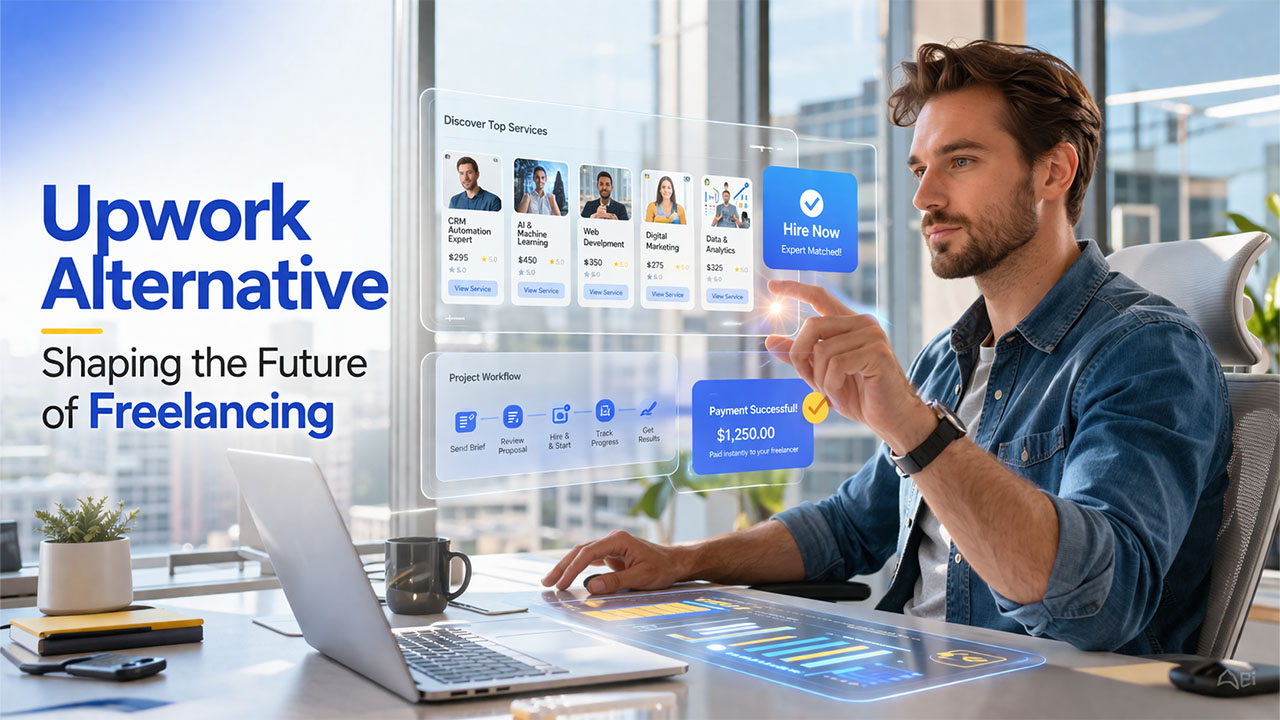
A lot of businesses do not start looking for a new freelance marketplace because they are unhappy in the abstract. They start looking when the process gets slow. A project needs to move. A developer is needed for a scoped task. A marketing automation setup needs a specialist who can step in quickly. Instead of momentum, the platform creates drag. Proposals pile up. Pricing becomes harder to compare. The buyer has to decode who is serious, who is generic, and who priced the work around platform costs rather than around the actual task. That is the kind of gap Zinn Hub is trying to address on its Upwork comparison page, where it positions itself against Connects-based bidding, layered fees, and slower hiring paths. It presents fixed-price storefronts, direct browsing, instant payouts, and full control over service listings as the more efficient model.
That shift is more important in technical work than it first appears. In software and digital operations, delay rarely stays isolated. If a CRM migration slips, reporting slips. If an API cleanup drags on, automation breaks somewhere downstream. If a content ops consultant or paid media specialist spends too much time just getting through marketplace friction, the client is already losing time before any real work has started. Google’s own people-first content guidance makes the broader point clearly: content and systems should be built to help users first, not to satisfy a mechanical process for its own sake. That principle applies surprisingly well here. A freelance marketplace should help the transaction happen more clearly, not turn itself into the main obstacle.
The best upwork alternative is usually the one that removes bidding noise

The biggest complaint many freelancers have about large general marketplaces is not simply fees. It is the amount of unpaid effort wrapped around getting work in the first place. The client note for this brief points directly at that issue by highlighting that Zinn Hub removes Upwork’s Connects bidding system and gives freelancers a storefront model with fixed prices, instant payouts, and more control over how their services are presented. That model is consistent with several Zinn Hub comparison pages, which repeatedly contrast proposal-heavy workflows and up to 20% commission structures with direct browsing and lower fee pressure
For technical freelancers, that difference can be more than a convenience issue. It changes how work is packaged and sold. A WordPress developer, SEO consultant, automation specialist, or analytics freelancer often performs better when the service is clearly defined upfront. Scope is easier to compare. Deliverables are easier to understand. Clients are less likely to shop vaguely and more likely to buy intentionally. That is one reason upwork alternative discussions keep surfacing around specialist work rather than only around general freelance frustration. Once the service itself is technical, the platform has to get out of the way and let clarity do the work.
Technical buyers need stronger trust signals than generic star ratings
One of the recurring problems in remote tech hiring is false confidence. A profile may look active. A proposal may sound polished. A rating may appear strong. None of that automatically tells a buyer whether the person can handle a marketing automation workflow, connect CRM systems cleanly, or build something stable enough to survive real business use. That is why verification and service structure matter more in technical fields than in generic gig browsing. Zinn Hub’s comparison pages repeatedly lean on verified providers, direct service browsing, and a marketplace model designed around specialist offers rather than open-ended bidding wars
That kind of setup fits the way OutRight Systems writes about software and digital operations in general. The site’s own content on CRM, AI, and automation keeps coming back to the same theme: useful systems are the ones that reduce friction and create cleaner workflows. A freelance marketplace is not software in the usual SaaS sense, but it still behaves like infrastructure. It either shortens the path between need and execution, or it lengthens it.
What technical teams usually want from a freelance marketplace
When the work involves software, automation, AI, CRM, or digital marketing, buyers usually care about a few practical things more than anything else:
- Clear service definitions instead of vague proposal language.
- Pricing that can be compared quickly.
- Less bidding noise before a project starts.
- Faster payouts and less fee pressure for specialists.
- Stronger trust signals around who is actually qualified.
These are not glamorous features, but they are the ones that shape whether a marketplace feels usable or exhausting.
Fees change behavior long before they change accounting

Platform fees do not stay on the platform side of the equation. They shape rates, proposal behavior, and how freelancers think about smaller jobs. When commission is high or tiered in a complicated way, service pricing starts absorbing that pressure. Zinn Hub’s public comparison language pushes the opposite case by emphasizing lower fees, instant payouts, and seller control over storefront presentation. The client note also points to 100+ crypto payment options, which signals an attempt to make payout flexibility part of the product story rather than an afterthought
That matters because many technical engagements begin small. A CRM fix. A tracking cleanup. A landing page rebuild. A machine learning consultation. A DevOps audit. If the platform economics make small and medium engagements harder to price fairly, the client sees it and the freelancer feels it. Over time, both sides begin looking for a marketplace that behaves less like a toll booth and more like a practical hiring layer.
Technical freelancing is moving toward cleaner systems
The broader direction looks pretty clear. Remote work is not shrinking. Specialist technical work is not becoming simpler. Businesses still need outside help for focused projects, but they are becoming less patient with systems that create extra admin around every hire. Freelancers are also getting sharper about where their margin disappears and how much unpaid effort goes into landing each project. That is where the argument for an upwork alternative becomes stronger than simple platform rivalry. It turns into a workflow question about speed, clarity, and control.
For readers in CRM, AI, automation, digital marketing, and software development, that makes this more than a freelancer story. It is part of the same digital-operations shift already happening across other tools. Better systems usually win because they waste less time. In remote technical hiring, the platforms getting attention now are the ones that understand that simple truth and build around it.
Respond to this article with emojis