
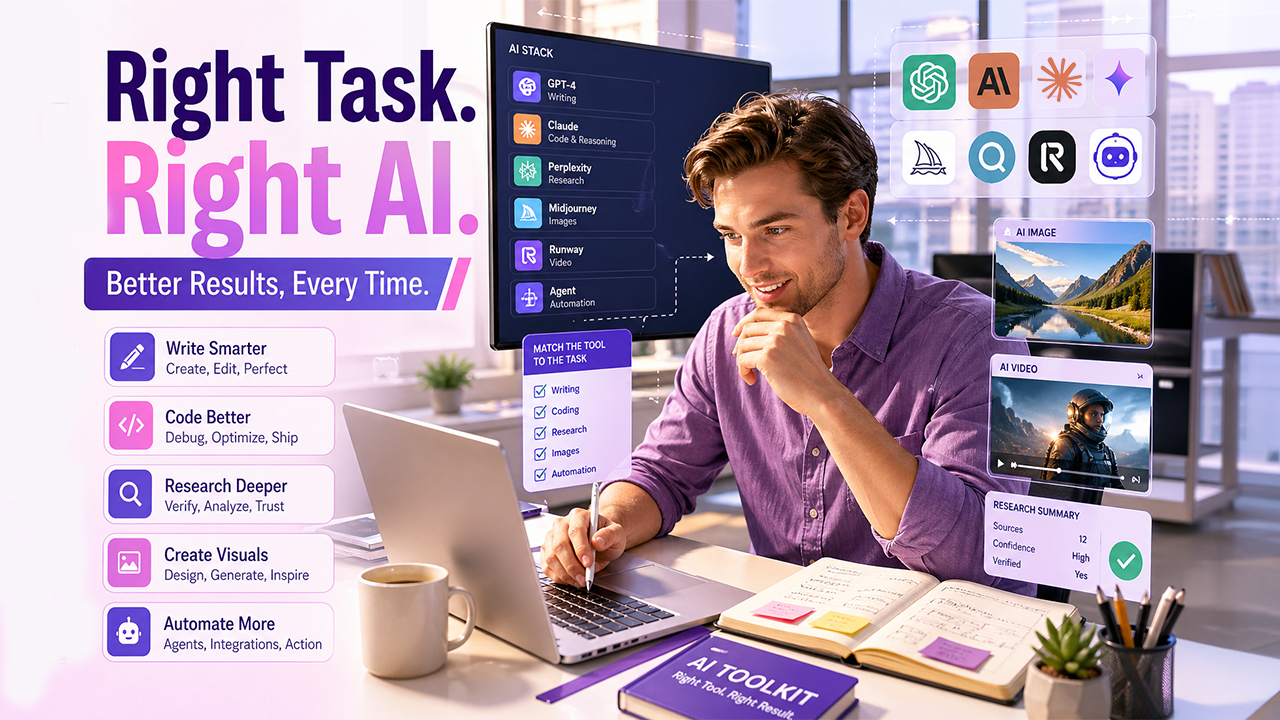
Stop Asking “What is the Best AI?” – Use the Right Tool for the Job
Stop chasing the “best AI” and learn how to choose the right AI tool for each job. Discover how to match AI models for writing, coding, research, creativity, and automation to boost productivity.
Most folks chase the wrong answer. They ask, “What is the best AI?” That misses the point. The real question is this: What job do you need done?
Think of it like this. Using the wrong AI for a task is like grabbing a spoon to slice steak. Sure, you can hack away. But it is slow, messy, and frustrating. AI is not one magic box. It is a set of tools. Some handle writing. Others tackle code, images, research, or automation. Pick the right one, and you save time. Use the wrong one, and you waste effort.
The Fundamental Shift: From Model Preference to Task Necessity
You must nail the task first. That is what should guide your choice. General chatbots often struggle with deep technical work. Image generators cannot write structured emails. Each tool has strengths and limits.
AI works like a toolbox in your garage. A hammer drives nails. A screwdriver turns screws. Grab the wrong one, and nothing works properly. The same applies here. Define your goal first. Then explore the tools that match it. This approach cuts confusion and helps you move faster in a crowded AI space.
Understanding AI as Pattern Machines
AI models learn from massive amounts of data—text, code, images, and more. They do not “think” in the human sense. They identify patterns and predict what comes next.
A writing model predicts words. A coding model predicts logic. An image model predicts visuals. That is the foundation. No magic—just advanced pattern recognition.
Understanding this changes how you use AI. You stop expecting human-like reasoning and start recognizing where each model performs best. That clarity alone can improve your results significantly.
The Everyday Drivers: General Purpose AI Models
Daily tasks need quick and flexible helpers. General-purpose AI models fit this role well. They are designed for speed and versatility.
Use them for drafting emails, brainstorming ideas, summarizing documents, or creating quick plans. They are easy to use and require little setup. While they may not be perfect specialists, they are highly effective for routine work.
These tools help you move faster by reducing the time spent on repetitive tasks. Instead of starting from scratch, you begin with a strong draft or structure.
Core Capabilities and Use Cases
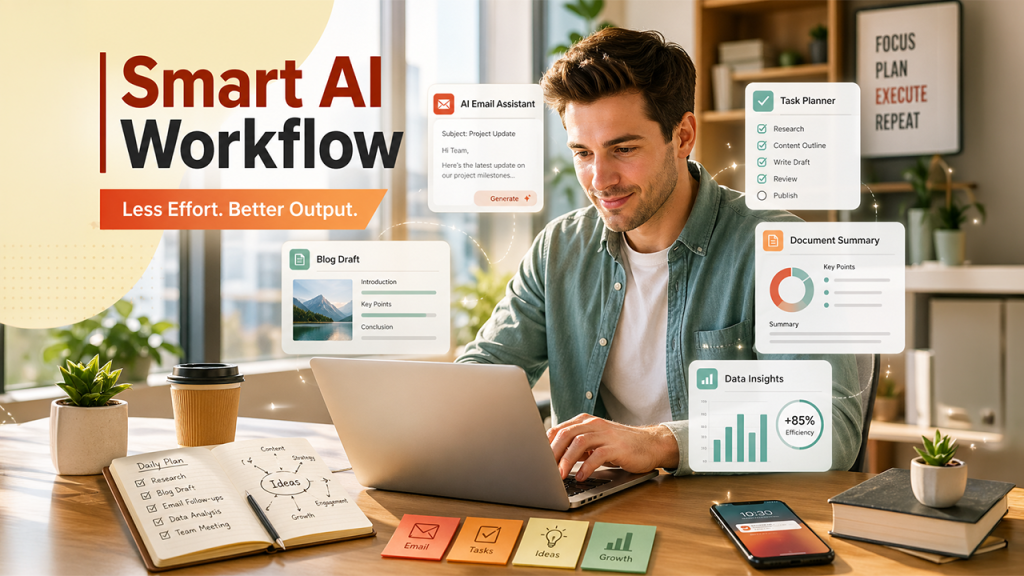
General-purpose AI models are useful for:
- Writing emails or blog drafts
- Brainstorming ideas and content angles
- Summarizing long documents
- Creating simple plans and notes
- Performing basic data checks
For example, you can draft replies in seconds, outline a meeting agenda quickly, or turn messy notes into structured content. This frees your time for more important work.
Key Examples: GPT-4 and Gemini 1.5 Pro
Some models stand out as strong general assistants.
GPT-4 is known for smooth writing and creative output. It is great for storytelling, rewriting content, and generating polished text.
Gemini 1.5 Pro is strong for quick reasoning, document handling, and workflow integration. It performs well across everyday productivity tasks.
The key takeaway is not which one is better overall, but which one fits your task. A creative writing task may favor GPT-4, while structured or workflow-based tasks may suit Gemini better.
The Specialists: AI for Deep Analysis and Complex Logic
Some tasks require more than general capability—complex coding, technical writing, and deep analysis demand specialized models.
These tools are built for precision. They handle step-by-step reasoning, identify errors, and maintain consistency across longer tasks. When accuracy matters, specialists outperform general models.
When to Deploy High-Performance Models (e.g., Claude Opus)
High-performance models are ideal for demanding tasks.
Claude Opus, for example, excels at code debugging, long-form reasoning, and structured analysis. It can walk through complex problems and provide detailed solutions.
If you are building software, writing technical documents, or conducting deep research, this level of AI can save significant time and effort.
Workflow Integration: AI Living Where You Work
AI becomes even more powerful when it integrates into your existing workflow.
Instead of switching between tools, you can use AI directly within email, documents, or spreadsheets. This allows you to summarize files, generate reports, and automate tasks without breaking your flow.
The result is a smoother, faster working experience.
Specialized AI Categories: Beyond Text Generation
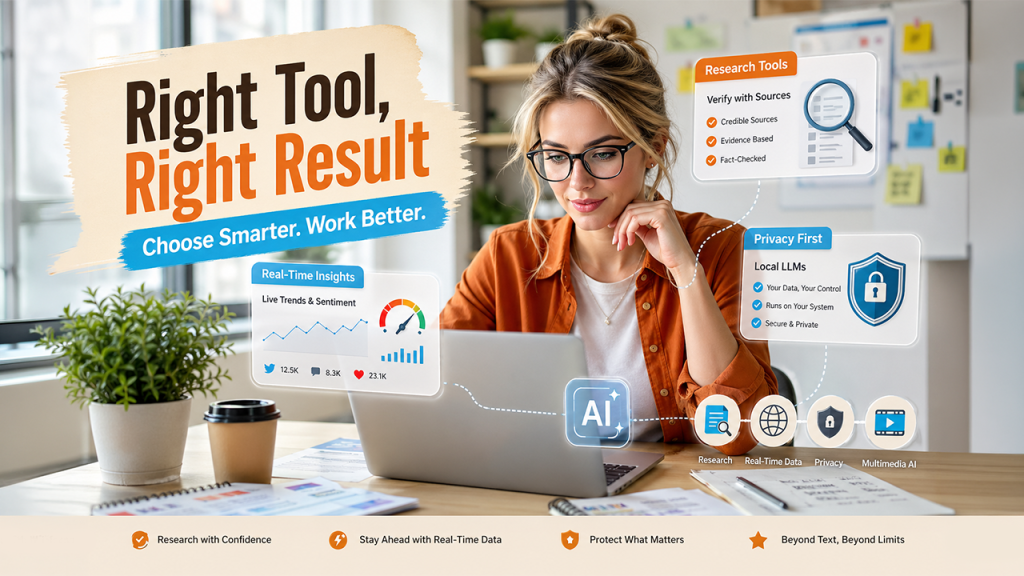
AI is not limited to text. There are tools for research, real-time data, privacy-focused use, and creative production.
Choosing the right category matters. Use research tools for accuracy. Use real-time tools for current trends. Use local models for privacy. Use creative tools for visuals and media.
This targeted approach delivers better outcomes than relying on a single all-in-one tool.
Research Tools: Prioritizing Verification Over Confidence
Related walkthrough
How to Choose the Right AI Tool (Stop Guessing)
Some AI tools sound confident but may produce incorrect information. Research-focused tools solve this by providing sources and verifiable data.
They are essential for blogging, reporting, and analysis where accuracy matters. Instead of guessing, they help you build content backed by evidence.
Real-Time Information and Public Sentiment (e.g., Grok)
When you need current information, real-time AI tools are the right choice.
They track live trends, news, and public sentiment. This makes them useful for social media strategies, trend analysis, and timely content creation.
Using up-to-date data gives you an advantage over relying on outdated information.
Ownership, Privacy, and Local LLMs (e.g., Llama Models)
For users who prioritize privacy, local AI models offer full control.
These models run on your own system instead of the cloud. This means your data stays private. They are ideal for sensitive work, internal processes, and development environments.
While they may require more setup, they provide unmatched control and security.
Creative AI: Mastering Visuals, Video, and Audio
AI is transforming creative work. From images to video and music, it enables faster and more scalable content creation.
This is especially useful for creators and marketers who need high-quality output without long production cycles.
Image Generation: Purpose-Driven Visuals
Image generation tools serve different purposes.
Some focus on artistic style. Others prioritize accuracy and branding. Choosing the right tool depends on your goal.
Use them for thumbnails, advertisements, or brand visuals. A clear purpose leads to better results.
The Frontier of Video and Music Generation
Video and music AI tools are rapidly evolving.
They can turn text into video clips or generate background music in minutes. This reduces production time and allows creators to experiment quickly.
For content creators, this is a major advantage.
The Future Stack: Agents and Building Your AI Arsenal
AI is moving beyond conversation into action.
Agents can perform tasks, browse websites, and complete workflows. This represents a shift from assistance to execution.
Building an AI stack that combines different tools is the smartest strategy going forward.
From Chat to Agents: AI That Executes
Agents can chain multiple steps together.
They open pages, gather data, fill forms, and complete tasks automatically. This makes them ideal for repetitive or process-driven work.
Instead of just answering questions, they help you get things done.
The Optimal Strategy: Building a Purpose-Driven AI Stack
The best approach is to build a small, focused AI stack.
Use one tool for writing, another for logic, another for research, and another for creative work. Keep it simple and adaptable.
This method is more effective than trying to rely on a single “best” AI.
Conclusion: Your Next Question Determines Your Success
AI is not about finding a single winner. It is about fit. The most useful question is never “What is the best AI?” The real question is always, “What job do I need done?”
That shift makes your choices clearer and your workflow smarter. General tools handle everyday work. Specialists handle complexity. Creative tools handle visuals and media. Research tools handle verification. Agents handle execution.
So the next time you reach for AI, do not ask for the best one. Ask for the right one. That is where the real advantage begins.