

Deep Work in the Age of Constant Distraction
Master deep work with 5 powerful secrets to beat distraction, boost focus, and achieve real productivity in a fast-paced digital world.
Modern life is built around interruption. Notifications arrive every few minutes, inboxes refill before lunch, and most people move between tasks so often that concentration feels almost old-fashioned. Many workers begin the day with good intentions, only to discover that their attention has already been divided into tiny pieces by meetings, messages, and endless scrolling. In this environment, focus is no longer just a personal strength. It is a professional advantage.
The ability to work with full concentration has become rare because distraction is now part of the design of everyday life. Many digital tools are useful, but they also compete aggressively for attention. A person may sit down to complete one meaningful task and, within minutes, find themselves checking updates, answering non-urgent messages, or switching to easier work that feels productive but creates little real progress. Over time, this pattern weakens both efficiency and confidence.
Deep work offers a different path. It is the practice of giving full attention to one demanding task for a meaningful stretch of time. This kind of work allows people to solve harder problems, produce better ideas, and finish important projects with greater clarity. In a distracted world, focused effort stands out because it produces results that fragmented attention simply cannot match.
The Difference Between Being Busy and Being Effective
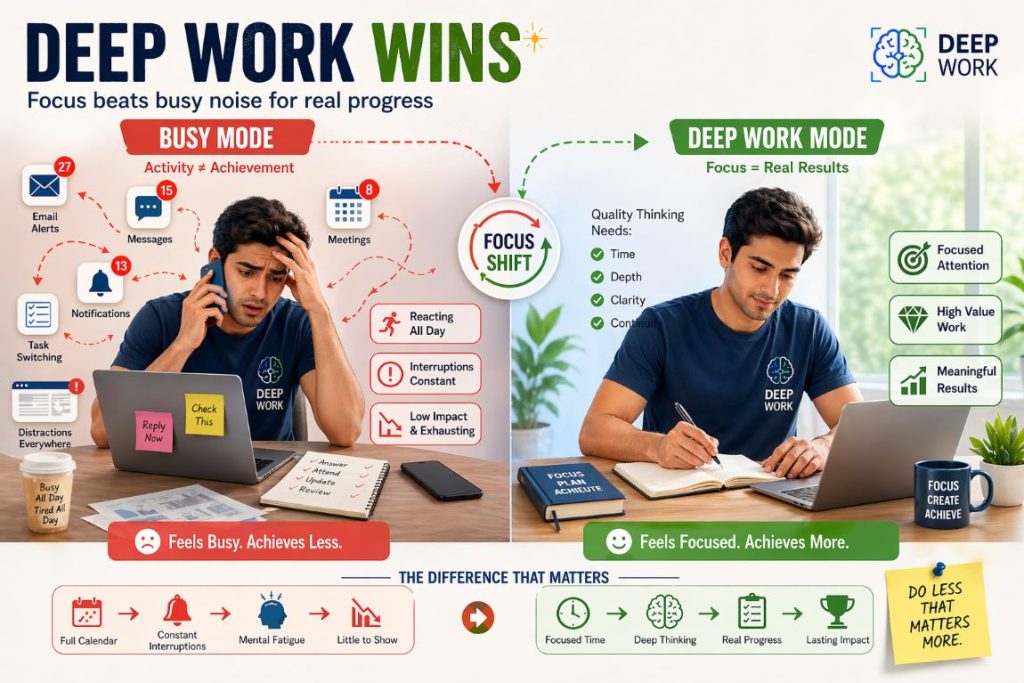
Many people confuse activity with achievement. A full calendar, rapid replies, and constant motion can create the impression of productivity. Yet being busy does not always mean moving forward. In many workplaces, people spend entire days reacting instead of creating. They answer, attend, update, and review, but reach the end of the day without completing the work that actually matters most.
Deep work helps separate true effectiveness from surface-level busyness. When someone gives real concentration to a high-value task, they often produce more in two focused hours than in a full day of distracted effort. This is because quality thinking needs mental continuity. Writing, designing, planning, analyzing, and problem-solving all improve when the mind has time to settle into the task instead of being pulled away every few minutes.
This shift also changes how work feels. Shallow busyness often creates fatigue without satisfaction. A person may feel exhausted and still wonder what they actually accomplished. Focused work is different. It demands effort, but it usually leads to progress that can be seen and measured. That sense of movement creates motivation, which in turn makes future work easier to begin.
Why Attention Shapes the Quality of Ideas

Attention is not only about speed. It also affects depth. Important ideas usually need time to develop. Strong solutions rarely appear in rushed moments between interruptions. They often emerge after a person has stayed with a problem long enough to notice patterns, test possibilities, and move beyond the first obvious answer. This process requires patience, and patience depends on attention.
Creative work especially depends on this. Writers need enough uninterrupted time to discover the true direction of a piece. Strategists need quiet thinking to connect facts into a useful plan. Students need sustained effort to understand difficult material instead of memorizing it temporarily. Even routine work improves when it is done carefully rather than mechanically. Attention changes not just how long a task takes, but how good the final result becomes. Strong systems also support better thinking, and learning to improve digital workflows can help maintain uninterrupted focus during important tasks.
This is one reason many successful professionals protect their concentration so deliberately. They understand that their best value often comes from thinking clearly, not merely responding quickly. They create conditions that support long stretches of work, even if that means stepping away from noise, turning off alerts, or setting stronger boundaries around availability. They know that ideas need space in order to grow.
Building Better Work Habits in a Distracted World
Related walkthrough
Robots Are Learning to Work Like Humans

Deep focus does not happen by accident. It usually requires structure. People who want to work with greater concentration often need to redesign their routines rather than rely on willpower alone. One of the simplest changes is scheduling focused blocks of time before the day becomes fragmented. Early hours are especially useful for demanding work because energy is often higher and interruptions are fewer.
Physical and digital environments also matter. A cluttered desk, an open inbox, and a constantly buzzing phone all send the mind in different directions. Reducing these signals makes it easier to stay present. Some people use website blockers, silence notifications, or keep a separate notebook for distracting thoughts that arise during work. Others set clear start and stop times for focused sessions so the task feels defined rather than endless.
Measurement can help as well, but it should support focus rather than replace it. A writer tracking progress with a word counter may feel encouraged by visible momentum, yet the larger goal should remain the quality and completion of meaningful work. Tools are useful when they reinforce intention. They become harmful when they distract from the purpose of the task itself.
The Long-Term Value of Protecting Your Mind
The benefits of deep work extend beyond a single project. Over time, the habit of concentration changes what a person is capable of producing. Skills improve faster, thinking becomes sharper, and difficult tasks feel less intimidating. A person who regularly practices focused effort develops trust in their own ability to make progress without needing constant stimulation or external pressure.
There is also a psychological benefit. Distraction can create a restless mental state in which the mind becomes dependent on novelty. Focused work pushes in the opposite direction. It teaches patience, discipline, and endurance. These qualities are useful not just for professional success, but for personal stability. They help people feel less scattered and more in control of their time.
In the future, attention may become even more valuable than it is now. As technology grows more persuasive and information becomes more overwhelming, the ability to think deeply will continue to separate meaningful contributors from constant reactors. Those who can focus will not simply get more done. They will often produce the work that matters most.
Choosing Depth Over Noise
Deep work is not a trend or a luxury. It is a practical response to a world designed to break attention apart. People who protect their focus are not avoiding reality. They are choosing to engage with it more deliberately. Instead of letting every message and interruption define the shape of their day, they decide what deserves real thought and sustained effort.
That choice has consequences. It leads to better work, clearer ideas, and stronger progress over time. It also creates a calmer relationship with productivity because success becomes tied to substance rather than motion. In an age full of noise, depth is powerful. The people who learn to protect it will continue to stand out, not because they do more at once, but because they do important things well.