





The durable medical equipment industry has always been a David-versus-Goliath story, but 2026 is proving that the little guys can win - if they're smart about it. Small and mid-sized
The durable medical equipment industry has always been a David-versus-Goliath story, but 2026 is proving that the little guys can win - if they're smart about it. Small and mid-sized providers are carving out profitable niches while billion-dollar competitors struggle with bloated operations. The secret? They're using DME software strategically, not just as a billing tool, but as their competitive advantage in patient care, inventory management, and regulatory compliance.
Recent data shows independent DME providers who adopted integrated management systems saw average revenue increases of 23% over the past 18 months, compared to just 8% for those still relying on spreadsheets and legacy systems. This isn't about having the fanciest technology - it's about working smarter in an industry where margins are razor-thin and Medicare audits can sink a business overnight.
Why Small Providers Have the Upper Hand Right Now
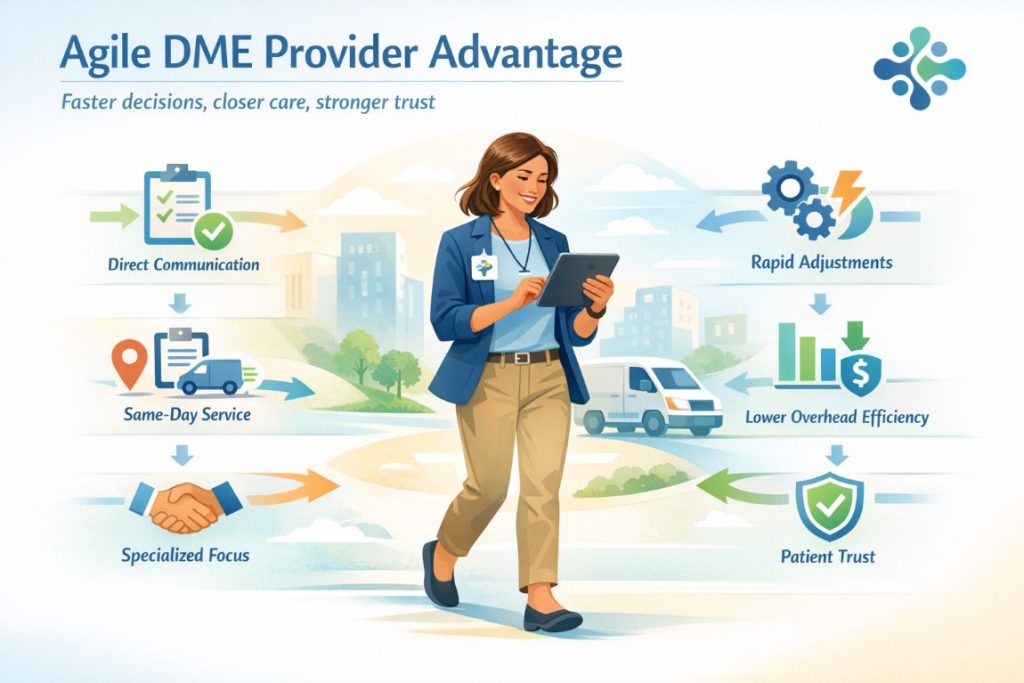
Large DME companies are dealing with serious problems that smaller operations simply don't face. Corporate bureaucracy slows decision-making to a crawl. When Medicare changes a billing code or introduces new documentation requirements, a small provider can adapt in days. Their corporate competitor? That might take months of committee meetings and system updates.
Key advantages small providers leverage:
- Direct relationships with local physicians and case managers who actually know their name
- Ability to offer same-day delivery in their service area without complex logistics
- Faster pivot to high-margin specialty equipment when opportunities arise
- Lower overhead means they can afford to be more selective about referrals
- Personal accountability that builds trust with patients and referral sources
The statistics back this up. A 2025 study of 400 DME providers found that companies with fewer than 50 employees had patient satisfaction scores averaging 4.6 out of 5, compared to 3.9 for providers with over 200 employees. That gap translates directly into referrals and repeat business.
The Technology Equalizer
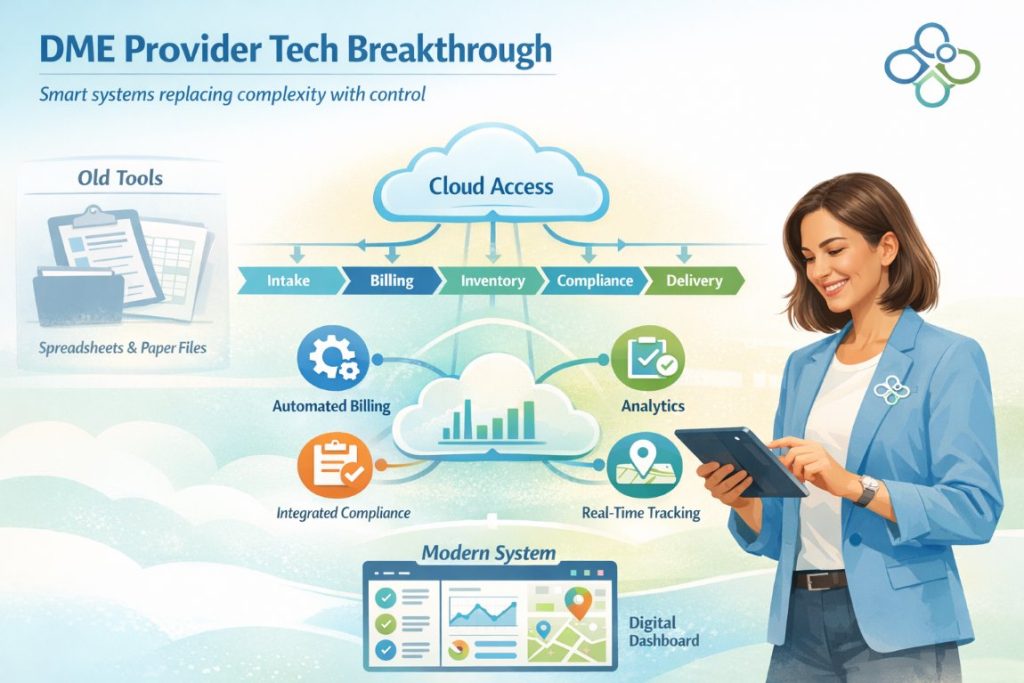
Here's where it gets interesting. Ten years ago, enterprise-level software was prohibitively expensive for small providers. You either paid six figures annually for a comprehensive system or cobbled together QuickBooks with Excel and hoped for the best during audits.
That's changed completely. Modern cloud-based platforms have eliminated the barrier to entry. A provider with ten employees now has access to the same caliber of inventory tracking, billing automation, and compliance documentation that used to require a dedicated IT department.
The key is choosing systems that actually fit how DME businesses operate. Around the middle of the market, you'll find options like Brightree software and similar platforms that handle everything from intake to collections. But smart providers don't just implement technology - they use it to do things their bigger competitors can't.
Real-World Wins: What's Actually Working
Let me give you a concrete example. A three-person DME provider in suburban Ohio started tracking which referral sources generated the most profitable orders, not just the most volume. They discovered that two small physician practices accounted for 60% of their margin, even though they represented only 30% of orders. They doubled down on those relationships with better communication and faster turnaround times. Revenue increased 41% in one year without adding a single employee.
Here's what successful small providers are doing differently:
- Specializing in one or two equipment categories instead of trying to stock everything
- Building automated follow-up systems for resupply items like CPAP supplies and diabetic testing strips. To remain competitive, many organizations are focusing on structured process design rather than adding disconnected tools. This shift toward well-designed operational frameworks is essential for maintaining consistency, scalability, and compliance.
- Using data to identify which insurance plans are actually profitable after factoring in claim denial rates
- Investing in patient education that reduces equipment returns and improves compliance
- Creating partnerships with other small providers to share expensive inventory items
The numbers tell the story. According to industry data, DME providers with fewer than 20 employees have an average claim denial rate of 6.2%, while providers with over 100 employees average 11.8%. Why? Smaller teams can review every claim before submission. Larger operations rely on automated processes that miss errors.
The Compliance Advantage Nobody Talks About
Medicare audits are terrifying for any DME provider, but small operations have a hidden advantage: documentation discipline. When you have three people handling intake instead of thirty, it's much easier to ensure every single order has the required physician signature, detailed medical necessity documentation, and proof of delivery.
Consider this comparison:
| Provider Size | Average Audit Payback (2025) | Documentation Error Rate |
| 1-10 employees | $8,300 | 3.1% |
| 11-50 employees | $22,700 | 5.8% |
| 51+ employees | $67,400 | 9.2% |
Those aren't just numbers - they represent the difference between a sustainable business and one that's constantly fighting to survive. Small providers who implement systematic documentation checks are essentially audit-proof.
Looking Ahead: Sustainability in an Uncertain Market
The DME industry faces ongoing challenges. Reimbursement rates continue their slow decline. Competitive bidding creates pricing pressure. Regulatory requirements keep expanding. But here's the paradox: these challenges actually favor smaller, more agile providers.
When Medicare adjusts reimbursement for CPAP supplies, a small provider can immediately calculate whether it makes sense to continue offering that product line. They can shift to cash-pay models, focus on different equipment categories, or adjust their service area. A large provider with established contracts, warehouse leases, and corporate overhead? They're stuck trying to optimize a losing proposition.
The future belongs to DME providers who understand that size isn't the goal - sustainability is. That means building systems that scale without adding complexity, maintaining the personal touch that generates referrals, and using technology to eliminate busy work rather than just digitizing inefficient processes. The giants aren't going anywhere, but they're leaving plenty of room for smart, focused competitors who know their market and serve it better than any national company ever could.
Respond to this article with emojis