
Top Tips for Saving Money on VPNs and Proxies
Save money on VPNs and Proxies with simple tips. Learn how to avoid hidden costs, choose the right plans, and find the best deals without overpaying.
Most people don’t start using VPNs and Proxies thinking about cost. They just need something that works. Privacy, access, maybe automation. That’s it.
Then after a while, the bills start stacking. One plan becomes two. Then you upgrade something because it feels necessary. At some point you stop tracking it properly, and that’s where things get messy.
What They Actually Do (Without Overcomplicating It)
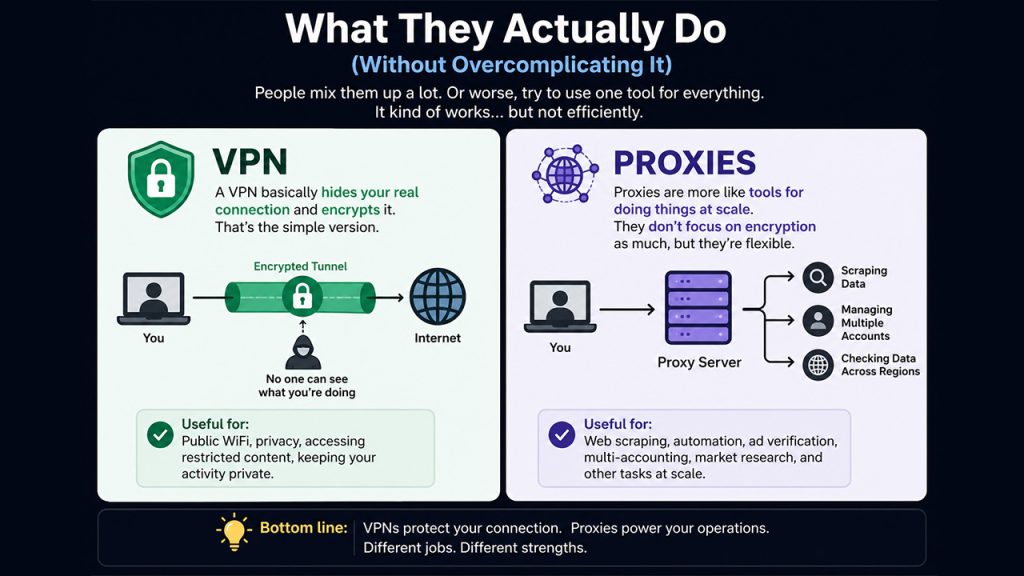
A VPN basically hides your real connection and encrypts it. That’s the simple version. Useful if you’re on public WiFi or just don’t want your activity exposed. Understanding Virtual Private Networks (VPN) also helps users see why they’re commonly used for privacy, secure browsing, and safer remote access.
Proxies are more like tools for doing things at scale. Scraping, running multiple accounts, checking data across regions. They don’t focus on encryption as much, but they’re flexible.
People mix them up a lot. Or worse, try to use one tool for everything. It kind of works… but not efficiently.
Why You End Up Paying More Than You Should
This part is where most people underestimate things.
Monthly plans feel harmless. You look at the price and think, okay, that’s fine. But stretch that over 12 months and suddenly it’s not that cheap anymore.
And then there’s usage. Especially with proxies. You start small, everything runs fine, then your needs grow. More requests, more bandwidth, more cost. It doesn’t jump all at once. It creeps.
Also, not everyone needs residential IPs. But they sound premium, so people go for them anyway. Sometimes you’re paying extra for something you don’t even fully use.
And yeah… renewals.
That first discount does its job really well. The next bill is usually where people realize what’s going on.
Cutting Costs Without Doing Anything Extreme
You don’t need some advanced strategy here. Most savings come from very basic decisions.
Longer plans, for example. People avoid them because of the upfront cost. But if you already know you’ll use the service, you’re just delaying a bigger total expense.
Another thing people skip is checking deals. Not obsessively, just quickly. Before you buy, look at something like ProxyCoupons. You’ll often find working discounts that aren’t shown on the main site.
Timing helps too, but only if you’re willing to wait a bit. Big sales usually offer better pricing. Not always, but often enough to matter.
And occasionally, discounts stack. It doesn’t always work, but when it does, the price drops more than expected.
About Free Options (They’re Not Really Free)
Free tools sound like a good starting point. And sometimes they are, for testing.
But long term, they come with trade-offs. Some log your data. Some show ads. A few go further than that—something often highlighted when discussing the Risks of Free VPNs.
Performance is also inconsistent. Slower speeds, random disconnects. If you’re doing anything important, it becomes annoying pretty fast.
So technically you’re saving money. But in practice, you’re paying in other ways.
Choosing a Provider Without Overthinking It
Related walkthrough
BIG YouTube Update 2027! New Monetization Features You Must Know

There are too many options out there. If you try to compare everything, you’ll just get stuck.
Focus on the basics. Speed matters. Stability matters. If those aren’t solid, nothing else really saves it.
Privacy policies are worth checking, but don’t overanalyze. If it clearly says no logs, good. If it’s vague, maybe skip it.
Location coverage depends on what you’re doing. More options usually help, especially for region-based tasks.
Reviews help, but don’t trust a single one. Look for patterns. That’s usually more reliable.
Mistakes That Keep Happening
People upgrade too early. That’s probably the most common one. Extra features look useful, but most of the time they’re not needed.
Lifetime deals look attractive too. One payment, no recurring cost. Sounds perfect. But many don’t hold up over time.
And then again, renewals. It keeps coming back because it’s easy to forget. You sign up once, and months later you’re paying more without noticing.
Using VPNs and Proxies Together (Without Wasting Money)
There are cases where using both makes sense. For example, keeping your connection secure with a VPN while using proxies for specific tasks.
But using both for the same thing doesn’t really add value. It just adds cost.
It’s better to keep things separate. VPN for privacy. Proxies for scale. Simple setup, fewer problems.
Deals That Look Good but Aren’t
Not every discount is worth trusting. Some are outdated. Some are just there to pull clicks.
It takes a minute to check. Compare it with the official price. If it feels off, it probably is.
Even with reliable deal platforms, it’s still worth double-checking. Saves you from making a bad call.
Conclusion
Saving money on VPNs and proxies isn’t about finding the absolute cheapest option. It’s about avoiding small mistakes that slowly increase your cost over time. Most people don’t notice where the extra money is going until it adds up. If you stay aware of how pricing works and keep things simple, you’ll spend less without really trying that hard.
Article rating
Was this article useful?
0.0 out of 5 from 0 ratings