
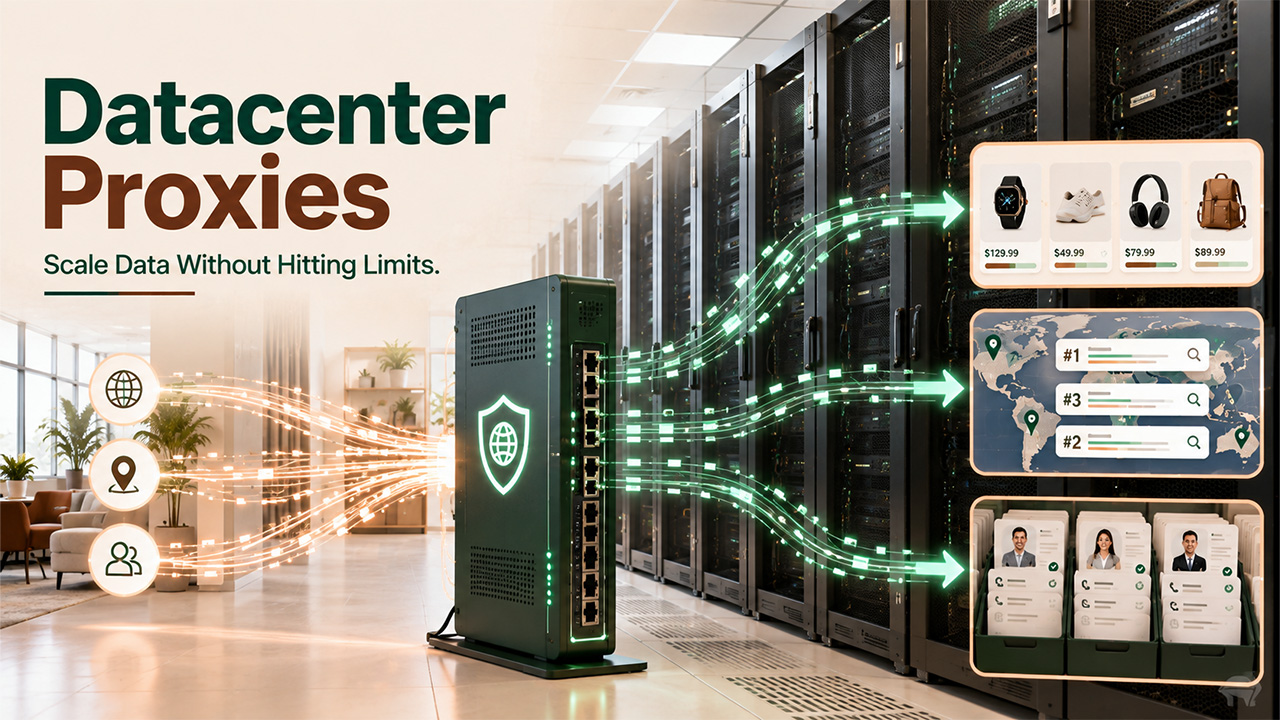
Datacenter Proxies: The Complete Guide to Web Scraping, SEO Monitoring, and CRM Data Enrichment
Learn what datacenter proxies are, how rotating and static IPs differ, and how businesses use them for web scraping, SEO monitoring, and CRM data enrichment.
Datacenter proxies keep data collection running smoothly for a lot of businesses. Think about scraping competitor prices, checking search rankings in different locations, or updating lead details in your CRM; all those automated tasks rely on proxies to get things done at scale. But sooner or later, businesses hit the usual roadblocks: strict rate limits, getting IPs banned, and dealing with geo-restrictions. Datacenter proxies exist to knock those walls down — at a speed and price point no other proxy type can match.
This comprehensive guide will walk you through what datacenter proxies are, the difference between rotating and static configurations, when to pick them over residential proxies, and how to use them in real business workflows such as SEO monitoring, web scraping, and CRM data enrichment.
What Are Datacenter Proxies?
Datacenter proxies use IP addresses from servers in big commercial data centers, not from home internet providers. So, when you send a request through one of these proxies, the website sees the datacenter’s IP; your own stays hidden. This lets you distribute your traffic across a bunch of different IPs, dodge those annoying per-IP rate limits, and collect public web data efficiently at scale.
Datacenter proxies deliver faster results and lowest latency because they use dedicated server infrastructure. There are several providers that support both HTTP and SOCKS5 protocols. This way, the same IP pool works with Pythan scraping libraries, browser automation frameworks, custom PHP integrations, and off-the-shelf SEO tools without reconfiguration.
Why Businesses Use Datacenter Proxies for Data Collection
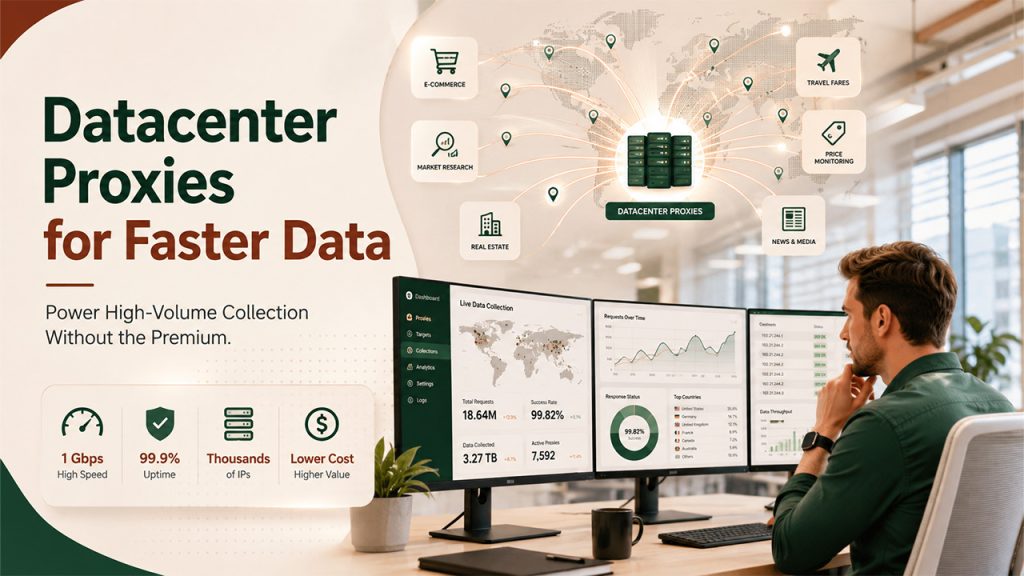
The reason datacenter proxies dominate business automation is simple economics: they combine unlimited-bandwidth plans with 1 Gbps-class speeds at a fraction of residential pricing. Providers like NovaProxy offer fast and reliable datacenter proxies with thousands of IPs, 99.9% uptime, and plans starting around $3 per day — which changes the math on what kind of data collection is affordable for a small or mid-sized business.
Here’s where that capability translates into everyday workflows.
Web Scraping at Scale
Datacenter proxies for web scraping are the default choice when the job is “collect a lot of public data, fast.” Rotating your requests across a large IP pool keeps any single address from tripping anti-bot thresholds, so nightly price sweeps, product catalog monitoring, and research crawls run to completion instead of dying halfway through on a ban.
SEO Monitoring and Rank Tracking
If you publish content, you need to see search results the way your audience sees them — from multiple locations, at regular intervals, without your monitoring queries being throttled. SEO monitoring proxies make multi-location SERP tracking practical: each check goes out through a different IP, and the ranking data flows cleanly into your reporting dashboards.
Competitor Price Intelligence
E-commerce and SaaS teams routinely monitor competitor pricing pages to inform their own positioning. This is high-frequency, high-volume work where raw speed matters more than appearing to be a home user, which is exactly the trade datacenter IPs are built for.
Lead Enrichment and CRM Data Quality
A CRM is valuable because it holds customer data inside it. Public business directories, review platforms, and company websites hold the firmographic details that turn a bare lead record into an actionable one. Distributing enrichment requests across a proxy pool keeps that pipeline flowing, and pairing it with professional CRM development ensures the collected data lands in well-structured SuiteCRM or SugarCRM modules instead of a spreadsheet graveyard.
API and Load Testing
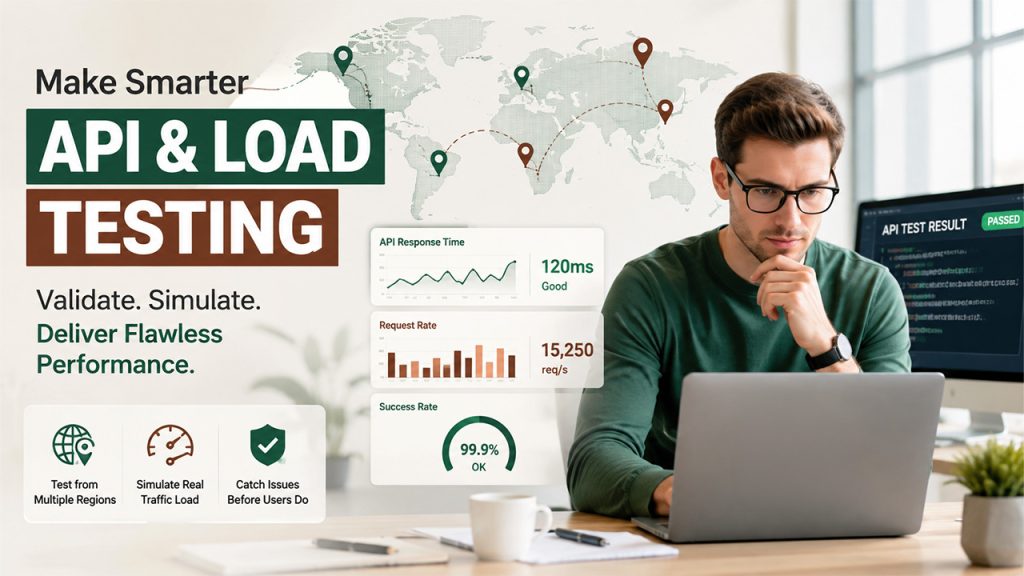
Dev teams lean on datacenter IPs to test rate limits, check geo-specific features, and simulate lots of traffic from different sources. It’s how they catch integration issues before customers ever notice.
Rotating vs. Static Datacenter Proxies: Which Should You Choose?
Related walkthrough
Google Apps Script: Build Dynamic Web Forms and Save Data to Google Sheets

Rotating datacenter proxies give you a new IP address each time you make a request. That way, your traffic gets spread out and isn’t easily pinned to one location. Static datacenter proxies, on the other hand, hold onto a single IP for longer, so you get a steady online identity.
The rule of thumb: if the job is “collect a lot of data from many pages,” rotate. If the job is “act as one consistent user or server” — maintaining a logged-in session, whitelisting an IP with a third-party API, managing a business account — go static. Many teams run both, with rotating IPs feeding the data pipelines and a handful of static IPs handling integrations.
Datacenter vs. Residential Proxies: Key Differences
Residential proxies route traffic through real household connections, which makes them harder to detect but slower and considerably more expensive per gigabyte. Datacenter proxies trade a little stealth for a lot of performance.
| Factor | Datacenter Proxies | Residential Proxies |
| Speed | Very high (dedicated servers, up to 1 Gbps) | Moderate (depends on household connections) |
| Cost | Low, often flat-rate with unlimited bandwidth | Higher, usually billed per GB |
| Detection resistance | Moderate | High |
| Best for | Scraping, SEO monitoring, load testing, price tracking | Heavily protected targets, sneaker/ticketing sites |
| Stability | Excellent (99.9% uptime infrastructure) | Variable |
For most business workflows — public-data scraping, rank tracking, testing — the datacenter-first approach wins. Reserve residential IPs for the small subset of targets that aggressively filter datacenter traffic, and let the cheaper, faster pool do the heavy lifting everywhere else.
How to Choose the Best Datacenter Proxy Provider
Evaluate providers on five criteria before you buy datacenter proxies. First, IP pool size: a larger pool means better rotation and fewer repeated addresses. Second, bandwidth policy: unlimited-bandwidth plans keep costs predictable as your pipelines grow. Third, protocol support: HTTP and SOCKS5 compatibility ensures your existing tools connect without workarounds. Fourth, uptime guarantees: look for 99.9% or better, backed by redundant infrastructure. Fifth, flexible terms: daily pricing and the ability to scale up or cancel anytime beat long contracts for teams still tuning their workloads.
Whichever provider you choose, build good hygiene into your scripts from day one: honor robots.txt where applicable, throttle request rates to something reasonable, collect only publicly available data in compliance with each site’s terms and applicable law, and log which proxy handled which request so failures are diagnosable. Ethical scraping is what keeps pipelines stable long-term.
Final Thoughts
Automation is only as reliable as the infrastructure underneath it. For businesses that depend on fresh external data — feeding a CRM, informing pricing decisions, or tracking search visibility — datacenter proxies deliver the best combination of speed, scale, and cost in the proxy market. Pick a provider with a deep IP pool, transparent flat-rate pricing, and support for the protocols your tools already use, and your data pipelines will stop being the bottleneck in your growth stack.
Frequently Asked Questions
Q1. What are datacenter proxies used for?
Datacenter proxies are used for web scraping, SEO rank monitoring, price comparison, ad verification, load and API testing, and large-scale market research — any task that requires sending many requests without hitting per-IP rate limits.
Q2. Are datacenter proxies good for web scraping?
Yes. Their speed, unlimited bandwidth, and low cost make datacenter proxies the standard choice for scraping public data at scale. Only heavily protected targets that filter datacenter IP ranges call for residential alternatives.
Q3. What is the difference between datacenter and residential proxies?
Datacenter proxies come from commercial server infrastructure and prioritize speed and affordability. Residential proxies come from real household connections and prioritize detection resistance, at a higher price and lower speed.
Q4. Are datacenter proxies legal?
Yes, proxy servers are legal when used for legitimate purposes such as scraping public data, SEO monitoring, ad verification, and testing. Users remain responsible for complying with applicable laws and the terms of the websites they access.
Q5. How much do datacenter proxies cost?
Reputable providers offer datacenter proxy plans starting around $3 per day, often with unlimited bandwidth — dramatically cheaper than residential proxies, which are typically billed per gigabyte.