Boosting Sales with Personal Shopping Appointments
Discover how personal shopping appointments turn store visits into bigger baskets, and learn how to launch, staff, and measure a booked-visit program.
The majority of retailers precisely know how many people entered through the door yesterday. Significantly a smaller number of retailers know how many people left empty-handed, and that second number is always most important. Personal shopping appointments directly attack the gap, since a customer who books a slot comes with intent and meets an associate who knows they are coming already. Here is how booked visits create a lot more revenue than unplanned ones, how to develop a program across a store network, and how to assess what it returns.
What Are Personal Shopping Appointments in Retail?
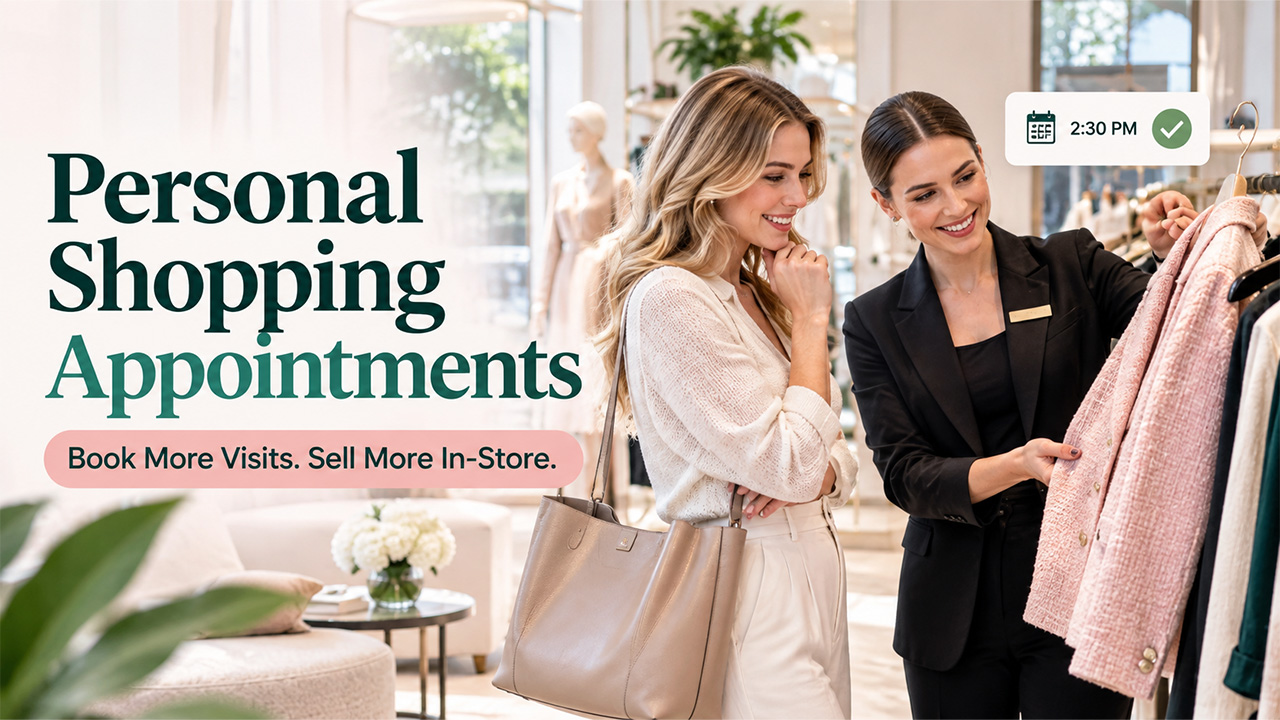
A personal shopping appointment refers to a one-on-one and booked in-store visit between a named associate and a customer, prepared before the arrival of a customer. The customer chooses a location, a service, a time, and generally a particular advisor. The associate opens a booking with stated requirements, purchase history, and a prepared selection, so the visit begins with context instead of a cold greeting.
Group formats belong in different categories. A collection launch, masterclass, or a styling workshop is an event, since numerous customers share a similar time slot. By definition, appointments are individual, and considering both the same operational object makes reporting and staffing more difficult than they need to be.
Store teams can only do preparation for the demand that can see, and generic spreadsheets or calendars rarely provide the visibility across different locations. Retailers running booked visits at scale tend to sit on purpose-built systems instead, and platforms like Booxi offer retail appointment scheduling software that centralizes bookings across every store while keeping the interface simple for associates on the floor. This structure enables a network to deliver the same experience in a store and in a flagship opened last month.
How Do Personal Shopping Appointments Change from Walk-in Visits?
A walk-in arrives unannounced, so the store absorbs that demand with whatever capacity happens to be free. During quiet hours the experience is excellent. During peak hours the same customer waits, gets a rushed answer, or leaves without speaking to anyone.
A booked visit reverses that dynamic. Demand is quite visible in advance, which means that the store can block enough time, assign the right specialist, and prepare products before the customer can even walk in. The difference is not the service level that the team wants to provide, it is whether the structure enables them to give it.
Which Retail Categories Mostly Benefit from Booked Visits?
Booked visits pay off fastest where the purchase needs advice, fitting, or trust. Luxury and jewelry lead, because high-value decisions rarely happen in 4 minutes of unassisted browsing. Beauty retail networks follow, since consultations and diagnostics carry full routines rather than single products.
Eyewear and premium fashion sit in the same bracket, because both depend on a specialist and a fitting room being available at the right moment. Department stores gain in a distinct way: personal shopping is generally their most profitable service and their least discoverable one, so making bookable can expose the capacity that exists already.
Why Do Booked Appointments Generate More Sales Than Walk-Ins?
How Much More Does an Appointment Client Spend Per Each Visit?
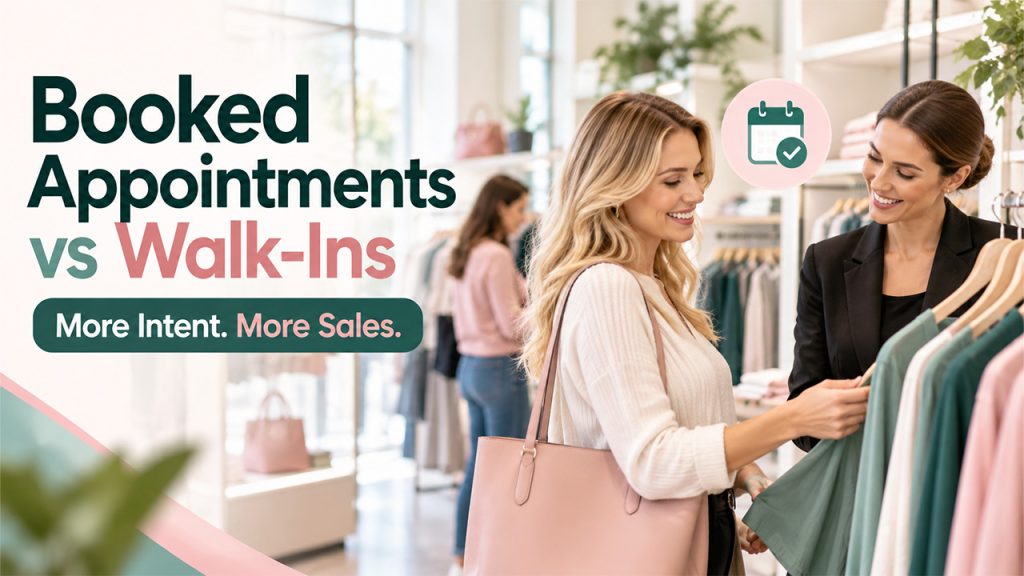
Customers who book spend more per visit than customers who drop in, and they get converted at a much better rate. Industry benchmarks ensure that the basket increases at approximately 30% or more for appointment-driven interactions, with conversions on booked visits landing well above the 20-30% range, which is typical of unplanned traffic.
The reason is intent. Someone who reserves a Tuesday evening slot has already decided to buy something, so the conversation starts at selection rather than persuasion. That single shift explains why a minority of traffic can generate a disproportionate share of store margin.
Why Does Preparation Time Change the Outcome of a Visit?
Preparation removes the discovery phase from the sales floor. When the associate is aware about the past purchases, customer size, and reason for visitation, the first five minutes go to relevant options instead of standard questions.
That preparation also protects the relationship with your best customers. A top-value client who enters unannounced gets whoever is free, and the associate has no history to work from. A booked visit ensures that the right brief, right person, and a selection is waiting on arrival, which is what converts a good experience into a repeated visit.
How Do Appointments Turn Online Intent Into Store Revenue?
Related walkthrough
What is CRM? CRM Explained in 1 Minutes | Boost Sales & Manage Customers Better
Retailers spend heavily on campaigns that push people toward physical stores, then hand those people a store locator and hope. Between the click and the door there’s usually no booking, no confirmation, and no handoff to the team who will serve them.
A booking button closes that gap. The customer’s intent gets captured while it’s still active, the store receives the context, and the visit becomes a scheduled commitment instead of a maybe. Reminders then do the rest of the work, because a confirmed slot in a calendar behaves very differently from a vague plan to stop by.
How Do You Launch a Personal Shopping Program Across Your Stores?
Which Services Should You Package as Bookable Appointments?
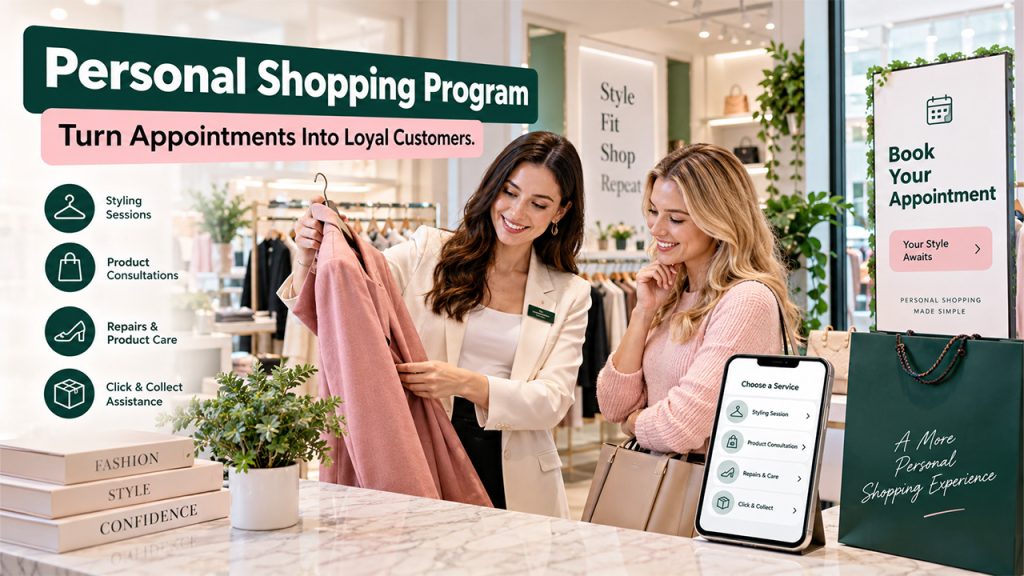
Start with the services your teams already deliver informally. Fitting appointments, styling sessions, repairs and product care, product consultations, and assisted click-and-collect pickups all qualify, since each one has a determined purpose and a predictable duration.
Name each service in the language of customers rather than relying on internal vocabulary. “Book a styling session for 45 minutes,” which converts better than “Inviting you to store for consultation,” since the first version lets the customer know what they are getting exactly and how long it is going to take.
How Do You Protect Walk-In Coverage While Booking Slots?
Capacity planning is an area that decides the success or failure of the programs. First map your traffic curve, then reserve your appointment slots closer to peaks instead of being on top of them, so booked visits absorb quieter hours instead of busiest ones.
Your teams also need one view of everything happening in the store. When walk-ins, booked visits, and event attendees sit in individual tools, managers manually reconcile schedules and something slips always. A single flow allows a manager to see who is expected, who is waiting, and who is free right now.
How the Customer Booking Flow Looks Like?
Ensure that the path is specific and short. The customer selects a store, a service, a time, and an advisor (where relevant). The advisor then gets an instant confirmation with everything they require to show up prepared.
Rescheduling is as important as booking. Most of the no-shows are not refusals; they are conflicts, so a one-tap option to shift the slot recovers revenue that a cancellation policy never does. SMS reminders and automated emails in the 48 hours before the visit can do the same job at scale.
How Do You Measure the Revenue Impact of Personal Shopping Appointments?
Which Metrics Ensure That the Program Is Effective?
From the first month, keep track of 5 numbers: measure booked visits conversion rate versus walk-ins, average basket for each repeat visit, no-show rate within 90 days, and revenue per each available slot. The last one you need to keep track of is operational metrics, and this is the most important metric that lets you know whether you need to open more capacity.
Compare those figures store by store rather than as a network average. Averages hide the outliers, and the outliers are where the playbook comes from, because a store converting booked visits at double the network rate is doing something the rest can copy.
How You Need to Attribute In-Store Sales Back to Digital Booking?
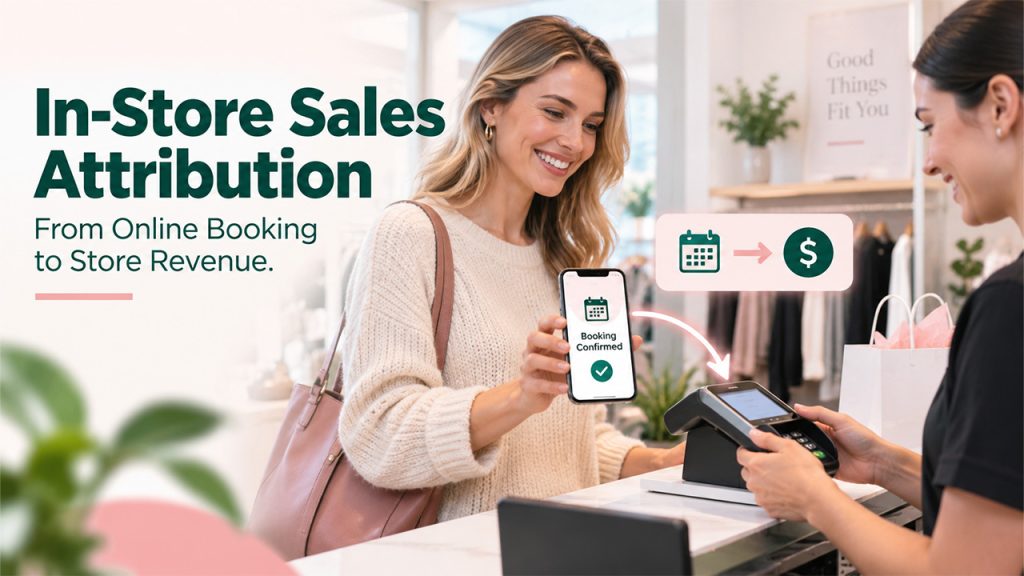
Attribution needs 3 platforms: the point of sale, the booking platform, and Customer Relationship Management like HubSpot. When a booking has an identifier that follows customer-to-transaction, the sale stops being anonymous for foot traffic and becomes a measurable revenue associated with the campaign, a specific store team, and a channel.
That link changes budget conversations. Without it, digital teams report the fraction of conversions that happen online and defend their spending with incomplete data. Along with it, in-store revenue finally shows up in the same report as the campaign that created it.
Which Mistakes Makes Personal Shopping Programs to Stall?
The most common failure is discoverability. If the booking entry point lives 3 clicks deep on a contact page, the program will only ever reach a sliver of your traffic, no matter how good the service is.
The second is adoption. Store teams abandon anything that adds admin work during a shift, so a tool that takes more than a few taps will quietly go unused, and the calendar will stay empty.
The third is follow-up. A personal shopping visit reveals sizes, preferences, and budget, and most retailers let that information evaporate the moment the customer leaves. Without a rebooking prompt or a note in the client’s profile, an excellent visit produces one sale instead of a relationship.
What Booked Visits Change About Store Performance?
Personal shopping appointments don’t bring new customers into the funnel. They transform bulk of the traffic that you pay for already, which is why the return shows up in conversion, basket size, and repeat visits instead of in raw footfall.
The operational change is just as valuable. Booked demand makes sure that staffing remains predictable, providing associates a reason to prepare, and converts your best service into something that customers can find. Begin with 2 or 3 bookable services, assess the delta against walk-ins, and then scale the version your stores provide for works.
Frequently Asked Questions
It refers to a booked one-on-one visit where a customer aligns with a particular associate at a selected store and time for a determined service, like fitting, styling, or product advice. The associate does preparation before the visit using purchase history and booking details. Group sessions such as launches or workshops, not appointments.
Yes, as long as the purchase includes fitting or advice. The format relies on the value of expertise, not so much on the price point, so footwear, eyewear, premium fashion, and home goods all see advantages. What changes is duration and format: shorter slots and clearer service definitions work better than the extended sessions luxury brands run.
Automated reminders by SMS and email in the 48 hours before slot manages most of the risk. Easy self-service rescheduling manages the rest since customers who have an option to reschedule the appointment do not abandon it outright. Freeing cancelled slots back into available capacity ensures that the calendar remains productive.
In most retailers, they are free since the appointment is a sales channel instead of a service line. A modest fee, which is generally credited against a purchase, makes sense for resource-heavy or long sessions where no-share carries real expense. You can test them both, then compare the no-show rate, and booked volume before making a decision.